<img height="1" width="1" style="display:none;" alt="" src="https://px.ads.linkedin.com/collect/?pid=4135034&amp;fmt=gif">

Article

Going beyond SLAs in your Business Reviews

The 'SLA trap' occurs when B2B account managers focus solely on contractual KPIs while neglecting the strategic value and client sentiment required for long-term retention.

Account managers need to confront an uncomfortable truth: your green dashboards might be masking a serious retention problem. Every KPI is met, every service level agreement is honoured, yet your enterprise clients are still walking away. This is the SLA trap, and it's silently eroding client relationships across B2B services.

The most successful account managers understand that SLAs define minimum performance standards, while strategic partnerships extend accountability and collaboration beyond those boundaries to drive continuous improvement and shared success.

Picture6

If you've ever lost a client despite flawless service delivery, this article will explain why: and show you how to transform your QBR approach to become an indispensable strategic partner rather than a replaceable vendor.


The 'green spreadsheet' fallacy

There's a dangerous assumption embedded in many account management cultures: if the numbers are green, the relationship is healthy. This can be far from the truth.

A vendor relationship focused solely on hitting SLAs is fundamentally reactive and transactional. This approach works for discrete, low-risk services, but breaks down when services are continuous, touch multiple teams or need to support broader organisational goals.

The problem? Information arrives too late. With vendor-only models, organisations often face timing challenges where problems surface after significant costs or disruption have already occurred, or when the contract’s up for renewal.

customer-sentiment-spreadsheet


The 3 pillars of enterprise retention

To escape the SLA trap, account managers need to reframe how they think about client success. Enterprise retention rests on three distinct pillars and most vendors only focus on one.

Performance is the foundation. This includes your SLAs, KPIs and operational metrics. It answers the question: ‘Are you doing what we're paying you for?’ This is table stakes. Every competitor in your market can hit these numbers.

Sentiment is the relationship layer. This encompasses how your client actually feels about working with you, captured through NPS scores, CSAT surveys and qualitative feedback. It answers the question, ‘Do they trust us and enjoy the partnership?’ This is where many account managers start to differentiate themselves.

Strategy is the partnership pinnacle. This is where you demonstrate understanding of your client's business direction, challenges and goals. It answers the question, ‘Are you helping us get where we need to go?’ This is where vendors become strategic partners, and where the QBR becomes your most powerful tool.

The most common mistake? Spending 90% of QBR time on Performance metrics, briefly touching on Sentiment and completely ignoring Strategy. 


QBR TOP TIP: Spend 20% of your meeting looking backwards and 80% looking forwards


The 20% retrospective should be a crisp executive summary of key achievements, any issues and how they were resolved, and a handful of metrics that genuinely matter. If your client needs to understand every data point, you haven't done your job of synthesising the information. Present insights and highlights, not entire spreadsheets.

The 80% prospective should focus on:

  • Emerging trends you've identified in their business or industry
  • Risks you've spotted before they've become problems
  • Opportunities for improvement, innovation or growth
  • Recommendations tied to their specific business objectives
  • Collaborative planning for the quarter ahead


Engaging leadership through business outcomes

One of the clearest indicators that you've escaped the SLA trap is who attends your Quarterly Business Reviews. If you're consistently meeting with operational contacts but struggling to get senior stakeholders in the room, your conversations are probably too tactical.

Enterprise leadership doesn't care about your uptime percentage or ticket resolution rates in isolation. They care about business outcomes like revenue growth, cost reduction, risk mitigation, competitive advantage and customer satisfaction. Your job is to translate your service delivery into these terms.

For example, instead of:

"We achieved 99.9% system availability this quarter."

Try:

"Our availability performance meant zero unplanned downtime during your peak trading period, protecting an estimated £2.3 million in transaction revenue."


Or, instead of:

"Customer satisfaction scores improved by 8 points."

Try:

"The satisfaction improvements we're seeing correlate with a 23% reduction in escalations to your leadership team, freeing up senior capacity for strategic initiatives."

When you consistently frame your value in terms of business outcomes, something interesting happens: your client starts wanting their leadership team to hear your insights. You become a strategic asset worth showcasing, not an operational vendor to be managed.


Tracking relationship health alongside service data

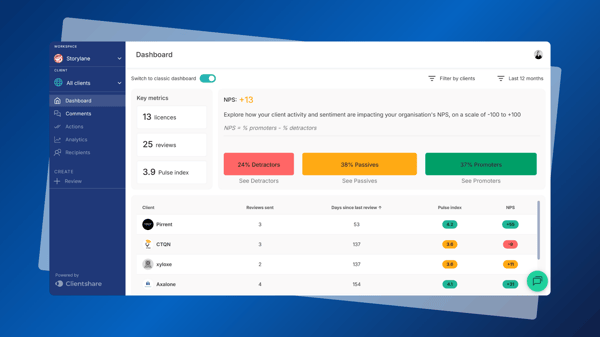
The challenge for many account managers is that traditional reporting tools only capture one pillar: Performance. Sentiment and Strategy require different measurement approaches and often fall through the cracks between quarterly meetings.
pulse-dashboard-product-image

This is where platforms like Clientshare Pulse become essential. By tracking client sentiment, feedback themes and relationship health alongside your operational metrics, you gain visibility into the unseen factors that drive retention. You'll spot declining satisfaction before it becomes churn risk, identify strategic opportunities through feedback patterns and demonstrate to clients that you're monitoring more than just the contractual minimum.


Read more:
5-ways-to-use-nps-and-csat-in-qbr-decks-qbr-hub-thumbnail

nps-whitepaper-thumbnail (2)


 thought-leadership-article-james-ward-ai-in-cx-2025-to-2026

Related resources

Article

5 tips on how to evidence value during your Quarterly Business Reviews (QBRs)
Read more

Article

Why you need to run Quarterly Business Reviews (QBRs)
Read more

Article

How Quarterly Business Reviews (QBRs) can help you reduce risk of churn
Read more

Article

Going beyond SLAs in your Business Reviews

The 'SLA trap' occurs when B2B account managers focus solely on contractual KPIs while neglecting the strategic value and client sentiment required for long-term retention.

Account managers need to confront an uncomfortable truth: your green dashboards might be masking a serious retention problem. Every KPI is met, every service level agreement is honoured, yet your enterprise clients are still walking away. This is the SLA trap, and it's silently eroding client relationships across B2B services.

The most successful account managers understand that SLAs define minimum performance standards, while strategic partnerships extend accountability and collaboration beyond those boundaries to drive continuous improvement and shared success.

Picture6

If you've ever lost a client despite flawless service delivery, this article will explain why: and show you how to transform your QBR approach to become an indispensable strategic partner rather than a replaceable vendor.


The 'green spreadsheet' fallacy

There's a dangerous assumption embedded in many account management cultures: if the numbers are green, the relationship is healthy. This can be far from the truth.

A vendor relationship focused solely on hitting SLAs is fundamentally reactive and transactional. This approach works for discrete, low-risk services, but breaks down when services are continuous, touch multiple teams or need to support broader organisational goals.

The problem? Information arrives too late. With vendor-only models, organisations often face timing challenges where problems surface after significant costs or disruption have already occurred, or when the contract’s up for renewal.

customer-sentiment-spreadsheet


The 3 pillars of enterprise retention

To escape the SLA trap, account managers need to reframe how they think about client success. Enterprise retention rests on three distinct pillars and most vendors only focus on one.

Performance is the foundation. This includes your SLAs, KPIs and operational metrics. It answers the question: ‘Are you doing what we're paying you for?’ This is table stakes. Every competitor in your market can hit these numbers.

Sentiment is the relationship layer. This encompasses how your client actually feels about working with you, captured through NPS scores, CSAT surveys and qualitative feedback. It answers the question, ‘Do they trust us and enjoy the partnership?’ This is where many account managers start to differentiate themselves.

Strategy is the partnership pinnacle. This is where you demonstrate understanding of your client's business direction, challenges and goals. It answers the question, ‘Are you helping us get where we need to go?’ This is where vendors become strategic partners, and where the QBR becomes your most powerful tool.

The most common mistake? Spending 90% of QBR time on Performance metrics, briefly touching on Sentiment and completely ignoring Strategy. 


QBR TOP TIP: Spend 20% of your meeting looking backwards and 80% looking forwards


The 20% retrospective should be a crisp executive summary of key achievements, any issues and how they were resolved, and a handful of metrics that genuinely matter. If your client needs to understand every data point, you haven't done your job of synthesising the information. Present insights and highlights, not entire spreadsheets.

The 80% prospective should focus on:

  • Emerging trends you've identified in their business or industry
  • Risks you've spotted before they've become problems
  • Opportunities for improvement, innovation or growth
  • Recommendations tied to their specific business objectives
  • Collaborative planning for the quarter ahead


Engaging leadership through business outcomes

One of the clearest indicators that you've escaped the SLA trap is who attends your Quarterly Business Reviews. If you're consistently meeting with operational contacts but struggling to get senior stakeholders in the room, your conversations are probably too tactical.

Enterprise leadership doesn't care about your uptime percentage or ticket resolution rates in isolation. They care about business outcomes like revenue growth, cost reduction, risk mitigation, competitive advantage and customer satisfaction. Your job is to translate your service delivery into these terms.

For example, instead of:

"We achieved 99.9% system availability this quarter."

Try:

"Our availability performance meant zero unplanned downtime during your peak trading period, protecting an estimated £2.3 million in transaction revenue."


Or, instead of:

"Customer satisfaction scores improved by 8 points."

Try:

"The satisfaction improvements we're seeing correlate with a 23% reduction in escalations to your leadership team, freeing up senior capacity for strategic initiatives."

When you consistently frame your value in terms of business outcomes, something interesting happens: your client starts wanting their leadership team to hear your insights. You become a strategic asset worth showcasing, not an operational vendor to be managed.


Tracking relationship health alongside service data

The challenge for many account managers is that traditional reporting tools only capture one pillar: Performance. Sentiment and Strategy require different measurement approaches and often fall through the cracks between quarterly meetings.

pulse-dashboard-product-image

This is where platforms like Clientshare Pulse become essential. By tracking client sentiment, feedback themes and relationship health alongside your operational metrics, you gain visibility into the unseen factors that drive retention. You'll spot declining satisfaction before it becomes churn risk, identify strategic opportunities through feedback patterns and demonstrate to clients that you're monitoring more than just the contractual minimum.


Read more:

5-ways-to-use-nps-and-csat-in-qbr-decks-qbr-hub-thumbnail

nps-whitepaper-thumbnail (2)


 thought-leadership-article-james-ward-ai-in-cx-2025-to-2026

Related resources

Article

5 reasons Quarterly Business Reviews (QBRs) are essential for B2B enterprises
Read more

Infographic

Five ways Quarterly Business Reviews impact retention and growth
Open now

Article

What to include in your Quarterly Business Reviews (QBRs)
Read more

Article

Going beyond SLAs in your Business Reviews

The 'SLA trap' occurs when B2B account managers focus solely on contractual KPIs while neglecting the strategic value and client sentiment required for long-term retention.

Account managers need to confront an uncomfortable truth: your green dashboards might be masking a serious retention problem. Every KPI is met, every service level agreement is honoured, yet your enterprise clients are still walking away. This is the SLA trap, and it's silently eroding client relationships across B2B services.

The most successful account managers understand that SLAs define minimum performance standards, while strategic partnerships extend accountability and collaboration beyond those boundaries to drive continuous improvement and shared success.

Picture6

If you've ever lost a client despite flawless service delivery, this article will explain why: and show you how to transform your QBR approach to become an indispensable strategic partner rather than a replaceable vendor.


The 'green spreadsheet' fallacy

There's a dangerous assumption embedded in many account management cultures: if the numbers are green, the relationship is healthy. This can be far from the truth.

A vendor relationship focused solely on hitting SLAs is fundamentally reactive and transactional. This approach works for discrete, low-risk services, but breaks down when services are continuous, touch multiple teams or need to support broader organisational goals.

The problem? Information arrives too late. With vendor-only models, organisations often face timing challenges where problems surface after significant costs or disruption have already occurred, or when the contract’s up for renewal.

customer-sentiment-spreadsheet


The 3 pillars of enterprise retention

To escape the SLA trap, account managers need to reframe how they think about client success. Enterprise retention rests on three distinct pillars and most vendors only focus on one.

Performance is the foundation. This includes your SLAs, KPIs and operational metrics. It answers the question: ‘Are you doing what we're paying you for?’ This is table stakes. Every competitor in your market can hit these numbers.

Sentiment is the relationship layer. This encompasses how your client actually feels about working with you, captured through NPS scores, CSAT surveys and qualitative feedback. It answers the question, ‘Do they trust us and enjoy the partnership?’ This is where many account managers start to differentiate themselves.

Strategy is the partnership pinnacle. This is where you demonstrate understanding of your client's business direction, challenges and goals. It answers the question, ‘Are you helping us get where we need to go?’ This is where vendors become strategic partners, and where the QBR becomes your most powerful tool.

The most common mistake? Spending 90% of QBR time on Performance metrics, briefly touching on Sentiment and completely ignoring Strategy. 


QBR TOP TIP: Spend 20% of your meeting looking backwards and 80% looking forwards


The 20% retrospective should be a crisp executive summary of key achievements, any issues and how they were resolved, and a handful of metrics that genuinely matter. If your client needs to understand every data point, you haven't done your job of synthesising the information. Present insights and highlights, not entire spreadsheets.

The 80% prospective should focus on:

  • Emerging trends you've identified in their business or industry
  • Risks you've spotted before they've become problems
  • Opportunities for improvement, innovation or growth
  • Recommendations tied to their specific business objectives
  • Collaborative planning for the quarter ahead


Engaging leadership through business outcomes

One of the clearest indicators that you've escaped the SLA trap is who attends your Quarterly Business Reviews. If you're consistently meeting with operational contacts but struggling to get senior stakeholders in the room, your conversations are probably too tactical.

Enterprise leadership doesn't care about your uptime percentage or ticket resolution rates in isolation. They care about business outcomes like revenue growth, cost reduction, risk mitigation, competitive advantage and customer satisfaction. Your job is to translate your service delivery into these terms.

For example, instead of:

"We achieved 99.9% system availability this quarter."

Try:

"Our availability performance meant zero unplanned downtime during your peak trading period, protecting an estimated £2.3 million in transaction revenue."


Or, instead of:

"Customer satisfaction scores improved by 8 points."

Try:

"The satisfaction improvements we're seeing correlate with a 23% reduction in escalations to your leadership team, freeing up senior capacity for strategic initiatives."

When you consistently frame your value in terms of business outcomes, something interesting happens: your client starts wanting their leadership team to hear your insights. You become a strategic asset worth showcasing, not an operational vendor to be managed.


Tracking relationship health alongside service data

The challenge for many account managers is that traditional reporting tools only capture one pillar: Performance. Sentiment and Strategy require different measurement approaches and often fall through the cracks between quarterly meetings.

pulse-dashboard-product-image

This is where platforms like Clientshare Pulse become essential. By tracking client sentiment, feedback themes and relationship health alongside your operational metrics, you gain visibility into the unseen factors that drive retention. You'll spot declining satisfaction before it becomes churn risk, identify strategic opportunities through feedback patterns and demonstrate to clients that you're monitoring more than just the contractual minimum.


Read more:

5-ways-to-use-nps-and-csat-in-qbr-decks-qbr-hub-thumbnail

nps-whitepaper-thumbnail (2)


 thought-leadership-article-james-ward-ai-in-cx-2025-to-2026

Related resources

Article

5 reasons Quarterly Business Reviews (QBRs) are essential for B2B enterprises
Read more

Infographic

Five ways Quarterly Business Reviews impact retention and growth
Open now

Article

What to include in your Quarterly Business Reviews (QBRs)
Read more

Article

Going beyond SLAs in your Business Reviews

The 'SLA trap' occurs when B2B account managers focus solely on contractual KPIs while neglecting the strategic value and client sentiment required for long-term retention.

Account managers need to confront an uncomfortable truth: your green dashboards might be masking a serious retention problem. Every KPI is met, every service level agreement is honoured, yet your enterprise clients are still walking away. This is the SLA trap, and it's silently eroding client relationships across B2B services.

The most successful account managers understand that SLAs define minimum performance standards, while strategic partnerships extend accountability and collaboration beyond those boundaries to drive continuous improvement and shared success.

Picture6

If you've ever lost a client despite flawless service delivery, this article will explain why: and show you how to transform your QBR approach to become an indispensable strategic partner rather than a replaceable vendor.


The 'green spreadsheet' fallacy

There's a dangerous assumption embedded in many account management cultures: if the numbers are green, the relationship is healthy. This can be far from the truth.

A vendor relationship focused solely on hitting SLAs is fundamentally reactive and transactional. This approach works for discrete, low-risk services, but breaks down when services are continuous, touch multiple teams or need to support broader organisational goals.

The problem? Information arrives too late. With vendor-only models, organisations often face timing challenges where problems surface after significant costs or disruption have already occurred, or when the contract’s up for renewal.

customer-sentiment-spreadsheet


The 3 pillars of enterprise retention

To escape the SLA trap, account managers need to reframe how they think about client success. Enterprise retention rests on three distinct pillars and most vendors only focus on one.

Performance is the foundation. This includes your SLAs, KPIs and operational metrics. It answers the question: ‘Are you doing what we're paying you for?’ This is table stakes. Every competitor in your market can hit these numbers.

Sentiment is the relationship layer. This encompasses how your client actually feels about working with you, captured through NPS scores, CSAT surveys and qualitative feedback. It answers the question, ‘Do they trust us and enjoy the partnership?’ This is where many account managers start to differentiate themselves.

Strategy is the partnership pinnacle. This is where you demonstrate understanding of your client's business direction, challenges and goals. It answers the question, ‘Are you helping us get where we need to go?’ This is where vendors become strategic partners, and where the QBR becomes your most powerful tool.

The most common mistake? Spending 90% of QBR time on Performance metrics, briefly touching on Sentiment and completely ignoring Strategy. 


QBR TOP TIP: Spend 20% of your meeting looking backwards and 80% looking forwards


The 20% retrospective should be a crisp executive summary of key achievements, any issues and how they were resolved, and a handful of metrics that genuinely matter. If your client needs to understand every data point, you haven't done your job of synthesising the information. Present insights and highlights, not entire spreadsheets.

The 80% prospective should focus on:

  • Emerging trends you've identified in their business or industry
  • Risks you've spotted before they've become problems
  • Opportunities for improvement, innovation or growth
  • Recommendations tied to their specific business objectives
  • Collaborative planning for the quarter ahead


Engaging leadership through business outcomes

One of the clearest indicators that you've escaped the SLA trap is who attends your Quarterly Business Reviews. If you're consistently meeting with operational contacts but struggling to get senior stakeholders in the room, your conversations are probably too tactical.

Enterprise leadership doesn't care about your uptime percentage or ticket resolution rates in isolation. They care about business outcomes like revenue growth, cost reduction, risk mitigation, competitive advantage and customer satisfaction. Your job is to translate your service delivery into these terms.

For example, instead of:

"We achieved 99.9% system availability this quarter."

Try:

"Our availability performance meant zero unplanned downtime during your peak trading period, protecting an estimated £2.3 million in transaction revenue."


Or, instead of:

"Customer satisfaction scores improved by 8 points."

Try:

"The satisfaction improvements we're seeing correlate with a 23% reduction in escalations to your leadership team, freeing up senior capacity for strategic initiatives."

When you consistently frame your value in terms of business outcomes, something interesting happens: your client starts wanting their leadership team to hear your insights. You become a strategic asset worth showcasing, not an operational vendor to be managed.


Tracking relationship health alongside service data

The challenge for many account managers is that traditional reporting tools only capture one pillar: Performance. Sentiment and Strategy require different measurement approaches and often fall through the cracks between quarterly meetings.

pulse-dashboard-product-image

This is where platforms like Clientshare Pulse become essential. By tracking client sentiment, feedback themes and relationship health alongside your operational metrics, you gain visibility into the unseen factors that drive retention. You'll spot declining satisfaction before it becomes churn risk, identify strategic opportunities through feedback patterns and demonstrate to clients that you're monitoring more than just the contractual minimum.


Read more:

5-ways-to-use-nps-and-csat-in-qbr-decks-qbr-hub-thumbnail

nps-whitepaper-thumbnail (2)


 thought-leadership-article-james-ward-ai-in-cx-2025-to-2026

Related resources

Article

5 reasons Quarterly Business Reviews (QBRs) are essential for B2B enterprises
Read more

Infographic

Five ways Quarterly Business Reviews impact retention and growth
Open now

Article

What to include in your Quarterly Business Reviews (QBRs)
Read more

Article

Going beyond SLAs in your Business Reviews

The 'SLA trap' occurs when B2B account managers focus solely on contractual KPIs while neglecting the strategic value and client sentiment required for long-term retention.

Account managers need to confront an uncomfortable truth: your green dashboards might be masking a serious retention problem. Every KPI is met, every service level agreement is honoured, yet your enterprise clients are still walking away. This is the SLA trap, and it's silently eroding client relationships across B2B services.

The most successful account managers understand that SLAs define minimum performance standards, while strategic partnerships extend accountability and collaboration beyond those boundaries to drive continuous improvement and shared success.

Picture6

If you've ever lost a client despite flawless service delivery, this article will explain why: and show you how to transform your QBR approach to become an indispensable strategic partner rather than a replaceable vendor.


The 'green spreadsheet' fallacy

There's a dangerous assumption embedded in many account management cultures: if the numbers are green, the relationship is healthy. This can be far from the truth.

A vendor relationship focused solely on hitting SLAs is fundamentally reactive and transactional. This approach works for discrete, low-risk services, but breaks down when services are continuous, touch multiple teams or need to support broader organisational goals.

The problem? Information arrives too late. With vendor-only models, organisations often face timing challenges where problems surface after significant costs or disruption have already occurred, or when the contract’s up for renewal.

customer-sentiment-spreadsheet


The 3 pillars of enterprise retention

To escape the SLA trap, account managers need to reframe how they think about client success. Enterprise retention rests on three distinct pillars and most vendors only focus on one.

Performance is the foundation. This includes your SLAs, KPIs and operational metrics. It answers the question: ‘Are you doing what we're paying you for?’ This is table stakes. Every competitor in your market can hit these numbers.

Sentiment is the relationship layer. This encompasses how your client actually feels about working with you, captured through NPS scores, CSAT surveys and qualitative feedback. It answers the question, ‘Do they trust us and enjoy the partnership?’ This is where many account managers start to differentiate themselves.

Strategy is the partnership pinnacle. This is where you demonstrate understanding of your client's business direction, challenges and goals. It answers the question, ‘Are you helping us get where we need to go?’ This is where vendors become strategic partners, and where the QBR becomes your most powerful tool.

The most common mistake? Spending 90% of QBR time on Performance metrics, briefly touching on Sentiment and completely ignoring Strategy. 


QBR TOP TIP: Spend 20% of your meeting looking backwards and 80% looking forwards


The 20% retrospective should be a crisp executive summary of key achievements, any issues and how they were resolved, and a handful of metrics that genuinely matter. If your client needs to understand every data point, you haven't done your job of synthesising the information. Present insights and highlights, not entire spreadsheets.

The 80% prospective should focus on:

  • Emerging trends you've identified in their business or industry
  • Risks you've spotted before they've become problems
  • Opportunities for improvement, innovation or growth
  • Recommendations tied to their specific business objectives
  • Collaborative planning for the quarter ahead


Engaging leadership through business outcomes

One of the clearest indicators that you've escaped the SLA trap is who attends your Quarterly Business Reviews. If you're consistently meeting with operational contacts but struggling to get senior stakeholders in the room, your conversations are probably too tactical.

Enterprise leadership doesn't care about your uptime percentage or ticket resolution rates in isolation. They care about business outcomes like revenue growth, cost reduction, risk mitigation, competitive advantage and customer satisfaction. Your job is to translate your service delivery into these terms.

For example, instead of:

"We achieved 99.9% system availability this quarter."

Try:

"Our availability performance meant zero unplanned downtime during your peak trading period, protecting an estimated £2.3 million in transaction revenue."


Or, instead of:

"Customer satisfaction scores improved by 8 points."

Try:

"The satisfaction improvements we're seeing correlate with a 23% reduction in escalations to your leadership team, freeing up senior capacity for strategic initiatives."

When you consistently frame your value in terms of business outcomes, something interesting happens: your client starts wanting their leadership team to hear your insights. You become a strategic asset worth showcasing, not an operational vendor to be managed.


Tracking relationship health alongside service data

The challenge for many account managers is that traditional reporting tools only capture one pillar: Performance. Sentiment and Strategy require different measurement approaches and often fall through the cracks between quarterly meetings.

pulse-dashboard-product-image

This is where platforms like Clientshare Pulse become essential. By tracking client sentiment, feedback themes and relationship health alongside your operational metrics, you gain visibility into the unseen factors that drive retention. You'll spot declining satisfaction before it becomes churn risk, identify strategic opportunities through feedback patterns and demonstrate to clients that you're monitoring more than just the contractual minimum.


Read more:

5-ways-to-use-nps-and-csat-in-qbr-decks-qbr-hub-thumbnail

nps-whitepaper-thumbnail (2)


 thought-leadership-article-james-ward-ai-in-cx-2025-to-2026

Related resources

Article

5 reasons Quarterly Business Reviews (QBRs) are essential for B2B enterprises
Read more

Infographic

Five ways Quarterly Business Reviews impact retention and growth
Open now

Article

What to include in your Quarterly Business Reviews (QBRs)
Read more

Article

Going beyond SLAs in your Business Reviews

The 'SLA trap' occurs when B2B account managers focus solely on contractual KPIs while neglecting the strategic value and client sentiment required for long-term retention.

Account managers need to confront an uncomfortable truth: your green dashboards might be masking a serious retention problem. Every KPI is met, every service level agreement is honoured, yet your enterprise clients are still walking away. This is the SLA trap, and it's silently eroding client relationships across B2B services.

The most successful account managers understand that SLAs define minimum performance standards, while strategic partnerships extend accountability and collaboration beyond those boundaries to drive continuous improvement and shared success.

Picture6

If you've ever lost a client despite flawless service delivery, this article will explain why: and show you how to transform your QBR approach to become an indispensable strategic partner rather than a replaceable vendor.


The 'green spreadsheet' fallacy

There's a dangerous assumption embedded in many account management cultures: if the numbers are green, the relationship is healthy. This can be far from the truth.

A vendor relationship focused solely on hitting SLAs is fundamentally reactive and transactional. This approach works for discrete, low-risk services, but breaks down when services are continuous, touch multiple teams or need to support broader organisational goals.

The problem? Information arrives too late. With vendor-only models, organisations often face timing challenges where problems surface after significant costs or disruption have already occurred, or when the contract’s up for renewal.

customer-sentiment-spreadsheet


The 3 pillars of enterprise retention

To escape the SLA trap, account managers need to reframe how they think about client success. Enterprise retention rests on three distinct pillars and most vendors only focus on one.

Performance is the foundation. This includes your SLAs, KPIs and operational metrics. It answers the question: ‘Are you doing what we're paying you for?’ This is table stakes. Every competitor in your market can hit these numbers.

Sentiment is the relationship layer. This encompasses how your client actually feels about working with you, captured through NPS scores, CSAT surveys and qualitative feedback. It answers the question, ‘Do they trust us and enjoy the partnership?’ This is where many account managers start to differentiate themselves.

Strategy is the partnership pinnacle. This is where you demonstrate understanding of your client's business direction, challenges and goals. It answers the question, ‘Are you helping us get where we need to go?’ This is where vendors become strategic partners, and where the QBR becomes your most powerful tool.

The most common mistake? Spending 90% of QBR time on Performance metrics, briefly touching on Sentiment and completely ignoring Strategy. 


QBR TOP TIP: Spend 20% of your meeting looking backwards and 80% looking forwards


The 20% retrospective should be a crisp executive summary of key achievements, any issues and how they were resolved, and a handful of metrics that genuinely matter. If your client needs to understand every data point, you haven't done your job of synthesising the information. Present insights and highlights, not entire spreadsheets.

The 80% prospective should focus on:

  • Emerging trends you've identified in their business or industry
  • Risks you've spotted before they've become problems
  • Opportunities for improvement, innovation or growth
  • Recommendations tied to their specific business objectives
  • Collaborative planning for the quarter ahead


Engaging leadership through business outcomes

One of the clearest indicators that you've escaped the SLA trap is who attends your Quarterly Business Reviews. If you're consistently meeting with operational contacts but struggling to get senior stakeholders in the room, your conversations are probably too tactical.

Enterprise leadership doesn't care about your uptime percentage or ticket resolution rates in isolation. They care about business outcomes like revenue growth, cost reduction, risk mitigation, competitive advantage and customer satisfaction. Your job is to translate your service delivery into these terms.

For example, instead of:

"We achieved 99.9% system availability this quarter."

Try:

"Our availability performance meant zero unplanned downtime during your peak trading period, protecting an estimated £2.3 million in transaction revenue."


Or, instead of:

"Customer satisfaction scores improved by 8 points."

Try:

"The satisfaction improvements we're seeing correlate with a 23% reduction in escalations to your leadership team, freeing up senior capacity for strategic initiatives."

When you consistently frame your value in terms of business outcomes, something interesting happens: your client starts wanting their leadership team to hear your insights. You become a strategic asset worth showcasing, not an operational vendor to be managed.


Tracking relationship health alongside service data

The challenge for many account managers is that traditional reporting tools only capture one pillar: Performance. Sentiment and Strategy require different measurement approaches and often fall through the cracks between quarterly meetings.

pulse-dashboard-product-image

This is where platforms like Clientshare Pulse become essential. By tracking client sentiment, feedback themes and relationship health alongside your operational metrics, you gain visibility into the unseen factors that drive retention. You'll spot declining satisfaction before it becomes churn risk, identify strategic opportunities through feedback patterns and demonstrate to clients that you're monitoring more than just the contractual minimum.


Read more:

5-ways-to-use-nps-and-csat-in-qbr-decks-qbr-hub-thumbnail

nps-whitepaper-thumbnail (2)


 thought-leadership-article-james-ward-ai-in-cx-2025-to-2026

Related resources

Article

5 reasons Quarterly Business Reviews (QBRs) are essential for B2B enterprises
Read more

Infographic

Five ways Quarterly Business Reviews impact retention and growth
Open now

Article

What to include in your Quarterly Business Reviews (QBRs)
Read more

Article

Going beyond SLAs in your Business Reviews

The 'SLA trap' occurs when B2B account managers focus solely on contractual KPIs while neglecting the strategic value and client sentiment required for long-term retention.

Account managers need to confront an uncomfortable truth: your green dashboards might be masking a serious retention problem. Every KPI is met, every service level agreement is honoured, yet your enterprise clients are still walking away. This is the SLA trap, and it's silently eroding client relationships across B2B services.

The most successful account managers understand that SLAs define minimum performance standards, while strategic partnerships extend accountability and collaboration beyond those boundaries to drive continuous improvement and shared success.

Picture6

If you've ever lost a client despite flawless service delivery, this article will explain why: and show you how to transform your QBR approach to become an indispensable strategic partner rather than a replaceable vendor.


The 'green spreadsheet' fallacy

There's a dangerous assumption embedded in many account management cultures: if the numbers are green, the relationship is healthy. This can be far from the truth.

A vendor relationship focused solely on hitting SLAs is fundamentally reactive and transactional. This approach works for discrete, low-risk services, but breaks down when services are continuous, touch multiple teams or need to support broader organisational goals.

The problem? Information arrives too late. With vendor-only models, organisations often face timing challenges where problems surface after significant costs or disruption have already occurred, or when the contract’s up for renewal.

customer-sentiment-spreadsheet


The 3 pillars of enterprise retention

To escape the SLA trap, account managers need to reframe how they think about client success. Enterprise retention rests on three distinct pillars and most vendors only focus on one.

Performance is the foundation. This includes your SLAs, KPIs and operational metrics. It answers the question: ‘Are you doing what we're paying you for?’ This is table stakes. Every competitor in your market can hit these numbers.

Sentiment is the relationship layer. This encompasses how your client actually feels about working with you, captured through NPS scores, CSAT surveys and qualitative feedback. It answers the question, ‘Do they trust us and enjoy the partnership?’ This is where many account managers start to differentiate themselves.

Strategy is the partnership pinnacle. This is where you demonstrate understanding of your client's business direction, challenges and goals. It answers the question, ‘Are you helping us get where we need to go?’ This is where vendors become strategic partners, and where the QBR becomes your most powerful tool.

The most common mistake? Spending 90% of QBR time on Performance metrics, briefly touching on Sentiment and completely ignoring Strategy. 


QBR TOP TIP: Spend 20% of your meeting looking backwards and 80% looking forwards


The 20% retrospective should be a crisp executive summary of key achievements, any issues and how they were resolved, and a handful of metrics that genuinely matter. If your client needs to understand every data point, you haven't done your job of synthesising the information. Present insights and highlights, not entire spreadsheets.

The 80% prospective should focus on:

  • Emerging trends you've identified in their business or industry
  • Risks you've spotted before they've become problems
  • Opportunities for improvement, innovation or growth
  • Recommendations tied to their specific business objectives
  • Collaborative planning for the quarter ahead


Engaging leadership through business outcomes

One of the clearest indicators that you've escaped the SLA trap is who attends your Quarterly Business Reviews. If you're consistently meeting with operational contacts but struggling to get senior stakeholders in the room, your conversations are probably too tactical.

Enterprise leadership doesn't care about your uptime percentage or ticket resolution rates in isolation. They care about business outcomes like revenue growth, cost reduction, risk mitigation, competitive advantage and customer satisfaction. Your job is to translate your service delivery into these terms.

For example, instead of:

"We achieved 99.9% system availability this quarter."

Try:

"Our availability performance meant zero unplanned downtime during your peak trading period, protecting an estimated £2.3 million in transaction revenue."


Or, instead of:

"Customer satisfaction scores improved by 8 points."

Try:

"The satisfaction improvements we're seeing correlate with a 23% reduction in escalations to your leadership team, freeing up senior capacity for strategic initiatives."

When you consistently frame your value in terms of business outcomes, something interesting happens: your client starts wanting their leadership team to hear your insights. You become a strategic asset worth showcasing, not an operational vendor to be managed.


Tracking relationship health alongside service data

The challenge for many account managers is that traditional reporting tools only capture one pillar: Performance. Sentiment and Strategy require different measurement approaches and often fall through the cracks between quarterly meetings.

pulse-dashboard-product-image

This is where platforms like Clientshare Pulse become essential. By tracking client sentiment, feedback themes and relationship health alongside your operational metrics, you gain visibility into the unseen factors that drive retention. You'll spot declining satisfaction before it becomes churn risk, identify strategic opportunities through feedback patterns and demonstrate to clients that you're monitoring more than just the contractual minimum.


Read more:

5-ways-to-use-nps-and-csat-in-qbr-decks-qbr-hub-thumbnail

nps-whitepaper-thumbnail (2)


 thought-leadership-article-james-ward-ai-in-cx-2025-to-2026

Related resources

Article

5 reasons Quarterly Business Reviews (QBRs) are essential for B2B enterprises
Read more

Infographic

Five ways Quarterly Business Reviews impact retention and growth
Open now

Article

What to include in your Quarterly Business Reviews (QBRs)
Read more

Article

Going beyond SLAs in your Business Reviews

The 'SLA trap' occurs when B2B account managers focus solely on contractual KPIs while neglecting the strategic value and client sentiment required for long-term retention.

Account managers need to confront an uncomfortable truth: your green dashboards might be masking a serious retention problem. Every KPI is met, every service level agreement is honoured, yet your enterprise clients are still walking away. This is the SLA trap, and it's silently eroding client relationships across B2B services.

The most successful account managers understand that SLAs define minimum performance standards, while strategic partnerships extend accountability and collaboration beyond those boundaries to drive continuous improvement and shared success.

Picture6

If you've ever lost a client despite flawless service delivery, this article will explain why: and show you how to transform your QBR approach to become an indispensable strategic partner rather than a replaceable vendor.


The 'green spreadsheet' fallacy

There's a dangerous assumption embedded in many account management cultures: if the numbers are green, the relationship is healthy. This can be far from the truth.

A vendor relationship focused solely on hitting SLAs is fundamentally reactive and transactional. This approach works for discrete, low-risk services, but breaks down when services are continuous, touch multiple teams or need to support broader organisational goals.

The problem? Information arrives too late. With vendor-only models, organisations often face timing challenges where problems surface after significant costs or disruption have already occurred, or when the contract’s up for renewal.

customer-sentiment-spreadsheet


The 3 pillars of enterprise retention

To escape the SLA trap, account managers need to reframe how they think about client success. Enterprise retention rests on three distinct pillars and most vendors only focus on one.

Performance is the foundation. This includes your SLAs, KPIs and operational metrics. It answers the question: ‘Are you doing what we're paying you for?’ This is table stakes. Every competitor in your market can hit these numbers.

Sentiment is the relationship layer. This encompasses how your client actually feels about working with you, captured through NPS scores, CSAT surveys and qualitative feedback. It answers the question, ‘Do they trust us and enjoy the partnership?’ This is where many account managers start to differentiate themselves.

Strategy is the partnership pinnacle. This is where you demonstrate understanding of your client's business direction, challenges and goals. It answers the question, ‘Are you helping us get where we need to go?’ This is where vendors become strategic partners, and where the QBR becomes your most powerful tool.

The most common mistake? Spending 90% of QBR time on Performance metrics, briefly touching on Sentiment and completely ignoring Strategy. 


QBR TOP TIP: Spend 20% of your meeting looking backwards and 80% looking forwards


The 20% retrospective should be a crisp executive summary of key achievements, any issues and how they were resolved, and a handful of metrics that genuinely matter. If your client needs to understand every data point, you haven't done your job of synthesising the information. Present insights and highlights, not entire spreadsheets.

The 80% prospective should focus on:

  • Emerging trends you've identified in their business or industry
  • Risks you've spotted before they've become problems
  • Opportunities for improvement, innovation or growth
  • Recommendations tied to their specific business objectives
  • Collaborative planning for the quarter ahead


Engaging leadership through business outcomes

One of the clearest indicators that you've escaped the SLA trap is who attends your Quarterly Business Reviews. If you're consistently meeting with operational contacts but struggling to get senior stakeholders in the room, your conversations are probably too tactical.

Enterprise leadership doesn't care about your uptime percentage or ticket resolution rates in isolation. They care about business outcomes like revenue growth, cost reduction, risk mitigation, competitive advantage and customer satisfaction. Your job is to translate your service delivery into these terms.

For example, instead of:

"We achieved 99.9% system availability this quarter."

Try:

"Our availability performance meant zero unplanned downtime during your peak trading period, protecting an estimated £2.3 million in transaction revenue."


Or, instead of:

"Customer satisfaction scores improved by 8 points."

Try:

"The satisfaction improvements we're seeing correlate with a 23% reduction in escalations to your leadership team, freeing up senior capacity for strategic initiatives."

When you consistently frame your value in terms of business outcomes, something interesting happens: your client starts wanting their leadership team to hear your insights. You become a strategic asset worth showcasing, not an operational vendor to be managed.


Tracking relationship health alongside service data

The challenge for many account managers is that traditional reporting tools only capture one pillar: Performance. Sentiment and Strategy require different measurement approaches and often fall through the cracks between quarterly meetings.

pulse-dashboard-product-image

This is where platforms like Clientshare Pulse become essential. By tracking client sentiment, feedback themes and relationship health alongside your operational metrics, you gain visibility into the unseen factors that drive retention. You'll spot declining satisfaction before it becomes churn risk, identify strategic opportunities through feedback patterns and demonstrate to clients that you're monitoring more than just the contractual minimum.


Read more:

5-ways-to-use-nps-and-csat-in-qbr-decks-qbr-hub-thumbnail

nps-whitepaper-thumbnail (2)


 thought-leadership-article-james-ward-ai-in-cx-2025-to-2026

Related resources

Article

How Quarterly Business Reviews (QBRs) can help you reduce risk of churn
Read more

Infographic

Five ways Quarterly Business Reviews impact retention and growth
Open now

Article

What to include in your Quarterly Business Reviews (QBRs)
Read more

Article

Going beyond SLAs in your Business Reviews

The 'SLA trap' occurs when B2B account managers focus solely on contractual KPIs while neglecting the strategic value and client sentiment required for long-term retention.

Account managers need to confront an uncomfortable truth: your green dashboards might be masking a serious retention problem. Every KPI is met, every service level agreement is honoured, yet your enterprise clients are still walking away. This is the SLA trap, and it's silently eroding client relationships across B2B services.

The most successful account managers understand that SLAs define minimum performance standards, while strategic partnerships extend accountability and collaboration beyond those boundaries to drive continuous improvement and shared success.

Picture6

If you've ever lost a client despite flawless service delivery, this article will explain why: and show you how to transform your QBR approach to become an indispensable strategic partner rather than a replaceable vendor.


The 'green spreadsheet' fallacy

There's a dangerous assumption embedded in many account management cultures: if the numbers are green, the relationship is healthy. This can be far from the truth.

A vendor relationship focused solely on hitting SLAs is fundamentally reactive and transactional. This approach works for discrete, low-risk services, but breaks down when services are continuous, touch multiple teams or need to support broader organisational goals.

The problem? Information arrives too late. With vendor-only models, organisations often face timing challenges where problems surface after significant costs or disruption have already occurred, or when the contract’s up for renewal.

customer-sentiment-spreadsheet


The 3 pillars of enterprise retention

To escape the SLA trap, account managers need to reframe how they think about client success. Enterprise retention rests on three distinct pillars and most vendors only focus on one.

Performance is the foundation. This includes your SLAs, KPIs and operational metrics. It answers the question: ‘Are you doing what we're paying you for?’ This is table stakes. Every competitor in your market can hit these numbers.

Sentiment is the relationship layer. This encompasses how your client actually feels about working with you, captured through NPS scores, CSAT surveys and qualitative feedback. It answers the question, ‘Do they trust us and enjoy the partnership?’ This is where many account managers start to differentiate themselves.

Strategy is the partnership pinnacle. This is where you demonstrate understanding of your client's business direction, challenges and goals. It answers the question, ‘Are you helping us get where we need to go?’ This is where vendors become strategic partners, and where the QBR becomes your most powerful tool.

The most common mistake? Spending 90% of QBR time on Performance metrics, briefly touching on Sentiment and completely ignoring Strategy. 


QBR TOP TIP: Spend 20% of your meeting looking backwards and 80% looking forwards


The 20% retrospective should be a crisp executive summary of key achievements, any issues and how they were resolved, and a handful of metrics that genuinely matter. If your client needs to understand every data point, you haven't done your job of synthesising the information. Present insights and highlights, not entire spreadsheets.

The 80% prospective should focus on:

  • Emerging trends you've identified in their business or industry
  • Risks you've spotted before they've become problems
  • Opportunities for improvement, innovation or growth
  • Recommendations tied to their specific business objectives
  • Collaborative planning for the quarter ahead


Engaging leadership through business outcomes

One of the clearest indicators that you've escaped the SLA trap is who attends your Quarterly Business Reviews. If you're consistently meeting with operational contacts but struggling to get senior stakeholders in the room, your conversations are probably too tactical.

Enterprise leadership doesn't care about your uptime percentage or ticket resolution rates in isolation. They care about business outcomes like revenue growth, cost reduction, risk mitigation, competitive advantage and customer satisfaction. Your job is to translate your service delivery into these terms.

For example, instead of:

"We achieved 99.9% system availability this quarter."

Try:

"Our availability performance meant zero unplanned downtime during your peak trading period, protecting an estimated £2.3 million in transaction revenue."


Or, instead of:

"Customer satisfaction scores improved by 8 points."

Try:

"The satisfaction improvements we're seeing correlate with a 23% reduction in escalations to your leadership team, freeing up senior capacity for strategic initiatives."

When you consistently frame your value in terms of business outcomes, something interesting happens: your client starts wanting their leadership team to hear your insights. You become a strategic asset worth showcasing, not an operational vendor to be managed.


Tracking relationship health alongside service data

The challenge for many account managers is that traditional reporting tools only capture one pillar: Performance. Sentiment and Strategy require different measurement approaches and often fall through the cracks between quarterly meetings.

pulse-dashboard-product-image

This is where platforms like Clientshare Pulse become essential. By tracking client sentiment, feedback themes and relationship health alongside your operational metrics, you gain visibility into the unseen factors that drive retention. You'll spot declining satisfaction before it becomes churn risk, identify strategic opportunities through feedback patterns and demonstrate to clients that you're monitoring more than just the contractual minimum.


Read more:

5-ways-to-use-nps-and-csat-in-qbr-decks-qbr-hub-thumbnail

nps-whitepaper-thumbnail (2)


 thought-leadership-article-james-ward-ai-in-cx-2025-to-2026

Related resources

Article

How Quarterly Business Reviews (QBRs) can help you reduce risk of churn
Read more

Infographic

Five ways Quarterly Business Reviews impact retention and growth
Open now

Article

What to include in your Quarterly Business Reviews (QBRs)
Read more

Article

Going beyond SLAs in your Business Reviews

The 'SLA trap' occurs when B2B account managers focus solely on contractual KPIs while neglecting the strategic value and client sentiment required for long-term retention.

Account managers need to confront an uncomfortable truth: your green dashboards might be masking a serious retention problem. Every KPI is met, every service level agreement is honoured, yet your enterprise clients are still walking away. This is the SLA trap, and it's silently eroding client relationships across B2B services.

The most successful account managers understand that SLAs define minimum performance standards, while strategic partnerships extend accountability and collaboration beyond those boundaries to drive continuous improvement and shared success.

Picture6

If you've ever lost a client despite flawless service delivery, this article will explain why: and show you how to transform your QBR approach to become an indispensable strategic partner rather than a replaceable vendor.


The 'green spreadsheet' fallacy

There's a dangerous assumption embedded in many account management cultures: if the numbers are green, the relationship is healthy. This can be far from the truth.

A vendor relationship focused solely on hitting SLAs is fundamentally reactive and transactional. This approach works for discrete, low-risk services, but breaks down when services are continuous, touch multiple teams or need to support broader organisational goals.

The problem? Information arrives too late. With vendor-only models, organisations often face timing challenges where problems surface after significant costs or disruption have already occurred, or when the contract’s up for renewal.

customer-sentiment-spreadsheet


The 3 pillars of enterprise retention

To escape the SLA trap, account managers need to reframe how they think about client success. Enterprise retention rests on three distinct pillars and most vendors only focus on one.

Performance is the foundation. This includes your SLAs, KPIs and operational metrics. It answers the question: ‘Are you doing what we're paying you for?’ This is table stakes. Every competitor in your market can hit these numbers.

Sentiment is the relationship layer. This encompasses how your client actually feels about working with you, captured through NPS scores, CSAT surveys and qualitative feedback. It answers the question, ‘Do they trust us and enjoy the partnership?’ This is where many account managers start to differentiate themselves.

Strategy is the partnership pinnacle. This is where you demonstrate understanding of your client's business direction, challenges and goals. It answers the question, ‘Are you helping us get where we need to go?’ This is where vendors become strategic partners, and where the QBR becomes your most powerful tool.

The most common mistake? Spending 90% of QBR time on Performance metrics, briefly touching on Sentiment and completely ignoring Strategy. 


QBR TOP TIP: Spend 20% of your meeting looking backwards and 80% looking forwards


The 20% retrospective should be a crisp executive summary of key achievements, any issues and how they were resolved, and a handful of metrics that genuinely matter. If your client needs to understand every data point, you haven't done your job of synthesising the information. Present insights and highlights, not entire spreadsheets.

The 80% prospective should focus on:

  • Emerging trends you've identified in their business or industry
  • Risks you've spotted before they've become problems
  • Opportunities for improvement, innovation or growth
  • Recommendations tied to their specific business objectives
  • Collaborative planning for the quarter ahead


Engaging leadership through business outcomes

One of the clearest indicators that you've escaped the SLA trap is who attends your Quarterly Business Reviews. If you're consistently meeting with operational contacts but struggling to get senior stakeholders in the room, your conversations are probably too tactical.

Enterprise leadership doesn't care about your uptime percentage or ticket resolution rates in isolation. They care about business outcomes like revenue growth, cost reduction, risk mitigation, competitive advantage and customer satisfaction. Your job is to translate your service delivery into these terms.

For example, instead of:

"We achieved 99.9% system availability this quarter."

Try:

"Our availability performance meant zero unplanned downtime during your peak trading period, protecting an estimated £2.3 million in transaction revenue."


Or, instead of:

"Customer satisfaction scores improved by 8 points."

Try:

"The satisfaction improvements we're seeing correlate with a 23% reduction in escalations to your leadership team, freeing up senior capacity for strategic initiatives."

When you consistently frame your value in terms of business outcomes, something interesting happens: your client starts wanting their leadership team to hear your insights. You become a strategic asset worth showcasing, not an operational vendor to be managed.


Tracking relationship health alongside service data

The challenge for many account managers is that traditional reporting tools only capture one pillar: Performance. Sentiment and Strategy require different measurement approaches and often fall through the cracks between quarterly meetings.

pulse-dashboard-product-image

This is where platforms like Clientshare Pulse become essential. By tracking client sentiment, feedback themes and relationship health alongside your operational metrics, you gain visibility into the unseen factors that drive retention. You'll spot declining satisfaction before it becomes churn risk, identify strategic opportunities through feedback patterns and demonstrate to clients that you're monitoring more than just the contractual minimum.


Read more:

5-ways-to-use-nps-and-csat-in-qbr-decks-qbr-hub-thumbnail

nps-whitepaper-thumbnail (2)


 thought-leadership-article-james-ward-ai-in-cx-2025-to-2026

Related resources

Article

How Quarterly Business Reviews (QBRs) can help you reduce risk of churn
Read more

Infographic

Five ways Quarterly Business Reviews impact retention and growth
Open now

Article

What to include in your Quarterly Business Reviews (QBRs)
Read more

Article

Going beyond SLAs in your Business Reviews

The 'SLA trap' occurs when B2B account managers focus solely on contractual KPIs while neglecting the strategic value and client sentiment required for long-term retention.

Account managers need to confront an uncomfortable truth: your green dashboards might be masking a serious retention problem. Every KPI is met, every service level agreement is honoured, yet your enterprise clients are still walking away. This is the SLA trap, and it's silently eroding client relationships across B2B services.

The most successful account managers understand that SLAs define minimum performance standards, while strategic partnerships extend accountability and collaboration beyond those boundaries to drive continuous improvement and shared success.

Picture6

If you've ever lost a client despite flawless service delivery, this article will explain why: and show you how to transform your QBR approach to become an indispensable strategic partner rather than a replaceable vendor.


The 'green spreadsheet' fallacy

There's a dangerous assumption embedded in many account management cultures: if the numbers are green, the relationship is healthy. This can be far from the truth.

A vendor relationship focused solely on hitting SLAs is fundamentally reactive and transactional. This approach works for discrete, low-risk services, but breaks down when services are continuous, touch multiple teams or need to support broader organisational goals.

The problem? Information arrives too late. With vendor-only models, organisations often face timing challenges where problems surface after significant costs or disruption have already occurred, or when the contract’s up for renewal.

customer-sentiment-spreadsheet


The 3 pillars of enterprise retention

To escape the SLA trap, account managers need to reframe how they think about client success. Enterprise retention rests on three distinct pillars and most vendors only focus on one.

Performance is the foundation. This includes your SLAs, KPIs and operational metrics. It answers the question: ‘Are you doing what we're paying you for?’ This is table stakes. Every competitor in your market can hit these numbers.

Sentiment is the relationship layer. This encompasses how your client actually feels about working with you, captured through NPS scores, CSAT surveys and qualitative feedback. It answers the question, ‘Do they trust us and enjoy the partnership?’ This is where many account managers start to differentiate themselves.

Strategy is the partnership pinnacle. This is where you demonstrate understanding of your client's business direction, challenges and goals. It answers the question, ‘Are you helping us get where we need to go?’ This is where vendors become strategic partners, and where the QBR becomes your most powerful tool.

The most common mistake? Spending 90% of QBR time on Performance metrics, briefly touching on Sentiment and completely ignoring Strategy. 


QBR TOP TIP: Spend 20% of your meeting looking backwards and 80% looking forwards


The 20% retrospective should be a crisp executive summary of key achievements, any issues and how they were resolved, and a handful of metrics that genuinely matter. If your client needs to understand every data point, you haven't done your job of synthesising the information. Present insights and highlights, not entire spreadsheets.

The 80% prospective should focus on:

  • Emerging trends you've identified in their business or industry
  • Risks you've spotted before they've become problems
  • Opportunities for improvement, innovation or growth
  • Recommendations tied to their specific business objectives
  • Collaborative planning for the quarter ahead


Engaging leadership through business outcomes

One of the clearest indicators that you've escaped the SLA trap is who attends your Quarterly Business Reviews. If you're consistently meeting with operational contacts but struggling to get senior stakeholders in the room, your conversations are probably too tactical.

Enterprise leadership doesn't care about your uptime percentage or ticket resolution rates in isolation. They care about business outcomes like revenue growth, cost reduction, risk mitigation, competitive advantage and customer satisfaction. Your job is to translate your service delivery into these terms.

For example, instead of:

"We achieved 99.9% system availability this quarter."

Try:

"Our availability performance meant zero unplanned downtime during your peak trading period, protecting an estimated £2.3 million in transaction revenue."


Or, instead of:

"Customer satisfaction scores improved by 8 points."

Try:

"The satisfaction improvements we're seeing correlate with a 23% reduction in escalations to your leadership team, freeing up senior capacity for strategic initiatives."

When you consistently frame your value in terms of business outcomes, something interesting happens: your client starts wanting their leadership team to hear your insights. You become a strategic asset worth showcasing, not an operational vendor to be managed.


Tracking relationship health alongside service data

The challenge for many account managers is that traditional reporting tools only capture one pillar: Performance. Sentiment and Strategy require different measurement approaches and often fall through the cracks between quarterly meetings.

pulse-dashboard-product-image

This is where platforms like Clientshare Pulse become essential. By tracking client sentiment, feedback themes and relationship health alongside your operational metrics, you gain visibility into the unseen factors that drive retention. You'll spot declining satisfaction before it becomes churn risk, identify strategic opportunities through feedback patterns and demonstrate to clients that you're monitoring more than just the contractual minimum.


Read more:

5-ways-to-use-nps-and-csat-in-qbr-decks-qbr-hub-thumbnail

nps-whitepaper-thumbnail (2)


 thought-leadership-article-james-ward-ai-in-cx-2025-to-2026

Related resources

Article

5 reasons Quarterly Business Reviews (QBRs) are essential for B2B enterprises
Read more

Infographic

Five ways Quarterly Business Reviews impact retention and growth
Open now

Article

What to include in your Quarterly Business Reviews (QBRs)
Read more

Article

Going beyond SLAs in your Business Reviews

The 'SLA trap' occurs when B2B account managers focus solely on contractual KPIs while neglecting the strategic value and client sentiment required for long-term retention.

Account managers need to confront an uncomfortable truth: your green dashboards might be masking a serious retention problem. Every KPI is met, every service level agreement is honoured, yet your enterprise clients are still walking away. This is the SLA trap, and it's silently eroding client relationships across B2B services.

The most successful account managers understand that SLAs define minimum performance standards, while strategic partnerships extend accountability and collaboration beyond those boundaries to drive continuous improvement and shared success.

Picture6

If you've ever lost a client despite flawless service delivery, this article will explain why: and show you how to transform your QBR approach to become an indispensable strategic partner rather than a replaceable vendor.


The 'green spreadsheet' fallacy

There's a dangerous assumption embedded in many account management cultures: if the numbers are green, the relationship is healthy. This can be far from the truth.

A vendor relationship focused solely on hitting SLAs is fundamentally reactive and transactional. This approach works for discrete, low-risk services, but breaks down when services are continuous, touch multiple teams or need to support broader organisational goals.

The problem? Information arrives too late. With vendor-only models, organisations often face timing challenges where problems surface after significant costs or disruption have already occurred, or when the contract’s up for renewal.

customer-sentiment-spreadsheet


The 3 pillars of enterprise retention

To escape the SLA trap, account managers need to reframe how they think about client success. Enterprise retention rests on three distinct pillars and most vendors only focus on one.

Performance is the foundation. This includes your SLAs, KPIs and operational metrics. It answers the question: ‘Are you doing what we're paying you for?’ This is table stakes. Every competitor in your market can hit these numbers.

Sentiment is the relationship layer. This encompasses how your client actually feels about working with you, captured through NPS scores, CSAT surveys and qualitative feedback. It answers the question, ‘Do they trust us and enjoy the partnership?’ This is where many account managers start to differentiate themselves.

Strategy is the partnership pinnacle. This is where you demonstrate understanding of your client's business direction, challenges and goals. It answers the question, ‘Are you helping us get where we need to go?’ This is where vendors become strategic partners, and where the QBR becomes your most powerful tool.

The most common mistake? Spending 90% of QBR time on Performance metrics, briefly touching on Sentiment and completely ignoring Strategy. 


QBR TOP TIP: Spend 20% of your meeting looking backwards and 80% looking forwards


The 20% retrospective should be a crisp executive summary of key achievements, any issues and how they were resolved, and a handful of metrics that genuinely matter. If your client needs to understand every data point, you haven't done your job of synthesising the information. Present insights and highlights, not entire spreadsheets.

The 80% prospective should focus on:

  • Emerging trends you've identified in their business or industry
  • Risks you've spotted before they've become problems
  • Opportunities for improvement, innovation or growth
  • Recommendations tied to their specific business objectives
  • Collaborative planning for the quarter ahead


Engaging leadership through business outcomes

One of the clearest indicators that you've escaped the SLA trap is who attends your Quarterly Business Reviews. If you're consistently meeting with operational contacts but struggling to get senior stakeholders in the room, your conversations are probably too tactical.

Enterprise leadership doesn't care about your uptime percentage or ticket resolution rates in isolation. They care about business outcomes like revenue growth, cost reduction, risk mitigation, competitive advantage and customer satisfaction. Your job is to translate your service delivery into these terms.

For example, instead of:

"We achieved 99.9% system availability this quarter."

Try:

"Our availability performance meant zero unplanned downtime during your peak trading period, protecting an estimated £2.3 million in transaction revenue."


Or, instead of:

"Customer satisfaction scores improved by 8 points."

Try:

"The satisfaction improvements we're seeing correlate with a 23% reduction in escalations to your leadership team, freeing up senior capacity for strategic initiatives."

When you consistently frame your value in terms of business outcomes, something interesting happens: your client starts wanting their leadership team to hear your insights. You become a strategic asset worth showcasing, not an operational vendor to be managed.


Tracking relationship health alongside service data

The challenge for many account managers is that traditional reporting tools only capture one pillar: Performance. Sentiment and Strategy require different measurement approaches and often fall through the cracks between quarterly meetings.

pulse-dashboard-product-image

This is where platforms like Clientshare Pulse become essential. By tracking client sentiment, feedback themes and relationship health alongside your operational metrics, you gain visibility into the unseen factors that drive retention. You'll spot declining satisfaction before it becomes churn risk, identify strategic opportunities through feedback patterns and demonstrate to clients that you're monitoring more than just the contractual minimum.


Read more:

5-ways-to-use-nps-and-csat-in-qbr-decks-qbr-hub-thumbnail

nps-whitepaper-thumbnail (2)


 thought-leadership-article-james-ward-ai-in-cx-2025-to-2026

Related resources

Article

How Quarterly Business Reviews (QBRs) can help you reduce risk of churn
Read more

Infographic

Five ways Quarterly Business Reviews impact retention and growth
Open now

Article

What to include in your Quarterly Business Reviews (QBRs)
Read more

Article

Going beyond SLAs in your Business Reviews

The 'SLA trap' occurs when B2B account managers focus solely on contractual KPIs while neglecting the strategic value and client sentiment required for long-term retention.

Account managers need to confront an uncomfortable truth: your green dashboards might be masking a serious retention problem. Every KPI is met, every service level agreement is honoured, yet your enterprise clients are still walking away. This is the SLA trap, and it's silently eroding client relationships across B2B services.

The most successful account managers understand that SLAs define minimum performance standards, while strategic partnerships extend accountability and collaboration beyond those boundaries to drive continuous improvement and shared success.

Picture6

If you've ever lost a client despite flawless service delivery, this article will explain why: and show you how to transform your QBR approach to become an indispensable strategic partner rather than a replaceable vendor.


The 'green spreadsheet' fallacy

There's a dangerous assumption embedded in many account management cultures: if the numbers are green, the relationship is healthy. This can be far from the truth.

A vendor relationship focused solely on hitting SLAs is fundamentally reactive and transactional. This approach works for discrete, low-risk services, but breaks down when services are continuous, touch multiple teams or need to support broader organisational goals.

The problem? Information arrives too late. With vendor-only models, organisations often face timing challenges where problems surface after significant costs or disruption have already occurred, or when the contract’s up for renewal.

customer-sentiment-spreadsheet


The 3 pillars of enterprise retention

To escape the SLA trap, account managers need to reframe how they think about client success. Enterprise retention rests on three distinct pillars and most vendors only focus on one.

Performance is the foundation. This includes your SLAs, KPIs and operational metrics. It answers the question: ‘Are you doing what we're paying you for?’ This is table stakes. Every competitor in your market can hit these numbers.

Sentiment is the relationship layer. This encompasses how your client actually feels about working with you, captured through NPS scores, CSAT surveys and qualitative feedback. It answers the question, ‘Do they trust us and enjoy the partnership?’ This is where many account managers start to differentiate themselves.

Strategy is the partnership pinnacle. This is where you demonstrate understanding of your client's business direction, challenges and goals. It answers the question, ‘Are you helping us get where we need to go?’ This is where vendors become strategic partners, and where the QBR becomes your most powerful tool.

The most common mistake? Spending 90% of QBR time on Performance metrics, briefly touching on Sentiment and completely ignoring Strategy. 


QBR TOP TIP: Spend 20% of your meeting looking backwards and 80% looking forwards


The 20% retrospective should be a crisp executive summary of key achievements, any issues and how they were resolved, and a handful of metrics that genuinely matter. If your client needs to understand every data point, you haven't done your job of synthesising the information. Present insights and highlights, not entire spreadsheets.

The 80% prospective should focus on:

  • Emerging trends you've identified in their business or industry
  • Risks you've spotted before they've become problems
  • Opportunities for improvement, innovation or growth
  • Recommendations tied to their specific business objectives
  • Collaborative planning for the quarter ahead


Engaging leadership through business outcomes

One of the clearest indicators that you've escaped the SLA trap is who attends your Quarterly Business Reviews. If you're consistently meeting with operational contacts but struggling to get senior stakeholders in the room, your conversations are probably too tactical.

Enterprise leadership doesn't care about your uptime percentage or ticket resolution rates in isolation. They care about business outcomes like revenue growth, cost reduction, risk mitigation, competitive advantage and customer satisfaction. Your job is to translate your service delivery into these terms.

For example, instead of:

"We achieved 99.9% system availability this quarter."

Try:

"Our availability performance meant zero unplanned downtime during your peak trading period, protecting an estimated £2.3 million in transaction revenue."


Or, instead of:

"Customer satisfaction scores improved by 8 points."

Try:

"The satisfaction improvements we're seeing correlate with a 23% reduction in escalations to your leadership team, freeing up senior capacity for strategic initiatives."

When you consistently frame your value in terms of business outcomes, something interesting happens: your client starts wanting their leadership team to hear your insights. You become a strategic asset worth showcasing, not an operational vendor to be managed.


Tracking relationship health alongside service data

The challenge for many account managers is that traditional reporting tools only capture one pillar: Performance. Sentiment and Strategy require different measurement approaches and often fall through the cracks between quarterly meetings.

pulse-dashboard-product-image

This is where platforms like Clientshare Pulse become essential. By tracking client sentiment, feedback themes and relationship health alongside your operational metrics, you gain visibility into the unseen factors that drive retention. You'll spot declining satisfaction before it becomes churn risk, identify strategic opportunities through feedback patterns and demonstrate to clients that you're monitoring more than just the contractual minimum.


Read more:

5-ways-to-use-nps-and-csat-in-qbr-decks-qbr-hub-thumbnail

nps-whitepaper-thumbnail (2)


 thought-leadership-article-james-ward-ai-in-cx-2025-to-2026

Related resources

Article

How Quarterly Business Reviews (QBRs) can help you reduce risk of churn
Read more

Infographic

Five ways Quarterly Business Reviews impact retention and growth
Open now

Article

What to include in your Quarterly Business Reviews (QBRs)
Read more

Article

Going beyond SLAs in your Business Reviews

The 'SLA trap' occurs when B2B account managers focus solely on contractual KPIs while neglecting the strategic value and client sentiment required for long-term retention.

Account managers need to confront an uncomfortable truth: your green dashboards might be masking a serious retention problem. Every KPI is met, every service level agreement is honoured, yet your enterprise clients are still walking away. This is the SLA trap, and it's silently eroding client relationships across B2B services.

The most successful account managers understand that SLAs define minimum performance standards, while strategic partnerships extend accountability and collaboration beyond those boundaries to drive continuous improvement and shared success.

Picture6

If you've ever lost a client despite flawless service delivery, this article will explain why: and show you how to transform your QBR approach to become an indispensable strategic partner rather than a replaceable vendor.


The 'green spreadsheet' fallacy

There's a dangerous assumption embedded in many account management cultures: if the numbers are green, the relationship is healthy. This can be far from the truth.

A vendor relationship focused solely on hitting SLAs is fundamentally reactive and transactional. This approach works for discrete, low-risk services, but breaks down when services are continuous, touch multiple teams or need to support broader organisational goals.

The problem? Information arrives too late. With vendor-only models, organisations often face timing challenges where problems surface after significant costs or disruption have already occurred, or when the contract’s up for renewal.

customer-sentiment-spreadsheet


The 3 pillars of enterprise retention

To escape the SLA trap, account managers need to reframe how they think about client success. Enterprise retention rests on three distinct pillars and most vendors only focus on one.

Performance is the foundation. This includes your SLAs, KPIs and operational metrics. It answers the question: ‘Are you doing what we're paying you for?’ This is table stakes. Every competitor in your market can hit these numbers.

Sentiment is the relationship layer. This encompasses how your client actually feels about working with you, captured through NPS scores, CSAT surveys and qualitative feedback. It answers the question, ‘Do they trust us and enjoy the partnership?’ This is where many account managers start to differentiate themselves.

Strategy is the partnership pinnacle. This is where you demonstrate understanding of your client's business direction, challenges and goals. It answers the question, ‘Are you helping us get where we need to go?’ This is where vendors become strategic partners, and where the QBR becomes your most powerful tool.

The most common mistake? Spending 90% of QBR time on Performance metrics, briefly touching on Sentiment and completely ignoring Strategy. 


QBR TOP TIP: Spend 20% of your meeting looking backwards and 80% looking forwards


The 20% retrospective should be a crisp executive summary of key achievements, any issues and how they were resolved, and a handful of metrics that genuinely matter. If your client needs to understand every data point, you haven't done your job of synthesising the information. Present insights and highlights, not entire spreadsheets.

The 80% prospective should focus on:

  • Emerging trends you've identified in their business or industry
  • Risks you've spotted before they've become problems
  • Opportunities for improvement, innovation or growth
  • Recommendations tied to their specific business objectives
  • Collaborative planning for the quarter ahead


Engaging leadership through business outcomes

One of the clearest indicators that you've escaped the SLA trap is who attends your Quarterly Business Reviews. If you're consistently meeting with operational contacts but struggling to get senior stakeholders in the room, your conversations are probably too tactical.

Enterprise leadership doesn't care about your uptime percentage or ticket resolution rates in isolation. They care about business outcomes like revenue growth, cost reduction, risk mitigation, competitive advantage and customer satisfaction. Your job is to translate your service delivery into these terms.

For example, instead of:

"We achieved 99.9% system availability this quarter."

Try:

"Our availability performance meant zero unplanned downtime during your peak trading period, protecting an estimated £2.3 million in transaction revenue."


Or, instead of:

"Customer satisfaction scores improved by 8 points."

Try:

"The satisfaction improvements we're seeing correlate with a 23% reduction in escalations to your leadership team, freeing up senior capacity for strategic initiatives."

When you consistently frame your value in terms of business outcomes, something interesting happens: your client starts wanting their leadership team to hear your insights. You become a strategic asset worth showcasing, not an operational vendor to be managed.


Tracking relationship health alongside service data

The challenge for many account managers is that traditional reporting tools only capture one pillar: Performance. Sentiment and Strategy require different measurement approaches and often fall through the cracks between quarterly meetings.

pulse-dashboard-product-image

This is where platforms like Clientshare Pulse become essential. By tracking client sentiment, feedback themes and relationship health alongside your operational metrics, you gain visibility into the unseen factors that drive retention. You'll spot declining satisfaction before it becomes churn risk, identify strategic opportunities through feedback patterns and demonstrate to clients that you're monitoring more than just the contractual minimum.


Read more:

5-ways-to-use-nps-and-csat-in-qbr-decks-qbr-hub-thumbnail

nps-whitepaper-thumbnail (2)


 thought-leadership-article-james-ward-ai-in-cx-2025-to-2026

Related resources

Article

How Quarterly Business Reviews (QBRs) can help you reduce risk of churn
Read more

Infographic

Five ways Quarterly Business Reviews impact retention and growth
Open now

Article

What to include in your Quarterly Business Reviews (QBRs)
Read more

Article

Going beyond SLAs in your Business Reviews

The 'SLA trap' occurs when B2B account managers focus solely on contractual KPIs while neglecting the strategic value and client sentiment required for long-term retention.

Account managers need to confront an uncomfortable truth: your green dashboards might be masking a serious retention problem. Every KPI is met, every service level agreement is honoured, yet your enterprise clients are still walking away. This is the SLA trap, and it's silently eroding client relationships across B2B services.

The most successful account managers understand that SLAs define minimum performance standards, while strategic partnerships extend accountability and collaboration beyond those boundaries to drive continuous improvement and shared success.

Picture6

If you've ever lost a client despite flawless service delivery, this article will explain why: and show you how to transform your QBR approach to become an indispensable strategic partner rather than a replaceable vendor.


The 'green spreadsheet' fallacy

There's a dangerous assumption embedded in many account management cultures: if the numbers are green, the relationship is healthy. This can be far from the truth.

A vendor relationship focused solely on hitting SLAs is fundamentally reactive and transactional. This approach works for discrete, low-risk services, but breaks down when services are continuous, touch multiple teams or need to support broader organisational goals.

The problem? Information arrives too late. With vendor-only models, organisations often face timing challenges where problems surface after significant costs or disruption have already occurred, or when the contract’s up for renewal.

customer-sentiment-spreadsheet


The 3 pillars of enterprise retention

To escape the SLA trap, account managers need to reframe how they think about client success. Enterprise retention rests on three distinct pillars and most vendors only focus on one.

Performance is the foundation. This includes your SLAs, KPIs and operational metrics. It answers the question: ‘Are you doing what we're paying you for?’ This is table stakes. Every competitor in your market can hit these numbers.

Sentiment is the relationship layer. This encompasses how your client actually feels about working with you, captured through NPS scores, CSAT surveys and qualitative feedback. It answers the question, ‘Do they trust us and enjoy the partnership?’ This is where many account managers start to differentiate themselves.

Strategy is the partnership pinnacle. This is where you demonstrate understanding of your client's business direction, challenges and goals. It answers the question, ‘Are you helping us get where we need to go?’ This is where vendors become strategic partners, and where the QBR becomes your most powerful tool.

The most common mistake? Spending 90% of QBR time on Performance metrics, briefly touching on Sentiment and completely ignoring Strategy. 


QBR TOP TIP: Spend 20% of your meeting looking backwards and 80% looking forwards


The 20% retrospective should be a crisp executive summary of key achievements, any issues and how they were resolved, and a handful of metrics that genuinely matter. If your client needs to understand every data point, you haven't done your job of synthesising the information. Present insights and highlights, not entire spreadsheets.

The 80% prospective should focus on:

  • Emerging trends you've identified in their business or industry
  • Risks you've spotted before they've become problems
  • Opportunities for improvement, innovation or growth
  • Recommendations tied to their specific business objectives
  • Collaborative planning for the quarter ahead


Engaging leadership through business outcomes

One of the clearest indicators that you've escaped the SLA trap is who attends your Quarterly Business Reviews. If you're consistently meeting with operational contacts but struggling to get senior stakeholders in the room, your conversations are probably too tactical.

Enterprise leadership doesn't care about your uptime percentage or ticket resolution rates in isolation. They care about business outcomes like revenue growth, cost reduction, risk mitigation, competitive advantage and customer satisfaction. Your job is to translate your service delivery into these terms.

For example, instead of:

"We achieved 99.9% system availability this quarter."

Try:

"Our availability performance meant zero unplanned downtime during your peak trading period, protecting an estimated £2.3 million in transaction revenue."


Or, instead of:

"Customer satisfaction scores improved by 8 points."

Try:

"The satisfaction improvements we're seeing correlate with a 23% reduction in escalations to your leadership team, freeing up senior capacity for strategic initiatives."

When you consistently frame your value in terms of business outcomes, something interesting happens: your client starts wanting their leadership team to hear your insights. You become a strategic asset worth showcasing, not an operational vendor to be managed.


Tracking relationship health alongside service data

The challenge for many account managers is that traditional reporting tools only capture one pillar: Performance. Sentiment and Strategy require different measurement approaches and often fall through the cracks between quarterly meetings.

pulse-dashboard-product-image

This is where platforms like Clientshare Pulse become essential. By tracking client sentiment, feedback themes and relationship health alongside your operational metrics, you gain visibility into the unseen factors that drive retention. You'll spot declining satisfaction before it becomes churn risk, identify strategic opportunities through feedback patterns and demonstrate to clients that you're monitoring more than just the contractual minimum.


Read more:

5-ways-to-use-nps-and-csat-in-qbr-decks-qbr-hub-thumbnail

nps-whitepaper-thumbnail (2)


 thought-leadership-article-james-ward-ai-in-cx-2025-to-2026

Related resources

Article

How Quarterly Business Reviews (QBRs) can help you reduce risk of churn
Read more

Infographic

Five ways Quarterly Business Reviews impact retention and growth
Open now

Article

What to include in your Quarterly Business Reviews (QBRs)
Read more

Article

Going beyond SLAs in your Business Reviews

The 'SLA trap' occurs when B2B account managers focus solely on contractual KPIs while neglecting the strategic value and client sentiment required for long-term retention.

Account managers need to confront an uncomfortable truth: your green dashboards might be masking a serious retention problem. Every KPI is met, every service level agreement is honoured, yet your enterprise clients are still walking away. This is the SLA trap, and it's silently eroding client relationships across B2B services.

The most successful account managers understand that SLAs define minimum performance standards, while strategic partnerships extend accountability and collaboration beyond those boundaries to drive continuous improvement and shared success.

Picture6

If you've ever lost a client despite flawless service delivery, this article will explain why: and show you how to transform your QBR approach to become an indispensable strategic partner rather than a replaceable vendor.


The 'green spreadsheet' fallacy

There's a dangerous assumption embedded in many account management cultures: if the numbers are green, the relationship is healthy. This can be far from the truth.

A vendor relationship focused solely on hitting SLAs is fundamentally reactive and transactional. This approach works for discrete, low-risk services, but breaks down when services are continuous, touch multiple teams or need to support broader organisational goals.

The problem? Information arrives too late. With vendor-only models, organisations often face timing challenges where problems surface after significant costs or disruption have already occurred, or when the contract’s up for renewal.

customer-sentiment-spreadsheet


The 3 pillars of enterprise retention

To escape the SLA trap, account managers need to reframe how they think about client success. Enterprise retention rests on three distinct pillars and most vendors only focus on one.

Performance is the foundation. This includes your SLAs, KPIs and operational metrics. It answers the question: ‘Are you doing what we're paying you for?’ This is table stakes. Every competitor in your market can hit these numbers.

Sentiment is the relationship layer. This encompasses how your client actually feels about working with you, captured through NPS scores, CSAT surveys and qualitative feedback. It answers the question, ‘Do they trust us and enjoy the partnership?’ This is where many account managers start to differentiate themselves.

Strategy is the partnership pinnacle. This is where you demonstrate understanding of your client's business direction, challenges and goals. It answers the question, ‘Are you helping us get where we need to go?’ This is where vendors become strategic partners, and where the QBR becomes your most powerful tool.

The most common mistake? Spending 90% of QBR time on Performance metrics, briefly touching on Sentiment and completely ignoring Strategy. 


QBR TOP TIP: Spend 20% of your meeting looking backwards and 80% looking forwards


The 20% retrospective should be a crisp executive summary of key achievements, any issues and how they were resolved, and a handful of metrics that genuinely matter. If your client needs to understand every data point, you haven't done your job of synthesising the information. Present insights and highlights, not entire spreadsheets.

The 80% prospective should focus on:

  • Emerging trends you've identified in their business or industry
  • Risks you've spotted before they've become problems
  • Opportunities for improvement, innovation or growth
  • Recommendations tied to their specific business objectives
  • Collaborative planning for the quarter ahead


Engaging leadership through business outcomes

One of the clearest indicators that you've escaped the SLA trap is who attends your Quarterly Business Reviews. If you're consistently meeting with operational contacts but struggling to get senior stakeholders in the room, your conversations are probably too tactical.

Enterprise leadership doesn't care about your uptime percentage or ticket resolution rates in isolation. They care about business outcomes like revenue growth, cost reduction, risk mitigation, competitive advantage and customer satisfaction. Your job is to translate your service delivery into these terms.

For example, instead of:

"We achieved 99.9% system availability this quarter."

Try:

"Our availability performance meant zero unplanned downtime during your peak trading period, protecting an estimated £2.3 million in transaction revenue."


Or, instead of:

"Customer satisfaction scores improved by 8 points."

Try:

"The satisfaction improvements we're seeing correlate with a 23% reduction in escalations to your leadership team, freeing up senior capacity for strategic initiatives."

When you consistently frame your value in terms of business outcomes, something interesting happens: your client starts wanting their leadership team to hear your insights. You become a strategic asset worth showcasing, not an operational vendor to be managed.


Tracking relationship health alongside service data

The challenge for many account managers is that traditional reporting tools only capture one pillar: Performance. Sentiment and Strategy require different measurement approaches and often fall through the cracks between quarterly meetings.

pulse-dashboard-product-image

This is where platforms like Clientshare Pulse become essential. By tracking client sentiment, feedback themes and relationship health alongside your operational metrics, you gain visibility into the unseen factors that drive retention. You'll spot declining satisfaction before it becomes churn risk, identify strategic opportunities through feedback patterns and demonstrate to clients that you're monitoring more than just the contractual minimum.


Read more:

5-ways-to-use-nps-and-csat-in-qbr-decks-qbr-hub-thumbnail

nps-whitepaper-thumbnail (2)


 thought-leadership-article-james-ward-ai-in-cx-2025-to-2026

Related resources

Article

How Quarterly Business Reviews (QBRs) can help you reduce risk of churn
Read more

Infographic

Five ways Quarterly Business Reviews impact retention and growth
Open now

Article

What to include in your Quarterly Business Reviews (QBRs)
Read more

Article

Going beyond SLAs in your Business Reviews

The 'SLA trap' occurs when B2B account managers focus solely on contractual KPIs while neglecting the strategic value and client sentiment required for long-term retention.

Account managers need to confront an uncomfortable truth: your green dashboards might be masking a serious retention problem. Every KPI is met, every service level agreement is honoured, yet your enterprise clients are still walking away. This is the SLA trap, and it's silently eroding client relationships across B2B services.

The most successful account managers understand that SLAs define minimum performance standards, while strategic partnerships extend accountability and collaboration beyond those boundaries to drive continuous improvement and shared success.

Picture6

If you've ever lost a client despite flawless service delivery, this article will explain why: and show you how to transform your QBR approach to become an indispensable strategic partner rather than a replaceable vendor.


The 'green spreadsheet' fallacy

There's a dangerous assumption embedded in many account management cultures: if the numbers are green, the relationship is healthy. This can be far from the truth.

A vendor relationship focused solely on hitting SLAs is fundamentally reactive and transactional. This approach works for discrete, low-risk services, but breaks down when services are continuous, touch multiple teams or need to support broader organisational goals.

The problem? Information arrives too late. With vendor-only models, organisations often face timing challenges where problems surface after significant costs or disruption have already occurred, or when the contract’s up for renewal.

customer-sentiment-spreadsheet


The 3 pillars of enterprise retention

To escape the SLA trap, account managers need to reframe how they think about client success. Enterprise retention rests on three distinct pillars and most vendors only focus on one.

Performance is the foundation. This includes your SLAs, KPIs and operational metrics. It answers the question: ‘Are you doing what we're paying you for?’ This is table stakes. Every competitor in your market can hit these numbers.

Sentiment is the relationship layer. This encompasses how your client actually feels about working with you, captured through NPS scores, CSAT surveys and qualitative feedback. It answers the question, ‘Do they trust us and enjoy the partnership?’ This is where many account managers start to differentiate themselves.

Strategy is the partnership pinnacle. This is where you demonstrate understanding of your client's business direction, challenges and goals. It answers the question, ‘Are you helping us get where we need to go?’ This is where vendors become strategic partners, and where the QBR becomes your most powerful tool.

The most common mistake? Spending 90% of QBR time on Performance metrics, briefly touching on Sentiment and completely ignoring Strategy. 


QBR TOP TIP: Spend 20% of your meeting looking backwards and 80% looking forwards


The 20% retrospective should be a crisp executive summary of key achievements, any issues and how they were resolved, and a handful of metrics that genuinely matter. If your client needs to understand every data point, you haven't done your job of synthesising the information. Present insights and highlights, not entire spreadsheets.

The 80% prospective should focus on:

  • Emerging trends you've identified in their business or industry
  • Risks you've spotted before they've become problems
  • Opportunities for improvement, innovation or growth
  • Recommendations tied to their specific business objectives
  • Collaborative planning for the quarter ahead


Engaging leadership through business outcomes

One of the clearest indicators that you've escaped the SLA trap is who attends your Quarterly Business Reviews. If you're consistently meeting with operational contacts but struggling to get senior stakeholders in the room, your conversations are probably too tactical.

Enterprise leadership doesn't care about your uptime percentage or ticket resolution rates in isolation. They care about business outcomes like revenue growth, cost reduction, risk mitigation, competitive advantage and customer satisfaction. Your job is to translate your service delivery into these terms.

For example, instead of:

"We achieved 99.9% system availability this quarter."

Try:

"Our availability performance meant zero unplanned downtime during your peak trading period, protecting an estimated £2.3 million in transaction revenue."


Or, instead of:

"Customer satisfaction scores improved by 8 points."

Try:

"The satisfaction improvements we're seeing correlate with a 23% reduction in escalations to your leadership team, freeing up senior capacity for strategic initiatives."

When you consistently frame your value in terms of business outcomes, something interesting happens: your client starts wanting their leadership team to hear your insights. You become a strategic asset worth showcasing, not an operational vendor to be managed.


Tracking relationship health alongside service data

The challenge for many account managers is that traditional reporting tools only capture one pillar: Performance. Sentiment and Strategy require different measurement approaches and often fall through the cracks between quarterly meetings.

pulse-dashboard-product-image

This is where platforms like Clientshare Pulse become essential. By tracking client sentiment, feedback themes and relationship health alongside your operational metrics, you gain visibility into the unseen factors that drive retention. You'll spot declining satisfaction before it becomes churn risk, identify strategic opportunities through feedback patterns and demonstrate to clients that you're monitoring more than just the contractual minimum.


Read more:

5-ways-to-use-nps-and-csat-in-qbr-decks-qbr-hub-thumbnail

nps-whitepaper-thumbnail (2)


 thought-leadership-article-james-ward-ai-in-cx-2025-to-2026

Related resources

Article

How Quarterly Business Reviews (QBRs) can help you reduce risk of churn
Read more

Infographic

Five ways Quarterly Business Reviews impact retention and growth
Open now

Article

What to include in your Quarterly Business Reviews (QBRs)
Read more

Article

Going beyond SLAs in your Business Reviews

The 'SLA trap' occurs when B2B account managers focus solely on contractual KPIs while neglecting the strategic value and client sentiment required for long-term retention.

Account managers need to confront an uncomfortable truth: your green dashboards might be masking a serious retention problem. Every KPI is met, every service level agreement is honoured, yet your enterprise clients are still walking away. This is the SLA trap, and it's silently eroding client relationships across B2B services.

The most successful account managers understand that SLAs define minimum performance standards, while strategic partnerships extend accountability and collaboration beyond those boundaries to drive continuous improvement and shared success.

Picture6

If you've ever lost a client despite flawless service delivery, this article will explain why: and show you how to transform your QBR approach to become an indispensable strategic partner rather than a replaceable vendor.


The 'green spreadsheet' fallacy

There's a dangerous assumption embedded in many account management cultures: if the numbers are green, the relationship is healthy. This can be far from the truth.

A vendor relationship focused solely on hitting SLAs is fundamentally reactive and transactional. This approach works for discrete, low-risk services, but breaks down when services are continuous, touch multiple teams or need to support broader organisational goals.

The problem? Information arrives too late. With vendor-only models, organisations often face timing challenges where problems surface after significant costs or disruption have already occurred, or when the contract’s up for renewal.

customer-sentiment-spreadsheet


The 3 pillars of enterprise retention

To escape the SLA trap, account managers need to reframe how they think about client success. Enterprise retention rests on three distinct pillars and most vendors only focus on one.

Performance is the foundation. This includes your SLAs, KPIs and operational metrics. It answers the question: ‘Are you doing what we're paying you for?’ This is table stakes. Every competitor in your market can hit these numbers.

Sentiment is the relationship layer. This encompasses how your client actually feels about working with you, captured through NPS scores, CSAT surveys and qualitative feedback. It answers the question, ‘Do they trust us and enjoy the partnership?’ This is where many account managers start to differentiate themselves.

Strategy is the partnership pinnacle. This is where you demonstrate understanding of your client's business direction, challenges and goals. It answers the question, ‘Are you helping us get where we need to go?’ This is where vendors become strategic partners, and where the QBR becomes your most powerful tool.

The most common mistake? Spending 90% of QBR time on Performance metrics, briefly touching on Sentiment and completely ignoring Strategy. 


QBR TOP TIP: Spend 20% of your meeting looking backwards and 80% looking forwards


The 20% retrospective should be a crisp executive summary of key achievements, any issues and how they were resolved, and a handful of metrics that genuinely matter. If your client needs to understand every data point, you haven't done your job of synthesising the information. Present insights and highlights, not entire spreadsheets.

The 80% prospective should focus on:

  • Emerging trends you've identified in their business or industry
  • Risks you've spotted before they've become problems
  • Opportunities for improvement, innovation or growth
  • Recommendations tied to their specific business objectives
  • Collaborative planning for the quarter ahead


Engaging leadership through business outcomes

One of the clearest indicators that you've escaped the SLA trap is who attends your Quarterly Business Reviews. If you're consistently meeting with operational contacts but struggling to get senior stakeholders in the room, your conversations are probably too tactical.

Enterprise leadership doesn't care about your uptime percentage or ticket resolution rates in isolation. They care about business outcomes like revenue growth, cost reduction, risk mitigation, competitive advantage and customer satisfaction. Your job is to translate your service delivery into these terms.

For example, instead of:

"We achieved 99.9% system availability this quarter."

Try:

"Our availability performance meant zero unplanned downtime during your peak trading period, protecting an estimated £2.3 million in transaction revenue."


Or, instead of:

"Customer satisfaction scores improved by 8 points."

Try:

"The satisfaction improvements we're seeing correlate with a 23% reduction in escalations to your leadership team, freeing up senior capacity for strategic initiatives."

When you consistently frame your value in terms of business outcomes, something interesting happens: your client starts wanting their leadership team to hear your insights. You become a strategic asset worth showcasing, not an operational vendor to be managed.


Tracking relationship health alongside service data

The challenge for many account managers is that traditional reporting tools only capture one pillar: Performance. Sentiment and Strategy require different measurement approaches and often fall through the cracks between quarterly meetings.

pulse-dashboard-product-image

This is where platforms like Clientshare Pulse become essential. By tracking client sentiment, feedback themes and relationship health alongside your operational metrics, you gain visibility into the unseen factors that drive retention. You'll spot declining satisfaction before it becomes churn risk, identify strategic opportunities through feedback patterns and demonstrate to clients that you're monitoring more than just the contractual minimum.


Read more:

5-ways-to-use-nps-and-csat-in-qbr-decks-qbr-hub-thumbnail

nps-whitepaper-thumbnail (2)


 thought-leadership-article-james-ward-ai-in-cx-2025-to-2026

Related resources

Article

How Quarterly Business Reviews (QBRs) can help you reduce risk of churn
Read more

Infographic

Five ways Quarterly Business Reviews impact retention and growth
Open now

Article

What to include in your Quarterly Business Reviews (QBRs)
Read more

Article

Going beyond SLAs in your Business Reviews

The 'SLA trap' occurs when B2B account managers focus solely on contractual KPIs while neglecting the strategic value and client sentiment required for long-term retention.

Account managers need to confront an uncomfortable truth: your green dashboards might be masking a serious retention problem. Every KPI is met, every service level agreement is honoured, yet your enterprise clients are still walking away. This is the SLA trap, and it's silently eroding client relationships across B2B services.

The most successful account managers understand that SLAs define minimum performance standards, while strategic partnerships extend accountability and collaboration beyond those boundaries to drive continuous improvement and shared success.

Picture6

If you've ever lost a client despite flawless service delivery, this article will explain why: and show you how to transform your QBR approach to become an indispensable strategic partner rather than a replaceable vendor.


The 'green spreadsheet' fallacy

There's a dangerous assumption embedded in many account management cultures: if the numbers are green, the relationship is healthy. This can be far from the truth.

A vendor relationship focused solely on hitting SLAs is fundamentally reactive and transactional. This approach works for discrete, low-risk services, but breaks down when services are continuous, touch multiple teams or need to support broader organisational goals.

The problem? Information arrives too late. With vendor-only models, organisations often face timing challenges where problems surface after significant costs or disruption have already occurred, or when the contract’s up for renewal.

customer-sentiment-spreadsheet


The 3 pillars of enterprise retention

To escape the SLA trap, account managers need to reframe how they think about client success. Enterprise retention rests on three distinct pillars and most vendors only focus on one.

Performance is the foundation. This includes your SLAs, KPIs and operational metrics. It answers the question: ‘Are you doing what we're paying you for?’ This is table stakes. Every competitor in your market can hit these numbers.

Sentiment is the relationship layer. This encompasses how your client actually feels about working with you, captured through NPS scores, CSAT surveys and qualitative feedback. It answers the question, ‘Do they trust us and enjoy the partnership?’ This is where many account managers start to differentiate themselves.

Strategy is the partnership pinnacle. This is where you demonstrate understanding of your client's business direction, challenges and goals. It answers the question, ‘Are you helping us get where we need to go?’ This is where vendors become strategic partners, and where the QBR becomes your most powerful tool.

The most common mistake? Spending 90% of QBR time on Performance metrics, briefly touching on Sentiment and completely ignoring Strategy. 


QBR TOP TIP: Spend 20% of your meeting looking backwards and 80% looking forwards


The 20% retrospective should be a crisp executive summary of key achievements, any issues and how they were resolved, and a handful of metrics that genuinely matter. If your client needs to understand every data point, you haven't done your job of synthesising the information. Present insights and highlights, not entire spreadsheets.

The 80% prospective should focus on:

  • Emerging trends you've identified in their business or industry
  • Risks you've spotted before they've become problems
  • Opportunities for improvement, innovation or growth
  • Recommendations tied to their specific business objectives
  • Collaborative planning for the quarter ahead


Engaging leadership through business outcomes

One of the clearest indicators that you've escaped the SLA trap is who attends your Quarterly Business Reviews. If you're consistently meeting with operational contacts but struggling to get senior stakeholders in the room, your conversations are probably too tactical.

Enterprise leadership doesn't care about your uptime percentage or ticket resolution rates in isolation. They care about business outcomes like revenue growth, cost reduction, risk mitigation, competitive advantage and customer satisfaction. Your job is to translate your service delivery into these terms.

For example, instead of:

"We achieved 99.9% system availability this quarter."

Try:

"Our availability performance meant zero unplanned downtime during your peak trading period, protecting an estimated £2.3 million in transaction revenue."


Or, instead of:

"Customer satisfaction scores improved by 8 points."

Try:

"The satisfaction improvements we're seeing correlate with a 23% reduction in escalations to your leadership team, freeing up senior capacity for strategic initiatives."

When you consistently frame your value in terms of business outcomes, something interesting happens: your client starts wanting their leadership team to hear your insights. You become a strategic asset worth showcasing, not an operational vendor to be managed.


Tracking relationship health alongside service data

The challenge for many account managers is that traditional reporting tools only capture one pillar: Performance. Sentiment and Strategy require different measurement approaches and often fall through the cracks between quarterly meetings.

pulse-dashboard-product-image

This is where platforms like Clientshare Pulse become essential. By tracking client sentiment, feedback themes and relationship health alongside your operational metrics, you gain visibility into the unseen factors that drive retention. You'll spot declining satisfaction before it becomes churn risk, identify strategic opportunities through feedback patterns and demonstrate to clients that you're monitoring more than just the contractual minimum.


Read more:

5-ways-to-use-nps-and-csat-in-qbr-decks-qbr-hub-thumbnail

nps-whitepaper-thumbnail (2)


 thought-leadership-article-james-ward-ai-in-cx-2025-to-2026

Related resources

Article

How Quarterly Business Reviews (QBRs) can help you reduce risk of churn
Read more

Infographic

Five ways Quarterly Business Reviews impact retention and growth
Open now

Article

What to include in your Quarterly Business Reviews (QBRs)
Read more

Article

Going beyond SLAs in your Business Reviews

The 'SLA trap' occurs when B2B account managers focus solely on contractual KPIs while neglecting the strategic value and client sentiment required for long-term retention.

Account managers need to confront an uncomfortable truth: your green dashboards might be masking a serious retention problem. Every KPI is met, every service level agreement is honoured, yet your enterprise clients are still walking away. This is the SLA trap, and it's silently eroding client relationships across B2B services.

The most successful account managers understand that SLAs define minimum performance standards, while strategic partnerships extend accountability and collaboration beyond those boundaries to drive continuous improvement and shared success.

Picture6

If you've ever lost a client despite flawless service delivery, this article will explain why: and show you how to transform your QBR approach to become an indispensable strategic partner rather than a replaceable vendor.


The 'green spreadsheet' fallacy

There's a dangerous assumption embedded in many account management cultures: if the numbers are green, the relationship is healthy. This can be far from the truth.

A vendor relationship focused solely on hitting SLAs is fundamentally reactive and transactional. This approach works for discrete, low-risk services, but breaks down when services are continuous, touch multiple teams or need to support broader organisational goals.

The problem? Information arrives too late. With vendor-only models, organisations often face timing challenges where problems surface after significant costs or disruption have already occurred, or when the contract’s up for renewal.

customer-sentiment-spreadsheet


The 3 pillars of enterprise retention

To escape the SLA trap, account managers need to reframe how they think about client success. Enterprise retention rests on three distinct pillars and most vendors only focus on one.

Performance is the foundation. This includes your SLAs, KPIs and operational metrics. It answers the question: ‘Are you doing what we're paying you for?’ This is table stakes. Every competitor in your market can hit these numbers.

Sentiment is the relationship layer. This encompasses how your client actually feels about working with you, captured through NPS scores, CSAT surveys and qualitative feedback. It answers the question, ‘Do they trust us and enjoy the partnership?’ This is where many account managers start to differentiate themselves.

Strategy is the partnership pinnacle. This is where you demonstrate understanding of your client's business direction, challenges and goals. It answers the question, ‘Are you helping us get where we need to go?’ This is where vendors become strategic partners, and where the QBR becomes your most powerful tool.

The most common mistake? Spending 90% of QBR time on Performance metrics, briefly touching on Sentiment and completely ignoring Strategy. 


QBR TOP TIP: Spend 20% of your meeting looking backwards and 80% looking forwards


The 20% retrospective should be a crisp executive summary of key achievements, any issues and how they were resolved, and a handful of metrics that genuinely matter. If your client needs to understand every data point, you haven't done your job of synthesising the information. Present insights and highlights, not entire spreadsheets.

The 80% prospective should focus on:

  • Emerging trends you've identified in their business or industry
  • Risks you've spotted before they've become problems
  • Opportunities for improvement, innovation or growth
  • Recommendations tied to their specific business objectives
  • Collaborative planning for the quarter ahead


Engaging leadership through business outcomes

One of the clearest indicators that you've escaped the SLA trap is who attends your Quarterly Business Reviews. If you're consistently meeting with operational contacts but struggling to get senior stakeholders in the room, your conversations are probably too tactical.

Enterprise leadership doesn't care about your uptime percentage or ticket resolution rates in isolation. They care about business outcomes like revenue growth, cost reduction, risk mitigation, competitive advantage and customer satisfaction. Your job is to translate your service delivery into these terms.

For example, instead of:

"We achieved 99.9% system availability this quarter."

Try:

"Our availability performance meant zero unplanned downtime during your peak trading period, protecting an estimated £2.3 million in transaction revenue."


Or, instead of:

"Customer satisfaction scores improved by 8 points."

Try:

"The satisfaction improvements we're seeing correlate with a 23% reduction in escalations to your leadership team, freeing up senior capacity for strategic initiatives."

When you consistently frame your value in terms of business outcomes, something interesting happens: your client starts wanting their leadership team to hear your insights. You become a strategic asset worth showcasing, not an operational vendor to be managed.


Tracking relationship health alongside service data

The challenge for many account managers is that traditional reporting tools only capture one pillar: Performance. Sentiment and Strategy require different measurement approaches and often fall through the cracks between quarterly meetings.

pulse-dashboard-product-image

This is where platforms like Clientshare Pulse become essential. By tracking client sentiment, feedback themes and relationship health alongside your operational metrics, you gain visibility into the unseen factors that drive retention. You'll spot declining satisfaction before it becomes churn risk, identify strategic opportunities through feedback patterns and demonstrate to clients that you're monitoring more than just the contractual minimum.


Read more:

5-ways-to-use-nps-and-csat-in-qbr-decks-qbr-hub-thumbnail

nps-whitepaper-thumbnail (2)


 thought-leadership-article-james-ward-ai-in-cx-2025-to-2026

Related resources

Article

How Quarterly Business Reviews (QBRs) can help you reduce risk of churn
Read more

Infographic

Five ways Quarterly Business Reviews impact retention and growth
Open now

Article

What to include in your Quarterly Business Reviews (QBRs)
Read more

Article

Going beyond SLAs in your Business Reviews

The 'SLA trap' occurs when B2B account managers focus solely on contractual KPIs while neglecting the strategic value and client sentiment required for long-term retention.

Account managers need to confront an uncomfortable truth: your green dashboards might be masking a serious retention problem. Every KPI is met, every service level agreement is honoured, yet your enterprise clients are still walking away. This is the SLA trap, and it's silently eroding client relationships across B2B services.

The most successful account managers understand that SLAs define minimum performance standards, while strategic partnerships extend accountability and collaboration beyond those boundaries to drive continuous improvement and shared success.

Picture6

If you've ever lost a client despite flawless service delivery, this article will explain why: and show you how to transform your QBR approach to become an indispensable strategic partner rather than a replaceable vendor.


The 'green spreadsheet' fallacy

There's a dangerous assumption embedded in many account management cultures: if the numbers are green, the relationship is healthy. This can be far from the truth.

A vendor relationship focused solely on hitting SLAs is fundamentally reactive and transactional. This approach works for discrete, low-risk services, but breaks down when services are continuous, touch multiple teams or need to support broader organisational goals.

The problem? Information arrives too late. With vendor-only models, organisations often face timing challenges where problems surface after significant costs or disruption have already occurred, or when the contract’s up for renewal.

customer-sentiment-spreadsheet


The 3 pillars of enterprise retention

To escape the SLA trap, account managers need to reframe how they think about client success. Enterprise retention rests on three distinct pillars and most vendors only focus on one.

Performance is the foundation. This includes your SLAs, KPIs and operational metrics. It answers the question: ‘Are you doing what we're paying you for?’ This is table stakes. Every competitor in your market can hit these numbers.

Sentiment is the relationship layer. This encompasses how your client actually feels about working with you, captured through NPS scores, CSAT surveys and qualitative feedback. It answers the question, ‘Do they trust us and enjoy the partnership?’ This is where many account managers start to differentiate themselves.

Strategy is the partnership pinnacle. This is where you demonstrate understanding of your client's business direction, challenges and goals. It answers the question, ‘Are you helping us get where we need to go?’ This is where vendors become strategic partners, and where the QBR becomes your most powerful tool.

The most common mistake? Spending 90% of QBR time on Performance metrics, briefly touching on Sentiment and completely ignoring Strategy. 


QBR TOP TIP: Spend 20% of your meeting looking backwards and 80% looking forwards


The 20% retrospective should be a crisp executive summary of key achievements, any issues and how they were resolved, and a handful of metrics that genuinely matter. If your client needs to understand every data point, you haven't done your job of synthesising the information. Present insights and highlights, not entire spreadsheets.

The 80% prospective should focus on:

  • Emerging trends you've identified in their business or industry
  • Risks you've spotted before they've become problems
  • Opportunities for improvement, innovation or growth
  • Recommendations tied to their specific business objectives
  • Collaborative planning for the quarter ahead


Engaging leadership through business outcomes

One of the clearest indicators that you've escaped the SLA trap is who attends your Quarterly Business Reviews. If you're consistently meeting with operational contacts but struggling to get senior stakeholders in the room, your conversations are probably too tactical.

Enterprise leadership doesn't care about your uptime percentage or ticket resolution rates in isolation. They care about business outcomes like revenue growth, cost reduction, risk mitigation, competitive advantage and customer satisfaction. Your job is to translate your service delivery into these terms.

For example, instead of:

"We achieved 99.9% system availability this quarter."

Try:

"Our availability performance meant zero unplanned downtime during your peak trading period, protecting an estimated £2.3 million in transaction revenue."


Or, instead of:

"Customer satisfaction scores improved by 8 points."

Try:

"The satisfaction improvements we're seeing correlate with a 23% reduction in escalations to your leadership team, freeing up senior capacity for strategic initiatives."

When you consistently frame your value in terms of business outcomes, something interesting happens: your client starts wanting their leadership team to hear your insights. You become a strategic asset worth showcasing, not an operational vendor to be managed.


Tracking relationship health alongside service data

The challenge for many account managers is that traditional reporting tools only capture one pillar: Performance. Sentiment and Strategy require different measurement approaches and often fall through the cracks between quarterly meetings.

pulse-dashboard-product-image

This is where platforms like Clientshare Pulse become essential. By tracking client sentiment, feedback themes and relationship health alongside your operational metrics, you gain visibility into the unseen factors that drive retention. You'll spot declining satisfaction before it becomes churn risk, identify strategic opportunities through feedback patterns and demonstrate to clients that you're monitoring more than just the contractual minimum.


Read more:

5-ways-to-use-nps-and-csat-in-qbr-decks-qbr-hub-thumbnail

nps-whitepaper-thumbnail (2)


 thought-leadership-article-james-ward-ai-in-cx-2025-to-2026

Related resources

Article

How Quarterly Business Reviews (QBRs) can help you reduce risk of churn
Read more

Infographic

Five ways Quarterly Business Reviews impact retention and growth
Open now

Article

What to include in your Quarterly Business Reviews (QBRs)
Read more

Article

Going beyond SLAs in your Business Reviews

The 'SLA trap' occurs when B2B account managers focus solely on contractual KPIs while neglecting the strategic value and client sentiment required for long-term retention.

Account managers need to confront an uncomfortable truth: your green dashboards might be masking a serious retention problem. Every KPI is met, every service level agreement is honoured, yet your enterprise clients are still walking away. This is the SLA trap, and it's silently eroding client relationships across B2B services.

The most successful account managers understand that SLAs define minimum performance standards, while strategic partnerships extend accountability and collaboration beyond those boundaries to drive continuous improvement and shared success.

Picture6

If you've ever lost a client despite flawless service delivery, this article will explain why: and show you how to transform your QBR approach to become an indispensable strategic partner rather than a replaceable vendor.


The 'green spreadsheet' fallacy

There's a dangerous assumption embedded in many account management cultures: if the numbers are green, the relationship is healthy. This can be far from the truth.

A vendor relationship focused solely on hitting SLAs is fundamentally reactive and transactional. This approach works for discrete, low-risk services, but breaks down when services are continuous, touch multiple teams or need to support broader organisational goals.

The problem? Information arrives too late. With vendor-only models, organisations often face timing challenges where problems surface after significant costs or disruption have already occurred, or when the contract’s up for renewal.

customer-sentiment-spreadsheet


The 3 pillars of enterprise retention

To escape the SLA trap, account managers need to reframe how they think about client success. Enterprise retention rests on three distinct pillars and most vendors only focus on one.

Performance is the foundation. This includes your SLAs, KPIs and operational metrics. It answers the question: ‘Are you doing what we're paying you for?’ This is table stakes. Every competitor in your market can hit these numbers.

Sentiment is the relationship layer. This encompasses how your client actually feels about working with you, captured through NPS scores, CSAT surveys and qualitative feedback. It answers the question, ‘Do they trust us and enjoy the partnership?’ This is where many account managers start to differentiate themselves.

Strategy is the partnership pinnacle. This is where you demonstrate understanding of your client's business direction, challenges and goals. It answers the question, ‘Are you helping us get where we need to go?’ This is where vendors become strategic partners, and where the QBR becomes your most powerful tool.

The most common mistake? Spending 90% of QBR time on Performance metrics, briefly touching on Sentiment and completely ignoring Strategy. 


QBR TOP TIP: Spend 20% of your meeting looking backwards and 80% looking forwards


The 20% retrospective should be a crisp executive summary of key achievements, any issues and how they were resolved, and a handful of metrics that genuinely matter. If your client needs to understand every data point, you haven't done your job of synthesising the information. Present insights and highlights, not entire spreadsheets.

The 80% prospective should focus on:

  • Emerging trends you've identified in their business or industry
  • Risks you've spotted before they've become problems
  • Opportunities for improvement, innovation or growth
  • Recommendations tied to their specific business objectives
  • Collaborative planning for the quarter ahead


Engaging leadership through business outcomes

One of the clearest indicators that you've escaped the SLA trap is who attends your Quarterly Business Reviews. If you're consistently meeting with operational contacts but struggling to get senior stakeholders in the room, your conversations are probably too tactical.

Enterprise leadership doesn't care about your uptime percentage or ticket resolution rates in isolation. They care about business outcomes like revenue growth, cost reduction, risk mitigation, competitive advantage and customer satisfaction. Your job is to translate your service delivery into these terms.

For example, instead of:

"We achieved 99.9% system availability this quarter."

Try:

"Our availability performance meant zero unplanned downtime during your peak trading period, protecting an estimated £2.3 million in transaction revenue."


Or, instead of:

"Customer satisfaction scores improved by 8 points."

Try:

"The satisfaction improvements we're seeing correlate with a 23% reduction in escalations to your leadership team, freeing up senior capacity for strategic initiatives."

When you consistently frame your value in terms of business outcomes, something interesting happens: your client starts wanting their leadership team to hear your insights. You become a strategic asset worth showcasing, not an operational vendor to be managed.


Tracking relationship health alongside service data

The challenge for many account managers is that traditional reporting tools only capture one pillar: Performance. Sentiment and Strategy require different measurement approaches and often fall through the cracks between quarterly meetings.

pulse-dashboard-product-image

This is where platforms like Clientshare Pulse become essential. By tracking client sentiment, feedback themes and relationship health alongside your operational metrics, you gain visibility into the unseen factors that drive retention. You'll spot declining satisfaction before it becomes churn risk, identify strategic opportunities through feedback patterns and demonstrate to clients that you're monitoring more than just the contractual minimum.


Read more:

5-ways-to-use-nps-and-csat-in-qbr-decks-qbr-hub-thumbnail

nps-whitepaper-thumbnail (2)


 thought-leadership-article-james-ward-ai-in-cx-2025-to-2026

Related resources

Article

How Quarterly Business Reviews (QBRs) can help you reduce risk of churn
Read more

Infographic

Five ways Quarterly Business Reviews impact retention and growth
Open now

Article

What to include in your Quarterly Business Reviews (QBRs)
Read more

Article

Going beyond SLAs in your Business Reviews

The 'SLA trap' occurs when B2B account managers focus solely on contractual KPIs while neglecting the strategic value and client sentiment required for long-term retention.

Account managers need to confront an uncomfortable truth: your green dashboards might be masking a serious retention problem. Every KPI is met, every service level agreement is honoured, yet your enterprise clients are still walking away. This is the SLA trap, and it's silently eroding client relationships across B2B services.

The most successful account managers understand that SLAs define minimum performance standards, while strategic partnerships extend accountability and collaboration beyond those boundaries to drive continuous improvement and shared success.

Picture6

If you've ever lost a client despite flawless service delivery, this article will explain why: and show you how to transform your QBR approach to become an indispensable strategic partner rather than a replaceable vendor.


The 'green spreadsheet' fallacy

There's a dangerous assumption embedded in many account management cultures: if the numbers are green, the relationship is healthy. This can be far from the truth.

A vendor relationship focused solely on hitting SLAs is fundamentally reactive and transactional. This approach works for discrete, low-risk services, but breaks down when services are continuous, touch multiple teams or need to support broader organisational goals.

The problem? Information arrives too late. With vendor-only models, organisations often face timing challenges where problems surface after significant costs or disruption have already occurred, or when the contract’s up for renewal.

customer-sentiment-spreadsheet


The 3 pillars of enterprise retention

To escape the SLA trap, account managers need to reframe how they think about client success. Enterprise retention rests on three distinct pillars and most vendors only focus on one.

Performance is the foundation. This includes your SLAs, KPIs and operational metrics. It answers the question: ‘Are you doing what we're paying you for?’ This is table stakes. Every competitor in your market can hit these numbers.

Sentiment is the relationship layer. This encompasses how your client actually feels about working with you, captured through NPS scores, CSAT surveys and qualitative feedback. It answers the question, ‘Do they trust us and enjoy the partnership?’ This is where many account managers start to differentiate themselves.

Strategy is the partnership pinnacle. This is where you demonstrate understanding of your client's business direction, challenges and goals. It answers the question, ‘Are you helping us get where we need to go?’ This is where vendors become strategic partners, and where the QBR becomes your most powerful tool.

The most common mistake? Spending 90% of QBR time on Performance metrics, briefly touching on Sentiment and completely ignoring Strategy. 


QBR TOP TIP: Spend 20% of your meeting looking backwards and 80% looking forwards


The 20% retrospective should be a crisp executive summary of key achievements, any issues and how they were resolved, and a handful of metrics that genuinely matter. If your client needs to understand every data point, you haven't done your job of synthesising the information. Present insights and highlights, not entire spreadsheets.

The 80% prospective should focus on:

  • Emerging trends you've identified in their business or industry
  • Risks you've spotted before they've become problems
  • Opportunities for improvement, innovation or growth
  • Recommendations tied to their specific business objectives
  • Collaborative planning for the quarter ahead


Engaging leadership through business outcomes

One of the clearest indicators that you've escaped the SLA trap is who attends your Quarterly Business Reviews. If you're consistently meeting with operational contacts but struggling to get senior stakeholders in the room, your conversations are probably too tactical.

Enterprise leadership doesn't care about your uptime percentage or ticket resolution rates in isolation. They care about business outcomes like revenue growth, cost reduction, risk mitigation, competitive advantage and customer satisfaction. Your job is to translate your service delivery into these terms.

For example, instead of:

"We achieved 99.9% system availability this quarter."

Try:

"Our availability performance meant zero unplanned downtime during your peak trading period, protecting an estimated £2.3 million in transaction revenue."


Or, instead of:

"Customer satisfaction scores improved by 8 points."

Try:

"The satisfaction improvements we're seeing correlate with a 23% reduction in escalations to your leadership team, freeing up senior capacity for strategic initiatives."

When you consistently frame your value in terms of business outcomes, something interesting happens: your client starts wanting their leadership team to hear your insights. You become a strategic asset worth showcasing, not an operational vendor to be managed.


Tracking relationship health alongside service data

The challenge for many account managers is that traditional reporting tools only capture one pillar: Performance. Sentiment and Strategy require different measurement approaches and often fall through the cracks between quarterly meetings.

pulse-dashboard-product-image

This is where platforms like Clientshare Pulse become essential. By tracking client sentiment, feedback themes and relationship health alongside your operational metrics, you gain visibility into the unseen factors that drive retention. You'll spot declining satisfaction before it becomes churn risk, identify strategic opportunities through feedback patterns and demonstrate to clients that you're monitoring more than just the contractual minimum.


Read more:

5-ways-to-use-nps-and-csat-in-qbr-decks-qbr-hub-thumbnail

nps-whitepaper-thumbnail (2)


 thought-leadership-article-james-ward-ai-in-cx-2025-to-2026

Related resources

Article

How Quarterly Business Reviews (QBRs) can help you reduce risk of churn
Read more

Infographic

Five ways Quarterly Business Reviews impact retention and growth
Open now

Article

What to include in your Quarterly Business Reviews (QBRs)
Read more

Article

Going beyond SLAs in your Business Reviews

The 'SLA trap' occurs when B2B account managers focus solely on contractual KPIs while neglecting the strategic value and client sentiment required for long-term retention.

Account managers need to confront an uncomfortable truth: your green dashboards might be masking a serious retention problem. Every KPI is met, every service level agreement is honoured, yet your enterprise clients are still walking away. This is the SLA trap, and it's silently eroding client relationships across B2B services.

The most successful account managers understand that SLAs define minimum performance standards, while strategic partnerships extend accountability and collaboration beyond those boundaries to drive continuous improvement and shared success.

Picture6

If you've ever lost a client despite flawless service delivery, this article will explain why: and show you how to transform your QBR approach to become an indispensable strategic partner rather than a replaceable vendor.


The 'green spreadsheet' fallacy

There's a dangerous assumption embedded in many account management cultures: if the numbers are green, the relationship is healthy. This can be far from the truth.

A vendor relationship focused solely on hitting SLAs is fundamentally reactive and transactional. This approach works for discrete, low-risk services, but breaks down when services are continuous, touch multiple teams or need to support broader organisational goals.

The problem? Information arrives too late. With vendor-only models, organisations often face timing challenges where problems surface after significant costs or disruption have already occurred, or when the contract’s up for renewal.

customer-sentiment-spreadsheet


The 3 pillars of enterprise retention

To escape the SLA trap, account managers need to reframe how they think about client success. Enterprise retention rests on three distinct pillars and most vendors only focus on one.

Performance is the foundation. This includes your SLAs, KPIs and operational metrics. It answers the question: ‘Are you doing what we're paying you for?’ This is table stakes. Every competitor in your market can hit these numbers.

Sentiment is the relationship layer. This encompasses how your client actually feels about working with you, captured through NPS scores, CSAT surveys and qualitative feedback. It answers the question, ‘Do they trust us and enjoy the partnership?’ This is where many account managers start to differentiate themselves.

Strategy is the partnership pinnacle. This is where you demonstrate understanding of your client's business direction, challenges and goals. It answers the question, ‘Are you helping us get where we need to go?’ This is where vendors become strategic partners, and where the QBR becomes your most powerful tool.

The most common mistake? Spending 90% of QBR time on Performance metrics, briefly touching on Sentiment and completely ignoring Strategy. 


QBR TOP TIP: Spend 20% of your meeting looking backwards and 80% looking forwards


The 20% retrospective should be a crisp executive summary of key achievements, any issues and how they were resolved, and a handful of metrics that genuinely matter. If your client needs to understand every data point, you haven't done your job of synthesising the information. Present insights and highlights, not entire spreadsheets.

The 80% prospective should focus on:

  • Emerging trends you've identified in their business or industry
  • Risks you've spotted before they've become problems
  • Opportunities for improvement, innovation or growth
  • Recommendations tied to their specific business objectives
  • Collaborative planning for the quarter ahead


Engaging leadership through business outcomes

One of the clearest indicators that you've escaped the SLA trap is who attends your Quarterly Business Reviews. If you're consistently meeting with operational contacts but struggling to get senior stakeholders in the room, your conversations are probably too tactical.

Enterprise leadership doesn't care about your uptime percentage or ticket resolution rates in isolation. They care about business outcomes like revenue growth, cost reduction, risk mitigation, competitive advantage and customer satisfaction. Your job is to translate your service delivery into these terms.

For example, instead of:

"We achieved 99.9% system availability this quarter."

Try:

"Our availability performance meant zero unplanned downtime during your peak trading period, protecting an estimated £2.3 million in transaction revenue."


Or, instead of:

"Customer satisfaction scores improved by 8 points."

Try:

"The satisfaction improvements we're seeing correlate with a 23% reduction in escalations to your leadership team, freeing up senior capacity for strategic initiatives."

When you consistently frame your value in terms of business outcomes, something interesting happens: your client starts wanting their leadership team to hear your insights. You become a strategic asset worth showcasing, not an operational vendor to be managed.


Tracking relationship health alongside service data

The challenge for many account managers is that traditional reporting tools only capture one pillar: Performance. Sentiment and Strategy require different measurement approaches and often fall through the cracks between quarterly meetings.

pulse-dashboard-product-image

This is where platforms like Clientshare Pulse become essential. By tracking client sentiment, feedback themes and relationship health alongside your operational metrics, you gain visibility into the unseen factors that drive retention. You'll spot declining satisfaction before it becomes churn risk, identify strategic opportunities through feedback patterns and demonstrate to clients that you're monitoring more than just the contractual minimum.


Read more:

5-ways-to-use-nps-and-csat-in-qbr-decks-qbr-hub-thumbnail

nps-whitepaper-thumbnail (2)


 thought-leadership-article-james-ward-ai-in-cx-2025-to-2026

Related resources

Article

How Quarterly Business Reviews (QBRs) can help you reduce risk of churn
Read more

Infographic

Five ways Quarterly Business Reviews impact retention and growth
Open now

Article

What to include in your Quarterly Business Reviews (QBRs)
Read more

Article

Going beyond SLAs in your Business Reviews

The 'SLA trap' occurs when B2B account managers focus solely on contractual KPIs while neglecting the strategic value and client sentiment required for long-term retention.

Account managers need to confront an uncomfortable truth: your green dashboards might be masking a serious retention problem. Every KPI is met, every service level agreement is honoured, yet your enterprise clients are still walking away. This is the SLA trap, and it's silently eroding client relationships across B2B services.

The most successful account managers understand that SLAs define minimum performance standards, while strategic partnerships extend accountability and collaboration beyond those boundaries to drive continuous improvement and shared success.

Picture6

If you've ever lost a client despite flawless service delivery, this article will explain why: and show you how to transform your QBR approach to become an indispensable strategic partner rather than a replaceable vendor.


The 'green spreadsheet' fallacy

There's a dangerous assumption embedded in many account management cultures: if the numbers are green, the relationship is healthy. This can be far from the truth.

A vendor relationship focused solely on hitting SLAs is fundamentally reactive and transactional. This approach works for discrete, low-risk services, but breaks down when services are continuous, touch multiple teams or need to support broader organisational goals.

The problem? Information arrives too late. With vendor-only models, organisations often face timing challenges where problems surface after significant costs or disruption have already occurred, or when the contract’s up for renewal.

customer-sentiment-spreadsheet


The 3 pillars of enterprise retention

To escape the SLA trap, account managers need to reframe how they think about client success. Enterprise retention rests on three distinct pillars and most vendors only focus on one.

Performance is the foundation. This includes your SLAs, KPIs and operational metrics. It answers the question: ‘Are you doing what we're paying you for?’ This is table stakes. Every competitor in your market can hit these numbers.

Sentiment is the relationship layer. This encompasses how your client actually feels about working with you, captured through NPS scores, CSAT surveys and qualitative feedback. It answers the question, ‘Do they trust us and enjoy the partnership?’ This is where many account managers start to differentiate themselves.

Strategy is the partnership pinnacle. This is where you demonstrate understanding of your client's business direction, challenges and goals. It answers the question, ‘Are you helping us get where we need to go?’ This is where vendors become strategic partners, and where the QBR becomes your most powerful tool.

The most common mistake? Spending 90% of QBR time on Performance metrics, briefly touching on Sentiment and completely ignoring Strategy. 


QBR TOP TIP: Spend 20% of your meeting looking backwards and 80% looking forwards


The 20% retrospective should be a crisp executive summary of key achievements, any issues and how they were resolved, and a handful of metrics that genuinely matter. If your client needs to understand every data point, you haven't done your job of synthesising the information. Present insights and highlights, not entire spreadsheets.

The 80% prospective should focus on:

  • Emerging trends you've identified in their business or industry
  • Risks you've spotted before they've become problems
  • Opportunities for improvement, innovation or growth
  • Recommendations tied to their specific business objectives
  • Collaborative planning for the quarter ahead


Engaging leadership through business outcomes

One of the clearest indicators that you've escaped the SLA trap is who attends your Quarterly Business Reviews. If you're consistently meeting with operational contacts but struggling to get senior stakeholders in the room, your conversations are probably too tactical.

Enterprise leadership doesn't care about your uptime percentage or ticket resolution rates in isolation. They care about business outcomes like revenue growth, cost reduction, risk mitigation, competitive advantage and customer satisfaction. Your job is to translate your service delivery into these terms.

For example, instead of:

"We achieved 99.9% system availability this quarter."

Try:

"Our availability performance meant zero unplanned downtime during your peak trading period, protecting an estimated £2.3 million in transaction revenue."


Or, instead of:

"Customer satisfaction scores improved by 8 points."

Try:

"The satisfaction improvements we're seeing correlate with a 23% reduction in escalations to your leadership team, freeing up senior capacity for strategic initiatives."

When you consistently frame your value in terms of business outcomes, something interesting happens: your client starts wanting their leadership team to hear your insights. You become a strategic asset worth showcasing, not an operational vendor to be managed.


Tracking relationship health alongside service data

The challenge for many account managers is that traditional reporting tools only capture one pillar: Performance. Sentiment and Strategy require different measurement approaches and often fall through the cracks between quarterly meetings.

pulse-dashboard-product-image

This is where platforms like Clientshare Pulse become essential. By tracking client sentiment, feedback themes and relationship health alongside your operational metrics, you gain visibility into the unseen factors that drive retention. You'll spot declining satisfaction before it becomes churn risk, identify strategic opportunities through feedback patterns and demonstrate to clients that you're monitoring more than just the contractual minimum.


Read more:

5-ways-to-use-nps-and-csat-in-qbr-decks-qbr-hub-thumbnail

nps-whitepaper-thumbnail (2)


 thought-leadership-article-james-ward-ai-in-cx-2025-to-2026

Related resources

Article

How Quarterly Business Reviews (QBRs) can help you reduce risk of churn
Read more

Infographic

Five ways Quarterly Business Reviews impact retention and growth
Open now

Article

What to include in your Quarterly Business Reviews (QBRs)
Read more

Article

Going beyond SLAs in your Business Reviews

The 'SLA trap' occurs when B2B account managers focus solely on contractual KPIs while neglecting the strategic value and client sentiment required for long-term retention.

Account managers need to confront an uncomfortable truth: your green dashboards might be masking a serious retention problem. Every KPI is met, every service level agreement is honoured, yet your enterprise clients are still walking away. This is the SLA trap, and it's silently eroding client relationships across B2B services.

The most successful account managers understand that SLAs define minimum performance standards, while strategic partnerships extend accountability and collaboration beyond those boundaries to drive continuous improvement and shared success.

Picture6

If you've ever lost a client despite flawless service delivery, this article will explain why: and show you how to transform your QBR approach to become an indispensable strategic partner rather than a replaceable vendor.


The 'green spreadsheet' fallacy

There's a dangerous assumption embedded in many account management cultures: if the numbers are green, the relationship is healthy. This can be far from the truth.

A vendor relationship focused solely on hitting SLAs is fundamentally reactive and transactional. This approach works for discrete, low-risk services, but breaks down when services are continuous, touch multiple teams or need to support broader organisational goals.

The problem? Information arrives too late. With vendor-only models, organisations often face timing challenges where problems surface after significant costs or disruption have already occurred, or when the contract’s up for renewal.

customer-sentiment-spreadsheet


The 3 pillars of enterprise retention

To escape the SLA trap, account managers need to reframe how they think about client success. Enterprise retention rests on three distinct pillars and most vendors only focus on one.

Performance is the foundation. This includes your SLAs, KPIs and operational metrics. It answers the question: ‘Are you doing what we're paying you for?’ This is table stakes. Every competitor in your market can hit these numbers.

Sentiment is the relationship layer. This encompasses how your client actually feels about working with you, captured through NPS scores, CSAT surveys and qualitative feedback. It answers the question, ‘Do they trust us and enjoy the partnership?’ This is where many account managers start to differentiate themselves.

Strategy is the partnership pinnacle. This is where you demonstrate understanding of your client's business direction, challenges and goals. It answers the question, ‘Are you helping us get where we need to go?’ This is where vendors become strategic partners, and where the QBR becomes your most powerful tool.

The most common mistake? Spending 90% of QBR time on Performance metrics, briefly touching on Sentiment and completely ignoring Strategy. 


QBR TOP TIP: Spend 20% of your meeting looking backwards and 80% looking forwards


The 20% retrospective should be a crisp executive summary of key achievements, any issues and how they were resolved, and a handful of metrics that genuinely matter. If your client needs to understand every data point, you haven't done your job of synthesising the information. Present insights and highlights, not entire spreadsheets.

The 80% prospective should focus on:

  • Emerging trends you've identified in their business or industry
  • Risks you've spotted before they've become problems
  • Opportunities for improvement, innovation or growth
  • Recommendations tied to their specific business objectives
  • Collaborative planning for the quarter ahead


Engaging leadership through business outcomes

One of the clearest indicators that you've escaped the SLA trap is who attends your Quarterly Business Reviews. If you're consistently meeting with operational contacts but struggling to get senior stakeholders in the room, your conversations are probably too tactical.

Enterprise leadership doesn't care about your uptime percentage or ticket resolution rates in isolation. They care about business outcomes like revenue growth, cost reduction, risk mitigation, competitive advantage and customer satisfaction. Your job is to translate your service delivery into these terms.

For example, instead of:

"We achieved 99.9% system availability this quarter."

Try:

"Our availability performance meant zero unplanned downtime during your peak trading period, protecting an estimated £2.3 million in transaction revenue."


Or, instead of:

"Customer satisfaction scores improved by 8 points."

Try:

"The satisfaction improvements we're seeing correlate with a 23% reduction in escalations to your leadership team, freeing up senior capacity for strategic initiatives."

When you consistently frame your value in terms of business outcomes, something interesting happens: your client starts wanting their leadership team to hear your insights. You become a strategic asset worth showcasing, not an operational vendor to be managed.


Tracking relationship health alongside service data

The challenge for many account managers is that traditional reporting tools only capture one pillar: Performance. Sentiment and Strategy require different measurement approaches and often fall through the cracks between quarterly meetings.

pulse-dashboard-product-image

This is where platforms like Clientshare Pulse become essential. By tracking client sentiment, feedback themes and relationship health alongside your operational metrics, you gain visibility into the unseen factors that drive retention. You'll spot declining satisfaction before it becomes churn risk, identify strategic opportunities through feedback patterns and demonstrate to clients that you're monitoring more than just the contractual minimum.


Read more:

5-ways-to-use-nps-and-csat-in-qbr-decks-qbr-hub-thumbnail

nps-whitepaper-thumbnail (2)


 thought-leadership-article-james-ward-ai-in-cx-2025-to-2026

Related resources

Article

How Quarterly Business Reviews (QBRs) can help you reduce risk of churn
Read more

Infographic

Five ways Quarterly Business Reviews impact retention and growth
Open now

Article

What to include in your Quarterly Business Reviews (QBRs)
Read more

Article

Going beyond SLAs in your Business Reviews

The 'SLA trap' occurs when B2B account managers focus solely on contractual KPIs while neglecting the strategic value and client sentiment required for long-term retention.

Account managers need to confront an uncomfortable truth: your green dashboards might be masking a serious retention problem. Every KPI is met, every service level agreement is honoured, yet your enterprise clients are still walking away. This is the SLA trap, and it's silently eroding client relationships across B2B services.

The most successful account managers understand that SLAs define minimum performance standards, while strategic partnerships extend accountability and collaboration beyond those boundaries to drive continuous improvement and shared success.

Picture6

If you've ever lost a client despite flawless service delivery, this article will explain why: and show you how to transform your QBR approach to become an indispensable strategic partner rather than a replaceable vendor.


The 'green spreadsheet' fallacy

There's a dangerous assumption embedded in many account management cultures: if the numbers are green, the relationship is healthy. This can be far from the truth.

A vendor relationship focused solely on hitting SLAs is fundamentally reactive and transactional. This approach works for discrete, low-risk services, but breaks down when services are continuous, touch multiple teams or need to support broader organisational goals.

The problem? Information arrives too late. With vendor-only models, organisations often face timing challenges where problems surface after significant costs or disruption have already occurred, or when the contract’s up for renewal.

customer-sentiment-spreadsheet


The 3 pillars of enterprise retention

To escape the SLA trap, account managers need to reframe how they think about client success. Enterprise retention rests on three distinct pillars and most vendors only focus on one.

Performance is the foundation. This includes your SLAs, KPIs and operational metrics. It answers the question: ‘Are you doing what we're paying you for?’ This is table stakes. Every competitor in your market can hit these numbers.

Sentiment is the relationship layer. This encompasses how your client actually feels about working with you, captured through NPS scores, CSAT surveys and qualitative feedback. It answers the question, ‘Do they trust us and enjoy the partnership?’ This is where many account managers start to differentiate themselves.

Strategy is the partnership pinnacle. This is where you demonstrate understanding of your client's business direction, challenges and goals. It answers the question, ‘Are you helping us get where we need to go?’ This is where vendors become strategic partners, and where the QBR becomes your most powerful tool.

The most common mistake? Spending 90% of QBR time on Performance metrics, briefly touching on Sentiment and completely ignoring Strategy. 


QBR TOP TIP: Spend 20% of your meeting looking backwards and 80% looking forwards


The 20% retrospective should be a crisp executive summary of key achievements, any issues and how they were resolved, and a handful of metrics that genuinely matter. If your client needs to understand every data point, you haven't done your job of synthesising the information. Present insights and highlights, not entire spreadsheets.

The 80% prospective should focus on:

  • Emerging trends you've identified in their business or industry
  • Risks you've spotted before they've become problems
  • Opportunities for improvement, innovation or growth
  • Recommendations tied to their specific business objectives
  • Collaborative planning for the quarter ahead


Engaging leadership through business outcomes

One of the clearest indicators that you've escaped the SLA trap is who attends your Quarterly Business Reviews. If you're consistently meeting with operational contacts but struggling to get senior stakeholders in the room, your conversations are probably too tactical.

Enterprise leadership doesn't care about your uptime percentage or ticket resolution rates in isolation. They care about business outcomes like revenue growth, cost reduction, risk mitigation, competitive advantage and customer satisfaction. Your job is to translate your service delivery into these terms.

For example, instead of:

"We achieved 99.9% system availability this quarter."

Try:

"Our availability performance meant zero unplanned downtime during your peak trading period, protecting an estimated £2.3 million in transaction revenue."


Or, instead of:

"Customer satisfaction scores improved by 8 points."

Try:

"The satisfaction improvements we're seeing correlate with a 23% reduction in escalations to your leadership team, freeing up senior capacity for strategic initiatives."

When you consistently frame your value in terms of business outcomes, something interesting happens: your client starts wanting their leadership team to hear your insights. You become a strategic asset worth showcasing, not an operational vendor to be managed.


Tracking relationship health alongside service data

The challenge for many account managers is that traditional reporting tools only capture one pillar: Performance. Sentiment and Strategy require different measurement approaches and often fall through the cracks between quarterly meetings.

pulse-dashboard-product-image

This is where platforms like Clientshare Pulse become essential. By tracking client sentiment, feedback themes and relationship health alongside your operational metrics, you gain visibility into the unseen factors that drive retention. You'll spot declining satisfaction before it becomes churn risk, identify strategic opportunities through feedback patterns and demonstrate to clients that you're monitoring more than just the contractual minimum.


Read more:

5-ways-to-use-nps-and-csat-in-qbr-decks-qbr-hub-thumbnail

nps-whitepaper-thumbnail (2)


 thought-leadership-article-james-ward-ai-in-cx-2025-to-2026

Related resources

Article

How Quarterly Business Reviews (QBRs) can help you reduce risk of churn
Read more

Infographic

Five ways Quarterly Business Reviews impact retention and growth
Open now

Article

What to include in your Quarterly Business Reviews (QBRs)
Read more

Article

Going beyond SLAs in your Business Reviews

The 'SLA trap' occurs when B2B account managers focus solely on contractual KPIs while neglecting the strategic value and client sentiment required for long-term retention.

Account managers need to confront an uncomfortable truth: your green dashboards might be masking a serious retention problem. Every KPI is met, every service level agreement is honoured, yet your enterprise clients are still walking away. This is the SLA trap, and it's silently eroding client relationships across B2B services.

The most successful account managers understand that SLAs define minimum performance standards, while strategic partnerships extend accountability and collaboration beyond those boundaries to drive continuous improvement and shared success.

Picture6

If you've ever lost a client despite flawless service delivery, this article will explain why: and show you how to transform your QBR approach to become an indispensable strategic partner rather than a replaceable vendor.


The 'green spreadsheet' fallacy

There's a dangerous assumption embedded in many account management cultures: if the numbers are green, the relationship is healthy. This can be far from the truth.

A vendor relationship focused solely on hitting SLAs is fundamentally reactive and transactional. This approach works for discrete, low-risk services, but breaks down when services are continuous, touch multiple teams or need to support broader organisational goals.

The problem? Information arrives too late. With vendor-only models, organisations often face timing challenges where problems surface after significant costs or disruption have already occurred, or when the contract’s up for renewal.

customer-sentiment-spreadsheet


The 3 pillars of enterprise retention

To escape the SLA trap, account managers need to reframe how they think about client success. Enterprise retention rests on three distinct pillars and most vendors only focus on one.

Performance is the foundation. This includes your SLAs, KPIs and operational metrics. It answers the question: ‘Are you doing what we're paying you for?’ This is table stakes. Every competitor in your market can hit these numbers.

Sentiment is the relationship layer. This encompasses how your client actually feels about working with you, captured through NPS scores, CSAT surveys and qualitative feedback. It answers the question, ‘Do they trust us and enjoy the partnership?’ This is where many account managers start to differentiate themselves.

Strategy is the partnership pinnacle. This is where you demonstrate understanding of your client's business direction, challenges and goals. It answers the question, ‘Are you helping us get where we need to go?’ This is where vendors become strategic partners, and where the QBR becomes your most powerful tool.

The most common mistake? Spending 90% of QBR time on Performance metrics, briefly touching on Sentiment and completely ignoring Strategy. 


QBR TOP TIP: Spend 20% of your meeting looking backwards and 80% looking forwards


The 20% retrospective should be a crisp executive summary of key achievements, any issues and how they were resolved, and a handful of metrics that genuinely matter. If your client needs to understand every data point, you haven't done your job of synthesising the information. Present insights and highlights, not entire spreadsheets.

The 80% prospective should focus on:

  • Emerging trends you've identified in their business or industry
  • Risks you've spotted before they've become problems
  • Opportunities for improvement, innovation or growth
  • Recommendations tied to their specific business objectives
  • Collaborative planning for the quarter ahead


Engaging leadership through business outcomes

One of the clearest indicators that you've escaped the SLA trap is who attends your Quarterly Business Reviews. If you're consistently meeting with operational contacts but struggling to get senior stakeholders in the room, your conversations are probably too tactical.

Enterprise leadership doesn't care about your uptime percentage or ticket resolution rates in isolation. They care about business outcomes like revenue growth, cost reduction, risk mitigation, competitive advantage and customer satisfaction. Your job is to translate your service delivery into these terms.

For example, instead of:

"We achieved 99.9% system availability this quarter."

Try:

"Our availability performance meant zero unplanned downtime during your peak trading period, protecting an estimated £2.3 million in transaction revenue."


Or, instead of:

"Customer satisfaction scores improved by 8 points."

Try:

"The satisfaction improvements we're seeing correlate with a 23% reduction in escalations to your leadership team, freeing up senior capacity for strategic initiatives."

When you consistently frame your value in terms of business outcomes, something interesting happens: your client starts wanting their leadership team to hear your insights. You become a strategic asset worth showcasing, not an operational vendor to be managed.


Tracking relationship health alongside service data

The challenge for many account managers is that traditional reporting tools only capture one pillar: Performance. Sentiment and Strategy require different measurement approaches and often fall through the cracks between quarterly meetings.

pulse-dashboard-product-image

This is where platforms like Clientshare Pulse become essential. By tracking client sentiment, feedback themes and relationship health alongside your operational metrics, you gain visibility into the unseen factors that drive retention. You'll spot declining satisfaction before it becomes churn risk, identify strategic opportunities through feedback patterns and demonstrate to clients that you're monitoring more than just the contractual minimum.


Read more:

5-ways-to-use-nps-and-csat-in-qbr-decks-qbr-hub-thumbnail

nps-whitepaper-thumbnail (2)


 thought-leadership-article-james-ward-ai-in-cx-2025-to-2026

Related resources

Article

How Quarterly Business Reviews (QBRs) can help you reduce risk of churn
Read more

Infographic

Five ways Quarterly Business Reviews impact retention and growth
Open now

Article

What to include in your Quarterly Business Reviews (QBRs)
Read more

Article

Going beyond SLAs in your Business Reviews

The 'SLA trap' occurs when B2B account managers focus solely on contractual KPIs while neglecting the strategic value and client sentiment required for long-term retention.

Account managers need to confront an uncomfortable truth: your green dashboards might be masking a serious retention problem. Every KPI is met, every service level agreement is honoured, yet your enterprise clients are still walking away. This is the SLA trap, and it's silently eroding client relationships across B2B services.

The most successful account managers understand that SLAs define minimum performance standards, while strategic partnerships extend accountability and collaboration beyond those boundaries to drive continuous improvement and shared success.

Picture6

If you've ever lost a client despite flawless service delivery, this article will explain why: and show you how to transform your QBR approach to become an indispensable strategic partner rather than a replaceable vendor.


The 'green spreadsheet' fallacy

There's a dangerous assumption embedded in many account management cultures: if the numbers are green, the relationship is healthy. This can be far from the truth.

A vendor relationship focused solely on hitting SLAs is fundamentally reactive and transactional. This approach works for discrete, low-risk services, but breaks down when services are continuous, touch multiple teams or need to support broader organisational goals.

The problem? Information arrives too late. With vendor-only models, organisations often face timing challenges where problems surface after significant costs or disruption have already occurred, or when the contract’s up for renewal.

customer-sentiment-spreadsheet


The 3 pillars of enterprise retention

To escape the SLA trap, account managers need to reframe how they think about client success. Enterprise retention rests on three distinct pillars and most vendors only focus on one.

Performance is the foundation. This includes your SLAs, KPIs and operational metrics. It answers the question: ‘Are you doing what we're paying you for?’ This is table stakes. Every competitor in your market can hit these numbers.

Sentiment is the relationship layer. This encompasses how your client actually feels about working with you, captured through NPS scores, CSAT surveys and qualitative feedback. It answers the question, ‘Do they trust us and enjoy the partnership?’ This is where many account managers start to differentiate themselves.

Strategy is the partnership pinnacle. This is where you demonstrate understanding of your client's business direction, challenges and goals. It answers the question, ‘Are you helping us get where we need to go?’ This is where vendors become strategic partners, and where the QBR becomes your most powerful tool.

The most common mistake? Spending 90% of QBR time on Performance metrics, briefly touching on Sentiment and completely ignoring Strategy. 


QBR TOP TIP: Spend 20% of your meeting looking backwards and 80% looking forwards


The 20% retrospective should be a crisp executive summary of key achievements, any issues and how they were resolved, and a handful of metrics that genuinely matter. If your client needs to understand every data point, you haven't done your job of synthesising the information. Present insights and highlights, not entire spreadsheets.

The 80% prospective should focus on:

  • Emerging trends you've identified in their business or industry
  • Risks you've spotted before they've become problems
  • Opportunities for improvement, innovation or growth
  • Recommendations tied to their specific business objectives
  • Collaborative planning for the quarter ahead


Engaging leadership through business outcomes

One of the clearest indicators that you've escaped the SLA trap is who attends your Quarterly Business Reviews. If you're consistently meeting with operational contacts but struggling to get senior stakeholders in the room, your conversations are probably too tactical.

Enterprise leadership doesn't care about your uptime percentage or ticket resolution rates in isolation. They care about business outcomes like revenue growth, cost reduction, risk mitigation, competitive advantage and customer satisfaction. Your job is to translate your service delivery into these terms.

For example, instead of:

"We achieved 99.9% system availability this quarter."

Try:

"Our availability performance meant zero unplanned downtime during your peak trading period, protecting an estimated £2.3 million in transaction revenue."


Or, instead of:

"Customer satisfaction scores improved by 8 points."

Try:

"The satisfaction improvements we're seeing correlate with a 23% reduction in escalations to your leadership team, freeing up senior capacity for strategic initiatives."

When you consistently frame your value in terms of business outcomes, something interesting happens: your client starts wanting their leadership team to hear your insights. You become a strategic asset worth showcasing, not an operational vendor to be managed.


Tracking relationship health alongside service data

The challenge for many account managers is that traditional reporting tools only capture one pillar: Performance. Sentiment and Strategy require different measurement approaches and often fall through the cracks between quarterly meetings.

pulse-dashboard-product-image

This is where platforms like Clientshare Pulse become essential. By tracking client sentiment, feedback themes and relationship health alongside your operational metrics, you gain visibility into the unseen factors that drive retention. You'll spot declining satisfaction before it becomes churn risk, identify strategic opportunities through feedback patterns and demonstrate to clients that you're monitoring more than just the contractual minimum.


Read more:

5-ways-to-use-nps-and-csat-in-qbr-decks-qbr-hub-thumbnail

nps-whitepaper-thumbnail (2)


 thought-leadership-article-james-ward-ai-in-cx-2025-to-2026

Related resources

Article

How Quarterly Business Reviews (QBRs) can help you reduce risk of churn
Read more

Infographic

Five ways Quarterly Business Reviews impact retention and growth
Open now

Article

What to include in your Quarterly Business Reviews (QBRs)
Read more

Article

Going beyond SLAs in your Business Reviews

The 'SLA trap' occurs when B2B account managers focus solely on contractual KPIs while neglecting the strategic value and client sentiment required for long-term retention.

Account managers need to confront an uncomfortable truth: your green dashboards might be masking a serious retention problem. Every KPI is met, every service level agreement is honoured, yet your enterprise clients are still walking away. This is the SLA trap, and it's silently eroding client relationships across B2B services.

The most successful account managers understand that SLAs define minimum performance standards, while strategic partnerships extend accountability and collaboration beyond those boundaries to drive continuous improvement and shared success.

Picture6

If you've ever lost a client despite flawless service delivery, this article will explain why: and show you how to transform your QBR approach to become an indispensable strategic partner rather than a replaceable vendor.


The 'green spreadsheet' fallacy

There's a dangerous assumption embedded in many account management cultures: if the numbers are green, the relationship is healthy. This can be far from the truth.

A vendor relationship focused solely on hitting SLAs is fundamentally reactive and transactional. This approach works for discrete, low-risk services, but breaks down when services are continuous, touch multiple teams or need to support broader organisational goals.

The problem? Information arrives too late. With vendor-only models, organisations often face timing challenges where problems surface after significant costs or disruption have already occurred, or when the contract’s up for renewal.

customer-sentiment-spreadsheet


The 3 pillars of enterprise retention

To escape the SLA trap, account managers need to reframe how they think about client success. Enterprise retention rests on three distinct pillars and most vendors only focus on one.

Performance is the foundation. This includes your SLAs, KPIs and operational metrics. It answers the question: ‘Are you doing what we're paying you for?’ This is table stakes. Every competitor in your market can hit these numbers.

Sentiment is the relationship layer. This encompasses how your client actually feels about working with you, captured through NPS scores, CSAT surveys and qualitative feedback. It answers the question, ‘Do they trust us and enjoy the partnership?’ This is where many account managers start to differentiate themselves.

Strategy is the partnership pinnacle. This is where you demonstrate understanding of your client's business direction, challenges and goals. It answers the question, ‘Are you helping us get where we need to go?’ This is where vendors become strategic partners, and where the QBR becomes your most powerful tool.

The most common mistake? Spending 90% of QBR time on Performance metrics, briefly touching on Sentiment and completely ignoring Strategy. 


QBR TOP TIP: Spend 20% of your meeting looking backwards and 80% looking forwards


The 20% retrospective should be a crisp executive summary of key achievements, any issues and how they were resolved, and a handful of metrics that genuinely matter. If your client needs to understand every data point, you haven't done your job of synthesising the information. Present insights and highlights, not entire spreadsheets.

The 80% prospective should focus on:

  • Emerging trends you've identified in their business or industry
  • Risks you've spotted before they've become problems
  • Opportunities for improvement, innovation or growth
  • Recommendations tied to their specific business objectives
  • Collaborative planning for the quarter ahead


Engaging leadership through business outcomes

One of the clearest indicators that you've escaped the SLA trap is who attends your Quarterly Business Reviews. If you're consistently meeting with operational contacts but struggling to get senior stakeholders in the room, your conversations are probably too tactical.

Enterprise leadership doesn't care about your uptime percentage or ticket resolution rates in isolation. They care about business outcomes like revenue growth, cost reduction, risk mitigation, competitive advantage and customer satisfaction. Your job is to translate your service delivery into these terms.

For example, instead of:

"We achieved 99.9% system availability this quarter."

Try:

"Our availability performance meant zero unplanned downtime during your peak trading period, protecting an estimated £2.3 million in transaction revenue."


Or, instead of:

"Customer satisfaction scores improved by 8 points."

Try:

"The satisfaction improvements we're seeing correlate with a 23% reduction in escalations to your leadership team, freeing up senior capacity for strategic initiatives."

When you consistently frame your value in terms of business outcomes, something interesting happens: your client starts wanting their leadership team to hear your insights. You become a strategic asset worth showcasing, not an operational vendor to be managed.


Tracking relationship health alongside service data

The challenge for many account managers is that traditional reporting tools only capture one pillar: Performance. Sentiment and Strategy require different measurement approaches and often fall through the cracks between quarterly meetings.

pulse-dashboard-product-image

This is where platforms like Clientshare Pulse become essential. By tracking client sentiment, feedback themes and relationship health alongside your operational metrics, you gain visibility into the unseen factors that drive retention. You'll spot declining satisfaction before it becomes churn risk, identify strategic opportunities through feedback patterns and demonstrate to clients that you're monitoring more than just the contractual minimum.


Read more:

5-ways-to-use-nps-and-csat-in-qbr-decks-qbr-hub-thumbnail

nps-whitepaper-thumbnail (2)


 thought-leadership-article-james-ward-ai-in-cx-2025-to-2026

Related resources

Article

How Quarterly Business Reviews (QBRs) can help you reduce risk of churn
Read more

Infographic

Five ways Quarterly Business Reviews impact retention and growth
Open now

Article

What to include in your Quarterly Business Reviews (QBRs)
Read more

Article

Going beyond SLAs in your Business Reviews

The 'SLA trap' occurs when B2B account managers focus solely on contractual KPIs while neglecting the strategic value and client sentiment required for long-term retention.

Account managers need to confront an uncomfortable truth: your green dashboards might be masking a serious retention problem. Every KPI is met, every service level agreement is honoured, yet your enterprise clients are still walking away. This is the SLA trap, and it's silently eroding client relationships across B2B services.

The most successful account managers understand that SLAs define minimum performance standards, while strategic partnerships extend accountability and collaboration beyond those boundaries to drive continuous improvement and shared success.

Picture6

If you've ever lost a client despite flawless service delivery, this article will explain why: and show you how to transform your QBR approach to become an indispensable strategic partner rather than a replaceable vendor.


The 'green spreadsheet' fallacy

There's a dangerous assumption embedded in many account management cultures: if the numbers are green, the relationship is healthy. This can be far from the truth.

A vendor relationship focused solely on hitting SLAs is fundamentally reactive and transactional. This approach works for discrete, low-risk services, but breaks down when services are continuous, touch multiple teams or need to support broader organisational goals.

The problem? Information arrives too late. With vendor-only models, organisations often face timing challenges where problems surface after significant costs or disruption have already occurred, or when the contract’s up for renewal.

customer-sentiment-spreadsheet


The 3 pillars of enterprise retention

To escape the SLA trap, account managers need to reframe how they think about client success. Enterprise retention rests on three distinct pillars and most vendors only focus on one.

Performance is the foundation. This includes your SLAs, KPIs and operational metrics. It answers the question: ‘Are you doing what we're paying you for?’ This is table stakes. Every competitor in your market can hit these numbers.

Sentiment is the relationship layer. This encompasses how your client actually feels about working with you, captured through NPS scores, CSAT surveys and qualitative feedback. It answers the question, ‘Do they trust us and enjoy the partnership?’ This is where many account managers start to differentiate themselves.

Strategy is the partnership pinnacle. This is where you demonstrate understanding of your client's business direction, challenges and goals. It answers the question, ‘Are you helping us get where we need to go?’ This is where vendors become strategic partners, and where the QBR becomes your most powerful tool.

The most common mistake? Spending 90% of QBR time on Performance metrics, briefly touching on Sentiment and completely ignoring Strategy. 


QBR TOP TIP: Spend 20% of your meeting looking backwards and 80% looking forwards


The 20% retrospective should be a crisp executive summary of key achievements, any issues and how they were resolved, and a handful of metrics that genuinely matter. If your client needs to understand every data point, you haven't done your job of synthesising the information. Present insights and highlights, not entire spreadsheets.

The 80% prospective should focus on:

  • Emerging trends you've identified in their business or industry
  • Risks you've spotted before they've become problems
  • Opportunities for improvement, innovation or growth
  • Recommendations tied to their specific business objectives
  • Collaborative planning for the quarter ahead


Engaging leadership through business outcomes

One of the clearest indicators that you've escaped the SLA trap is who attends your Quarterly Business Reviews. If you're consistently meeting with operational contacts but struggling to get senior stakeholders in the room, your conversations are probably too tactical.

Enterprise leadership doesn't care about your uptime percentage or ticket resolution rates in isolation. They care about business outcomes like revenue growth, cost reduction, risk mitigation, competitive advantage and customer satisfaction. Your job is to translate your service delivery into these terms.

For example, instead of:

"We achieved 99.9% system availability this quarter."

Try:

"Our availability performance meant zero unplanned downtime during your peak trading period, protecting an estimated £2.3 million in transaction revenue."


Or, instead of:

"Customer satisfaction scores improved by 8 points."

Try:

"The satisfaction improvements we're seeing correlate with a 23% reduction in escalations to your leadership team, freeing up senior capacity for strategic initiatives."

When you consistently frame your value in terms of business outcomes, something interesting happens: your client starts wanting their leadership team to hear your insights. You become a strategic asset worth showcasing, not an operational vendor to be managed.


Tracking relationship health alongside service data

The challenge for many account managers is that traditional reporting tools only capture one pillar: Performance. Sentiment and Strategy require different measurement approaches and often fall through the cracks between quarterly meetings.

pulse-dashboard-product-image

This is where platforms like Clientshare Pulse become essential. By tracking client sentiment, feedback themes and relationship health alongside your operational metrics, you gain visibility into the unseen factors that drive retention. You'll spot declining satisfaction before it becomes churn risk, identify strategic opportunities through feedback patterns and demonstrate to clients that you're monitoring more than just the contractual minimum.


Read more:

5-ways-to-use-nps-and-csat-in-qbr-decks-qbr-hub-thumbnail

nps-whitepaper-thumbnail (2)


 thought-leadership-article-james-ward-ai-in-cx-2025-to-2026

Related resources

Article

How Quarterly Business Reviews (QBRs) can help you reduce risk of churn
Read more

Infographic

Five ways Quarterly Business Reviews impact retention and growth
Open now

Article

What to include in your Quarterly Business Reviews (QBRs)
Read more

Article

Going beyond SLAs in your Business Reviews

The 'SLA trap' occurs when B2B account managers focus solely on contractual KPIs while neglecting the strategic value and client sentiment required for long-term retention.

Account managers need to confront an uncomfortable truth: your green dashboards might be masking a serious retention problem. Every KPI is met, every service level agreement is honoured, yet your enterprise clients are still walking away. This is the SLA trap, and it's silently eroding client relationships across B2B services.

The most successful account managers understand that SLAs define minimum performance standards, while strategic partnerships extend accountability and collaboration beyond those boundaries to drive continuous improvement and shared success.

Picture6

If you've ever lost a client despite flawless service delivery, this article will explain why: and show you how to transform your QBR approach to become an indispensable strategic partner rather than a replaceable vendor.


The 'green spreadsheet' fallacy

There's a dangerous assumption embedded in many account management cultures: if the numbers are green, the relationship is healthy. This can be far from the truth.

A vendor relationship focused solely on hitting SLAs is fundamentally reactive and transactional. This approach works for discrete, low-risk services, but breaks down when services are continuous, touch multiple teams or need to support broader organisational goals.

The problem? Information arrives too late. With vendor-only models, organisations often face timing challenges where problems surface after significant costs or disruption have already occurred, or when the contract’s up for renewal.

customer-sentiment-spreadsheet


The 3 pillars of enterprise retention

To escape the SLA trap, account managers need to reframe how they think about client success. Enterprise retention rests on three distinct pillars and most vendors only focus on one.

Performance is the foundation. This includes your SLAs, KPIs and operational metrics. It answers the question: ‘Are you doing what we're paying you for?’ This is table stakes. Every competitor in your market can hit these numbers.

Sentiment is the relationship layer. This encompasses how your client actually feels about working with you, captured through NPS scores, CSAT surveys and qualitative feedback. It answers the question, ‘Do they trust us and enjoy the partnership?’ This is where many account managers start to differentiate themselves.

Strategy is the partnership pinnacle. This is where you demonstrate understanding of your client's business direction, challenges and goals. It answers the question, ‘Are you helping us get where we need to go?’ This is where vendors become strategic partners, and where the QBR becomes your most powerful tool.

The most common mistake? Spending 90% of QBR time on Performance metrics, briefly touching on Sentiment and completely ignoring Strategy. 


QBR TOP TIP: Spend 20% of your meeting looking backwards and 80% looking forwards


The 20% retrospective should be a crisp executive summary of key achievements, any issues and how they were resolved, and a handful of metrics that genuinely matter. If your client needs to understand every data point, you haven't done your job of synthesising the information. Present insights and highlights, not entire spreadsheets.

The 80% prospective should focus on:

  • Emerging trends you've identified in their business or industry
  • Risks you've spotted before they've become problems
  • Opportunities for improvement, innovation or growth
  • Recommendations tied to their specific business objectives
  • Collaborative planning for the quarter ahead


Engaging leadership through business outcomes

One of the clearest indicators that you've escaped the SLA trap is who attends your Quarterly Business Reviews. If you're consistently meeting with operational contacts but struggling to get senior stakeholders in the room, your conversations are probably too tactical.

Enterprise leadership doesn't care about your uptime percentage or ticket resolution rates in isolation. They care about business outcomes like revenue growth, cost reduction, risk mitigation, competitive advantage and customer satisfaction. Your job is to translate your service delivery into these terms.

For example, instead of:

"We achieved 99.9% system availability this quarter."

Try:

"Our availability performance meant zero unplanned downtime during your peak trading period, protecting an estimated £2.3 million in transaction revenue."


Or, instead of:

"Customer satisfaction scores improved by 8 points."

Try:

"The satisfaction improvements we're seeing correlate with a 23% reduction in escalations to your leadership team, freeing up senior capacity for strategic initiatives."

When you consistently frame your value in terms of business outcomes, something interesting happens: your client starts wanting their leadership team to hear your insights. You become a strategic asset worth showcasing, not an operational vendor to be managed.


Tracking relationship health alongside service data

The challenge for many account managers is that traditional reporting tools only capture one pillar: Performance. Sentiment and Strategy require different measurement approaches and often fall through the cracks between quarterly meetings.

pulse-dashboard-product-image

This is where platforms like Clientshare Pulse become essential. By tracking client sentiment, feedback themes and relationship health alongside your operational metrics, you gain visibility into the unseen factors that drive retention. You'll spot declining satisfaction before it becomes churn risk, identify strategic opportunities through feedback patterns and demonstrate to clients that you're monitoring more than just the contractual minimum.


Read more:

5-ways-to-use-nps-and-csat-in-qbr-decks-qbr-hub-thumbnail

nps-whitepaper-thumbnail (2)


 thought-leadership-article-james-ward-ai-in-cx-2025-to-2026

Related resources

Article

5 reasons Quarterly Business Reviews (QBRs) are essential for B2B enterprises
Read more

Infographic

Five ways Quarterly Business Reviews impact retention and growth
Open now

Article

What to include in your Quarterly Business Reviews (QBRs)
Read more

Article

Going beyond SLAs in your Business Reviews

The 'SLA trap' occurs when B2B account managers focus solely on contractual KPIs while neglecting the strategic value and client sentiment required for long-term retention.

Account managers need to confront an uncomfortable truth: your green dashboards might be masking a serious retention problem. Every KPI is met, every service level agreement is honoured, yet your enterprise clients are still walking away. This is the SLA trap, and it's silently eroding client relationships across B2B services.

The most successful account managers understand that SLAs define minimum performance standards, while strategic partnerships extend accountability and collaboration beyond those boundaries to drive continuous improvement and shared success.

Picture6

If you've ever lost a client despite flawless service delivery, this article will explain why: and show you how to transform your QBR approach to become an indispensable strategic partner rather than a replaceable vendor.


The 'green spreadsheet' fallacy

There's a dangerous assumption embedded in many account management cultures: if the numbers are green, the relationship is healthy. This can be far from the truth.

A vendor relationship focused solely on hitting SLAs is fundamentally reactive and transactional. This approach works for discrete, low-risk services, but breaks down when services are continuous, touch multiple teams or need to support broader organisational goals.

The problem? Information arrives too late. With vendor-only models, organisations often face timing challenges where problems surface after significant costs or disruption have already occurred, or when the contract’s up for renewal.

customer-sentiment-spreadsheet


The 3 pillars of enterprise retention

To escape the SLA trap, account managers need to reframe how they think about client success. Enterprise retention rests on three distinct pillars and most vendors only focus on one.

Performance is the foundation. This includes your SLAs, KPIs and operational metrics. It answers the question: ‘Are you doing what we're paying you for?’ This is table stakes. Every competitor in your market can hit these numbers.

Sentiment is the relationship layer. This encompasses how your client actually feels about working with you, captured through NPS scores, CSAT surveys and qualitative feedback. It answers the question, ‘Do they trust us and enjoy the partnership?’ This is where many account managers start to differentiate themselves.

Strategy is the partnership pinnacle. This is where you demonstrate understanding of your client's business direction, challenges and goals. It answers the question, ‘Are you helping us get where we need to go?’ This is where vendors become strategic partners, and where the QBR becomes your most powerful tool.

The most common mistake? Spending 90% of QBR time on Performance metrics, briefly touching on Sentiment and completely ignoring Strategy. 


QBR TOP TIP: Spend 20% of your meeting looking backwards and 80% looking forwards


The 20% retrospective should be a crisp executive summary of key achievements, any issues and how they were resolved, and a handful of metrics that genuinely matter. If your client needs to understand every data point, you haven't done your job of synthesising the information. Present insights and highlights, not entire spreadsheets.

The 80% prospective should focus on:

  • Emerging trends you've identified in their business or industry
  • Risks you've spotted before they've become problems
  • Opportunities for improvement, innovation or growth
  • Recommendations tied to their specific business objectives
  • Collaborative planning for the quarter ahead


Engaging leadership through business outcomes

One of the clearest indicators that you've escaped the SLA trap is who attends your Quarterly Business Reviews. If you're consistently meeting with operational contacts but struggling to get senior stakeholders in the room, your conversations are probably too tactical.

Enterprise leadership doesn't care about your uptime percentage or ticket resolution rates in isolation. They care about business outcomes like revenue growth, cost reduction, risk mitigation, competitive advantage and customer satisfaction. Your job is to translate your service delivery into these terms.

For example, instead of:

"We achieved 99.9% system availability this quarter."

Try:

"Our availability performance meant zero unplanned downtime during your peak trading period, protecting an estimated £2.3 million in transaction revenue."


Or, instead of:

"Customer satisfaction scores improved by 8 points."

Try:

"The satisfaction improvements we're seeing correlate with a 23% reduction in escalations to your leadership team, freeing up senior capacity for strategic initiatives."

When you consistently frame your value in terms of business outcomes, something interesting happens: your client starts wanting their leadership team to hear your insights. You become a strategic asset worth showcasing, not an operational vendor to be managed.


Tracking relationship health alongside service data

The challenge for many account managers is that traditional reporting tools only capture one pillar: Performance. Sentiment and Strategy require different measurement approaches and often fall through the cracks between quarterly meetings.

pulse-dashboard-product-image

This is where platforms like Clientshare Pulse become essential. By tracking client sentiment, feedback themes and relationship health alongside your operational metrics, you gain visibility into the unseen factors that drive retention. You'll spot declining satisfaction before it becomes churn risk, identify strategic opportunities through feedback patterns and demonstrate to clients that you're monitoring more than just the contractual minimum.


Read more:

5-ways-to-use-nps-and-csat-in-qbr-decks-qbr-hub-thumbnail

nps-whitepaper-thumbnail (2)


 thought-leadership-article-james-ward-ai-in-cx-2025-to-2026

Related resources

Article

How Quarterly Business Reviews (QBRs) can help you reduce risk of churn
Read more

Infographic

Five ways Quarterly Business Reviews impact retention and growth
Open now

Article

What to include in your Quarterly Business Reviews (QBRs)
Read more

Article

Going beyond SLAs in your Business Reviews

The 'SLA trap' occurs when B2B account managers focus solely on contractual KPIs while neglecting the strategic value and client sentiment required for long-term retention.

Account managers need to confront an uncomfortable truth: your green dashboards might be masking a serious retention problem. Every KPI is met, every service level agreement is honoured, yet your enterprise clients are still walking away. This is the SLA trap, and it's silently eroding client relationships across B2B services.

The most successful account managers understand that SLAs define minimum performance standards, while strategic partnerships extend accountability and collaboration beyond those boundaries to drive continuous improvement and shared success.

Picture6

If you've ever lost a client despite flawless service delivery, this article will explain why: and show you how to transform your QBR approach to become an indispensable strategic partner rather than a replaceable vendor.


The 'green spreadsheet' fallacy

There's a dangerous assumption embedded in many account management cultures: if the numbers are green, the relationship is healthy. This can be far from the truth.

A vendor relationship focused solely on hitting SLAs is fundamentally reactive and transactional. This approach works for discrete, low-risk services, but breaks down when services are continuous, touch multiple teams or need to support broader organisational goals.

The problem? Information arrives too late. With vendor-only models, organisations often face timing challenges where problems surface after significant costs or disruption have already occurred, or when the contract’s up for renewal.

customer-sentiment-spreadsheet


The 3 pillars of enterprise retention

To escape the SLA trap, account managers need to reframe how they think about client success. Enterprise retention rests on three distinct pillars and most vendors only focus on one.

Performance is the foundation. This includes your SLAs, KPIs and operational metrics. It answers the question: ‘Are you doing what we're paying you for?’ This is table stakes. Every competitor in your market can hit these numbers.

Sentiment is the relationship layer. This encompasses how your client actually feels about working with you, captured through NPS scores, CSAT surveys and qualitative feedback. It answers the question, ‘Do they trust us and enjoy the partnership?’ This is where many account managers start to differentiate themselves.

Strategy is the partnership pinnacle. This is where you demonstrate understanding of your client's business direction, challenges and goals. It answers the question, ‘Are you helping us get where we need to go?’ This is where vendors become strategic partners, and where the QBR becomes your most powerful tool.

The most common mistake? Spending 90% of QBR time on Performance metrics, briefly touching on Sentiment and completely ignoring Strategy. 


QBR TOP TIP: Spend 20% of your meeting looking backwards and 80% looking forwards


The 20% retrospective should be a crisp executive summary of key achievements, any issues and how they were resolved, and a handful of metrics that genuinely matter. If your client needs to understand every data point, you haven't done your job of synthesising the information. Present insights and highlights, not entire spreadsheets.

The 80% prospective should focus on:

  • Emerging trends you've identified in their business or industry
  • Risks you've spotted before they've become problems
  • Opportunities for improvement, innovation or growth
  • Recommendations tied to their specific business objectives
  • Collaborative planning for the quarter ahead


Engaging leadership through business outcomes

One of the clearest indicators that you've escaped the SLA trap is who attends your Quarterly Business Reviews. If you're consistently meeting with operational contacts but struggling to get senior stakeholders in the room, your conversations are probably too tactical.

Enterprise leadership doesn't care about your uptime percentage or ticket resolution rates in isolation. They care about business outcomes like revenue growth, cost reduction, risk mitigation, competitive advantage and customer satisfaction. Your job is to translate your service delivery into these terms.

For example, instead of:

"We achieved 99.9% system availability this quarter."

Try:

"Our availability performance meant zero unplanned downtime during your peak trading period, protecting an estimated £2.3 million in transaction revenue."


Or, instead of:

"Customer satisfaction scores improved by 8 points."

Try:

"The satisfaction improvements we're seeing correlate with a 23% reduction in escalations to your leadership team, freeing up senior capacity for strategic initiatives."

When you consistently frame your value in terms of business outcomes, something interesting happens: your client starts wanting their leadership team to hear your insights. You become a strategic asset worth showcasing, not an operational vendor to be managed.


Tracking relationship health alongside service data

The challenge for many account managers is that traditional reporting tools only capture one pillar: Performance. Sentiment and Strategy require different measurement approaches and often fall through the cracks between quarterly meetings.

pulse-dashboard-product-image

This is where platforms like Clientshare Pulse become essential. By tracking client sentiment, feedback themes and relationship health alongside your operational metrics, you gain visibility into the unseen factors that drive retention. You'll spot declining satisfaction before it becomes churn risk, identify strategic opportunities through feedback patterns and demonstrate to clients that you're monitoring more than just the contractual minimum.


Read more:

5-ways-to-use-nps-and-csat-in-qbr-decks-qbr-hub-thumbnail

nps-whitepaper-thumbnail (2)


 thought-leadership-article-james-ward-ai-in-cx-2025-to-2026

Related resources

Article

How Quarterly Business Reviews (QBRs) can help you reduce risk of churn
Read more

Infographic

Five ways Quarterly Business Reviews impact retention and growth
Open now

Article

What to include in your Quarterly Business Reviews (QBRs)
Read more

Article

Going beyond SLAs in your Business Reviews

The 'SLA trap' occurs when B2B account managers focus solely on contractual KPIs while neglecting the strategic value and client sentiment required for long-term retention.

Account managers need to confront an uncomfortable truth: your green dashboards might be masking a serious retention problem. Every KPI is met, every service level agreement is honoured, yet your enterprise clients are still walking away. This is the SLA trap, and it's silently eroding client relationships across B2B services.

The most successful account managers understand that SLAs define minimum performance standards, while strategic partnerships extend accountability and collaboration beyond those boundaries to drive continuous improvement and shared success.

Picture6

If you've ever lost a client despite flawless service delivery, this article will explain why: and show you how to transform your QBR approach to become an indispensable strategic partner rather than a replaceable vendor.


The 'green spreadsheet' fallacy

There's a dangerous assumption embedded in many account management cultures: if the numbers are green, the relationship is healthy. This can be far from the truth.

A vendor relationship focused solely on hitting SLAs is fundamentally reactive and transactional. This approach works for discrete, low-risk services, but breaks down when services are continuous, touch multiple teams or need to support broader organisational goals.

The problem? Information arrives too late. With vendor-only models, organisations often face timing challenges where problems surface after significant costs or disruption have already occurred, or when the contract’s up for renewal.

customer-sentiment-spreadsheet


The 3 pillars of enterprise retention

To escape the SLA trap, account managers need to reframe how they think about client success. Enterprise retention rests on three distinct pillars and most vendors only focus on one.

Performance is the foundation. This includes your SLAs, KPIs and operational metrics. It answers the question: ‘Are you doing what we're paying you for?’ This is table stakes. Every competitor in your market can hit these numbers.

Sentiment is the relationship layer. This encompasses how your client actually feels about working with you, captured through NPS scores, CSAT surveys and qualitative feedback. It answers the question, ‘Do they trust us and enjoy the partnership?’ This is where many account managers start to differentiate themselves.

Strategy is the partnership pinnacle. This is where you demonstrate understanding of your client's business direction, challenges and goals. It answers the question, ‘Are you helping us get where we need to go?’ This is where vendors become strategic partners, and where the QBR becomes your most powerful tool.

The most common mistake? Spending 90% of QBR time on Performance metrics, briefly touching on Sentiment and completely ignoring Strategy. 


QBR TOP TIP: Spend 20% of your meeting looking backwards and 80% looking forwards


The 20% retrospective should be a crisp executive summary of key achievements, any issues and how they were resolved, and a handful of metrics that genuinely matter. If your client needs to understand every data point, you haven't done your job of synthesising the information. Present insights and highlights, not entire spreadsheets.

The 80% prospective should focus on:

  • Emerging trends you've identified in their business or industry
  • Risks you've spotted before they've become problems
  • Opportunities for improvement, innovation or growth
  • Recommendations tied to their specific business objectives
  • Collaborative planning for the quarter ahead


Engaging leadership through business outcomes

One of the clearest indicators that you've escaped the SLA trap is who attends your Quarterly Business Reviews. If you're consistently meeting with operational contacts but struggling to get senior stakeholders in the room, your conversations are probably too tactical.

Enterprise leadership doesn't care about your uptime percentage or ticket resolution rates in isolation. They care about business outcomes like revenue growth, cost reduction, risk mitigation, competitive advantage and customer satisfaction. Your job is to translate your service delivery into these terms.

For example, instead of:

"We achieved 99.9% system availability this quarter."

Try:

"Our availability performance meant zero unplanned downtime during your peak trading period, protecting an estimated £2.3 million in transaction revenue."


Or, instead of:

"Customer satisfaction scores improved by 8 points."

Try:

"The satisfaction improvements we're seeing correlate with a 23% reduction in escalations to your leadership team, freeing up senior capacity for strategic initiatives."

When you consistently frame your value in terms of business outcomes, something interesting happens: your client starts wanting their leadership team to hear your insights. You become a strategic asset worth showcasing, not an operational vendor to be managed.


Tracking relationship health alongside service data

The challenge for many account managers is that traditional reporting tools only capture one pillar: Performance. Sentiment and Strategy require different measurement approaches and often fall through the cracks between quarterly meetings.

pulse-dashboard-product-image

This is where platforms like Clientshare Pulse become essential. By tracking client sentiment, feedback themes and relationship health alongside your operational metrics, you gain visibility into the unseen factors that drive retention. You'll spot declining satisfaction before it becomes churn risk, identify strategic opportunities through feedback patterns and demonstrate to clients that you're monitoring more than just the contractual minimum.


Read more:

5-ways-to-use-nps-and-csat-in-qbr-decks-qbr-hub-thumbnail

nps-whitepaper-thumbnail (2)


 thought-leadership-article-james-ward-ai-in-cx-2025-to-2026

Related resources

Article

How Quarterly Business Reviews (QBRs) can help you reduce risk of churn
Read more

Infographic

Five ways Quarterly Business Reviews impact retention and growth
Open now

Article

What to include in your Quarterly Business Reviews (QBRs)
Read more

Article

Going beyond SLAs in your Business Reviews

The 'SLA trap' occurs when B2B account managers focus solely on contractual KPIs while neglecting the strategic value and client sentiment required for long-term retention.

Account managers need to confront an uncomfortable truth: your green dashboards might be masking a serious retention problem. Every KPI is met, every service level agreement is honoured, yet your enterprise clients are still walking away. This is the SLA trap, and it's silently eroding client relationships across B2B services.

The most successful account managers understand that SLAs define minimum performance standards, while strategic partnerships extend accountability and collaboration beyond those boundaries to drive continuous improvement and shared success.

Picture6

If you've ever lost a client despite flawless service delivery, this article will explain why: and show you how to transform your QBR approach to become an indispensable strategic partner rather than a replaceable vendor.


The 'green spreadsheet' fallacy

There's a dangerous assumption embedded in many account management cultures: if the numbers are green, the relationship is healthy. This can be far from the truth.

A vendor relationship focused solely on hitting SLAs is fundamentally reactive and transactional. This approach works for discrete, low-risk services, but breaks down when services are continuous, touch multiple teams or need to support broader organisational goals.

The problem? Information arrives too late. With vendor-only models, organisations often face timing challenges where problems surface after significant costs or disruption have already occurred, or when the contract’s up for renewal.

customer-sentiment-spreadsheet


The 3 pillars of enterprise retention

To escape the SLA trap, account managers need to reframe how they think about client success. Enterprise retention rests on three distinct pillars and most vendors only focus on one.

Performance is the foundation. This includes your SLAs, KPIs and operational metrics. It answers the question: ‘Are you doing what we're paying you for?’ This is table stakes. Every competitor in your market can hit these numbers.

Sentiment is the relationship layer. This encompasses how your client actually feels about working with you, captured through NPS scores, CSAT surveys and qualitative feedback. It answers the question, ‘Do they trust us and enjoy the partnership?’ This is where many account managers start to differentiate themselves.

Strategy is the partnership pinnacle. This is where you demonstrate understanding of your client's business direction, challenges and goals. It answers the question, ‘Are you helping us get where we need to go?’ This is where vendors become strategic partners, and where the QBR becomes your most powerful tool.

The most common mistake? Spending 90% of QBR time on Performance metrics, briefly touching on Sentiment and completely ignoring Strategy. 


QBR TOP TIP: Spend 20% of your meeting looking backwards and 80% looking forwards


The 20% retrospective should be a crisp executive summary of key achievements, any issues and how they were resolved, and a handful of metrics that genuinely matter. If your client needs to understand every data point, you haven't done your job of synthesising the information. Present insights and highlights, not entire spreadsheets.

The 80% prospective should focus on:

  • Emerging trends you've identified in their business or industry
  • Risks you've spotted before they've become problems
  • Opportunities for improvement, innovation or growth
  • Recommendations tied to their specific business objectives
  • Collaborative planning for the quarter ahead


Engaging leadership through business outcomes

One of the clearest indicators that you've escaped the SLA trap is who attends your Quarterly Business Reviews. If you're consistently meeting with operational contacts but struggling to get senior stakeholders in the room, your conversations are probably too tactical.

Enterprise leadership doesn't care about your uptime percentage or ticket resolution rates in isolation. They care about business outcomes like revenue growth, cost reduction, risk mitigation, competitive advantage and customer satisfaction. Your job is to translate your service delivery into these terms.

For example, instead of:

"We achieved 99.9% system availability this quarter."

Try:

"Our availability performance meant zero unplanned downtime during your peak trading period, protecting an estimated £2.3 million in transaction revenue."


Or, instead of:

"Customer satisfaction scores improved by 8 points."

Try:

"The satisfaction improvements we're seeing correlate with a 23% reduction in escalations to your leadership team, freeing up senior capacity for strategic initiatives."

When you consistently frame your value in terms of business outcomes, something interesting happens: your client starts wanting their leadership team to hear your insights. You become a strategic asset worth showcasing, not an operational vendor to be managed.


Tracking relationship health alongside service data

The challenge for many account managers is that traditional reporting tools only capture one pillar: Performance. Sentiment and Strategy require different measurement approaches and often fall through the cracks between quarterly meetings.

pulse-dashboard-product-image

This is where platforms like Clientshare Pulse become essential. By tracking client sentiment, feedback themes and relationship health alongside your operational metrics, you gain visibility into the unseen factors that drive retention. You'll spot declining satisfaction before it becomes churn risk, identify strategic opportunities through feedback patterns and demonstrate to clients that you're monitoring more than just the contractual minimum.


Read more:

5-ways-to-use-nps-and-csat-in-qbr-decks-qbr-hub-thumbnail

nps-whitepaper-thumbnail (2)


 thought-leadership-article-james-ward-ai-in-cx-2025-to-2026

Related resources

Infographic

Five ways Quarterly Business Reviews impact retention and growth
Open now

Article

3 questions to ask to optimise your Quarterly Business Reviews (QBRs)
Read more

Article

5 reasons Quarterly Business Reviews (QBRs) are essential for B2B enterprises
Read more

Article

Going beyond SLAs in your Business Reviews

The 'SLA trap' occurs when B2B account managers focus solely on contractual KPIs while neglecting the strategic value and client sentiment required for long-term retention.

Account managers need to confront an uncomfortable truth: your green dashboards might be masking a serious retention problem. Every KPI is met, every service level agreement is honoured, yet your enterprise clients are still walking away. This is the SLA trap, and it's silently eroding client relationships across B2B services.

The most successful account managers understand that SLAs define minimum performance standards, while strategic partnerships extend accountability and collaboration beyond those boundaries to drive continuous improvement and shared success.

Picture6

If you've ever lost a client despite flawless service delivery, this article will explain why: and show you how to transform your QBR approach to become an indispensable strategic partner rather than a replaceable vendor.


The 'green spreadsheet' fallacy

There's a dangerous assumption embedded in many account management cultures: if the numbers are green, the relationship is healthy. This can be far from the truth.

A vendor relationship focused solely on hitting SLAs is fundamentally reactive and transactional. This approach works for discrete, low-risk services, but breaks down when services are continuous, touch multiple teams or need to support broader organisational goals.

The problem? Information arrives too late. With vendor-only models, organisations often face timing challenges where problems surface after significant costs or disruption have already occurred, or when the contract’s up for renewal.

customer-sentiment-spreadsheet


The 3 pillars of enterprise retention

To escape the SLA trap, account managers need to reframe how they think about client success. Enterprise retention rests on three distinct pillars and most vendors only focus on one.

Performance is the foundation. This includes your SLAs, KPIs and operational metrics. It answers the question: ‘Are you doing what we're paying you for?’ This is table stakes. Every competitor in your market can hit these numbers.

Sentiment is the relationship layer. This encompasses how your client actually feels about working with you, captured through NPS scores, CSAT surveys and qualitative feedback. It answers the question, ‘Do they trust us and enjoy the partnership?’ This is where many account managers start to differentiate themselves.

Strategy is the partnership pinnacle. This is where you demonstrate understanding of your client's business direction, challenges and goals. It answers the question, ‘Are you helping us get where we need to go?’ This is where vendors become strategic partners, and where the QBR becomes your most powerful tool.

The most common mistake? Spending 90% of QBR time on Performance metrics, briefly touching on Sentiment and completely ignoring Strategy. 


QBR TOP TIP: Spend 20% of your meeting looking backwards and 80% looking forwards


The 20% retrospective should be a crisp executive summary of key achievements, any issues and how they were resolved, and a handful of metrics that genuinely matter. If your client needs to understand every data point, you haven't done your job of synthesising the information. Present insights and highlights, not entire spreadsheets.

The 80% prospective should focus on:

  • Emerging trends you've identified in their business or industry
  • Risks you've spotted before they've become problems
  • Opportunities for improvement, innovation or growth
  • Recommendations tied to their specific business objectives
  • Collaborative planning for the quarter ahead


Engaging leadership through business outcomes

One of the clearest indicators that you've escaped the SLA trap is who attends your Quarterly Business Reviews. If you're consistently meeting with operational contacts but struggling to get senior stakeholders in the room, your conversations are probably too tactical.

Enterprise leadership doesn't care about your uptime percentage or ticket resolution rates in isolation. They care about business outcomes like revenue growth, cost reduction, risk mitigation, competitive advantage and customer satisfaction. Your job is to translate your service delivery into these terms.

For example, instead of:

"We achieved 99.9% system availability this quarter."

Try:

"Our availability performance meant zero unplanned downtime during your peak trading period, protecting an estimated £2.3 million in transaction revenue."


Or, instead of:

"Customer satisfaction scores improved by 8 points."

Try:

"The satisfaction improvements we're seeing correlate with a 23% reduction in escalations to your leadership team, freeing up senior capacity for strategic initiatives."

When you consistently frame your value in terms of business outcomes, something interesting happens: your client starts wanting their leadership team to hear your insights. You become a strategic asset worth showcasing, not an operational vendor to be managed.


Tracking relationship health alongside service data

The challenge for many account managers is that traditional reporting tools only capture one pillar: Performance. Sentiment and Strategy require different measurement approaches and often fall through the cracks between quarterly meetings.

pulse-dashboard-product-image

This is where platforms like Clientshare Pulse become essential. By tracking client sentiment, feedback themes and relationship health alongside your operational metrics, you gain visibility into the unseen factors that drive retention. You'll spot declining satisfaction before it becomes churn risk, identify strategic opportunities through feedback patterns and demonstrate to clients that you're monitoring more than just the contractual minimum.


Read more:

5-ways-to-use-nps-and-csat-in-qbr-decks-qbr-hub-thumbnail

nps-whitepaper-thumbnail (2)


 thought-leadership-article-james-ward-ai-in-cx-2025-to-2026

Related resources

Article

Why you need to run Quarterly Business Reviews (QBRs)
Read more

Article

How Quarterly Business Reviews (QBRs) can help you reduce risk of churn
Read more

Infographic

Five ways Quarterly Business Reviews impact retention and growth
Open now

Article

Going beyond SLAs in your Business Reviews

The 'SLA trap' occurs when B2B account managers focus solely on contractual KPIs while neglecting the strategic value and client sentiment required for long-term retention.

Account managers need to confront an uncomfortable truth: your green dashboards might be masking a serious retention problem. Every KPI is met, every service level agreement is honoured, yet your enterprise clients are still walking away. This is the SLA trap, and it's silently eroding client relationships across B2B services.

The most successful account managers understand that SLAs define minimum performance standards, while strategic partnerships extend accountability and collaboration beyond those boundaries to drive continuous improvement and shared success.

Picture6

If you've ever lost a client despite flawless service delivery, this article will explain why: and show you how to transform your QBR approach to become an indispensable strategic partner rather than a replaceable vendor.


The 'green spreadsheet' fallacy

There's a dangerous assumption embedded in many account management cultures: if the numbers are green, the relationship is healthy. This can be far from the truth.

A vendor relationship focused solely on hitting SLAs is fundamentally reactive and transactional. This approach works for discrete, low-risk services, but breaks down when services are continuous, touch multiple teams or need to support broader organisational goals.

The problem? Information arrives too late. With vendor-only models, organisations often face timing challenges where problems surface after significant costs or disruption have already occurred, or when the contract’s up for renewal.

customer-sentiment-spreadsheet


The 3 pillars of enterprise retention

To escape the SLA trap, account managers need to reframe how they think about client success. Enterprise retention rests on three distinct pillars and most vendors only focus on one.

Performance is the foundation. This includes your SLAs, KPIs and operational metrics. It answers the question: ‘Are you doing what we're paying you for?’ This is table stakes. Every competitor in your market can hit these numbers.

Sentiment is the relationship layer. This encompasses how your client actually feels about working with you, captured through NPS scores, CSAT surveys and qualitative feedback. It answers the question, ‘Do they trust us and enjoy the partnership?’ This is where many account managers start to differentiate themselves.

Strategy is the partnership pinnacle. This is where you demonstrate understanding of your client's business direction, challenges and goals. It answers the question, ‘Are you helping us get where we need to go?’ This is where vendors become strategic partners, and where the QBR becomes your most powerful tool.

The most common mistake? Spending 90% of QBR time on Performance metrics, briefly touching on Sentiment and completely ignoring Strategy. 


QBR TOP TIP: Spend 20% of your meeting looking backwards and 80% looking forwards


The 20% retrospective should be a crisp executive summary of key achievements, any issues and how they were resolved, and a handful of metrics that genuinely matter. If your client needs to understand every data point, you haven't done your job of synthesising the information. Present insights and highlights, not entire spreadsheets.

The 80% prospective should focus on:

  • Emerging trends you've identified in their business or industry
  • Risks you've spotted before they've become problems
  • Opportunities for improvement, innovation or growth
  • Recommendations tied to their specific business objectives
  • Collaborative planning for the quarter ahead


Engaging leadership through business outcomes

One of the clearest indicators that you've escaped the SLA trap is who attends your Quarterly Business Reviews. If you're consistently meeting with operational contacts but struggling to get senior stakeholders in the room, your conversations are probably too tactical.

Enterprise leadership doesn't care about your uptime percentage or ticket resolution rates in isolation. They care about business outcomes like revenue growth, cost reduction, risk mitigation, competitive advantage and customer satisfaction. Your job is to translate your service delivery into these terms.

For example, instead of:

"We achieved 99.9% system availability this quarter."

Try:

"Our availability performance meant zero unplanned downtime during your peak trading period, protecting an estimated £2.3 million in transaction revenue."


Or, instead of:

"Customer satisfaction scores improved by 8 points."

Try:

"The satisfaction improvements we're seeing correlate with a 23% reduction in escalations to your leadership team, freeing up senior capacity for strategic initiatives."

When you consistently frame your value in terms of business outcomes, something interesting happens: your client starts wanting their leadership team to hear your insights. You become a strategic asset worth showcasing, not an operational vendor to be managed.


Tracking relationship health alongside service data

The challenge for many account managers is that traditional reporting tools only capture one pillar: Performance. Sentiment and Strategy require different measurement approaches and often fall through the cracks between quarterly meetings.

pulse-dashboard-product-image

This is where platforms like Clientshare Pulse become essential. By tracking client sentiment, feedback themes and relationship health alongside your operational metrics, you gain visibility into the unseen factors that drive retention. You'll spot declining satisfaction before it becomes churn risk, identify strategic opportunities through feedback patterns and demonstrate to clients that you're monitoring more than just the contractual minimum.


Read more:

5-ways-to-use-nps-and-csat-in-qbr-decks-qbr-hub-thumbnail

nps-whitepaper-thumbnail (2)


 thought-leadership-article-james-ward-ai-in-cx-2025-to-2026

Related resources

Article

5 ways to optimise your Quarterly Business Review (QBR) meetings
Read more

Article

3 questions to ask to optimise your Quarterly Business Reviews (QBRs)
Read more

Article

3 easy steps to personalise your Quarterly Business Reviews (QBRs)
Read more

Article

Going beyond SLAs in your Business Reviews

The 'SLA trap' occurs when B2B account managers focus solely on contractual KPIs while neglecting the strategic value and client sentiment required for long-term retention.

Account managers need to confront an uncomfortable truth: your green dashboards might be masking a serious retention problem. Every KPI is met, every service level agreement is honoured, yet your enterprise clients are still walking away. This is the SLA trap, and it's silently eroding client relationships across B2B services.

The most successful account managers understand that SLAs define minimum performance standards, while strategic partnerships extend accountability and collaboration beyond those boundaries to drive continuous improvement and shared success.

Picture6

If you've ever lost a client despite flawless service delivery, this article will explain why: and show you how to transform your QBR approach to become an indispensable strategic partner rather than a replaceable vendor.


The 'green spreadsheet' fallacy

There's a dangerous assumption embedded in many account management cultures: if the numbers are green, the relationship is healthy. This can be far from the truth.

A vendor relationship focused solely on hitting SLAs is fundamentally reactive and transactional. This approach works for discrete, low-risk services, but breaks down when services are continuous, touch multiple teams or need to support broader organisational goals.

The problem? Information arrives too late. With vendor-only models, organisations often face timing challenges where problems surface after significant costs or disruption have already occurred, or when the contract’s up for renewal.

customer-sentiment-spreadsheet


The 3 pillars of enterprise retention

To escape the SLA trap, account managers need to reframe how they think about client success. Enterprise retention rests on three distinct pillars and most vendors only focus on one.

Performance is the foundation. This includes your SLAs, KPIs and operational metrics. It answers the question: ‘Are you doing what we're paying you for?’ This is table stakes. Every competitor in your market can hit these numbers.

Sentiment is the relationship layer. This encompasses how your client actually feels about working with you, captured through NPS scores, CSAT surveys and qualitative feedback. It answers the question, ‘Do they trust us and enjoy the partnership?’ This is where many account managers start to differentiate themselves.

Strategy is the partnership pinnacle. This is where you demonstrate understanding of your client's business direction, challenges and goals. It answers the question, ‘Are you helping us get where we need to go?’ This is where vendors become strategic partners, and where the QBR becomes your most powerful tool.

The most common mistake? Spending 90% of QBR time on Performance metrics, briefly touching on Sentiment and completely ignoring Strategy. 


QBR TOP TIP: Spend 20% of your meeting looking backwards and 80% looking forwards


The 20% retrospective should be a crisp executive summary of key achievements, any issues and how they were resolved, and a handful of metrics that genuinely matter. If your client needs to understand every data point, you haven't done your job of synthesising the information. Present insights and highlights, not entire spreadsheets.

The 80% prospective should focus on:

  • Emerging trends you've identified in their business or industry
  • Risks you've spotted before they've become problems
  • Opportunities for improvement, innovation or growth
  • Recommendations tied to their specific business objectives
  • Collaborative planning for the quarter ahead


Engaging leadership through business outcomes

One of the clearest indicators that you've escaped the SLA trap is who attends your Quarterly Business Reviews. If you're consistently meeting with operational contacts but struggling to get senior stakeholders in the room, your conversations are probably too tactical.

Enterprise leadership doesn't care about your uptime percentage or ticket resolution rates in isolation. They care about business outcomes like revenue growth, cost reduction, risk mitigation, competitive advantage and customer satisfaction. Your job is to translate your service delivery into these terms.

For example, instead of:

"We achieved 99.9% system availability this quarter."

Try:

"Our availability performance meant zero unplanned downtime during your peak trading period, protecting an estimated £2.3 million in transaction revenue."


Or, instead of:

"Customer satisfaction scores improved by 8 points."

Try:

"The satisfaction improvements we're seeing correlate with a 23% reduction in escalations to your leadership team, freeing up senior capacity for strategic initiatives."

When you consistently frame your value in terms of business outcomes, something interesting happens: your client starts wanting their leadership team to hear your insights. You become a strategic asset worth showcasing, not an operational vendor to be managed.


Tracking relationship health alongside service data

The challenge for many account managers is that traditional reporting tools only capture one pillar: Performance. Sentiment and Strategy require different measurement approaches and often fall through the cracks between quarterly meetings.

pulse-dashboard-product-image

This is where platforms like Clientshare Pulse become essential. By tracking client sentiment, feedback themes and relationship health alongside your operational metrics, you gain visibility into the unseen factors that drive retention. You'll spot declining satisfaction before it becomes churn risk, identify strategic opportunities through feedback patterns and demonstrate to clients that you're monitoring more than just the contractual minimum.


Read more:

5-ways-to-use-nps-and-csat-in-qbr-decks-qbr-hub-thumbnail

nps-whitepaper-thumbnail (2)


 thought-leadership-article-james-ward-ai-in-cx-2025-to-2026

Related resources

Article

How Quarterly Business Reviews (QBRs) can help you reduce risk of churn
Read more

Infographic

Five ways Quarterly Business Reviews impact retention and growth
Open now

Article

What to include in your Quarterly Business Reviews (QBRs)
Read more

Article

Going beyond SLAs in your Business Reviews

The 'SLA trap' occurs when B2B account managers focus solely on contractual KPIs while neglecting the strategic value and client sentiment required for long-term retention.

Account managers need to confront an uncomfortable truth: your green dashboards might be masking a serious retention problem. Every KPI is met, every service level agreement is honoured, yet your enterprise clients are still walking away. This is the SLA trap, and it's silently eroding client relationships across B2B services.

The most successful account managers understand that SLAs define minimum performance standards, while strategic partnerships extend accountability and collaboration beyond those boundaries to drive continuous improvement and shared success.

Picture6

If you've ever lost a client despite flawless service delivery, this article will explain why: and show you how to transform your QBR approach to become an indispensable strategic partner rather than a replaceable vendor.


The 'green spreadsheet' fallacy

There's a dangerous assumption embedded in many account management cultures: if the numbers are green, the relationship is healthy. This can be far from the truth.

A vendor relationship focused solely on hitting SLAs is fundamentally reactive and transactional. This approach works for discrete, low-risk services, but breaks down when services are continuous, touch multiple teams or need to support broader organisational goals.

The problem? Information arrives too late. With vendor-only models, organisations often face timing challenges where problems surface after significant costs or disruption have already occurred, or when the contract’s up for renewal.

customer-sentiment-spreadsheet


The 3 pillars of enterprise retention

To escape the SLA trap, account managers need to reframe how they think about client success. Enterprise retention rests on three distinct pillars and most vendors only focus on one.

Performance is the foundation. This includes your SLAs, KPIs and operational metrics. It answers the question: ‘Are you doing what we're paying you for?’ This is table stakes. Every competitor in your market can hit these numbers.

Sentiment is the relationship layer. This encompasses how your client actually feels about working with you, captured through NPS scores, CSAT surveys and qualitative feedback. It answers the question, ‘Do they trust us and enjoy the partnership?’ This is where many account managers start to differentiate themselves.

Strategy is the partnership pinnacle. This is where you demonstrate understanding of your client's business direction, challenges and goals. It answers the question, ‘Are you helping us get where we need to go?’ This is where vendors become strategic partners, and where the QBR becomes your most powerful tool.

The most common mistake? Spending 90% of QBR time on Performance metrics, briefly touching on Sentiment and completely ignoring Strategy. 


QBR TOP TIP: Spend 20% of your meeting looking backwards and 80% looking forwards


The 20% retrospective should be a crisp executive summary of key achievements, any issues and how they were resolved, and a handful of metrics that genuinely matter. If your client needs to understand every data point, you haven't done your job of synthesising the information. Present insights and highlights, not entire spreadsheets.

The 80% prospective should focus on:

  • Emerging trends you've identified in their business or industry
  • Risks you've spotted before they've become problems
  • Opportunities for improvement, innovation or growth
  • Recommendations tied to their specific business objectives
  • Collaborative planning for the quarter ahead


Engaging leadership through business outcomes

One of the clearest indicators that you've escaped the SLA trap is who attends your Quarterly Business Reviews. If you're consistently meeting with operational contacts but struggling to get senior stakeholders in the room, your conversations are probably too tactical.

Enterprise leadership doesn't care about your uptime percentage or ticket resolution rates in isolation. They care about business outcomes like revenue growth, cost reduction, risk mitigation, competitive advantage and customer satisfaction. Your job is to translate your service delivery into these terms.

For example, instead of:

"We achieved 99.9% system availability this quarter."

Try:

"Our availability performance meant zero unplanned downtime during your peak trading period, protecting an estimated £2.3 million in transaction revenue."


Or, instead of:

"Customer satisfaction scores improved by 8 points."

Try:

"The satisfaction improvements we're seeing correlate with a 23% reduction in escalations to your leadership team, freeing up senior capacity for strategic initiatives."

When you consistently frame your value in terms of business outcomes, something interesting happens: your client starts wanting their leadership team to hear your insights. You become a strategic asset worth showcasing, not an operational vendor to be managed.


Tracking relationship health alongside service data

The challenge for many account managers is that traditional reporting tools only capture one pillar: Performance. Sentiment and Strategy require different measurement approaches and often fall through the cracks between quarterly meetings.

pulse-dashboard-product-image

This is where platforms like Clientshare Pulse become essential. By tracking client sentiment, feedback themes and relationship health alongside your operational metrics, you gain visibility into the unseen factors that drive retention. You'll spot declining satisfaction before it becomes churn risk, identify strategic opportunities through feedback patterns and demonstrate to clients that you're monitoring more than just the contractual minimum.


Read more:

5-ways-to-use-nps-and-csat-in-qbr-decks-qbr-hub-thumbnail

nps-whitepaper-thumbnail (2)


 thought-leadership-article-james-ward-ai-in-cx-2025-to-2026

Related resources

Article

How Quarterly Business Reviews (QBRs) can help you reduce risk of churn
Read more

Infographic

Five ways Quarterly Business Reviews impact retention and growth
Open now

Article

What to include in your Quarterly Business Reviews (QBRs)
Read more

Article

Going beyond SLAs in your Business Reviews

The 'SLA trap' occurs when B2B account managers focus solely on contractual KPIs while neglecting the strategic value and client sentiment required for long-term retention.

Account managers need to confront an uncomfortable truth: your green dashboards might be masking a serious retention problem. Every KPI is met, every service level agreement is honoured, yet your enterprise clients are still walking away. This is the SLA trap, and it's silently eroding client relationships across B2B services.

The most successful account managers understand that SLAs define minimum performance standards, while strategic partnerships extend accountability and collaboration beyond those boundaries to drive continuous improvement and shared success.

Picture6

If you've ever lost a client despite flawless service delivery, this article will explain why: and show you how to transform your QBR approach to become an indispensable strategic partner rather than a replaceable vendor.


The 'green spreadsheet' fallacy

There's a dangerous assumption embedded in many account management cultures: if the numbers are green, the relationship is healthy. This can be far from the truth.

A vendor relationship focused solely on hitting SLAs is fundamentally reactive and transactional. This approach works for discrete, low-risk services, but breaks down when services are continuous, touch multiple teams or need to support broader organisational goals.

The problem? Information arrives too late. With vendor-only models, organisations often face timing challenges where problems surface after significant costs or disruption have already occurred, or when the contract’s up for renewal.

customer-sentiment-spreadsheet


The 3 pillars of enterprise retention

To escape the SLA trap, account managers need to reframe how they think about client success. Enterprise retention rests on three distinct pillars and most vendors only focus on one.

Performance is the foundation. This includes your SLAs, KPIs and operational metrics. It answers the question: ‘Are you doing what we're paying you for?’ This is table stakes. Every competitor in your market can hit these numbers.

Sentiment is the relationship layer. This encompasses how your client actually feels about working with you, captured through NPS scores, CSAT surveys and qualitative feedback. It answers the question, ‘Do they trust us and enjoy the partnership?’ This is where many account managers start to differentiate themselves.

Strategy is the partnership pinnacle. This is where you demonstrate understanding of your client's business direction, challenges and goals. It answers the question, ‘Are you helping us get where we need to go?’ This is where vendors become strategic partners, and where the QBR becomes your most powerful tool.

The most common mistake? Spending 90% of QBR time on Performance metrics, briefly touching on Sentiment and completely ignoring Strategy. 


QBR TOP TIP: Spend 20% of your meeting looking backwards and 80% looking forwards


The 20% retrospective should be a crisp executive summary of key achievements, any issues and how they were resolved, and a handful of metrics that genuinely matter. If your client needs to understand every data point, you haven't done your job of synthesising the information. Present insights and highlights, not entire spreadsheets.

The 80% prospective should focus on:

  • Emerging trends you've identified in their business or industry
  • Risks you've spotted before they've become problems
  • Opportunities for improvement, innovation or growth
  • Recommendations tied to their specific business objectives
  • Collaborative planning for the quarter ahead


Engaging leadership through business outcomes

One of the clearest indicators that you've escaped the SLA trap is who attends your Quarterly Business Reviews. If you're consistently meeting with operational contacts but struggling to get senior stakeholders in the room, your conversations are probably too tactical.

Enterprise leadership doesn't care about your uptime percentage or ticket resolution rates in isolation. They care about business outcomes like revenue growth, cost reduction, risk mitigation, competitive advantage and customer satisfaction. Your job is to translate your service delivery into these terms.

For example, instead of:

"We achieved 99.9% system availability this quarter."

Try:

"Our availability performance meant zero unplanned downtime during your peak trading period, protecting an estimated £2.3 million in transaction revenue."


Or, instead of:

"Customer satisfaction scores improved by 8 points."

Try:

"The satisfaction improvements we're seeing correlate with a 23% reduction in escalations to your leadership team, freeing up senior capacity for strategic initiatives."

When you consistently frame your value in terms of business outcomes, something interesting happens: your client starts wanting their leadership team to hear your insights. You become a strategic asset worth showcasing, not an operational vendor to be managed.


Tracking relationship health alongside service data

The challenge for many account managers is that traditional reporting tools only capture one pillar: Performance. Sentiment and Strategy require different measurement approaches and often fall through the cracks between quarterly meetings.

pulse-dashboard-product-image

This is where platforms like Clientshare Pulse become essential. By tracking client sentiment, feedback themes and relationship health alongside your operational metrics, you gain visibility into the unseen factors that drive retention. You'll spot declining satisfaction before it becomes churn risk, identify strategic opportunities through feedback patterns and demonstrate to clients that you're monitoring more than just the contractual minimum.


Read more:

5-ways-to-use-nps-and-csat-in-qbr-decks-qbr-hub-thumbnail

nps-whitepaper-thumbnail (2)


 thought-leadership-article-james-ward-ai-in-cx-2025-to-2026

Related resources

Article

How Quarterly Business Reviews (QBRs) can help you reduce risk of churn
Read more

Infographic

Five ways Quarterly Business Reviews impact retention and growth
Open now

Article

What to include in your Quarterly Business Reviews (QBRs)
Read more

Article

Going beyond SLAs in your Business Reviews

The 'SLA trap' occurs when B2B account managers focus solely on contractual KPIs while neglecting the strategic value and client sentiment required for long-term retention.

Account managers need to confront an uncomfortable truth: your green dashboards might be masking a serious retention problem. Every KPI is met, every service level agreement is honoured, yet your enterprise clients are still walking away. This is the SLA trap, and it's silently eroding client relationships across B2B services.

The most successful account managers understand that SLAs define minimum performance standards, while strategic partnerships extend accountability and collaboration beyond those boundaries to drive continuous improvement and shared success.

Picture6

If you've ever lost a client despite flawless service delivery, this article will explain why: and show you how to transform your QBR approach to become an indispensable strategic partner rather than a replaceable vendor.


The 'green spreadsheet' fallacy

There's a dangerous assumption embedded in many account management cultures: if the numbers are green, the relationship is healthy. This can be far from the truth.

A vendor relationship focused solely on hitting SLAs is fundamentally reactive and transactional. This approach works for discrete, low-risk services, but breaks down when services are continuous, touch multiple teams or need to support broader organisational goals.

The problem? Information arrives too late. With vendor-only models, organisations often face timing challenges where problems surface after significant costs or disruption have already occurred, or when the contract’s up for renewal.

customer-sentiment-spreadsheet


The 3 pillars of enterprise retention

To escape the SLA trap, account managers need to reframe how they think about client success. Enterprise retention rests on three distinct pillars and most vendors only focus on one.

Performance is the foundation. This includes your SLAs, KPIs and operational metrics. It answers the question: ‘Are you doing what we're paying you for?’ This is table stakes. Every competitor in your market can hit these numbers.

Sentiment is the relationship layer. This encompasses how your client actually feels about working with you, captured through NPS scores, CSAT surveys and qualitative feedback. It answers the question, ‘Do they trust us and enjoy the partnership?’ This is where many account managers start to differentiate themselves.

Strategy is the partnership pinnacle. This is where you demonstrate understanding of your client's business direction, challenges and goals. It answers the question, ‘Are you helping us get where we need to go?’ This is where vendors become strategic partners, and where the QBR becomes your most powerful tool.

The most common mistake? Spending 90% of QBR time on Performance metrics, briefly touching on Sentiment and completely ignoring Strategy. 


QBR TOP TIP: Spend 20% of your meeting looking backwards and 80% looking forwards


The 20% retrospective should be a crisp executive summary of key achievements, any issues and how they were resolved, and a handful of metrics that genuinely matter. If your client needs to understand every data point, you haven't done your job of synthesising the information. Present insights and highlights, not entire spreadsheets.

The 80% prospective should focus on:

  • Emerging trends you've identified in their business or industry
  • Risks you've spotted before they've become problems
  • Opportunities for improvement, innovation or growth
  • Recommendations tied to their specific business objectives
  • Collaborative planning for the quarter ahead


Engaging leadership through business outcomes

One of the clearest indicators that you've escaped the SLA trap is who attends your Quarterly Business Reviews. If you're consistently meeting with operational contacts but struggling to get senior stakeholders in the room, your conversations are probably too tactical.

Enterprise leadership doesn't care about your uptime percentage or ticket resolution rates in isolation. They care about business outcomes like revenue growth, cost reduction, risk mitigation, competitive advantage and customer satisfaction. Your job is to translate your service delivery into these terms.

For example, instead of:

"We achieved 99.9% system availability this quarter."

Try:

"Our availability performance meant zero unplanned downtime during your peak trading period, protecting an estimated £2.3 million in transaction revenue."


Or, instead of:

"Customer satisfaction scores improved by 8 points."

Try:

"The satisfaction improvements we're seeing correlate with a 23% reduction in escalations to your leadership team, freeing up senior capacity for strategic initiatives."

When you consistently frame your value in terms of business outcomes, something interesting happens: your client starts wanting their leadership team to hear your insights. You become a strategic asset worth showcasing, not an operational vendor to be managed.


Tracking relationship health alongside service data

The challenge for many account managers is that traditional reporting tools only capture one pillar: Performance. Sentiment and Strategy require different measurement approaches and often fall through the cracks between quarterly meetings.

pulse-dashboard-product-image

This is where platforms like Clientshare Pulse become essential. By tracking client sentiment, feedback themes and relationship health alongside your operational metrics, you gain visibility into the unseen factors that drive retention. You'll spot declining satisfaction before it becomes churn risk, identify strategic opportunities through feedback patterns and demonstrate to clients that you're monitoring more than just the contractual minimum.


Read more:

5-ways-to-use-nps-and-csat-in-qbr-decks-qbr-hub-thumbnail

nps-whitepaper-thumbnail (2)


 thought-leadership-article-james-ward-ai-in-cx-2025-to-2026

Related resources

Article

5 reasons Quarterly Business Reviews (QBRs) are essential for B2B enterprises
Read more

Infographic

Five ways Quarterly Business Reviews impact retention and growth
Open now

Article

What to include in your Quarterly Business Reviews (QBRs)
Read more

Article

Going beyond SLAs in your Business Reviews

The 'SLA trap' occurs when B2B account managers focus solely on contractual KPIs while neglecting the strategic value and client sentiment required for long-term retention.

Account managers need to confront an uncomfortable truth: your green dashboards might be masking a serious retention problem. Every KPI is met, every service level agreement is honoured, yet your enterprise clients are still walking away. This is the SLA trap, and it's silently eroding client relationships across B2B services.

The most successful account managers understand that SLAs define minimum performance standards, while strategic partnerships extend accountability and collaboration beyond those boundaries to drive continuous improvement and shared success.

Picture6

If you've ever lost a client despite flawless service delivery, this article will explain why: and show you how to transform your QBR approach to become an indispensable strategic partner rather than a replaceable vendor.


The 'green spreadsheet' fallacy

There's a dangerous assumption embedded in many account management cultures: if the numbers are green, the relationship is healthy. This can be far from the truth.

A vendor relationship focused solely on hitting SLAs is fundamentally reactive and transactional. This approach works for discrete, low-risk services, but breaks down when services are continuous, touch multiple teams or need to support broader organisational goals.

The problem? Information arrives too late. With vendor-only models, organisations often face timing challenges where problems surface after significant costs or disruption have already occurred, or when the contract’s up for renewal.

customer-sentiment-spreadsheet


The 3 pillars of enterprise retention

To escape the SLA trap, account managers need to reframe how they think about client success. Enterprise retention rests on three distinct pillars and most vendors only focus on one.

Performance is the foundation. This includes your SLAs, KPIs and operational metrics. It answers the question: ‘Are you doing what we're paying you for?’ This is table stakes. Every competitor in your market can hit these numbers.

Sentiment is the relationship layer. This encompasses how your client actually feels about working with you, captured through NPS scores, CSAT surveys and qualitative feedback. It answers the question, ‘Do they trust us and enjoy the partnership?’ This is where many account managers start to differentiate themselves.

Strategy is the partnership pinnacle. This is where you demonstrate understanding of your client's business direction, challenges and goals. It answers the question, ‘Are you helping us get where we need to go?’ This is where vendors become strategic partners, and where the QBR becomes your most powerful tool.

The most common mistake? Spending 90% of QBR time on Performance metrics, briefly touching on Sentiment and completely ignoring Strategy. 


QBR TOP TIP: Spend 20% of your meeting looking backwards and 80% looking forwards


The 20% retrospective should be a crisp executive summary of key achievements, any issues and how they were resolved, and a handful of metrics that genuinely matter. If your client needs to understand every data point, you haven't done your job of synthesising the information. Present insights and highlights, not entire spreadsheets.

The 80% prospective should focus on:

  • Emerging trends you've identified in their business or industry
  • Risks you've spotted before they've become problems
  • Opportunities for improvement, innovation or growth
  • Recommendations tied to their specific business objectives
  • Collaborative planning for the quarter ahead


Engaging leadership through business outcomes

One of the clearest indicators that you've escaped the SLA trap is who attends your Quarterly Business Reviews. If you're consistently meeting with operational contacts but struggling to get senior stakeholders in the room, your conversations are probably too tactical.

Enterprise leadership doesn't care about your uptime percentage or ticket resolution rates in isolation. They care about business outcomes like revenue growth, cost reduction, risk mitigation, competitive advantage and customer satisfaction. Your job is to translate your service delivery into these terms.

For example, instead of:

"We achieved 99.9% system availability this quarter."

Try:

"Our availability performance meant zero unplanned downtime during your peak trading period, protecting an estimated £2.3 million in transaction revenue."


Or, instead of:

"Customer satisfaction scores improved by 8 points."

Try:

"The satisfaction improvements we're seeing correlate with a 23% reduction in escalations to your leadership team, freeing up senior capacity for strategic initiatives."

When you consistently frame your value in terms of business outcomes, something interesting happens: your client starts wanting their leadership team to hear your insights. You become a strategic asset worth showcasing, not an operational vendor to be managed.


Tracking relationship health alongside service data

The challenge for many account managers is that traditional reporting tools only capture one pillar: Performance. Sentiment and Strategy require different measurement approaches and often fall through the cracks between quarterly meetings.

pulse-dashboard-product-image

This is where platforms like Clientshare Pulse become essential. By tracking client sentiment, feedback themes and relationship health alongside your operational metrics, you gain visibility into the unseen factors that drive retention. You'll spot declining satisfaction before it becomes churn risk, identify strategic opportunities through feedback patterns and demonstrate to clients that you're monitoring more than just the contractual minimum.


Read more:

5-ways-to-use-nps-and-csat-in-qbr-decks-qbr-hub-thumbnail

nps-whitepaper-thumbnail (2)


 thought-leadership-article-james-ward-ai-in-cx-2025-to-2026

Related resources

Article

5 reasons Quarterly Business Reviews (QBRs) are essential for B2B enterprises
Read more

Infographic

Five ways Quarterly Business Reviews impact retention and growth
Open now

Article

What to include in your Quarterly Business Reviews (QBRs)
Read more

Article

Going beyond SLAs in your Business Reviews

The 'SLA trap' occurs when B2B account managers focus solely on contractual KPIs while neglecting the strategic value and client sentiment required for long-term retention.

Account managers need to confront an uncomfortable truth: your green dashboards might be masking a serious retention problem. Every KPI is met, every service level agreement is honoured, yet your enterprise clients are still walking away. This is the SLA trap, and it's silently eroding client relationships across B2B services.

The most successful account managers understand that SLAs define minimum performance standards, while strategic partnerships extend accountability and collaboration beyond those boundaries to drive continuous improvement and shared success.

Picture6

If you've ever lost a client despite flawless service delivery, this article will explain why: and show you how to transform your QBR approach to become an indispensable strategic partner rather than a replaceable vendor.


The 'green spreadsheet' fallacy

There's a dangerous assumption embedded in many account management cultures: if the numbers are green, the relationship is healthy. This can be far from the truth.

A vendor relationship focused solely on hitting SLAs is fundamentally reactive and transactional. This approach works for discrete, low-risk services, but breaks down when services are continuous, touch multiple teams or need to support broader organisational goals.

The problem? Information arrives too late. With vendor-only models, organisations often face timing challenges where problems surface after significant costs or disruption have already occurred, or when the contract’s up for renewal.

customer-sentiment-spreadsheet


The 3 pillars of enterprise retention

To escape the SLA trap, account managers need to reframe how they think about client success. Enterprise retention rests on three distinct pillars and most vendors only focus on one.

Performance is the foundation. This includes your SLAs, KPIs and operational metrics. It answers the question: ‘Are you doing what we're paying you for?’ This is table stakes. Every competitor in your market can hit these numbers.

Sentiment is the relationship layer. This encompasses how your client actually feels about working with you, captured through NPS scores, CSAT surveys and qualitative feedback. It answers the question, ‘Do they trust us and enjoy the partnership?’ This is where many account managers start to differentiate themselves.

Strategy is the partnership pinnacle. This is where you demonstrate understanding of your client's business direction, challenges and goals. It answers the question, ‘Are you helping us get where we need to go?’ This is where vendors become strategic partners, and where the QBR becomes your most powerful tool.

The most common mistake? Spending 90% of QBR time on Performance metrics, briefly touching on Sentiment and completely ignoring Strategy. 


QBR TOP TIP: Spend 20% of your meeting looking backwards and 80% looking forwards


The 20% retrospective should be a crisp executive summary of key achievements, any issues and how they were resolved, and a handful of metrics that genuinely matter. If your client needs to understand every data point, you haven't done your job of synthesising the information. Present insights and highlights, not entire spreadsheets.

The 80% prospective should focus on:

  • Emerging trends you've identified in their business or industry
  • Risks you've spotted before they've become problems
  • Opportunities for improvement, innovation or growth
  • Recommendations tied to their specific business objectives
  • Collaborative planning for the quarter ahead


Engaging leadership through business outcomes

One of the clearest indicators that you've escaped the SLA trap is who attends your Quarterly Business Reviews. If you're consistently meeting with operational contacts but struggling to get senior stakeholders in the room, your conversations are probably too tactical.

Enterprise leadership doesn't care about your uptime percentage or ticket resolution rates in isolation. They care about business outcomes like revenue growth, cost reduction, risk mitigation, competitive advantage and customer satisfaction. Your job is to translate your service delivery into these terms.

For example, instead of:

"We achieved 99.9% system availability this quarter."

Try:

"Our availability performance meant zero unplanned downtime during your peak trading period, protecting an estimated £2.3 million in transaction revenue."


Or, instead of:

"Customer satisfaction scores improved by 8 points."

Try:

"The satisfaction improvements we're seeing correlate with a 23% reduction in escalations to your leadership team, freeing up senior capacity for strategic initiatives."

When you consistently frame your value in terms of business outcomes, something interesting happens: your client starts wanting their leadership team to hear your insights. You become a strategic asset worth showcasing, not an operational vendor to be managed.


Tracking relationship health alongside service data

The challenge for many account managers is that traditional reporting tools only capture one pillar: Performance. Sentiment and Strategy require different measurement approaches and often fall through the cracks between quarterly meetings.

pulse-dashboard-product-image

This is where platforms like Clientshare Pulse become essential. By tracking client sentiment, feedback themes and relationship health alongside your operational metrics, you gain visibility into the unseen factors that drive retention. You'll spot declining satisfaction before it becomes churn risk, identify strategic opportunities through feedback patterns and demonstrate to clients that you're monitoring more than just the contractual minimum.


Read more:

5-ways-to-use-nps-and-csat-in-qbr-decks-qbr-hub-thumbnail

nps-whitepaper-thumbnail (2)


 thought-leadership-article-james-ward-ai-in-cx-2025-to-2026

Related resources

Article

How Quarterly Business Reviews (QBRs) can help you reduce risk of churn
Read more

Infographic

Five ways Quarterly Business Reviews impact retention and growth
Open now

Article

What to include in your Quarterly Business Reviews (QBRs)
Read more

Article

Going beyond SLAs in your Business Reviews

The 'SLA trap' occurs when B2B account managers focus solely on contractual KPIs while neglecting the strategic value and client sentiment required for long-term retention.

Account managers need to confront an uncomfortable truth: your green dashboards might be masking a serious retention problem. Every KPI is met, every service level agreement is honoured, yet your enterprise clients are still walking away. This is the SLA trap, and it's silently eroding client relationships across B2B services.

The most successful account managers understand that SLAs define minimum performance standards, while strategic partnerships extend accountability and collaboration beyond those boundaries to drive continuous improvement and shared success.

Picture6

If you've ever lost a client despite flawless service delivery, this article will explain why: and show you how to transform your QBR approach to become an indispensable strategic partner rather than a replaceable vendor.


The 'green spreadsheet' fallacy

There's a dangerous assumption embedded in many account management cultures: if the numbers are green, the relationship is healthy. This can be far from the truth.

A vendor relationship focused solely on hitting SLAs is fundamentally reactive and transactional. This approach works for discrete, low-risk services, but breaks down when services are continuous, touch multiple teams or need to support broader organisational goals.

The problem? Information arrives too late. With vendor-only models, organisations often face timing challenges where problems surface after significant costs or disruption have already occurred, or when the contract’s up for renewal.

customer-sentiment-spreadsheet


The 3 pillars of enterprise retention

To escape the SLA trap, account managers need to reframe how they think about client success. Enterprise retention rests on three distinct pillars and most vendors only focus on one.

Performance is the foundation. This includes your SLAs, KPIs and operational metrics. It answers the question: ‘Are you doing what we're paying you for?’ This is table stakes. Every competitor in your market can hit these numbers.

Sentiment is the relationship layer. This encompasses how your client actually feels about working with you, captured through NPS scores, CSAT surveys and qualitative feedback. It answers the question, ‘Do they trust us and enjoy the partnership?’ This is where many account managers start to differentiate themselves.

Strategy is the partnership pinnacle. This is where you demonstrate understanding of your client's business direction, challenges and goals. It answers the question, ‘Are you helping us get where we need to go?’ This is where vendors become strategic partners, and where the QBR becomes your most powerful tool.

The most common mistake? Spending 90% of QBR time on Performance metrics, briefly touching on Sentiment and completely ignoring Strategy. 


QBR TOP TIP: Spend 20% of your meeting looking backwards and 80% looking forwards


The 20% retrospective should be a crisp executive summary of key achievements, any issues and how they were resolved, and a handful of metrics that genuinely matter. If your client needs to understand every data point, you haven't done your job of synthesising the information. Present insights and highlights, not entire spreadsheets.

The 80% prospective should focus on:

  • Emerging trends you've identified in their business or industry
  • Risks you've spotted before they've become problems
  • Opportunities for improvement, innovation or growth
  • Recommendations tied to their specific business objectives
  • Collaborative planning for the quarter ahead


Engaging leadership through business outcomes

One of the clearest indicators that you've escaped the SLA trap is who attends your Quarterly Business Reviews. If you're consistently meeting with operational contacts but struggling to get senior stakeholders in the room, your conversations are probably too tactical.

Enterprise leadership doesn't care about your uptime percentage or ticket resolution rates in isolation. They care about business outcomes like revenue growth, cost reduction, risk mitigation, competitive advantage and customer satisfaction. Your job is to translate your service delivery into these terms.

For example, instead of:

"We achieved 99.9% system availability this quarter."

Try:

"Our availability performance meant zero unplanned downtime during your peak trading period, protecting an estimated £2.3 million in transaction revenue."


Or, instead of:

"Customer satisfaction scores improved by 8 points."

Try:

"The satisfaction improvements we're seeing correlate with a 23% reduction in escalations to your leadership team, freeing up senior capacity for strategic initiatives."

When you consistently frame your value in terms of business outcomes, something interesting happens: your client starts wanting their leadership team to hear your insights. You become a strategic asset worth showcasing, not an operational vendor to be managed.


Tracking relationship health alongside service data

The challenge for many account managers is that traditional reporting tools only capture one pillar: Performance. Sentiment and Strategy require different measurement approaches and often fall through the cracks between quarterly meetings.

pulse-dashboard-product-image

This is where platforms like Clientshare Pulse become essential. By tracking client sentiment, feedback themes and relationship health alongside your operational metrics, you gain visibility into the unseen factors that drive retention. You'll spot declining satisfaction before it becomes churn risk, identify strategic opportunities through feedback patterns and demonstrate to clients that you're monitoring more than just the contractual minimum.


Read more:

5-ways-to-use-nps-and-csat-in-qbr-decks-qbr-hub-thumbnail

nps-whitepaper-thumbnail (2)


 thought-leadership-article-james-ward-ai-in-cx-2025-to-2026

Related resources

Article

5 reasons Quarterly Business Reviews (QBRs) are essential for B2B enterprises
Read more

Infographic

Five ways Quarterly Business Reviews impact retention and growth
Open now

Article

What to include in your Quarterly Business Reviews (QBRs)
Read more

Article

Going beyond SLAs in your Business Reviews

The 'SLA trap' occurs when B2B account managers focus solely on contractual KPIs while neglecting the strategic value and client sentiment required for long-term retention.

Account managers need to confront an uncomfortable truth: your green dashboards might be masking a serious retention problem. Every KPI is met, every service level agreement is honoured, yet your enterprise clients are still walking away. This is the SLA trap, and it's silently eroding client relationships across B2B services.

The most successful account managers understand that SLAs define minimum performance standards, while strategic partnerships extend accountability and collaboration beyond those boundaries to drive continuous improvement and shared success.

Picture6

If you've ever lost a client despite flawless service delivery, this article will explain why: and show you how to transform your QBR approach to become an indispensable strategic partner rather than a replaceable vendor.


The 'green spreadsheet' fallacy

There's a dangerous assumption embedded in many account management cultures: if the numbers are green, the relationship is healthy. This can be far from the truth.

A vendor relationship focused solely on hitting SLAs is fundamentally reactive and transactional. This approach works for discrete, low-risk services, but breaks down when services are continuous, touch multiple teams or need to support broader organisational goals.

The problem? Information arrives too late. With vendor-only models, organisations often face timing challenges where problems surface after significant costs or disruption have already occurred, or when the contract’s up for renewal.

customer-sentiment-spreadsheet


The 3 pillars of enterprise retention

To escape the SLA trap, account managers need to reframe how they think about client success. Enterprise retention rests on three distinct pillars and most vendors only focus on one.

Performance is the foundation. This includes your SLAs, KPIs and operational metrics. It answers the question: ‘Are you doing what we're paying you for?’ This is table stakes. Every competitor in your market can hit these numbers.

Sentiment is the relationship layer. This encompasses how your client actually feels about working with you, captured through NPS scores, CSAT surveys and qualitative feedback. It answers the question, ‘Do they trust us and enjoy the partnership?’ This is where many account managers start to differentiate themselves.

Strategy is the partnership pinnacle. This is where you demonstrate understanding of your client's business direction, challenges and goals. It answers the question, ‘Are you helping us get where we need to go?’ This is where vendors become strategic partners, and where the QBR becomes your most powerful tool.

The most common mistake? Spending 90% of QBR time on Performance metrics, briefly touching on Sentiment and completely ignoring Strategy. 


QBR TOP TIP: Spend 20% of your meeting looking backwards and 80% looking forwards


The 20% retrospective should be a crisp executive summary of key achievements, any issues and how they were resolved, and a handful of metrics that genuinely matter. If your client needs to understand every data point, you haven't done your job of synthesising the information. Present insights and highlights, not entire spreadsheets.

The 80% prospective should focus on:

  • Emerging trends you've identified in their business or industry
  • Risks you've spotted before they've become problems
  • Opportunities for improvement, innovation or growth
  • Recommendations tied to their specific business objectives
  • Collaborative planning for the quarter ahead


Engaging leadership through business outcomes

One of the clearest indicators that you've escaped the SLA trap is who attends your Quarterly Business Reviews. If you're consistently meeting with operational contacts but struggling to get senior stakeholders in the room, your conversations are probably too tactical.

Enterprise leadership doesn't care about your uptime percentage or ticket resolution rates in isolation. They care about business outcomes like revenue growth, cost reduction, risk mitigation, competitive advantage and customer satisfaction. Your job is to translate your service delivery into these terms.

For example, instead of:

"We achieved 99.9% system availability this quarter."

Try:

"Our availability performance meant zero unplanned downtime during your peak trading period, protecting an estimated £2.3 million in transaction revenue."


Or, instead of:

"Customer satisfaction scores improved by 8 points."

Try:

"The satisfaction improvements we're seeing correlate with a 23% reduction in escalations to your leadership team, freeing up senior capacity for strategic initiatives."

When you consistently frame your value in terms of business outcomes, something interesting happens: your client starts wanting their leadership team to hear your insights. You become a strategic asset worth showcasing, not an operational vendor to be managed.


Tracking relationship health alongside service data

The challenge for many account managers is that traditional reporting tools only capture one pillar: Performance. Sentiment and Strategy require different measurement approaches and often fall through the cracks between quarterly meetings.

pulse-dashboard-product-image

This is where platforms like Clientshare Pulse become essential. By tracking client sentiment, feedback themes and relationship health alongside your operational metrics, you gain visibility into the unseen factors that drive retention. You'll spot declining satisfaction before it becomes churn risk, identify strategic opportunities through feedback patterns and demonstrate to clients that you're monitoring more than just the contractual minimum.


Read more:

5-ways-to-use-nps-and-csat-in-qbr-decks-qbr-hub-thumbnail

nps-whitepaper-thumbnail (2)


 thought-leadership-article-james-ward-ai-in-cx-2025-to-2026

Related resources

Article

How Quarterly Business Reviews (QBRs) can help you reduce risk of churn
Read more

Infographic

Five ways Quarterly Business Reviews impact retention and growth
Open now

Article

What to include in your Quarterly Business Reviews (QBRs)
Read more

Article

Going beyond SLAs in your Business Reviews

The 'SLA trap' occurs when B2B account managers focus solely on contractual KPIs while neglecting the strategic value and client sentiment required for long-term retention.

Account managers need to confront an uncomfortable truth: your green dashboards might be masking a serious retention problem. Every KPI is met, every service level agreement is honoured, yet your enterprise clients are still walking away. This is the SLA trap, and it's silently eroding client relationships across B2B services.

The most successful account managers understand that SLAs define minimum performance standards, while strategic partnerships extend accountability and collaboration beyond those boundaries to drive continuous improvement and shared success.

Picture6

If you've ever lost a client despite flawless service delivery, this article will explain why: and show you how to transform your QBR approach to become an indispensable strategic partner rather than a replaceable vendor.


The 'green spreadsheet' fallacy

There's a dangerous assumption embedded in many account management cultures: if the numbers are green, the relationship is healthy. This can be far from the truth.

A vendor relationship focused solely on hitting SLAs is fundamentally reactive and transactional. This approach works for discrete, low-risk services, but breaks down when services are continuous, touch multiple teams or need to support broader organisational goals.

The problem? Information arrives too late. With vendor-only models, organisations often face timing challenges where problems surface after significant costs or disruption have already occurred, or when the contract’s up for renewal.

customer-sentiment-spreadsheet


The 3 pillars of enterprise retention

To escape the SLA trap, account managers need to reframe how they think about client success. Enterprise retention rests on three distinct pillars and most vendors only focus on one.

Performance is the foundation. This includes your SLAs, KPIs and operational metrics. It answers the question: ‘Are you doing what we're paying you for?’ This is table stakes. Every competitor in your market can hit these numbers.

Sentiment is the relationship layer. This encompasses how your client actually feels about working with you, captured through NPS scores, CSAT surveys and qualitative feedback. It answers the question, ‘Do they trust us and enjoy the partnership?’ This is where many account managers start to differentiate themselves.

Strategy is the partnership pinnacle. This is where you demonstrate understanding of your client's business direction, challenges and goals. It answers the question, ‘Are you helping us get where we need to go?’ This is where vendors become strategic partners, and where the QBR becomes your most powerful tool.

The most common mistake? Spending 90% of QBR time on Performance metrics, briefly touching on Sentiment and completely ignoring Strategy. 


QBR TOP TIP: Spend 20% of your meeting looking backwards and 80% looking forwards


The 20% retrospective should be a crisp executive summary of key achievements, any issues and how they were resolved, and a handful of metrics that genuinely matter. If your client needs to understand every data point, you haven't done your job of synthesising the information. Present insights and highlights, not entire spreadsheets.

The 80% prospective should focus on:

  • Emerging trends you've identified in their business or industry
  • Risks you've spotted before they've become problems
  • Opportunities for improvement, innovation or growth
  • Recommendations tied to their specific business objectives
  • Collaborative planning for the quarter ahead


Engaging leadership through business outcomes

One of the clearest indicators that you've escaped the SLA trap is who attends your Quarterly Business Reviews. If you're consistently meeting with operational contacts but struggling to get senior stakeholders in the room, your conversations are probably too tactical.

Enterprise leadership doesn't care about your uptime percentage or ticket resolution rates in isolation. They care about business outcomes like revenue growth, cost reduction, risk mitigation, competitive advantage and customer satisfaction. Your job is to translate your service delivery into these terms.

For example, instead of:

"We achieved 99.9% system availability this quarter."

Try:

"Our availability performance meant zero unplanned downtime during your peak trading period, protecting an estimated £2.3 million in transaction revenue."


Or, instead of:

"Customer satisfaction scores improved by 8 points."

Try:

"The satisfaction improvements we're seeing correlate with a 23% reduction in escalations to your leadership team, freeing up senior capacity for strategic initiatives."

When you consistently frame your value in terms of business outcomes, something interesting happens: your client starts wanting their leadership team to hear your insights. You become a strategic asset worth showcasing, not an operational vendor to be managed.


Tracking relationship health alongside service data

The challenge for many account managers is that traditional reporting tools only capture one pillar: Performance. Sentiment and Strategy require different measurement approaches and often fall through the cracks between quarterly meetings.

pulse-dashboard-product-image

This is where platforms like Clientshare Pulse become essential. By tracking client sentiment, feedback themes and relationship health alongside your operational metrics, you gain visibility into the unseen factors that drive retention. You'll spot declining satisfaction before it becomes churn risk, identify strategic opportunities through feedback patterns and demonstrate to clients that you're monitoring more than just the contractual minimum.


Read more:

5-ways-to-use-nps-and-csat-in-qbr-decks-qbr-hub-thumbnail

nps-whitepaper-thumbnail (2)


 thought-leadership-article-james-ward-ai-in-cx-2025-to-2026

Related resources

Article

5 reasons Quarterly Business Reviews (QBRs) are essential for B2B enterprises
Read more

Infographic

Five ways Quarterly Business Reviews impact retention and growth
Open now

Article

What to include in your Quarterly Business Reviews (QBRs)
Read more

Article

Going beyond SLAs in your Business Reviews

The 'SLA trap' occurs when B2B account managers focus solely on contractual KPIs while neglecting the strategic value and client sentiment required for long-term retention.

Account managers need to confront an uncomfortable truth: your green dashboards might be masking a serious retention problem. Every KPI is met, every service level agreement is honoured, yet your enterprise clients are still walking away. This is the SLA trap, and it's silently eroding client relationships across B2B services.

The most successful account managers understand that SLAs define minimum performance standards, while strategic partnerships extend accountability and collaboration beyond those boundaries to drive continuous improvement and shared success.

Picture6

If you've ever lost a client despite flawless service delivery, this article will explain why: and show you how to transform your QBR approach to become an indispensable strategic partner rather than a replaceable vendor.


The 'green spreadsheet' fallacy

There's a dangerous assumption embedded in many account management cultures: if the numbers are green, the relationship is healthy. This can be far from the truth.

A vendor relationship focused solely on hitting SLAs is fundamentally reactive and transactional. This approach works for discrete, low-risk services, but breaks down when services are continuous, touch multiple teams or need to support broader organisational goals.

The problem? Information arrives too late. With vendor-only models, organisations often face timing challenges where problems surface after significant costs or disruption have already occurred, or when the contract’s up for renewal.

customer-sentiment-spreadsheet


The 3 pillars of enterprise retention

To escape the SLA trap, account managers need to reframe how they think about client success. Enterprise retention rests on three distinct pillars and most vendors only focus on one.

Performance is the foundation. This includes your SLAs, KPIs and operational metrics. It answers the question: ‘Are you doing what we're paying you for?’ This is table stakes. Every competitor in your market can hit these numbers.

Sentiment is the relationship layer. This encompasses how your client actually feels about working with you, captured through NPS scores, CSAT surveys and qualitative feedback. It answers the question, ‘Do they trust us and enjoy the partnership?’ This is where many account managers start to differentiate themselves.

Strategy is the partnership pinnacle. This is where you demonstrate understanding of your client's business direction, challenges and goals. It answers the question, ‘Are you helping us get where we need to go?’ This is where vendors become strategic partners, and where the QBR becomes your most powerful tool.

The most common mistake? Spending 90% of QBR time on Performance metrics, briefly touching on Sentiment and completely ignoring Strategy. 


QBR TOP TIP: Spend 20% of your meeting looking backwards and 80% looking forwards


The 20% retrospective should be a crisp executive summary of key achievements, any issues and how they were resolved, and a handful of metrics that genuinely matter. If your client needs to understand every data point, you haven't done your job of synthesising the information. Present insights and highlights, not entire spreadsheets.

The 80% prospective should focus on:

  • Emerging trends you've identified in their business or industry
  • Risks you've spotted before they've become problems
  • Opportunities for improvement, innovation or growth
  • Recommendations tied to their specific business objectives
  • Collaborative planning for the quarter ahead


Engaging leadership through business outcomes

One of the clearest indicators that you've escaped the SLA trap is who attends your Quarterly Business Reviews. If you're consistently meeting with operational contacts but struggling to get senior stakeholders in the room, your conversations are probably too tactical.

Enterprise leadership doesn't care about your uptime percentage or ticket resolution rates in isolation. They care about business outcomes like revenue growth, cost reduction, risk mitigation, competitive advantage and customer satisfaction. Your job is to translate your service delivery into these terms.

For example, instead of:

"We achieved 99.9% system availability this quarter."

Try:

"Our availability performance meant zero unplanned downtime during your peak trading period, protecting an estimated £2.3 million in transaction revenue."


Or, instead of:

"Customer satisfaction scores improved by 8 points."

Try:

"The satisfaction improvements we're seeing correlate with a 23% reduction in escalations to your leadership team, freeing up senior capacity for strategic initiatives."

When you consistently frame your value in terms of business outcomes, something interesting happens: your client starts wanting their leadership team to hear your insights. You become a strategic asset worth showcasing, not an operational vendor to be managed.


Tracking relationship health alongside service data

The challenge for many account managers is that traditional reporting tools only capture one pillar: Performance. Sentiment and Strategy require different measurement approaches and often fall through the cracks between quarterly meetings.

pulse-dashboard-product-image

This is where platforms like Clientshare Pulse become essential. By tracking client sentiment, feedback themes and relationship health alongside your operational metrics, you gain visibility into the unseen factors that drive retention. You'll spot declining satisfaction before it becomes churn risk, identify strategic opportunities through feedback patterns and demonstrate to clients that you're monitoring more than just the contractual minimum.


Read more:

5-ways-to-use-nps-and-csat-in-qbr-decks-qbr-hub-thumbnail

nps-whitepaper-thumbnail (2)


 thought-leadership-article-james-ward-ai-in-cx-2025-to-2026

Related resources

Article

5 reasons Quarterly Business Reviews (QBRs) are essential for B2B enterprises
Read more

Infographic

Five ways Quarterly Business Reviews impact retention and growth
Open now

Article

What to include in your Quarterly Business Reviews (QBRs)
Read more

Article

Going beyond SLAs in your Business Reviews

The 'SLA trap' occurs when B2B account managers focus solely on contractual KPIs while neglecting the strategic value and client sentiment required for long-term retention.

Account managers need to confront an uncomfortable truth: your green dashboards might be masking a serious retention problem. Every KPI is met, every service level agreement is honoured, yet your enterprise clients are still walking away. This is the SLA trap, and it's silently eroding client relationships across B2B services.

The most successful account managers understand that SLAs define minimum performance standards, while strategic partnerships extend accountability and collaboration beyond those boundaries to drive continuous improvement and shared success.

Picture6

If you've ever lost a client despite flawless service delivery, this article will explain why: and show you how to transform your QBR approach to become an indispensable strategic partner rather than a replaceable vendor.


The 'green spreadsheet' fallacy

There's a dangerous assumption embedded in many account management cultures: if the numbers are green, the relationship is healthy. This can be far from the truth.

A vendor relationship focused solely on hitting SLAs is fundamentally reactive and transactional. This approach works for discrete, low-risk services, but breaks down when services are continuous, touch multiple teams or need to support broader organisational goals.

The problem? Information arrives too late. With vendor-only models, organisations often face timing challenges where problems surface after significant costs or disruption have already occurred, or when the contract’s up for renewal.

customer-sentiment-spreadsheet


The 3 pillars of enterprise retention

To escape the SLA trap, account managers need to reframe how they think about client success. Enterprise retention rests on three distinct pillars and most vendors only focus on one.

Performance is the foundation. This includes your SLAs, KPIs and operational metrics. It answers the question: ‘Are you doing what we're paying you for?’ This is table stakes. Every competitor in your market can hit these numbers.

Sentiment is the relationship layer. This encompasses how your client actually feels about working with you, captured through NPS scores, CSAT surveys and qualitative feedback. It answers the question, ‘Do they trust us and enjoy the partnership?’ This is where many account managers start to differentiate themselves.

Strategy is the partnership pinnacle. This is where you demonstrate understanding of your client's business direction, challenges and goals. It answers the question, ‘Are you helping us get where we need to go?’ This is where vendors become strategic partners, and where the QBR becomes your most powerful tool.

The most common mistake? Spending 90% of QBR time on Performance metrics, briefly touching on Sentiment and completely ignoring Strategy. 


QBR TOP TIP: Spend 20% of your meeting looking backwards and 80% looking forwards


The 20% retrospective should be a crisp executive summary of key achievements, any issues and how they were resolved, and a handful of metrics that genuinely matter. If your client needs to understand every data point, you haven't done your job of synthesising the information. Present insights and highlights, not entire spreadsheets.

The 80% prospective should focus on:

  • Emerging trends you've identified in their business or industry
  • Risks you've spotted before they've become problems
  • Opportunities for improvement, innovation or growth
  • Recommendations tied to their specific business objectives
  • Collaborative planning for the quarter ahead


Engaging leadership through business outcomes

One of the clearest indicators that you've escaped the SLA trap is who attends your Quarterly Business Reviews. If you're consistently meeting with operational contacts but struggling to get senior stakeholders in the room, your conversations are probably too tactical.

Enterprise leadership doesn't care about your uptime percentage or ticket resolution rates in isolation. They care about business outcomes like revenue growth, cost reduction, risk mitigation, competitive advantage and customer satisfaction. Your job is to translate your service delivery into these terms.

For example, instead of:

"We achieved 99.9% system availability this quarter."

Try:

"Our availability performance meant zero unplanned downtime during your peak trading period, protecting an estimated £2.3 million in transaction revenue."


Or, instead of:

"Customer satisfaction scores improved by 8 points."

Try:

"The satisfaction improvements we're seeing correlate with a 23% reduction in escalations to your leadership team, freeing up senior capacity for strategic initiatives."

When you consistently frame your value in terms of business outcomes, something interesting happens: your client starts wanting their leadership team to hear your insights. You become a strategic asset worth showcasing, not an operational vendor to be managed.


Tracking relationship health alongside service data

The challenge for many account managers is that traditional reporting tools only capture one pillar: Performance. Sentiment and Strategy require different measurement approaches and often fall through the cracks between quarterly meetings.

pulse-dashboard-product-image

This is where platforms like Clientshare Pulse become essential. By tracking client sentiment, feedback themes and relationship health alongside your operational metrics, you gain visibility into the unseen factors that drive retention. You'll spot declining satisfaction before it becomes churn risk, identify strategic opportunities through feedback patterns and demonstrate to clients that you're monitoring more than just the contractual minimum.


Read more:

5-ways-to-use-nps-and-csat-in-qbr-decks-qbr-hub-thumbnail

nps-whitepaper-thumbnail (2)


 thought-leadership-article-james-ward-ai-in-cx-2025-to-2026

Related resources

Article

Why you need to run Quarterly Business Reviews (QBRs)
Read more

Article

How Quarterly Business Reviews (QBRs) can help you reduce risk of churn
Read more

Infographic

Five ways Quarterly Business Reviews impact retention and growth
Open now

Article

Going beyond SLAs in your Business Reviews

The 'SLA trap' occurs when B2B account managers focus solely on contractual KPIs while neglecting the strategic value and client sentiment required for long-term retention.

Account managers need to confront an uncomfortable truth: your green dashboards might be masking a serious retention problem. Every KPI is met, every service level agreement is honoured, yet your enterprise clients are still walking away. This is the SLA trap, and it's silently eroding client relationships across B2B services.

The most successful account managers understand that SLAs define minimum performance standards, while strategic partnerships extend accountability and collaboration beyond those boundaries to drive continuous improvement and shared success.

Picture6

If you've ever lost a client despite flawless service delivery, this article will explain why: and show you how to transform your QBR approach to become an indispensable strategic partner rather than a replaceable vendor.


The 'green spreadsheet' fallacy

There's a dangerous assumption embedded in many account management cultures: if the numbers are green, the relationship is healthy. This can be far from the truth.

A vendor relationship focused solely on hitting SLAs is fundamentally reactive and transactional. This approach works for discrete, low-risk services, but breaks down when services are continuous, touch multiple teams or need to support broader organisational goals.

The problem? Information arrives too late. With vendor-only models, organisations often face timing challenges where problems surface after significant costs or disruption have already occurred, or when the contract’s up for renewal.

customer-sentiment-spreadsheet


The 3 pillars of enterprise retention

To escape the SLA trap, account managers need to reframe how they think about client success. Enterprise retention rests on three distinct pillars and most vendors only focus on one.

Performance is the foundation. This includes your SLAs, KPIs and operational metrics. It answers the question: ‘Are you doing what we're paying you for?’ This is table stakes. Every competitor in your market can hit these numbers.

Sentiment is the relationship layer. This encompasses how your client actually feels about working with you, captured through NPS scores, CSAT surveys and qualitative feedback. It answers the question, ‘Do they trust us and enjoy the partnership?’ This is where many account managers start to differentiate themselves.

Strategy is the partnership pinnacle. This is where you demonstrate understanding of your client's business direction, challenges and goals. It answers the question, ‘Are you helping us get where we need to go?’ This is where vendors become strategic partners, and where the QBR becomes your most powerful tool.

The most common mistake? Spending 90% of QBR time on Performance metrics, briefly touching on Sentiment and completely ignoring Strategy. 


QBR TOP TIP: Spend 20% of your meeting looking backwards and 80% looking forwards


The 20% retrospective should be a crisp executive summary of key achievements, any issues and how they were resolved, and a handful of metrics that genuinely matter. If your client needs to understand every data point, you haven't done your job of synthesising the information. Present insights and highlights, not entire spreadsheets.

The 80% prospective should focus on:

  • Emerging trends you've identified in their business or industry
  • Risks you've spotted before they've become problems
  • Opportunities for improvement, innovation or growth
  • Recommendations tied to their specific business objectives
  • Collaborative planning for the quarter ahead


Engaging leadership through business outcomes

One of the clearest indicators that you've escaped the SLA trap is who attends your Quarterly Business Reviews. If you're consistently meeting with operational contacts but struggling to get senior stakeholders in the room, your conversations are probably too tactical.

Enterprise leadership doesn't care about your uptime percentage or ticket resolution rates in isolation. They care about business outcomes like revenue growth, cost reduction, risk mitigation, competitive advantage and customer satisfaction. Your job is to translate your service delivery into these terms.

For example, instead of:

"We achieved 99.9% system availability this quarter."

Try:

"Our availability performance meant zero unplanned downtime during your peak trading period, protecting an estimated £2.3 million in transaction revenue."


Or, instead of:

"Customer satisfaction scores improved by 8 points."

Try:

"The satisfaction improvements we're seeing correlate with a 23% reduction in escalations to your leadership team, freeing up senior capacity for strategic initiatives."

When you consistently frame your value in terms of business outcomes, something interesting happens: your client starts wanting their leadership team to hear your insights. You become a strategic asset worth showcasing, not an operational vendor to be managed.


Tracking relationship health alongside service data

The challenge for many account managers is that traditional reporting tools only capture one pillar: Performance. Sentiment and Strategy require different measurement approaches and often fall through the cracks between quarterly meetings.

pulse-dashboard-product-image

This is where platforms like Clientshare Pulse become essential. By tracking client sentiment, feedback themes and relationship health alongside your operational metrics, you gain visibility into the unseen factors that drive retention. You'll spot declining satisfaction before it becomes churn risk, identify strategic opportunities through feedback patterns and demonstrate to clients that you're monitoring more than just the contractual minimum.


Read more:

5-ways-to-use-nps-and-csat-in-qbr-decks-qbr-hub-thumbnail

nps-whitepaper-thumbnail (2)


 thought-leadership-article-james-ward-ai-in-cx-2025-to-2026

Related resources

Article

5 ways to optimise your Quarterly Business Review (QBR) meetings
Read more

Article

3 questions to ask to optimise your Quarterly Business Reviews (QBRs)
Read more

Article

3 easy steps to personalise your Quarterly Business Reviews (QBRs)
Read more

Article

Going beyond SLAs in your Business Reviews

The 'SLA trap' occurs when B2B account managers focus solely on contractual KPIs while neglecting the strategic value and client sentiment required for long-term retention.

Account managers need to confront an uncomfortable truth: your green dashboards might be masking a serious retention problem. Every KPI is met, every service level agreement is honoured, yet your enterprise clients are still walking away. This is the SLA trap, and it's silently eroding client relationships across B2B services.

The most successful account managers understand that SLAs define minimum performance standards, while strategic partnerships extend accountability and collaboration beyond those boundaries to drive continuous improvement and shared success.

Picture6

If you've ever lost a client despite flawless service delivery, this article will explain why: and show you how to transform your QBR approach to become an indispensable strategic partner rather than a replaceable vendor.


The 'green spreadsheet' fallacy

There's a dangerous assumption embedded in many account management cultures: if the numbers are green, the relationship is healthy. This can be far from the truth.

A vendor relationship focused solely on hitting SLAs is fundamentally reactive and transactional. This approach works for discrete, low-risk services, but breaks down when services are continuous, touch multiple teams or need to support broader organisational goals.

The problem? Information arrives too late. With vendor-only models, organisations often face timing challenges where problems surface after significant costs or disruption have already occurred, or when the contract’s up for renewal.

customer-sentiment-spreadsheet


The 3 pillars of enterprise retention

To escape the SLA trap, account managers need to reframe how they think about client success. Enterprise retention rests on three distinct pillars and most vendors only focus on one.

Performance is the foundation. This includes your SLAs, KPIs and operational metrics. It answers the question: ‘Are you doing what we're paying you for?’ This is table stakes. Every competitor in your market can hit these numbers.

Sentiment is the relationship layer. This encompasses how your client actually feels about working with you, captured through NPS scores, CSAT surveys and qualitative feedback. It answers the question, ‘Do they trust us and enjoy the partnership?’ This is where many account managers start to differentiate themselves.

Strategy is the partnership pinnacle. This is where you demonstrate understanding of your client's business direction, challenges and goals. It answers the question, ‘Are you helping us get where we need to go?’ This is where vendors become strategic partners, and where the QBR becomes your most powerful tool.

The most common mistake? Spending 90% of QBR time on Performance metrics, briefly touching on Sentiment and completely ignoring Strategy. 


QBR TOP TIP: Spend 20% of your meeting looking backwards and 80% looking forwards


The 20% retrospective should be a crisp executive summary of key achievements, any issues and how they were resolved, and a handful of metrics that genuinely matter. If your client needs to understand every data point, you haven't done your job of synthesising the information. Present insights and highlights, not entire spreadsheets.

The 80% prospective should focus on:

  • Emerging trends you've identified in their business or industry
  • Risks you've spotted before they've become problems
  • Opportunities for improvement, innovation or growth
  • Recommendations tied to their specific business objectives
  • Collaborative planning for the quarter ahead


Engaging leadership through business outcomes

One of the clearest indicators that you've escaped the SLA trap is who attends your Quarterly Business Reviews. If you're consistently meeting with operational contacts but struggling to get senior stakeholders in the room, your conversations are probably too tactical.

Enterprise leadership doesn't care about your uptime percentage or ticket resolution rates in isolation. They care about business outcomes like revenue growth, cost reduction, risk mitigation, competitive advantage and customer satisfaction. Your job is to translate your service delivery into these terms.

For example, instead of:

"We achieved 99.9% system availability this quarter."

Try:

"Our availability performance meant zero unplanned downtime during your peak trading period, protecting an estimated £2.3 million in transaction revenue."


Or, instead of:

"Customer satisfaction scores improved by 8 points."

Try:

"The satisfaction improvements we're seeing correlate with a 23% reduction in escalations to your leadership team, freeing up senior capacity for strategic initiatives."

When you consistently frame your value in terms of business outcomes, something interesting happens: your client starts wanting their leadership team to hear your insights. You become a strategic asset worth showcasing, not an operational vendor to be managed.


Tracking relationship health alongside service data

The challenge for many account managers is that traditional reporting tools only capture one pillar: Performance. Sentiment and Strategy require different measurement approaches and often fall through the cracks between quarterly meetings.

pulse-dashboard-product-image

This is where platforms like Clientshare Pulse become essential. By tracking client sentiment, feedback themes and relationship health alongside your operational metrics, you gain visibility into the unseen factors that drive retention. You'll spot declining satisfaction before it becomes churn risk, identify strategic opportunities through feedback patterns and demonstrate to clients that you're monitoring more than just the contractual minimum.


Read more:

5-ways-to-use-nps-and-csat-in-qbr-decks-qbr-hub-thumbnail

nps-whitepaper-thumbnail (2)


 thought-leadership-article-james-ward-ai-in-cx-2025-to-2026

Related resources

Infographic

Five ways Quarterly Business Reviews impact retention and growth
Open now

Article

3 questions to ask to optimise your Quarterly Business Reviews (QBRs)
Read more

Article

5 reasons Quarterly Business Reviews (QBRs) are essential for B2B enterprises
Read more

Article

Going beyond SLAs in your Business Reviews

The 'SLA trap' occurs when B2B account managers focus solely on contractual KPIs while neglecting the strategic value and client sentiment required for long-term retention.

Account managers need to confront an uncomfortable truth: your green dashboards might be masking a serious retention problem. Every KPI is met, every service level agreement is honoured, yet your enterprise clients are still walking away. This is the SLA trap, and it's silently eroding client relationships across B2B services.

The most successful account managers understand that SLAs define minimum performance standards, while strategic partnerships extend accountability and collaboration beyond those boundaries to drive continuous improvement and shared success.

Picture6

If you've ever lost a client despite flawless service delivery, this article will explain why: and show you how to transform your QBR approach to become an indispensable strategic partner rather than a replaceable vendor.


The 'green spreadsheet' fallacy

There's a dangerous assumption embedded in many account management cultures: if the numbers are green, the relationship is healthy. This can be far from the truth.

A vendor relationship focused solely on hitting SLAs is fundamentally reactive and transactional. This approach works for discrete, low-risk services, but breaks down when services are continuous, touch multiple teams or need to support broader organisational goals.

The problem? Information arrives too late. With vendor-only models, organisations often face timing challenges where problems surface after significant costs or disruption have already occurred, or when the contract’s up for renewal.

customer-sentiment-spreadsheet


The 3 pillars of enterprise retention

To escape the SLA trap, account managers need to reframe how they think about client success. Enterprise retention rests on three distinct pillars and most vendors only focus on one.

Performance is the foundation. This includes your SLAs, KPIs and operational metrics. It answers the question: ‘Are you doing what we're paying you for?’ This is table stakes. Every competitor in your market can hit these numbers.

Sentiment is the relationship layer. This encompasses how your client actually feels about working with you, captured through NPS scores, CSAT surveys and qualitative feedback. It answers the question, ‘Do they trust us and enjoy the partnership?’ This is where many account managers start to differentiate themselves.

Strategy is the partnership pinnacle. This is where you demonstrate understanding of your client's business direction, challenges and goals. It answers the question, ‘Are you helping us get where we need to go?’ This is where vendors become strategic partners, and where the QBR becomes your most powerful tool.

The most common mistake? Spending 90% of QBR time on Performance metrics, briefly touching on Sentiment and completely ignoring Strategy. 


QBR TOP TIP: Spend 20% of your meeting looking backwards and 80% looking forwards


The 20% retrospective should be a crisp executive summary of key achievements, any issues and how they were resolved, and a handful of metrics that genuinely matter. If your client needs to understand every data point, you haven't done your job of synthesising the information. Present insights and highlights, not entire spreadsheets.

The 80% prospective should focus on:

  • Emerging trends you've identified in their business or industry
  • Risks you've spotted before they've become problems
  • Opportunities for improvement, innovation or growth
  • Recommendations tied to their specific business objectives
  • Collaborative planning for the quarter ahead


Engaging leadership through business outcomes

One of the clearest indicators that you've escaped the SLA trap is who attends your Quarterly Business Reviews. If you're consistently meeting with operational contacts but struggling to get senior stakeholders in the room, your conversations are probably too tactical.

Enterprise leadership doesn't care about your uptime percentage or ticket resolution rates in isolation. They care about business outcomes like revenue growth, cost reduction, risk mitigation, competitive advantage and customer satisfaction. Your job is to translate your service delivery into these terms.

For example, instead of:

"We achieved 99.9% system availability this quarter."

Try:

"Our availability performance meant zero unplanned downtime during your peak trading period, protecting an estimated £2.3 million in transaction revenue."


Or, instead of:

"Customer satisfaction scores improved by 8 points."

Try:

"The satisfaction improvements we're seeing correlate with a 23% reduction in escalations to your leadership team, freeing up senior capacity for strategic initiatives."

When you consistently frame your value in terms of business outcomes, something interesting happens: your client starts wanting their leadership team to hear your insights. You become a strategic asset worth showcasing, not an operational vendor to be managed.


Tracking relationship health alongside service data

The challenge for many account managers is that traditional reporting tools only capture one pillar: Performance. Sentiment and Strategy require different measurement approaches and often fall through the cracks between quarterly meetings.

pulse-dashboard-product-image

This is where platforms like Clientshare Pulse become essential. By tracking client sentiment, feedback themes and relationship health alongside your operational metrics, you gain visibility into the unseen factors that drive retention. You'll spot declining satisfaction before it becomes churn risk, identify strategic opportunities through feedback patterns and demonstrate to clients that you're monitoring more than just the contractual minimum.


Read more:

5-ways-to-use-nps-and-csat-in-qbr-decks-qbr-hub-thumbnail

nps-whitepaper-thumbnail (2)


 thought-leadership-article-james-ward-ai-in-cx-2025-to-2026

Related resources

Article

Why you need to run Quarterly Business Reviews (QBRs)
Read more

Article

How Quarterly Business Reviews (QBRs) can help you reduce risk of churn
Read more

Infographic

Five ways Quarterly Business Reviews impact retention and growth
Open now

Article

Going beyond SLAs in your Business Reviews

The 'SLA trap' occurs when B2B account managers focus solely on contractual KPIs while neglecting the strategic value and client sentiment required for long-term retention.

Account managers need to confront an uncomfortable truth: your green dashboards might be masking a serious retention problem. Every KPI is met, every service level agreement is honoured, yet your enterprise clients are still walking away. This is the SLA trap, and it's silently eroding client relationships across B2B services.

The most successful account managers understand that SLAs define minimum performance standards, while strategic partnerships extend accountability and collaboration beyond those boundaries to drive continuous improvement and shared success.

Picture6

If you've ever lost a client despite flawless service delivery, this article will explain why: and show you how to transform your QBR approach to become an indispensable strategic partner rather than a replaceable vendor.


The 'green spreadsheet' fallacy

There's a dangerous assumption embedded in many account management cultures: if the numbers are green, the relationship is healthy. This can be far from the truth.

A vendor relationship focused solely on hitting SLAs is fundamentally reactive and transactional. This approach works for discrete, low-risk services, but breaks down when services are continuous, touch multiple teams or need to support broader organisational goals.

The problem? Information arrives too late. With vendor-only models, organisations often face timing challenges where problems surface after significant costs or disruption have already occurred, or when the contract’s up for renewal.

customer-sentiment-spreadsheet


The 3 pillars of enterprise retention

To escape the SLA trap, account managers need to reframe how they think about client success. Enterprise retention rests on three distinct pillars and most vendors only focus on one.

Performance is the foundation. This includes your SLAs, KPIs and operational metrics. It answers the question: ‘Are you doing what we're paying you for?’ This is table stakes. Every competitor in your market can hit these numbers.

Sentiment is the relationship layer. This encompasses how your client actually feels about working with you, captured through NPS scores, CSAT surveys and qualitative feedback. It answers the question, ‘Do they trust us and enjoy the partnership?’ This is where many account managers start to differentiate themselves.

Strategy is the partnership pinnacle. This is where you demonstrate understanding of your client's business direction, challenges and goals. It answers the question, ‘Are you helping us get where we need to go?’ This is where vendors become strategic partners, and where the QBR becomes your most powerful tool.

The most common mistake? Spending 90% of QBR time on Performance metrics, briefly touching on Sentiment and completely ignoring Strategy. 


QBR TOP TIP: Spend 20% of your meeting looking backwards and 80% looking forwards


The 20% retrospective should be a crisp executive summary of key achievements, any issues and how they were resolved, and a handful of metrics that genuinely matter. If your client needs to understand every data point, you haven't done your job of synthesising the information. Present insights and highlights, not entire spreadsheets.

The 80% prospective should focus on:

  • Emerging trends you've identified in their business or industry
  • Risks you've spotted before they've become problems
  • Opportunities for improvement, innovation or growth
  • Recommendations tied to their specific business objectives
  • Collaborative planning for the quarter ahead


Engaging leadership through business outcomes

One of the clearest indicators that you've escaped the SLA trap is who attends your Quarterly Business Reviews. If you're consistently meeting with operational contacts but struggling to get senior stakeholders in the room, your conversations are probably too tactical.

Enterprise leadership doesn't care about your uptime percentage or ticket resolution rates in isolation. They care about business outcomes like revenue growth, cost reduction, risk mitigation, competitive advantage and customer satisfaction. Your job is to translate your service delivery into these terms.

For example, instead of:

"We achieved 99.9% system availability this quarter."

Try:

"Our availability performance meant zero unplanned downtime during your peak trading period, protecting an estimated £2.3 million in transaction revenue."


Or, instead of:

"Customer satisfaction scores improved by 8 points."

Try:

"The satisfaction improvements we're seeing correlate with a 23% reduction in escalations to your leadership team, freeing up senior capacity for strategic initiatives."

When you consistently frame your value in terms of business outcomes, something interesting happens: your client starts wanting their leadership team to hear your insights. You become a strategic asset worth showcasing, not an operational vendor to be managed.


Tracking relationship health alongside service data

The challenge for many account managers is that traditional reporting tools only capture one pillar: Performance. Sentiment and Strategy require different measurement approaches and often fall through the cracks between quarterly meetings.

pulse-dashboard-product-image

This is where platforms like Clientshare Pulse become essential. By tracking client sentiment, feedback themes and relationship health alongside your operational metrics, you gain visibility into the unseen factors that drive retention. You'll spot declining satisfaction before it becomes churn risk, identify strategic opportunities through feedback patterns and demonstrate to clients that you're monitoring more than just the contractual minimum.


Read more:

5-ways-to-use-nps-and-csat-in-qbr-decks-qbr-hub-thumbnail

nps-whitepaper-thumbnail (2)


 thought-leadership-article-james-ward-ai-in-cx-2025-to-2026

Related resources

Article

5 reasons Quarterly Business Reviews (QBRs) are essential for B2B enterprises
Read more

Article

3 questions to ask to optimise your Quarterly Business Reviews (QBRs)
Read more

Article

3 easy steps to personalise your Quarterly Business Reviews (QBRs)
Read more

Article

Going beyond SLAs in your Business Reviews

The 'SLA trap' occurs when B2B account managers focus solely on contractual KPIs while neglecting the strategic value and client sentiment required for long-term retention.

Account managers need to confront an uncomfortable truth: your green dashboards might be masking a serious retention problem. Every KPI is met, every service level agreement is honoured, yet your enterprise clients are still walking away. This is the SLA trap, and it's silently eroding client relationships across B2B services.

The most successful account managers understand that SLAs define minimum performance standards, while strategic partnerships extend accountability and collaboration beyond those boundaries to drive continuous improvement and shared success.

Picture6

If you've ever lost a client despite flawless service delivery, this article will explain why: and show you how to transform your QBR approach to become an indispensable strategic partner rather than a replaceable vendor.


The 'green spreadsheet' fallacy

There's a dangerous assumption embedded in many account management cultures: if the numbers are green, the relationship is healthy. This can be far from the truth.

A vendor relationship focused solely on hitting SLAs is fundamentally reactive and transactional. This approach works for discrete, low-risk services, but breaks down when services are continuous, touch multiple teams or need to support broader organisational goals.

The problem? Information arrives too late. With vendor-only models, organisations often face timing challenges where problems surface after significant costs or disruption have already occurred, or when the contract’s up for renewal.

customer-sentiment-spreadsheet


The 3 pillars of enterprise retention

To escape the SLA trap, account managers need to reframe how they think about client success. Enterprise retention rests on three distinct pillars and most vendors only focus on one.

Performance is the foundation. This includes your SLAs, KPIs and operational metrics. It answers the question: ‘Are you doing what we're paying you for?’ This is table stakes. Every competitor in your market can hit these numbers.

Sentiment is the relationship layer. This encompasses how your client actually feels about working with you, captured through NPS scores, CSAT surveys and qualitative feedback. It answers the question, ‘Do they trust us and enjoy the partnership?’ This is where many account managers start to differentiate themselves.

Strategy is the partnership pinnacle. This is where you demonstrate understanding of your client's business direction, challenges and goals. It answers the question, ‘Are you helping us get where we need to go?’ This is where vendors become strategic partners, and where the QBR becomes your most powerful tool.

The most common mistake? Spending 90% of QBR time on Performance metrics, briefly touching on Sentiment and completely ignoring Strategy. 


QBR TOP TIP: Spend 20% of your meeting looking backwards and 80% looking forwards


The 20% retrospective should be a crisp executive summary of key achievements, any issues and how they were resolved, and a handful of metrics that genuinely matter. If your client needs to understand every data point, you haven't done your job of synthesising the information. Present insights and highlights, not entire spreadsheets.

The 80% prospective should focus on:

  • Emerging trends you've identified in their business or industry
  • Risks you've spotted before they've become problems
  • Opportunities for improvement, innovation or growth
  • Recommendations tied to their specific business objectives
  • Collaborative planning for the quarter ahead


Engaging leadership through business outcomes

One of the clearest indicators that you've escaped the SLA trap is who attends your Quarterly Business Reviews. If you're consistently meeting with operational contacts but struggling to get senior stakeholders in the room, your conversations are probably too tactical.

Enterprise leadership doesn't care about your uptime percentage or ticket resolution rates in isolation. They care about business outcomes like revenue growth, cost reduction, risk mitigation, competitive advantage and customer satisfaction. Your job is to translate your service delivery into these terms.

For example, instead of:

"We achieved 99.9% system availability this quarter."

Try:

"Our availability performance meant zero unplanned downtime during your peak trading period, protecting an estimated £2.3 million in transaction revenue."


Or, instead of:

"Customer satisfaction scores improved by 8 points."

Try:

"The satisfaction improvements we're seeing correlate with a 23% reduction in escalations to your leadership team, freeing up senior capacity for strategic initiatives."

When you consistently frame your value in terms of business outcomes, something interesting happens: your client starts wanting their leadership team to hear your insights. You become a strategic asset worth showcasing, not an operational vendor to be managed.


Tracking relationship health alongside service data

The challenge for many account managers is that traditional reporting tools only capture one pillar: Performance. Sentiment and Strategy require different measurement approaches and often fall through the cracks between quarterly meetings.

pulse-dashboard-product-image

This is where platforms like Clientshare Pulse become essential. By tracking client sentiment, feedback themes and relationship health alongside your operational metrics, you gain visibility into the unseen factors that drive retention. You'll spot declining satisfaction before it becomes churn risk, identify strategic opportunities through feedback patterns and demonstrate to clients that you're monitoring more than just the contractual minimum.


Read more:

5-ways-to-use-nps-and-csat-in-qbr-decks-qbr-hub-thumbnail

nps-whitepaper-thumbnail (2)


 thought-leadership-article-james-ward-ai-in-cx-2025-to-2026

Related resources

Article

How Quarterly Business Reviews (QBRs) can help you reduce risk of churn
Read more

Infographic

Five ways Quarterly Business Reviews impact retention and growth
Open now

Article

What to include in your Quarterly Business Reviews (QBRs)
Read more

Article

Going beyond SLAs in your Business Reviews

The 'SLA trap' occurs when B2B account managers focus solely on contractual KPIs while neglecting the strategic value and client sentiment required for long-term retention.

Account managers need to confront an uncomfortable truth: your green dashboards might be masking a serious retention problem. Every KPI is met, every service level agreement is honoured, yet your enterprise clients are still walking away. This is the SLA trap, and it's silently eroding client relationships across B2B services.

The most successful account managers understand that SLAs define minimum performance standards, while strategic partnerships extend accountability and collaboration beyond those boundaries to drive continuous improvement and shared success.

Picture6

If you've ever lost a client despite flawless service delivery, this article will explain why: and show you how to transform your QBR approach to become an indispensable strategic partner rather than a replaceable vendor.


The 'green spreadsheet' fallacy

There's a dangerous assumption embedded in many account management cultures: if the numbers are green, the relationship is healthy. This can be far from the truth.

A vendor relationship focused solely on hitting SLAs is fundamentally reactive and transactional. This approach works for discrete, low-risk services, but breaks down when services are continuous, touch multiple teams or need to support broader organisational goals.

The problem? Information arrives too late. With vendor-only models, organisations often face timing challenges where problems surface after significant costs or disruption have already occurred, or when the contract’s up for renewal.

customer-sentiment-spreadsheet


The 3 pillars of enterprise retention

To escape the SLA trap, account managers need to reframe how they think about client success. Enterprise retention rests on three distinct pillars and most vendors only focus on one.

Performance is the foundation. This includes your SLAs, KPIs and operational metrics. It answers the question: ‘Are you doing what we're paying you for?’ This is table stakes. Every competitor in your market can hit these numbers.

Sentiment is the relationship layer. This encompasses how your client actually feels about working with you, captured through NPS scores, CSAT surveys and qualitative feedback. It answers the question, ‘Do they trust us and enjoy the partnership?’ This is where many account managers start to differentiate themselves.

Strategy is the partnership pinnacle. This is where you demonstrate understanding of your client's business direction, challenges and goals. It answers the question, ‘Are you helping us get where we need to go?’ This is where vendors become strategic partners, and where the QBR becomes your most powerful tool.

The most common mistake? Spending 90% of QBR time on Performance metrics, briefly touching on Sentiment and completely ignoring Strategy. 


QBR TOP TIP: Spend 20% of your meeting looking backwards and 80% looking forwards


The 20% retrospective should be a crisp executive summary of key achievements, any issues and how they were resolved, and a handful of metrics that genuinely matter. If your client needs to understand every data point, you haven't done your job of synthesising the information. Present insights and highlights, not entire spreadsheets.

The 80% prospective should focus on:

  • Emerging trends you've identified in their business or industry
  • Risks you've spotted before they've become problems
  • Opportunities for improvement, innovation or growth
  • Recommendations tied to their specific business objectives
  • Collaborative planning for the quarter ahead


Engaging leadership through business outcomes

One of the clearest indicators that you've escaped the SLA trap is who attends your Quarterly Business Reviews. If you're consistently meeting with operational contacts but struggling to get senior stakeholders in the room, your conversations are probably too tactical.

Enterprise leadership doesn't care about your uptime percentage or ticket resolution rates in isolation. They care about business outcomes like revenue growth, cost reduction, risk mitigation, competitive advantage and customer satisfaction. Your job is to translate your service delivery into these terms.

For example, instead of:

"We achieved 99.9% system availability this quarter."

Try:

"Our availability performance meant zero unplanned downtime during your peak trading period, protecting an estimated £2.3 million in transaction revenue."


Or, instead of:

"Customer satisfaction scores improved by 8 points."

Try:

"The satisfaction improvements we're seeing correlate with a 23% reduction in escalations to your leadership team, freeing up senior capacity for strategic initiatives."

When you consistently frame your value in terms of business outcomes, something interesting happens: your client starts wanting their leadership team to hear your insights. You become a strategic asset worth showcasing, not an operational vendor to be managed.


Tracking relationship health alongside service data

The challenge for many account managers is that traditional reporting tools only capture one pillar: Performance. Sentiment and Strategy require different measurement approaches and often fall through the cracks between quarterly meetings.

pulse-dashboard-product-image

This is where platforms like Clientshare Pulse become essential. By tracking client sentiment, feedback themes and relationship health alongside your operational metrics, you gain visibility into the unseen factors that drive retention. You'll spot declining satisfaction before it becomes churn risk, identify strategic opportunities through feedback patterns and demonstrate to clients that you're monitoring more than just the contractual minimum.


Read more:

5-ways-to-use-nps-and-csat-in-qbr-decks-qbr-hub-thumbnail

nps-whitepaper-thumbnail (2)


 thought-leadership-article-james-ward-ai-in-cx-2025-to-2026

Related resources

Article

5 reasons Quarterly Business Reviews (QBRs) are essential for B2B enterprises
Read more

Infographic

Five ways Quarterly Business Reviews impact retention and growth
Open now

Article

What to include in your Quarterly Business Reviews (QBRs)
Read more

Article

Going beyond SLAs in your Business Reviews

The 'SLA trap' occurs when B2B account managers focus solely on contractual KPIs while neglecting the strategic value and client sentiment required for long-term retention.

Account managers need to confront an uncomfortable truth: your green dashboards might be masking a serious retention problem. Every KPI is met, every service level agreement is honoured, yet your enterprise clients are still walking away. This is the SLA trap, and it's silently eroding client relationships across B2B services.

The most successful account managers understand that SLAs define minimum performance standards, while strategic partnerships extend accountability and collaboration beyond those boundaries to drive continuous improvement and shared success.

Picture6

If you've ever lost a client despite flawless service delivery, this article will explain why: and show you how to transform your QBR approach to become an indispensable strategic partner rather than a replaceable vendor.


The 'green spreadsheet' fallacy

There's a dangerous assumption embedded in many account management cultures: if the numbers are green, the relationship is healthy. This can be far from the truth.

A vendor relationship focused solely on hitting SLAs is fundamentally reactive and transactional. This approach works for discrete, low-risk services, but breaks down when services are continuous, touch multiple teams or need to support broader organisational goals.

The problem? Information arrives too late. With vendor-only models, organisations often face timing challenges where problems surface after significant costs or disruption have already occurred, or when the contract’s up for renewal.

customer-sentiment-spreadsheet


The 3 pillars of enterprise retention

To escape the SLA trap, account managers need to reframe how they think about client success. Enterprise retention rests on three distinct pillars and most vendors only focus on one.

Performance is the foundation. This includes your SLAs, KPIs and operational metrics. It answers the question: ‘Are you doing what we're paying you for?’ This is table stakes. Every competitor in your market can hit these numbers.

Sentiment is the relationship layer. This encompasses how your client actually feels about working with you, captured through NPS scores, CSAT surveys and qualitative feedback. It answers the question, ‘Do they trust us and enjoy the partnership?’ This is where many account managers start to differentiate themselves.

Strategy is the partnership pinnacle. This is where you demonstrate understanding of your client's business direction, challenges and goals. It answers the question, ‘Are you helping us get where we need to go?’ This is where vendors become strategic partners, and where the QBR becomes your most powerful tool.

The most common mistake? Spending 90% of QBR time on Performance metrics, briefly touching on Sentiment and completely ignoring Strategy. 


QBR TOP TIP: Spend 20% of your meeting looking backwards and 80% looking forwards


The 20% retrospective should be a crisp executive summary of key achievements, any issues and how they were resolved, and a handful of metrics that genuinely matter. If your client needs to understand every data point, you haven't done your job of synthesising the information. Present insights and highlights, not entire spreadsheets.

The 80% prospective should focus on:

  • Emerging trends you've identified in their business or industry
  • Risks you've spotted before they've become problems
  • Opportunities for improvement, innovation or growth
  • Recommendations tied to their specific business objectives
  • Collaborative planning for the quarter ahead


Engaging leadership through business outcomes

One of the clearest indicators that you've escaped the SLA trap is who attends your Quarterly Business Reviews. If you're consistently meeting with operational contacts but struggling to get senior stakeholders in the room, your conversations are probably too tactical.

Enterprise leadership doesn't care about your uptime percentage or ticket resolution rates in isolation. They care about business outcomes like revenue growth, cost reduction, risk mitigation, competitive advantage and customer satisfaction. Your job is to translate your service delivery into these terms.

For example, instead of:

"We achieved 99.9% system availability this quarter."

Try:

"Our availability performance meant zero unplanned downtime during your peak trading period, protecting an estimated £2.3 million in transaction revenue."


Or, instead of:

"Customer satisfaction scores improved by 8 points."

Try:

"The satisfaction improvements we're seeing correlate with a 23% reduction in escalations to your leadership team, freeing up senior capacity for strategic initiatives."

When you consistently frame your value in terms of business outcomes, something interesting happens: your client starts wanting their leadership team to hear your insights. You become a strategic asset worth showcasing, not an operational vendor to be managed.


Tracking relationship health alongside service data

The challenge for many account managers is that traditional reporting tools only capture one pillar: Performance. Sentiment and Strategy require different measurement approaches and often fall through the cracks between quarterly meetings.

pulse-dashboard-product-image

This is where platforms like Clientshare Pulse become essential. By tracking client sentiment, feedback themes and relationship health alongside your operational metrics, you gain visibility into the unseen factors that drive retention. You'll spot declining satisfaction before it becomes churn risk, identify strategic opportunities through feedback patterns and demonstrate to clients that you're monitoring more than just the contractual minimum.


Read more:

5-ways-to-use-nps-and-csat-in-qbr-decks-qbr-hub-thumbnail

nps-whitepaper-thumbnail (2)


 thought-leadership-article-james-ward-ai-in-cx-2025-to-2026

Related resources

Infographic

Five ways Quarterly Business Reviews impact retention and growth
Open now

Article

3 questions to ask to optimise your Quarterly Business Reviews (QBRs)
Read more

Article

5 reasons Quarterly Business Reviews (QBRs) are essential for B2B enterprises
Read more

Article

Going beyond SLAs in your Business Reviews

The 'SLA trap' occurs when B2B account managers focus solely on contractual KPIs while neglecting the strategic value and client sentiment required for long-term retention.

Account managers need to confront an uncomfortable truth: your green dashboards might be masking a serious retention problem. Every KPI is met, every service level agreement is honoured, yet your enterprise clients are still walking away. This is the SLA trap, and it's silently eroding client relationships across B2B services.

The most successful account managers understand that SLAs define minimum performance standards, while strategic partnerships extend accountability and collaboration beyond those boundaries to drive continuous improvement and shared success.

Picture6

If you've ever lost a client despite flawless service delivery, this article will explain why: and show you how to transform your QBR approach to become an indispensable strategic partner rather than a replaceable vendor.


The 'green spreadsheet' fallacy

There's a dangerous assumption embedded in many account management cultures: if the numbers are green, the relationship is healthy. This can be far from the truth.

A vendor relationship focused solely on hitting SLAs is fundamentally reactive and transactional. This approach works for discrete, low-risk services, but breaks down when services are continuous, touch multiple teams or need to support broader organisational goals.

The problem? Information arrives too late. With vendor-only models, organisations often face timing challenges where problems surface after significant costs or disruption have already occurred, or when the contract’s up for renewal.

customer-sentiment-spreadsheet


The 3 pillars of enterprise retention

To escape the SLA trap, account managers need to reframe how they think about client success. Enterprise retention rests on three distinct pillars and most vendors only focus on one.

Performance is the foundation. This includes your SLAs, KPIs and operational metrics. It answers the question: ‘Are you doing what we're paying you for?’ This is table stakes. Every competitor in your market can hit these numbers.

Sentiment is the relationship layer. This encompasses how your client actually feels about working with you, captured through NPS scores, CSAT surveys and qualitative feedback. It answers the question, ‘Do they trust us and enjoy the partnership?’ This is where many account managers start to differentiate themselves.

Strategy is the partnership pinnacle. This is where you demonstrate understanding of your client's business direction, challenges and goals. It answers the question, ‘Are you helping us get where we need to go?’ This is where vendors become strategic partners, and where the QBR becomes your most powerful tool.

The most common mistake? Spending 90% of QBR time on Performance metrics, briefly touching on Sentiment and completely ignoring Strategy. 


QBR TOP TIP: Spend 20% of your meeting looking backwards and 80% looking forwards


The 20% retrospective should be a crisp executive summary of key achievements, any issues and how they were resolved, and a handful of metrics that genuinely matter. If your client needs to understand every data point, you haven't done your job of synthesising the information. Present insights and highlights, not entire spreadsheets.

The 80% prospective should focus on:

  • Emerging trends you've identified in their business or industry
  • Risks you've spotted before they've become problems
  • Opportunities for improvement, innovation or growth
  • Recommendations tied to their specific business objectives
  • Collaborative planning for the quarter ahead


Engaging leadership through business outcomes

One of the clearest indicators that you've escaped the SLA trap is who attends your Quarterly Business Reviews. If you're consistently meeting with operational contacts but struggling to get senior stakeholders in the room, your conversations are probably too tactical.

Enterprise leadership doesn't care about your uptime percentage or ticket resolution rates in isolation. They care about business outcomes like revenue growth, cost reduction, risk mitigation, competitive advantage and customer satisfaction. Your job is to translate your service delivery into these terms.

For example, instead of:

"We achieved 99.9% system availability this quarter."

Try:

"Our availability performance meant zero unplanned downtime during your peak trading period, protecting an estimated £2.3 million in transaction revenue."


Or, instead of:

"Customer satisfaction scores improved by 8 points."

Try:

"The satisfaction improvements we're seeing correlate with a 23% reduction in escalations to your leadership team, freeing up senior capacity for strategic initiatives."

When you consistently frame your value in terms of business outcomes, something interesting happens: your client starts wanting their leadership team to hear your insights. You become a strategic asset worth showcasing, not an operational vendor to be managed.


Tracking relationship health alongside service data

The challenge for many account managers is that traditional reporting tools only capture one pillar: Performance. Sentiment and Strategy require different measurement approaches and often fall through the cracks between quarterly meetings.

pulse-dashboard-product-image

This is where platforms like Clientshare Pulse become essential. By tracking client sentiment, feedback themes and relationship health alongside your operational metrics, you gain visibility into the unseen factors that drive retention. You'll spot declining satisfaction before it becomes churn risk, identify strategic opportunities through feedback patterns and demonstrate to clients that you're monitoring more than just the contractual minimum.


Read more:

5-ways-to-use-nps-and-csat-in-qbr-decks-qbr-hub-thumbnail

nps-whitepaper-thumbnail (2)


 thought-leadership-article-james-ward-ai-in-cx-2025-to-2026

Related resources

Article

Why you need to run Quarterly Business Reviews (QBRs)
Read more

Article

How Quarterly Business Reviews (QBRs) can help you reduce risk of churn
Read more

Infographic

Five ways Quarterly Business Reviews impact retention and growth
Open now

Article

Going beyond SLAs in your Business Reviews

The 'SLA trap' occurs when B2B account managers focus solely on contractual KPIs while neglecting the strategic value and client sentiment required for long-term retention.

Account managers need to confront an uncomfortable truth: your green dashboards might be masking a serious retention problem. Every KPI is met, every service level agreement is honoured, yet your enterprise clients are still walking away. This is the SLA trap, and it's silently eroding client relationships across B2B services.

The most successful account managers understand that SLAs define minimum performance standards, while strategic partnerships extend accountability and collaboration beyond those boundaries to drive continuous improvement and shared success.

Picture6

If you've ever lost a client despite flawless service delivery, this article will explain why: and show you how to transform your QBR approach to become an indispensable strategic partner rather than a replaceable vendor.


The 'green spreadsheet' fallacy

There's a dangerous assumption embedded in many account management cultures: if the numbers are green, the relationship is healthy. This can be far from the truth.

A vendor relationship focused solely on hitting SLAs is fundamentally reactive and transactional. This approach works for discrete, low-risk services, but breaks down when services are continuous, touch multiple teams or need to support broader organisational goals.

The problem? Information arrives too late. With vendor-only models, organisations often face timing challenges where problems surface after significant costs or disruption have already occurred, or when the contract’s up for renewal.

customer-sentiment-spreadsheet


The 3 pillars of enterprise retention

To escape the SLA trap, account managers need to reframe how they think about client success. Enterprise retention rests on three distinct pillars and most vendors only focus on one.

Performance is the foundation. This includes your SLAs, KPIs and operational metrics. It answers the question: ‘Are you doing what we're paying you for?’ This is table stakes. Every competitor in your market can hit these numbers.

Sentiment is the relationship layer. This encompasses how your client actually feels about working with you, captured through NPS scores, CSAT surveys and qualitative feedback. It answers the question, ‘Do they trust us and enjoy the partnership?’ This is where many account managers start to differentiate themselves.

Strategy is the partnership pinnacle. This is where you demonstrate understanding of your client's business direction, challenges and goals. It answers the question, ‘Are you helping us get where we need to go?’ This is where vendors become strategic partners, and where the QBR becomes your most powerful tool.

The most common mistake? Spending 90% of QBR time on Performance metrics, briefly touching on Sentiment and completely ignoring Strategy. 


QBR TOP TIP: Spend 20% of your meeting looking backwards and 80% looking forwards


The 20% retrospective should be a crisp executive summary of key achievements, any issues and how they were resolved, and a handful of metrics that genuinely matter. If your client needs to understand every data point, you haven't done your job of synthesising the information. Present insights and highlights, not entire spreadsheets.

The 80% prospective should focus on:

  • Emerging trends you've identified in their business or industry
  • Risks you've spotted before they've become problems
  • Opportunities for improvement, innovation or growth
  • Recommendations tied to their specific business objectives
  • Collaborative planning for the quarter ahead


Engaging leadership through business outcomes

One of the clearest indicators that you've escaped the SLA trap is who attends your Quarterly Business Reviews. If you're consistently meeting with operational contacts but struggling to get senior stakeholders in the room, your conversations are probably too tactical.

Enterprise leadership doesn't care about your uptime percentage or ticket resolution rates in isolation. They care about business outcomes like revenue growth, cost reduction, risk mitigation, competitive advantage and customer satisfaction. Your job is to translate your service delivery into these terms.

For example, instead of:

"We achieved 99.9% system availability this quarter."

Try:

"Our availability performance meant zero unplanned downtime during your peak trading period, protecting an estimated £2.3 million in transaction revenue."


Or, instead of:

"Customer satisfaction scores improved by 8 points."

Try:

"The satisfaction improvements we're seeing correlate with a 23% reduction in escalations to your leadership team, freeing up senior capacity for strategic initiatives."

When you consistently frame your value in terms of business outcomes, something interesting happens: your client starts wanting their leadership team to hear your insights. You become a strategic asset worth showcasing, not an operational vendor to be managed.


Tracking relationship health alongside service data

The challenge for many account managers is that traditional reporting tools only capture one pillar: Performance. Sentiment and Strategy require different measurement approaches and often fall through the cracks between quarterly meetings.

pulse-dashboard-product-image

This is where platforms like Clientshare Pulse become essential. By tracking client sentiment, feedback themes and relationship health alongside your operational metrics, you gain visibility into the unseen factors that drive retention. You'll spot declining satisfaction before it becomes churn risk, identify strategic opportunities through feedback patterns and demonstrate to clients that you're monitoring more than just the contractual minimum.


Read more:

5-ways-to-use-nps-and-csat-in-qbr-decks-qbr-hub-thumbnail

nps-whitepaper-thumbnail (2)


 thought-leadership-article-james-ward-ai-in-cx-2025-to-2026

Related resources

Article

5 reasons Quarterly Business Reviews (QBRs) are essential for B2B enterprises
Read more

Article

3 questions to ask to optimise your Quarterly Business Reviews (QBRs)
Read more

Article

3 easy steps to personalise your Quarterly Business Reviews (QBRs)
Read more

Article

Going beyond SLAs in your Business Reviews

The 'SLA trap' occurs when B2B account managers focus solely on contractual KPIs while neglecting the strategic value and client sentiment required for long-term retention.

Account managers need to confront an uncomfortable truth: your green dashboards might be masking a serious retention problem. Every KPI is met, every service level agreement is honoured, yet your enterprise clients are still walking away. This is the SLA trap, and it's silently eroding client relationships across B2B services.

The most successful account managers understand that SLAs define minimum performance standards, while strategic partnerships extend accountability and collaboration beyond those boundaries to drive continuous improvement and shared success.

Picture6

If you've ever lost a client despite flawless service delivery, this article will explain why: and show you how to transform your QBR approach to become an indispensable strategic partner rather than a replaceable vendor.


The 'green spreadsheet' fallacy

There's a dangerous assumption embedded in many account management cultures: if the numbers are green, the relationship is healthy. This can be far from the truth.

A vendor relationship focused solely on hitting SLAs is fundamentally reactive and transactional. This approach works for discrete, low-risk services, but breaks down when services are continuous, touch multiple teams or need to support broader organisational goals.

The problem? Information arrives too late. With vendor-only models, organisations often face timing challenges where problems surface after significant costs or disruption have already occurred, or when the contract’s up for renewal.

customer-sentiment-spreadsheet


The 3 pillars of enterprise retention

To escape the SLA trap, account managers need to reframe how they think about client success. Enterprise retention rests on three distinct pillars and most vendors only focus on one.

Performance is the foundation. This includes your SLAs, KPIs and operational metrics. It answers the question: ‘Are you doing what we're paying you for?’ This is table stakes. Every competitor in your market can hit these numbers.

Sentiment is the relationship layer. This encompasses how your client actually feels about working with you, captured through NPS scores, CSAT surveys and qualitative feedback. It answers the question, ‘Do they trust us and enjoy the partnership?’ This is where many account managers start to differentiate themselves.

Strategy is the partnership pinnacle. This is where you demonstrate understanding of your client's business direction, challenges and goals. It answers the question, ‘Are you helping us get where we need to go?’ This is where vendors become strategic partners, and where the QBR becomes your most powerful tool.

The most common mistake? Spending 90% of QBR time on Performance metrics, briefly touching on Sentiment and completely ignoring Strategy. 


QBR TOP TIP: Spend 20% of your meeting looking backwards and 80% looking forwards


The 20% retrospective should be a crisp executive summary of key achievements, any issues and how they were resolved, and a handful of metrics that genuinely matter. If your client needs to understand every data point, you haven't done your job of synthesising the information. Present insights and highlights, not entire spreadsheets.

The 80% prospective should focus on:

  • Emerging trends you've identified in their business or industry
  • Risks you've spotted before they've become problems
  • Opportunities for improvement, innovation or growth
  • Recommendations tied to their specific business objectives
  • Collaborative planning for the quarter ahead


Engaging leadership through business outcomes

One of the clearest indicators that you've escaped the SLA trap is who attends your Quarterly Business Reviews. If you're consistently meeting with operational contacts but struggling to get senior stakeholders in the room, your conversations are probably too tactical.

Enterprise leadership doesn't care about your uptime percentage or ticket resolution rates in isolation. They care about business outcomes like revenue growth, cost reduction, risk mitigation, competitive advantage and customer satisfaction. Your job is to translate your service delivery into these terms.

For example, instead of:

"We achieved 99.9% system availability this quarter."

Try:

"Our availability performance meant zero unplanned downtime during your peak trading period, protecting an estimated £2.3 million in transaction revenue."


Or, instead of:

"Customer satisfaction scores improved by 8 points."

Try:

"The satisfaction improvements we're seeing correlate with a 23% reduction in escalations to your leadership team, freeing up senior capacity for strategic initiatives."

When you consistently frame your value in terms of business outcomes, something interesting happens: your client starts wanting their leadership team to hear your insights. You become a strategic asset worth showcasing, not an operational vendor to be managed.


Tracking relationship health alongside service data

The challenge for many account managers is that traditional reporting tools only capture one pillar: Performance. Sentiment and Strategy require different measurement approaches and often fall through the cracks between quarterly meetings.

pulse-dashboard-product-image

This is where platforms like Clientshare Pulse become essential. By tracking client sentiment, feedback themes and relationship health alongside your operational metrics, you gain visibility into the unseen factors that drive retention. You'll spot declining satisfaction before it becomes churn risk, identify strategic opportunities through feedback patterns and demonstrate to clients that you're monitoring more than just the contractual minimum.


Read more:

5-ways-to-use-nps-and-csat-in-qbr-decks-qbr-hub-thumbnail

nps-whitepaper-thumbnail (2)


 thought-leadership-article-james-ward-ai-in-cx-2025-to-2026

Related resources

Article

How Quarterly Business Reviews (QBRs) can help you reduce risk of churn
Read more

Infographic

Five ways Quarterly Business Reviews impact retention and growth
Open now

Article

What to include in your Quarterly Business Reviews (QBRs)
Read more

Article

Going beyond SLAs in your Business Reviews

The 'SLA trap' occurs when B2B account managers focus solely on contractual KPIs while neglecting the strategic value and client sentiment required for long-term retention.

Account managers need to confront an uncomfortable truth: your green dashboards might be masking a serious retention problem. Every KPI is met, every service level agreement is honoured, yet your enterprise clients are still walking away. This is the SLA trap, and it's silently eroding client relationships across B2B services.

The most successful account managers understand that SLAs define minimum performance standards, while strategic partnerships extend accountability and collaboration beyond those boundaries to drive continuous improvement and shared success.

Picture6

If you've ever lost a client despite flawless service delivery, this article will explain why: and show you how to transform your QBR approach to become an indispensable strategic partner rather than a replaceable vendor.


The 'green spreadsheet' fallacy

There's a dangerous assumption embedded in many account management cultures: if the numbers are green, the relationship is healthy. This can be far from the truth.

A vendor relationship focused solely on hitting SLAs is fundamentally reactive and transactional. This approach works for discrete, low-risk services, but breaks down when services are continuous, touch multiple teams or need to support broader organisational goals.

The problem? Information arrives too late. With vendor-only models, organisations often face timing challenges where problems surface after significant costs or disruption have already occurred, or when the contract’s up for renewal.

customer-sentiment-spreadsheet


The 3 pillars of enterprise retention

To escape the SLA trap, account managers need to reframe how they think about client success. Enterprise retention rests on three distinct pillars and most vendors only focus on one.

Performance is the foundation. This includes your SLAs, KPIs and operational metrics. It answers the question: ‘Are you doing what we're paying you for?’ This is table stakes. Every competitor in your market can hit these numbers.

Sentiment is the relationship layer. This encompasses how your client actually feels about working with you, captured through NPS scores, CSAT surveys and qualitative feedback. It answers the question, ‘Do they trust us and enjoy the partnership?’ This is where many account managers start to differentiate themselves.

Strategy is the partnership pinnacle. This is where you demonstrate understanding of your client's business direction, challenges and goals. It answers the question, ‘Are you helping us get where we need to go?’ This is where vendors become strategic partners, and where the QBR becomes your most powerful tool.

The most common mistake? Spending 90% of QBR time on Performance metrics, briefly touching on Sentiment and completely ignoring Strategy. 


QBR TOP TIP: Spend 20% of your meeting looking backwards and 80% looking forwards


The 20% retrospective should be a crisp executive summary of key achievements, any issues and how they were resolved, and a handful of metrics that genuinely matter. If your client needs to understand every data point, you haven't done your job of synthesising the information. Present insights and highlights, not entire spreadsheets.

The 80% prospective should focus on:

  • Emerging trends you've identified in their business or industry
  • Risks you've spotted before they've become problems
  • Opportunities for improvement, innovation or growth
  • Recommendations tied to their specific business objectives
  • Collaborative planning for the quarter ahead


Engaging leadership through business outcomes

One of the clearest indicators that you've escaped the SLA trap is who attends your Quarterly Business Reviews. If you're consistently meeting with operational contacts but struggling to get senior stakeholders in the room, your conversations are probably too tactical.

Enterprise leadership doesn't care about your uptime percentage or ticket resolution rates in isolation. They care about business outcomes like revenue growth, cost reduction, risk mitigation, competitive advantage and customer satisfaction. Your job is to translate your service delivery into these terms.

For example, instead of:

"We achieved 99.9% system availability this quarter."

Try:

"Our availability performance meant zero unplanned downtime during your peak trading period, protecting an estimated £2.3 million in transaction revenue."


Or, instead of:

"Customer satisfaction scores improved by 8 points."

Try:

"The satisfaction improvements we're seeing correlate with a 23% reduction in escalations to your leadership team, freeing up senior capacity for strategic initiatives."

When you consistently frame your value in terms of business outcomes, something interesting happens: your client starts wanting their leadership team to hear your insights. You become a strategic asset worth showcasing, not an operational vendor to be managed.


Tracking relationship health alongside service data

The challenge for many account managers is that traditional reporting tools only capture one pillar: Performance. Sentiment and Strategy require different measurement approaches and often fall through the cracks between quarterly meetings.

pulse-dashboard-product-image

This is where platforms like Clientshare Pulse become essential. By tracking client sentiment, feedback themes and relationship health alongside your operational metrics, you gain visibility into the unseen factors that drive retention. You'll spot declining satisfaction before it becomes churn risk, identify strategic opportunities through feedback patterns and demonstrate to clients that you're monitoring more than just the contractual minimum.


Read more:

5-ways-to-use-nps-and-csat-in-qbr-decks-qbr-hub-thumbnail

nps-whitepaper-thumbnail (2)


 thought-leadership-article-james-ward-ai-in-cx-2025-to-2026

Related resources

Article

5 reasons Quarterly Business Reviews (QBRs) are essential for B2B enterprises
Read more

Infographic

Five ways Quarterly Business Reviews impact retention and growth
Open now

Article

What to include in your Quarterly Business Reviews (QBRs)
Read more

Article

Going beyond SLAs in your Business Reviews

The 'SLA trap' occurs when B2B account managers focus solely on contractual KPIs while neglecting the strategic value and client sentiment required for long-term retention.

Account managers need to confront an uncomfortable truth: your green dashboards might be masking a serious retention problem. Every KPI is met, every service level agreement is honoured, yet your enterprise clients are still walking away. This is the SLA trap, and it's silently eroding client relationships across B2B services.

The most successful account managers understand that SLAs define minimum performance standards, while strategic partnerships extend accountability and collaboration beyond those boundaries to drive continuous improvement and shared success.

Picture6

If you've ever lost a client despite flawless service delivery, this article will explain why: and show you how to transform your QBR approach to become an indispensable strategic partner rather than a replaceable vendor.


The 'green spreadsheet' fallacy

There's a dangerous assumption embedded in many account management cultures: if the numbers are green, the relationship is healthy. This can be far from the truth.

A vendor relationship focused solely on hitting SLAs is fundamentally reactive and transactional. This approach works for discrete, low-risk services, but breaks down when services are continuous, touch multiple teams or need to support broader organisational goals.

The problem? Information arrives too late. With vendor-only models, organisations often face timing challenges where problems surface after significant costs or disruption have already occurred, or when the contract’s up for renewal.

customer-sentiment-spreadsheet


The 3 pillars of enterprise retention

To escape the SLA trap, account managers need to reframe how they think about client success. Enterprise retention rests on three distinct pillars and most vendors only focus on one.

Performance is the foundation. This includes your SLAs, KPIs and operational metrics. It answers the question: ‘Are you doing what we're paying you for?’ This is table stakes. Every competitor in your market can hit these numbers.

Sentiment is the relationship layer. This encompasses how your client actually feels about working with you, captured through NPS scores, CSAT surveys and qualitative feedback. It answers the question, ‘Do they trust us and enjoy the partnership?’ This is where many account managers start to differentiate themselves.

Strategy is the partnership pinnacle. This is where you demonstrate understanding of your client's business direction, challenges and goals. It answers the question, ‘Are you helping us get where we need to go?’ This is where vendors become strategic partners, and where the QBR becomes your most powerful tool.

The most common mistake? Spending 90% of QBR time on Performance metrics, briefly touching on Sentiment and completely ignoring Strategy. 


QBR TOP TIP: Spend 20% of your meeting looking backwards and 80% looking forwards


The 20% retrospective should be a crisp executive summary of key achievements, any issues and how they were resolved, and a handful of metrics that genuinely matter. If your client needs to understand every data point, you haven't done your job of synthesising the information. Present insights and highlights, not entire spreadsheets.

The 80% prospective should focus on:

  • Emerging trends you've identified in their business or industry
  • Risks you've spotted before they've become problems
  • Opportunities for improvement, innovation or growth
  • Recommendations tied to their specific business objectives
  • Collaborative planning for the quarter ahead


Engaging leadership through business outcomes

One of the clearest indicators that you've escaped the SLA trap is who attends your Quarterly Business Reviews. If you're consistently meeting with operational contacts but struggling to get senior stakeholders in the room, your conversations are probably too tactical.

Enterprise leadership doesn't care about your uptime percentage or ticket resolution rates in isolation. They care about business outcomes like revenue growth, cost reduction, risk mitigation, competitive advantage and customer satisfaction. Your job is to translate your service delivery into these terms.

For example, instead of:

"We achieved 99.9% system availability this quarter."

Try:

"Our availability performance meant zero unplanned downtime during your peak trading period, protecting an estimated £2.3 million in transaction revenue."


Or, instead of:

"Customer satisfaction scores improved by 8 points."

Try:

"The satisfaction improvements we're seeing correlate with a 23% reduction in escalations to your leadership team, freeing up senior capacity for strategic initiatives."

When you consistently frame your value in terms of business outcomes, something interesting happens: your client starts wanting their leadership team to hear your insights. You become a strategic asset worth showcasing, not an operational vendor to be managed.


Tracking relationship health alongside service data

The challenge for many account managers is that traditional reporting tools only capture one pillar: Performance. Sentiment and Strategy require different measurement approaches and often fall through the cracks between quarterly meetings.

pulse-dashboard-product-image

This is where platforms like Clientshare Pulse become essential. By tracking client sentiment, feedback themes and relationship health alongside your operational metrics, you gain visibility into the unseen factors that drive retention. You'll spot declining satisfaction before it becomes churn risk, identify strategic opportunities through feedback patterns and demonstrate to clients that you're monitoring more than just the contractual minimum.


Read more:

5-ways-to-use-nps-and-csat-in-qbr-decks-qbr-hub-thumbnail

nps-whitepaper-thumbnail (2)


 thought-leadership-article-james-ward-ai-in-cx-2025-to-2026

Related resources

Infographic

Five ways Quarterly Business Reviews impact retention and growth
Open now

Article

3 questions to ask to optimise your Quarterly Business Reviews (QBRs)
Read more

Article

5 reasons Quarterly Business Reviews (QBRs) are essential for B2B enterprises
Read more

Article

Going beyond SLAs in your Business Reviews

The 'SLA trap' occurs when B2B account managers focus solely on contractual KPIs while neglecting the strategic value and client sentiment required for long-term retention.

Account managers need to confront an uncomfortable truth: your green dashboards might be masking a serious retention problem. Every KPI is met, every service level agreement is honoured, yet your enterprise clients are still walking away. This is the SLA trap, and it's silently eroding client relationships across B2B services.

The most successful account managers understand that SLAs define minimum performance standards, while strategic partnerships extend accountability and collaboration beyond those boundaries to drive continuous improvement and shared success.

Picture6

If you've ever lost a client despite flawless service delivery, this article will explain why: and show you how to transform your QBR approach to become an indispensable strategic partner rather than a replaceable vendor.


The 'green spreadsheet' fallacy

There's a dangerous assumption embedded in many account management cultures: if the numbers are green, the relationship is healthy. This can be far from the truth.

A vendor relationship focused solely on hitting SLAs is fundamentally reactive and transactional. This approach works for discrete, low-risk services, but breaks down when services are continuous, touch multiple teams or need to support broader organisational goals.

The problem? Information arrives too late. With vendor-only models, organisations often face timing challenges where problems surface after significant costs or disruption have already occurred, or when the contract’s up for renewal.

customer-sentiment-spreadsheet


The 3 pillars of enterprise retention

To escape the SLA trap, account managers need to reframe how they think about client success. Enterprise retention rests on three distinct pillars and most vendors only focus on one.

Performance is the foundation. This includes your SLAs, KPIs and operational metrics. It answers the question: ‘Are you doing what we're paying you for?’ This is table stakes. Every competitor in your market can hit these numbers.

Sentiment is the relationship layer. This encompasses how your client actually feels about working with you, captured through NPS scores, CSAT surveys and qualitative feedback. It answers the question, ‘Do they trust us and enjoy the partnership?’ This is where many account managers start to differentiate themselves.

Strategy is the partnership pinnacle. This is where you demonstrate understanding of your client's business direction, challenges and goals. It answers the question, ‘Are you helping us get where we need to go?’ This is where vendors become strategic partners, and where the QBR becomes your most powerful tool.

The most common mistake? Spending 90% of QBR time on Performance metrics, briefly touching on Sentiment and completely ignoring Strategy. 


QBR TOP TIP: Spend 20% of your meeting looking backwards and 80% looking forwards


The 20% retrospective should be a crisp executive summary of key achievements, any issues and how they were resolved, and a handful of metrics that genuinely matter. If your client needs to understand every data point, you haven't done your job of synthesising the information. Present insights and highlights, not entire spreadsheets.

The 80% prospective should focus on:

  • Emerging trends you've identified in their business or industry
  • Risks you've spotted before they've become problems
  • Opportunities for improvement, innovation or growth
  • Recommendations tied to their specific business objectives
  • Collaborative planning for the quarter ahead


Engaging leadership through business outcomes

One of the clearest indicators that you've escaped the SLA trap is who attends your Quarterly Business Reviews. If you're consistently meeting with operational contacts but struggling to get senior stakeholders in the room, your conversations are probably too tactical.

Enterprise leadership doesn't care about your uptime percentage or ticket resolution rates in isolation. They care about business outcomes like revenue growth, cost reduction, risk mitigation, competitive advantage and customer satisfaction. Your job is to translate your service delivery into these terms.

For example, instead of:

"We achieved 99.9% system availability this quarter."

Try:

"Our availability performance meant zero unplanned downtime during your peak trading period, protecting an estimated £2.3 million in transaction revenue."


Or, instead of:

"Customer satisfaction scores improved by 8 points."

Try:

"The satisfaction improvements we're seeing correlate with a 23% reduction in escalations to your leadership team, freeing up senior capacity for strategic initiatives."

When you consistently frame your value in terms of business outcomes, something interesting happens: your client starts wanting their leadership team to hear your insights. You become a strategic asset worth showcasing, not an operational vendor to be managed.


Tracking relationship health alongside service data

The challenge for many account managers is that traditional reporting tools only capture one pillar: Performance. Sentiment and Strategy require different measurement approaches and often fall through the cracks between quarterly meetings.

pulse-dashboard-product-image

This is where platforms like Clientshare Pulse become essential. By tracking client sentiment, feedback themes and relationship health alongside your operational metrics, you gain visibility into the unseen factors that drive retention. You'll spot declining satisfaction before it becomes churn risk, identify strategic opportunities through feedback patterns and demonstrate to clients that you're monitoring more than just the contractual minimum.


Read more:

5-ways-to-use-nps-and-csat-in-qbr-decks-qbr-hub-thumbnail

nps-whitepaper-thumbnail (2)


 thought-leadership-article-james-ward-ai-in-cx-2025-to-2026

Related resources

Article

Why you need to run Quarterly Business Reviews (QBRs)
Read more

Article

How Quarterly Business Reviews (QBRs) can help you reduce risk of churn
Read more

Infographic

Five ways Quarterly Business Reviews impact retention and growth
Open now

Article

Going beyond SLAs in your Business Reviews

The 'SLA trap' occurs when B2B account managers focus solely on contractual KPIs while neglecting the strategic value and client sentiment required for long-term retention.

Account managers need to confront an uncomfortable truth: your green dashboards might be masking a serious retention problem. Every KPI is met, every service level agreement is honoured, yet your enterprise clients are still walking away. This is the SLA trap, and it's silently eroding client relationships across B2B services.

The most successful account managers understand that SLAs define minimum performance standards, while strategic partnerships extend accountability and collaboration beyond those boundaries to drive continuous improvement and shared success.

Picture6

If you've ever lost a client despite flawless service delivery, this article will explain why: and show you how to transform your QBR approach to become an indispensable strategic partner rather than a replaceable vendor.


The 'green spreadsheet' fallacy

There's a dangerous assumption embedded in many account management cultures: if the numbers are green, the relationship is healthy. This can be far from the truth.

A vendor relationship focused solely on hitting SLAs is fundamentally reactive and transactional. This approach works for discrete, low-risk services, but breaks down when services are continuous, touch multiple teams or need to support broader organisational goals.

The problem? Information arrives too late. With vendor-only models, organisations often face timing challenges where problems surface after significant costs or disruption have already occurred, or when the contract’s up for renewal.

customer-sentiment-spreadsheet


The 3 pillars of enterprise retention

To escape the SLA trap, account managers need to reframe how they think about client success. Enterprise retention rests on three distinct pillars and most vendors only focus on one.

Performance is the foundation. This includes your SLAs, KPIs and operational metrics. It answers the question: ‘Are you doing what we're paying you for?’ This is table stakes. Every competitor in your market can hit these numbers.

Sentiment is the relationship layer. This encompasses how your client actually feels about working with you, captured through NPS scores, CSAT surveys and qualitative feedback. It answers the question, ‘Do they trust us and enjoy the partnership?’ This is where many account managers start to differentiate themselves.

Strategy is the partnership pinnacle. This is where you demonstrate understanding of your client's business direction, challenges and goals. It answers the question, ‘Are you helping us get where we need to go?’ This is where vendors become strategic partners, and where the QBR becomes your most powerful tool.

The most common mistake? Spending 90% of QBR time on Performance metrics, briefly touching on Sentiment and completely ignoring Strategy. 


QBR TOP TIP: Spend 20% of your meeting looking backwards and 80% looking forwards


The 20% retrospective should be a crisp executive summary of key achievements, any issues and how they were resolved, and a handful of metrics that genuinely matter. If your client needs to understand every data point, you haven't done your job of synthesising the information. Present insights and highlights, not entire spreadsheets.

The 80% prospective should focus on:

  • Emerging trends you've identified in their business or industry
  • Risks you've spotted before they've become problems
  • Opportunities for improvement, innovation or growth
  • Recommendations tied to their specific business objectives
  • Collaborative planning for the quarter ahead


Engaging leadership through business outcomes

One of the clearest indicators that you've escaped the SLA trap is who attends your Quarterly Business Reviews. If you're consistently meeting with operational contacts but struggling to get senior stakeholders in the room, your conversations are probably too tactical.

Enterprise leadership doesn't care about your uptime percentage or ticket resolution rates in isolation. They care about business outcomes like revenue growth, cost reduction, risk mitigation, competitive advantage and customer satisfaction. Your job is to translate your service delivery into these terms.

For example, instead of:

"We achieved 99.9% system availability this quarter."

Try:

"Our availability performance meant zero unplanned downtime during your peak trading period, protecting an estimated £2.3 million in transaction revenue."


Or, instead of:

"Customer satisfaction scores improved by 8 points."

Try:

"The satisfaction improvements we're seeing correlate with a 23% reduction in escalations to your leadership team, freeing up senior capacity for strategic initiatives."

When you consistently frame your value in terms of business outcomes, something interesting happens: your client starts wanting their leadership team to hear your insights. You become a strategic asset worth showcasing, not an operational vendor to be managed.


Tracking relationship health alongside service data

The challenge for many account managers is that traditional reporting tools only capture one pillar: Performance. Sentiment and Strategy require different measurement approaches and often fall through the cracks between quarterly meetings.

pulse-dashboard-product-image

This is where platforms like Clientshare Pulse become essential. By tracking client sentiment, feedback themes and relationship health alongside your operational metrics, you gain visibility into the unseen factors that drive retention. You'll spot declining satisfaction before it becomes churn risk, identify strategic opportunities through feedback patterns and demonstrate to clients that you're monitoring more than just the contractual minimum.


Read more:

5-ways-to-use-nps-and-csat-in-qbr-decks-qbr-hub-thumbnail

nps-whitepaper-thumbnail (2)


 thought-leadership-article-james-ward-ai-in-cx-2025-to-2026

Related resources

Article

5 reasons Quarterly Business Reviews (QBRs) are essential for B2B enterprises
Read more

Article

3 questions to ask to optimise your Quarterly Business Reviews (QBRs)
Read more

Article

3 easy steps to personalise your Quarterly Business Reviews (QBRs)
Read more

Article

Going beyond SLAs in your Business Reviews

The 'SLA trap' occurs when B2B account managers focus solely on contractual KPIs while neglecting the strategic value and client sentiment required for long-term retention.

Account managers need to confront an uncomfortable truth: your green dashboards might be masking a serious retention problem. Every KPI is met, every service level agreement is honoured, yet your enterprise clients are still walking away. This is the SLA trap, and it's silently eroding client relationships across B2B services.

The most successful account managers understand that SLAs define minimum performance standards, while strategic partnerships extend accountability and collaboration beyond those boundaries to drive continuous improvement and shared success.

Picture6

If you've ever lost a client despite flawless service delivery, this article will explain why: and show you how to transform your QBR approach to become an indispensable strategic partner rather than a replaceable vendor.


The 'green spreadsheet' fallacy

There's a dangerous assumption embedded in many account management cultures: if the numbers are green, the relationship is healthy. This can be far from the truth.

A vendor relationship focused solely on hitting SLAs is fundamentally reactive and transactional. This approach works for discrete, low-risk services, but breaks down when services are continuous, touch multiple teams or need to support broader organisational goals.

The problem? Information arrives too late. With vendor-only models, organisations often face timing challenges where problems surface after significant costs or disruption have already occurred, or when the contract’s up for renewal.

customer-sentiment-spreadsheet


The 3 pillars of enterprise retention

To escape the SLA trap, account managers need to reframe how they think about client success. Enterprise retention rests on three distinct pillars and most vendors only focus on one.

Performance is the foundation. This includes your SLAs, KPIs and operational metrics. It answers the question: ‘Are you doing what we're paying you for?’ This is table stakes. Every competitor in your market can hit these numbers.

Sentiment is the relationship layer. This encompasses how your client actually feels about working with you, captured through NPS scores, CSAT surveys and qualitative feedback. It answers the question, ‘Do they trust us and enjoy the partnership?’ This is where many account managers start to differentiate themselves.

Strategy is the partnership pinnacle. This is where you demonstrate understanding of your client's business direction, challenges and goals. It answers the question, ‘Are you helping us get where we need to go?’ This is where vendors become strategic partners, and where the QBR becomes your most powerful tool.

The most common mistake? Spending 90% of QBR time on Performance metrics, briefly touching on Sentiment and completely ignoring Strategy. 


QBR TOP TIP: Spend 20% of your meeting looking backwards and 80% looking forwards


The 20% retrospective should be a crisp executive summary of key achievements, any issues and how they were resolved, and a handful of metrics that genuinely matter. If your client needs to understand every data point, you haven't done your job of synthesising the information. Present insights and highlights, not entire spreadsheets.

The 80% prospective should focus on:

  • Emerging trends you've identified in their business or industry
  • Risks you've spotted before they've become problems
  • Opportunities for improvement, innovation or growth
  • Recommendations tied to their specific business objectives
  • Collaborative planning for the quarter ahead


Engaging leadership through business outcomes

One of the clearest indicators that you've escaped the SLA trap is who attends your Quarterly Business Reviews. If you're consistently meeting with operational contacts but struggling to get senior stakeholders in the room, your conversations are probably too tactical.

Enterprise leadership doesn't care about your uptime percentage or ticket resolution rates in isolation. They care about business outcomes like revenue growth, cost reduction, risk mitigation, competitive advantage and customer satisfaction. Your job is to translate your service delivery into these terms.

For example, instead of:

"We achieved 99.9% system availability this quarter."

Try:

"Our availability performance meant zero unplanned downtime during your peak trading period, protecting an estimated £2.3 million in transaction revenue."


Or, instead of:

"Customer satisfaction scores improved by 8 points."

Try:

"The satisfaction improvements we're seeing correlate with a 23% reduction in escalations to your leadership team, freeing up senior capacity for strategic initiatives."

When you consistently frame your value in terms of business outcomes, something interesting happens: your client starts wanting their leadership team to hear your insights. You become a strategic asset worth showcasing, not an operational vendor to be managed.


Tracking relationship health alongside service data

The challenge for many account managers is that traditional reporting tools only capture one pillar: Performance. Sentiment and Strategy require different measurement approaches and often fall through the cracks between quarterly meetings.

pulse-dashboard-product-image

This is where platforms like Clientshare Pulse become essential. By tracking client sentiment, feedback themes and relationship health alongside your operational metrics, you gain visibility into the unseen factors that drive retention. You'll spot declining satisfaction before it becomes churn risk, identify strategic opportunities through feedback patterns and demonstrate to clients that you're monitoring more than just the contractual minimum.


Read more:

5-ways-to-use-nps-and-csat-in-qbr-decks-qbr-hub-thumbnail

nps-whitepaper-thumbnail (2)


 thought-leadership-article-james-ward-ai-in-cx-2025-to-2026

Related resources

Article

How Quarterly Business Reviews (QBRs) can help you reduce risk of churn
Read more

Infographic

Five ways Quarterly Business Reviews impact retention and growth
Open now

Article

What to include in your Quarterly Business Reviews (QBRs)
Read more

Article

Going beyond SLAs in your Business Reviews

The 'SLA trap' occurs when B2B account managers focus solely on contractual KPIs while neglecting the strategic value and client sentiment required for long-term retention.

Account managers need to confront an uncomfortable truth: your green dashboards might be masking a serious retention problem. Every KPI is met, every service level agreement is honoured, yet your enterprise clients are still walking away. This is the SLA trap, and it's silently eroding client relationships across B2B services.

The most successful account managers understand that SLAs define minimum performance standards, while strategic partnerships extend accountability and collaboration beyond those boundaries to drive continuous improvement and shared success.

Picture6

If you've ever lost a client despite flawless service delivery, this article will explain why: and show you how to transform your QBR approach to become an indispensable strategic partner rather than a replaceable vendor.


The 'green spreadsheet' fallacy

There's a dangerous assumption embedded in many account management cultures: if the numbers are green, the relationship is healthy. This can be far from the truth.

A vendor relationship focused solely on hitting SLAs is fundamentally reactive and transactional. This approach works for discrete, low-risk services, but breaks down when services are continuous, touch multiple teams or need to support broader organisational goals.

The problem? Information arrives too late. With vendor-only models, organisations often face timing challenges where problems surface after significant costs or disruption have already occurred, or when the contract’s up for renewal.

customer-sentiment-spreadsheet


The 3 pillars of enterprise retention

To escape the SLA trap, account managers need to reframe how they think about client success. Enterprise retention rests on three distinct pillars and most vendors only focus on one.

Performance is the foundation. This includes your SLAs, KPIs and operational metrics. It answers the question: ‘Are you doing what we're paying you for?’ This is table stakes. Every competitor in your market can hit these numbers.

Sentiment is the relationship layer. This encompasses how your client actually feels about working with you, captured through NPS scores, CSAT surveys and qualitative feedback. It answers the question, ‘Do they trust us and enjoy the partnership?’ This is where many account managers start to differentiate themselves.

Strategy is the partnership pinnacle. This is where you demonstrate understanding of your client's business direction, challenges and goals. It answers the question, ‘Are you helping us get where we need to go?’ This is where vendors become strategic partners, and where the QBR becomes your most powerful tool.

The most common mistake? Spending 90% of QBR time on Performance metrics, briefly touching on Sentiment and completely ignoring Strategy. 


QBR TOP TIP: Spend 20% of your meeting looking backwards and 80% looking forwards


The 20% retrospective should be a crisp executive summary of key achievements, any issues and how they were resolved, and a handful of metrics that genuinely matter. If your client needs to understand every data point, you haven't done your job of synthesising the information. Present insights and highlights, not entire spreadsheets.

The 80% prospective should focus on:

  • Emerging trends you've identified in their business or industry
  • Risks you've spotted before they've become problems
  • Opportunities for improvement, innovation or growth
  • Recommendations tied to their specific business objectives
  • Collaborative planning for the quarter ahead


Engaging leadership through business outcomes

One of the clearest indicators that you've escaped the SLA trap is who attends your Quarterly Business Reviews. If you're consistently meeting with operational contacts but struggling to get senior stakeholders in the room, your conversations are probably too tactical.

Enterprise leadership doesn't care about your uptime percentage or ticket resolution rates in isolation. They care about business outcomes like revenue growth, cost reduction, risk mitigation, competitive advantage and customer satisfaction. Your job is to translate your service delivery into these terms.

For example, instead of:

"We achieved 99.9% system availability this quarter."

Try:

"Our availability performance meant zero unplanned downtime during your peak trading period, protecting an estimated £2.3 million in transaction revenue."


Or, instead of:

"Customer satisfaction scores improved by 8 points."

Try:

"The satisfaction improvements we're seeing correlate with a 23% reduction in escalations to your leadership team, freeing up senior capacity for strategic initiatives."

When you consistently frame your value in terms of business outcomes, something interesting happens: your client starts wanting their leadership team to hear your insights. You become a strategic asset worth showcasing, not an operational vendor to be managed.


Tracking relationship health alongside service data

The challenge for many account managers is that traditional reporting tools only capture one pillar: Performance. Sentiment and Strategy require different measurement approaches and often fall through the cracks between quarterly meetings.

pulse-dashboard-product-image

This is where platforms like Clientshare Pulse become essential. By tracking client sentiment, feedback themes and relationship health alongside your operational metrics, you gain visibility into the unseen factors that drive retention. You'll spot declining satisfaction before it becomes churn risk, identify strategic opportunities through feedback patterns and demonstrate to clients that you're monitoring more than just the contractual minimum.


Read more:

5-ways-to-use-nps-and-csat-in-qbr-decks-qbr-hub-thumbnail

nps-whitepaper-thumbnail (2)


 thought-leadership-article-james-ward-ai-in-cx-2025-to-2026

Related resources

Article

How Quarterly Business Reviews (QBRs) can help you reduce risk of churn
Read more

Infographic

Five ways Quarterly Business Reviews impact retention and growth
Open now

Article

What to include in your Quarterly Business Reviews (QBRs)
Read more

Article

Going beyond SLAs in your Business Reviews

The 'SLA trap' occurs when B2B account managers focus solely on contractual KPIs while neglecting the strategic value and client sentiment required for long-term retention.

Account managers need to confront an uncomfortable truth: your green dashboards might be masking a serious retention problem. Every KPI is met, every service level agreement is honoured, yet your enterprise clients are still walking away. This is the SLA trap, and it's silently eroding client relationships across B2B services.

The most successful account managers understand that SLAs define minimum performance standards, while strategic partnerships extend accountability and collaboration beyond those boundaries to drive continuous improvement and shared success.

Picture6

If you've ever lost a client despite flawless service delivery, this article will explain why: and show you how to transform your QBR approach to become an indispensable strategic partner rather than a replaceable vendor.


The 'green spreadsheet' fallacy

There's a dangerous assumption embedded in many account management cultures: if the numbers are green, the relationship is healthy. This can be far from the truth.

A vendor relationship focused solely on hitting SLAs is fundamentally reactive and transactional. This approach works for discrete, low-risk services, but breaks down when services are continuous, touch multiple teams or need to support broader organisational goals.

The problem? Information arrives too late. With vendor-only models, organisations often face timing challenges where problems surface after significant costs or disruption have already occurred, or when the contract’s up for renewal.

customer-sentiment-spreadsheet


The 3 pillars of enterprise retention

To escape the SLA trap, account managers need to reframe how they think about client success. Enterprise retention rests on three distinct pillars and most vendors only focus on one.

Performance is the foundation. This includes your SLAs, KPIs and operational metrics. It answers the question: ‘Are you doing what we're paying you for?’ This is table stakes. Every competitor in your market can hit these numbers.

Sentiment is the relationship layer. This encompasses how your client actually feels about working with you, captured through NPS scores, CSAT surveys and qualitative feedback. It answers the question, ‘Do they trust us and enjoy the partnership?’ This is where many account managers start to differentiate themselves.

Strategy is the partnership pinnacle. This is where you demonstrate understanding of your client's business direction, challenges and goals. It answers the question, ‘Are you helping us get where we need to go?’ This is where vendors become strategic partners, and where the QBR becomes your most powerful tool.

The most common mistake? Spending 90% of QBR time on Performance metrics, briefly touching on Sentiment and completely ignoring Strategy. 


QBR TOP TIP: Spend 20% of your meeting looking backwards and 80% looking forwards


The 20% retrospective should be a crisp executive summary of key achievements, any issues and how they were resolved, and a handful of metrics that genuinely matter. If your client needs to understand every data point, you haven't done your job of synthesising the information. Present insights and highlights, not entire spreadsheets.

The 80% prospective should focus on:

  • Emerging trends you've identified in their business or industry
  • Risks you've spotted before they've become problems
  • Opportunities for improvement, innovation or growth
  • Recommendations tied to their specific business objectives
  • Collaborative planning for the quarter ahead


Engaging leadership through business outcomes

One of the clearest indicators that you've escaped the SLA trap is who attends your Quarterly Business Reviews. If you're consistently meeting with operational contacts but struggling to get senior stakeholders in the room, your conversations are probably too tactical.

Enterprise leadership doesn't care about your uptime percentage or ticket resolution rates in isolation. They care about business outcomes like revenue growth, cost reduction, risk mitigation, competitive advantage and customer satisfaction. Your job is to translate your service delivery into these terms.

For example, instead of:

"We achieved 99.9% system availability this quarter."

Try:

"Our availability performance meant zero unplanned downtime during your peak trading period, protecting an estimated £2.3 million in transaction revenue."


Or, instead of:

"Customer satisfaction scores improved by 8 points."

Try:

"The satisfaction improvements we're seeing correlate with a 23% reduction in escalations to your leadership team, freeing up senior capacity for strategic initiatives."

When you consistently frame your value in terms of business outcomes, something interesting happens: your client starts wanting their leadership team to hear your insights. You become a strategic asset worth showcasing, not an operational vendor to be managed.


Tracking relationship health alongside service data

The challenge for many account managers is that traditional reporting tools only capture one pillar: Performance. Sentiment and Strategy require different measurement approaches and often fall through the cracks between quarterly meetings.

pulse-dashboard-product-image

This is where platforms like Clientshare Pulse become essential. By tracking client sentiment, feedback themes and relationship health alongside your operational metrics, you gain visibility into the unseen factors that drive retention. You'll spot declining satisfaction before it becomes churn risk, identify strategic opportunities through feedback patterns and demonstrate to clients that you're monitoring more than just the contractual minimum.


Read more:

5-ways-to-use-nps-and-csat-in-qbr-decks-qbr-hub-thumbnail

nps-whitepaper-thumbnail (2)


 thought-leadership-article-james-ward-ai-in-cx-2025-to-2026

Related resources

Infographic

Five ways Quarterly Business Reviews impact retention and growth
Open now

Article

Why you need to run Quarterly Business Reviews (QBRs)
Read more

Article

What to include in your Quarterly Business Reviews (QBRs)
Read more

Article

Going beyond SLAs in your Business Reviews

The 'SLA trap' occurs when B2B account managers focus solely on contractual KPIs while neglecting the strategic value and client sentiment required for long-term retention.

Account managers need to confront an uncomfortable truth: your green dashboards might be masking a serious retention problem. Every KPI is met, every service level agreement is honoured, yet your enterprise clients are still walking away. This is the SLA trap, and it's silently eroding client relationships across B2B services.

The most successful account managers understand that SLAs define minimum performance standards, while strategic partnerships extend accountability and collaboration beyond those boundaries to drive continuous improvement and shared success.

Picture6

If you've ever lost a client despite flawless service delivery, this article will explain why: and show you how to transform your QBR approach to become an indispensable strategic partner rather than a replaceable vendor.


The 'green spreadsheet' fallacy

There's a dangerous assumption embedded in many account management cultures: if the numbers are green, the relationship is healthy. This can be far from the truth.

A vendor relationship focused solely on hitting SLAs is fundamentally reactive and transactional. This approach works for discrete, low-risk services, but breaks down when services are continuous, touch multiple teams or need to support broader organisational goals.

The problem? Information arrives too late. With vendor-only models, organisations often face timing challenges where problems surface after significant costs or disruption have already occurred, or when the contract’s up for renewal.

customer-sentiment-spreadsheet


The 3 pillars of enterprise retention

To escape the SLA trap, account managers need to reframe how they think about client success. Enterprise retention rests on three distinct pillars and most vendors only focus on one.

Performance is the foundation. This includes your SLAs, KPIs and operational metrics. It answers the question: ‘Are you doing what we're paying you for?’ This is table stakes. Every competitor in your market can hit these numbers.

Sentiment is the relationship layer. This encompasses how your client actually feels about working with you, captured through NPS scores, CSAT surveys and qualitative feedback. It answers the question, ‘Do they trust us and enjoy the partnership?’ This is where many account managers start to differentiate themselves.

Strategy is the partnership pinnacle. This is where you demonstrate understanding of your client's business direction, challenges and goals. It answers the question, ‘Are you helping us get where we need to go?’ This is where vendors become strategic partners, and where the QBR becomes your most powerful tool.

The most common mistake? Spending 90% of QBR time on Performance metrics, briefly touching on Sentiment and completely ignoring Strategy. 


QBR TOP TIP: Spend 20% of your meeting looking backwards and 80% looking forwards


The 20% retrospective should be a crisp executive summary of key achievements, any issues and how they were resolved, and a handful of metrics that genuinely matter. If your client needs to understand every data point, you haven't done your job of synthesising the information. Present insights and highlights, not entire spreadsheets.

The 80% prospective should focus on:

  • Emerging trends you've identified in their business or industry
  • Risks you've spotted before they've become problems
  • Opportunities for improvement, innovation or growth
  • Recommendations tied to their specific business objectives
  • Collaborative planning for the quarter ahead


Engaging leadership through business outcomes

One of the clearest indicators that you've escaped the SLA trap is who attends your Quarterly Business Reviews. If you're consistently meeting with operational contacts but struggling to get senior stakeholders in the room, your conversations are probably too tactical.

Enterprise leadership doesn't care about your uptime percentage or ticket resolution rates in isolation. They care about business outcomes like revenue growth, cost reduction, risk mitigation, competitive advantage and customer satisfaction. Your job is to translate your service delivery into these terms.

For example, instead of:

"We achieved 99.9% system availability this quarter."

Try:

"Our availability performance meant zero unplanned downtime during your peak trading period, protecting an estimated £2.3 million in transaction revenue."


Or, instead of:

"Customer satisfaction scores improved by 8 points."

Try:

"The satisfaction improvements we're seeing correlate with a 23% reduction in escalations to your leadership team, freeing up senior capacity for strategic initiatives."

When you consistently frame your value in terms of business outcomes, something interesting happens: your client starts wanting their leadership team to hear your insights. You become a strategic asset worth showcasing, not an operational vendor to be managed.


Tracking relationship health alongside service data

The challenge for many account managers is that traditional reporting tools only capture one pillar: Performance. Sentiment and Strategy require different measurement approaches and often fall through the cracks between quarterly meetings.

pulse-dashboard-product-image

This is where platforms like Clientshare Pulse become essential. By tracking client sentiment, feedback themes and relationship health alongside your operational metrics, you gain visibility into the unseen factors that drive retention. You'll spot declining satisfaction before it becomes churn risk, identify strategic opportunities through feedback patterns and demonstrate to clients that you're monitoring more than just the contractual minimum.


Read more:

5-ways-to-use-nps-and-csat-in-qbr-decks-qbr-hub-thumbnail

nps-whitepaper-thumbnail (2)


 thought-leadership-article-james-ward-ai-in-cx-2025-to-2026

Related resources

White paper

Think your customers are happy?
Get the eBook

Article

Why you need to run Quarterly Business Reviews (QBRs)
Read more

Infographic

Five ways Quarterly Business Reviews impact retention and growth
Open now

Article

Going beyond SLAs in your Business Reviews

The 'SLA trap' occurs when B2B account managers focus solely on contractual KPIs while neglecting the strategic value and client sentiment required for long-term retention.

Account managers need to confront an uncomfortable truth: your green dashboards might be masking a serious retention problem. Every KPI is met, every service level agreement is honoured, yet your enterprise clients are still walking away. This is the SLA trap, and it's silently eroding client relationships across B2B services.

The most successful account managers understand that SLAs define minimum performance standards, while strategic partnerships extend accountability and collaboration beyond those boundaries to drive continuous improvement and shared success.

Picture6

If you've ever lost a client despite flawless service delivery, this article will explain why: and show you how to transform your QBR approach to become an indispensable strategic partner rather than a replaceable vendor.


The 'green spreadsheet' fallacy

There's a dangerous assumption embedded in many account management cultures: if the numbers are green, the relationship is healthy. This can be far from the truth.

A vendor relationship focused solely on hitting SLAs is fundamentally reactive and transactional. This approach works for discrete, low-risk services, but breaks down when services are continuous, touch multiple teams or need to support broader organisational goals.

The problem? Information arrives too late. With vendor-only models, organisations often face timing challenges where problems surface after significant costs or disruption have already occurred, or when the contract’s up for renewal.

customer-sentiment-spreadsheet


The 3 pillars of enterprise retention

To escape the SLA trap, account managers need to reframe how they think about client success. Enterprise retention rests on three distinct pillars and most vendors only focus on one.

Performance is the foundation. This includes your SLAs, KPIs and operational metrics. It answers the question: ‘Are you doing what we're paying you for?’ This is table stakes. Every competitor in your market can hit these numbers.

Sentiment is the relationship layer. This encompasses how your client actually feels about working with you, captured through NPS scores, CSAT surveys and qualitative feedback. It answers the question, ‘Do they trust us and enjoy the partnership?’ This is where many account managers start to differentiate themselves.

Strategy is the partnership pinnacle. This is where you demonstrate understanding of your client's business direction, challenges and goals. It answers the question, ‘Are you helping us get where we need to go?’ This is where vendors become strategic partners, and where the QBR becomes your most powerful tool.

The most common mistake? Spending 90% of QBR time on Performance metrics, briefly touching on Sentiment and completely ignoring Strategy. 


QBR TOP TIP: Spend 20% of your meeting looking backwards and 80% looking forwards


The 20% retrospective should be a crisp executive summary of key achievements, any issues and how they were resolved, and a handful of metrics that genuinely matter. If your client needs to understand every data point, you haven't done your job of synthesising the information. Present insights and highlights, not entire spreadsheets.

The 80% prospective should focus on:

  • Emerging trends you've identified in their business or industry
  • Risks you've spotted before they've become problems
  • Opportunities for improvement, innovation or growth
  • Recommendations tied to their specific business objectives
  • Collaborative planning for the quarter ahead


Engaging leadership through business outcomes

One of the clearest indicators that you've escaped the SLA trap is who attends your Quarterly Business Reviews. If you're consistently meeting with operational contacts but struggling to get senior stakeholders in the room, your conversations are probably too tactical.

Enterprise leadership doesn't care about your uptime percentage or ticket resolution rates in isolation. They care about business outcomes like revenue growth, cost reduction, risk mitigation, competitive advantage and customer satisfaction. Your job is to translate your service delivery into these terms.

For example, instead of:

"We achieved 99.9% system availability this quarter."

Try:

"Our availability performance meant zero unplanned downtime during your peak trading period, protecting an estimated £2.3 million in transaction revenue."


Or, instead of:

"Customer satisfaction scores improved by 8 points."

Try:

"The satisfaction improvements we're seeing correlate with a 23% reduction in escalations to your leadership team, freeing up senior capacity for strategic initiatives."

When you consistently frame your value in terms of business outcomes, something interesting happens: your client starts wanting their leadership team to hear your insights. You become a strategic asset worth showcasing, not an operational vendor to be managed.


Tracking relationship health alongside service data

The challenge for many account managers is that traditional reporting tools only capture one pillar: Performance. Sentiment and Strategy require different measurement approaches and often fall through the cracks between quarterly meetings.

pulse-dashboard-product-image

This is where platforms like Clientshare Pulse become essential. By tracking client sentiment, feedback themes and relationship health alongside your operational metrics, you gain visibility into the unseen factors that drive retention. You'll spot declining satisfaction before it becomes churn risk, identify strategic opportunities through feedback patterns and demonstrate to clients that you're monitoring more than just the contractual minimum.


Read more:

5-ways-to-use-nps-and-csat-in-qbr-decks-qbr-hub-thumbnail

nps-whitepaper-thumbnail (2)


 thought-leadership-article-james-ward-ai-in-cx-2025-to-2026

Related resources

White paper

Think your customers are happy?
Get the eBook

Article

Why you need to run Quarterly Business Reviews (QBRs)
Read more

Infographic

Five ways Quarterly Business Reviews impact retention and growth
Open now

Article

Going beyond SLAs in your Business Reviews

The 'SLA trap' occurs when B2B account managers focus solely on contractual KPIs while neglecting the strategic value and client sentiment required for long-term retention.

Account managers need to confront an uncomfortable truth: your green dashboards might be masking a serious retention problem. Every KPI is met, every service level agreement is honoured, yet your enterprise clients are still walking away. This is the SLA trap, and it's silently eroding client relationships across B2B services.

The most successful account managers understand that SLAs define minimum performance standards, while strategic partnerships extend accountability and collaboration beyond those boundaries to drive continuous improvement and shared success.

Picture6

If you've ever lost a client despite flawless service delivery, this article will explain why: and show you how to transform your QBR approach to become an indispensable strategic partner rather than a replaceable vendor.


The 'green spreadsheet' fallacy

There's a dangerous assumption embedded in many account management cultures: if the numbers are green, the relationship is healthy. This can be far from the truth.

A vendor relationship focused solely on hitting SLAs is fundamentally reactive and transactional. This approach works for discrete, low-risk services, but breaks down when services are continuous, touch multiple teams or need to support broader organisational goals.

The problem? Information arrives too late. With vendor-only models, organisations often face timing challenges where problems surface after significant costs or disruption have already occurred, or when the contract’s up for renewal.

customer-sentiment-spreadsheet


The 3 pillars of enterprise retention

To escape the SLA trap, account managers need to reframe how they think about client success. Enterprise retention rests on three distinct pillars and most vendors only focus on one.

Performance is the foundation. This includes your SLAs, KPIs and operational metrics. It answers the question: ‘Are you doing what we're paying you for?’ This is table stakes. Every competitor in your market can hit these numbers.

Sentiment is the relationship layer. This encompasses how your client actually feels about working with you, captured through NPS scores, CSAT surveys and qualitative feedback. It answers the question, ‘Do they trust us and enjoy the partnership?’ This is where many account managers start to differentiate themselves.

Strategy is the partnership pinnacle. This is where you demonstrate understanding of your client's business direction, challenges and goals. It answers the question, ‘Are you helping us get where we need to go?’ This is where vendors become strategic partners, and where the QBR becomes your most powerful tool.

The most common mistake? Spending 90% of QBR time on Performance metrics, briefly touching on Sentiment and completely ignoring Strategy. 


QBR TOP TIP: Spend 20% of your meeting looking backwards and 80% looking forwards


The 20% retrospective should be a crisp executive summary of key achievements, any issues and how they were resolved, and a handful of metrics that genuinely matter. If your client needs to understand every data point, you haven't done your job of synthesising the information. Present insights and highlights, not entire spreadsheets.

The 80% prospective should focus on:

  • Emerging trends you've identified in their business or industry
  • Risks you've spotted before they've become problems
  • Opportunities for improvement, innovation or growth
  • Recommendations tied to their specific business objectives
  • Collaborative planning for the quarter ahead


Engaging leadership through business outcomes

One of the clearest indicators that you've escaped the SLA trap is who attends your Quarterly Business Reviews. If you're consistently meeting with operational contacts but struggling to get senior stakeholders in the room, your conversations are probably too tactical.

Enterprise leadership doesn't care about your uptime percentage or ticket resolution rates in isolation. They care about business outcomes like revenue growth, cost reduction, risk mitigation, competitive advantage and customer satisfaction. Your job is to translate your service delivery into these terms.

For example, instead of:

"We achieved 99.9% system availability this quarter."

Try:

"Our availability performance meant zero unplanned downtime during your peak trading period, protecting an estimated £2.3 million in transaction revenue."


Or, instead of:

"Customer satisfaction scores improved by 8 points."

Try:

"The satisfaction improvements we're seeing correlate with a 23% reduction in escalations to your leadership team, freeing up senior capacity for strategic initiatives."

When you consistently frame your value in terms of business outcomes, something interesting happens: your client starts wanting their leadership team to hear your insights. You become a strategic asset worth showcasing, not an operational vendor to be managed.


Tracking relationship health alongside service data

The challenge for many account managers is that traditional reporting tools only capture one pillar: Performance. Sentiment and Strategy require different measurement approaches and often fall through the cracks between quarterly meetings.

pulse-dashboard-product-image

This is where platforms like Clientshare Pulse become essential. By tracking client sentiment, feedback themes and relationship health alongside your operational metrics, you gain visibility into the unseen factors that drive retention. You'll spot declining satisfaction before it becomes churn risk, identify strategic opportunities through feedback patterns and demonstrate to clients that you're monitoring more than just the contractual minimum.


Read more:

5-ways-to-use-nps-and-csat-in-qbr-decks-qbr-hub-thumbnail

nps-whitepaper-thumbnail (2)


 thought-leadership-article-james-ward-ai-in-cx-2025-to-2026

Related resources

Article

3 easy steps to personalise your Quarterly Business Reviews (QBRs)
Read more

Article

5 ways to optimise your Quarterly Business Review (QBR) meetings
Read more

Article

What to include in your Quarterly Business Reviews (QBRs)
Read more
the-qbr-frustration-blog-image

Download our research whitepaper, 'The QBR Frustration'

We interviewed 100 senior leaders of B2B enterprises across the Logistics, FM, Contract Catering, IT, RPO and BPO sectors from the UK and US. The research reveals the failures of today's QBRs and highlights the urgent need for better business conversations. Learn more about where you can improve your QBRs to protect your margin and grow relationships with buyers today.