I’m often asked how customer experience and client relationships have changed in the last few years, especially with all the noise around technology and AI. My honest answer is, in many respects, they haven’t changed at all.
Because, when all is said and done, people buy from people.
Technology helps massively, but it doesn’t replace the unique connections account teams create with their customers. If anything, it should protect and strengthen those connections, by making it easier to spot risk early, respond faster and stay aligned on what matters.
People buy from people, and loyalty is a relationship outcome
We can tell ourselves that the ‘rules of CX’ have been rewritten, but the fundamentals are the same, whether you’re B2B or B2C. If the relationship is healthy, loyalty follows. If it becomes purely transactional, you risk the relationship weakening and potentially dissolving altogether.
A healthy relationship is simple to describe, even if it can be challenging to maintain at scale: ‘I value you, you value me, and we’re both getting what we want out of the partnership’. That’s the lens I come back to again and again, especially in services, where what we deliver is experienced through people. Products matter but how we show up day to day is what customers remember.
It’s up to senior leaders to instil this into their teams. In fact, I’d argue the most common mistake I see leaders make is cultural, not technical.
You have to make it okay to receive feedback, be it positive or constructive, so teams can learn quickly and act effectively based on real customer responses. A leader who creates fear around feedback is setting their team up for unnecessary surprises in 2026.

The biggest shift for us was prioritising visibility
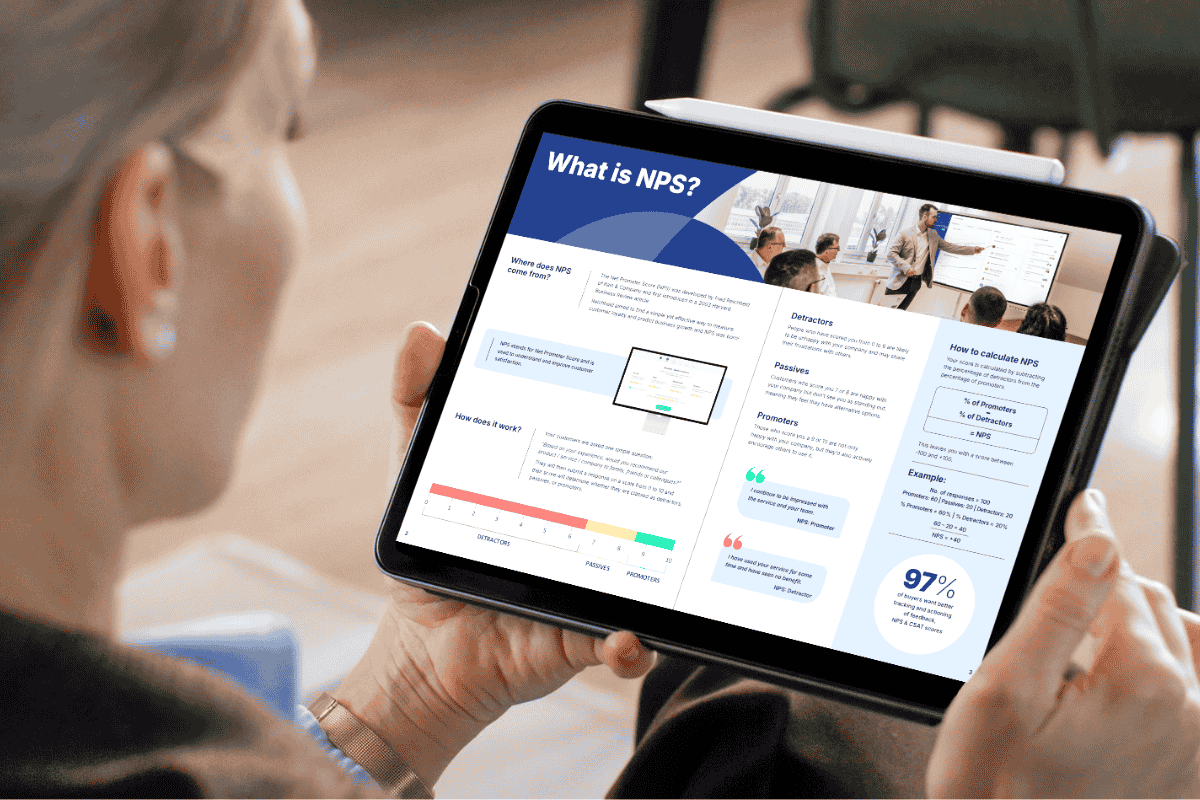
If there’s one change that has genuinely moved the needle at Go Inspire, it’s that we actively monitor Net Promoter Score (NPS), and we treat it as a leadership KPI, not just an account management metric.
Asking, consistently, how our customers are feeling about us, via Clientshare Pulse, has made us a better business. Not because it tells us we’re perfect, but because highlights what we didn’t know, both the positive and the uncomfortable.
Most leaders know the feeling. You get to renewal, you lose to a competitor, and only then do you hear about the frustrations that have been quietly building for months, sometimes years. You’re left thinking, why didn’t we talk about this earlier, when we could actually have done something about it?
Always-on feedback helps you stop finding out too late.
Where technology really helps is turning insight into action at scale
At Go Inspire, we’re on the same journey as everyone else, working out how to be more efficient and more effective while staying within a budget. In a commodity-driven space, the opportunity is in prediction and forecasting - spotting trends early enough to course correct and deploying resources wisely.
Without that visibility, you can end up running the same processes for every client, even though some need something different, and some don’t need the full, formal cadence at all.
The harder problem, and the exciting one, is triangulating multiple data points, spotting patterns across the organisation and joining the dots faster than a human brain can, consistently. That’s where I think AI has genuine potential; not as a gimmick, but as a practical partner to leadership decision-making.
Not ‘AI for AI’s sake’, but AI that helps you run the business better and, crucially, have better conversations, at the right time, with fewer surprises.

How Clientshare supports healthier client relationships
Clientshare has transformed how we monitor and measure sentiment across our customer base. It’s influenced behaviour and is now woven into our leadership rhythm. The question isn’t, ‘How do we think the account is going?’, it’s, ‘What’s the customer telling us, who’s new, and what’s changed since last time?’
Clientshare reinforces the habits that make relationships healthier, ensuring we are consistently listening, seeking visibility, following up and maintaining a shared view of what matters.
Three practical beliefs leaders should hold onto
If you’re trying to strengthen CX without losing the human element, these are the three things I’d encourage senior leaders to keep in mind:
-
Treat customer sentiment as business-critical data, not ‘soft’ feedback
Your financials tell you what happened. Sentiment helps explain why it happened, and what might come next.
-
Democratise insights and involve teams across the business
If you want action, the people who can act need regular, transparent visibility.
-
Use technology to reinforce human behaviours, not replace them
The goal is better conversations, at the right time, with fewer surprises.
Customer experience is still, and will always be, about people. Technology gives you a better chance of seeing the truth early, acting on it quickly and building the kind of relationships that last.