<img height="1" width="1" style="display:none;" alt="" src="https://px.ads.linkedin.com/collect/?pid=4135034&amp;fmt=gif">

Article

Why you need executive buy-in for your QBRs

B2B customers with strong executive engagement in Quarterly Business Reviews are 2.5 times more likely to renew, yet most account managers struggle to get senior stakeholders in the room.

Your Quarterly Business Review slides are polished and your performance metrics are flawless. You’ve prepared to cover every KPI from the past three months. Then you walk into the meeting and realise the most important people are missing. The procurement manager is there and the operations lead has dialled in, but the stakeholders who actually own the budget and decisions have sent their apologies.

This scenario is common and it represents a major missed opportunity. When your QBR becomes a reporting session for middle management, you lose the strategic positioning that keeps enterprise accounts sticky. The most successful account teams secure executive sponsorship on both sides of the table, transforming these sessions into successful partnership conversations.


Why executive attendance is a leading indicator of retention

The presence of senior stakeholders in your QBR isn't just a nice addition. According to McKinsey research, B2B customers with strong executive engagement are 2.5 times more likely to renew. This statistic should change how you approach your planning.

 

Picture13

Executive sponsors serve as your early warning system. When a Director or C-suite member stops attending your QBRs, it signals that your relationship has been downgraded to a transactional vendor status. By the time this happens, competitors could already be talking to your champion's boss.

When leaders participate, strategic goals become visible. Collaboration opportunities that never surface in day-to-day discussions emerge naturally when senior leaders share their business challenges. This alignment at the top ensures budget discussions move faster and strategic recommendations actually get implemented.


What C-suite actually wants from your QBRs

Enterprise leadership rarely cares about your KPIs in isolation. They operate at the level of business outcomes. Your job is to translate your operational metrics into the language of executive decision-making.

For example, instead of saying you achieved 99.9% uptime, frame it as protecting revenue during their peak trading period. Instead of reporting that customer satisfaction improved, explain how that improvement correlates with a reduction in escalations to their leadership team. The first approach reports what you did, while the second demonstrates the business impact.

campaign-creators-gMsnXqILjp4-unsplash-2


The leadership ask: Getting your own executives to the table

One of the most overlooked aspects of engagement is internal. Clients notice when your own Managing Director or Commercial Director is absent. It sends a message that the account might not be a priority.

Securing internal executive sponsorship requires making a business case to your own leadership. Present the opportunity cost of not showing up. A 90-minute meeting with a major account where renewal risk is emerging is a high-value investment. Brief your executives beforehand on the client's challenges and give them specific talking points that position your company as a forward-thinking partner.

Also consider which of your senior leaders would be best placed for the conversations you’re expecting to have. For example, if it’s going to be technical, bring in the CTO. Or if it’s going to be financial, bring in your CFO. 


Positioning the QBR as a risk mitigation tool

Enterprise account management is fundamentally about risk management. Executive-level QBRs provide the early warning system you need to spot when an account is drifting. The loss of an executive sponsor is a critical risk event that demands immediate attention.

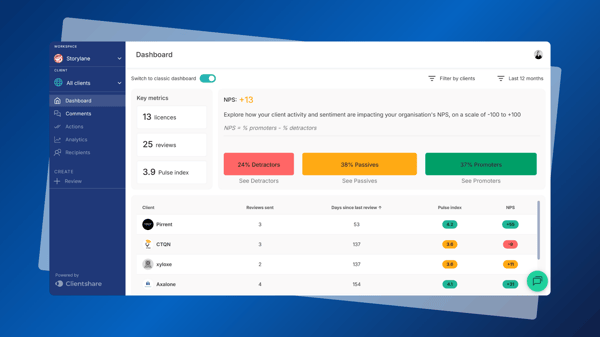
By tracking client sentiment and relationship health alongside operational metrics through tools like Clientshare Pulse, you gain visibility into the unseen factors that drive retention. Walking into a QBR with data on sentiment trends and emerging concerns transforms the session from a backwards-looking report into a forward-looking strategic meeting. This is exactly what executive sponsors need to justify their continued investment.
pulse-dashboard-product-image


Making the transition

Elevating your QBR requires a deliberate shift in approach. Apply the 80/20 rule. Spend 20% of your time on the performance summary and 80% on prospective strategic discussion. (You can read more about the 80/20 rule for QBRs here!

When you secure executive sponsorship, you move from being a vendor who delivers a service, to a strategic partner who contributes to business outcomes. This positioning protects you during budget reviews and competitive threats. 

Your operational excellence might get you in the door, but executive-level partnership is what keeps you at the table where renewal decisions are made.


Read more:

closing-the-loop-with-your-business-reviews-qbr-hub-thumbnail

nps-whitepaper-thumbnail (2)


 thought-leadership-article-dimitri-kyprianou-blog-thumbnail

Related resources

Article

5 tips on how to evidence value during your Quarterly Business Reviews (QBRs)
Read more

Article

Why you need to run Quarterly Business Reviews (QBRs)
Read more

Article

How Quarterly Business Reviews (QBRs) can help you reduce risk of churn
Read more

Article

Why you need executive buy-in for your QBRs

B2B customers with strong executive engagement in Quarterly Business Reviews are 2.5 times more likely to renew, yet most account managers struggle to get senior stakeholders in the room.

Your Quarterly Business Review slides are polished and your performance metrics are flawless. You’ve prepared to cover every KPI from the past three months. Then you walk into the meeting and realise the most important people are missing. The procurement manager is there and the operations lead has dialled in, but the stakeholders who actually own the budget and decisions have sent their apologies.

This scenario is common and it represents a major missed opportunity. When your QBR becomes a reporting session for middle management, you lose the strategic positioning that keeps enterprise accounts sticky. The most successful account teams secure executive sponsorship on both sides of the table, transforming these sessions into successful partnership conversations.


Why executive attendance is a leading indicator of retention

The presence of senior stakeholders in your QBR isn't just a nice addition. According to McKinsey research, B2B customers with strong executive engagement are 2.5 times more likely to renew. This statistic should change how you approach your planning.


Picture13

Executive sponsors serve as your early warning system. When a Director or C-suite member stops attending your QBRs, it signals that your relationship has been downgraded to a transactional vendor status. By the time this happens, competitors could already be talking to your champion's boss.

When leaders participate, strategic goals become visible. Collaboration opportunities that never surface in day-to-day discussions emerge naturally when senior leaders share their business challenges. This alignment at the top ensures budget discussions move faster and strategic recommendations actually get implemented.


What C-suite actually wants from your QBRs

Enterprise leadership rarely cares about your KPIs in isolation. They operate at the level of business outcomes. Your job is to translate your operational metrics into the language of executive decision-making.

For example, instead of saying you achieved 99.9% uptime, frame it as protecting revenue during their peak trading period. Instead of reporting that customer satisfaction improved, explain how that improvement correlates with a reduction in escalations to their leadership team. The first approach reports what you did, while the second demonstrates the business impact.

campaign-creators-gMsnXqILjp4-unsplash-2


The leadership ask: Getting your own executives to the table

One of the most overlooked aspects of engagement is internal. Clients notice when your own Managing Director or Commercial Director is absent. It sends a message that the account might not be a priority.

Securing internal executive sponsorship requires making a business case to your own leadership. Present the opportunity cost of not showing up. A 90-minute meeting with a major account where renewal risk is emerging is a high-value investment. Brief your executives beforehand on the client's challenges and give them specific talking points that position your company as a forward-thinking partner.

Also consider which of your senior leaders would be best placed for the conversations you’re expecting to have. For example, if it’s going to be technical, bring in the CTO. Or if it’s going to be financial, bring in your CFO. 


Positioning the QBR as a risk mitigation tool

Enterprise account management is fundamentally about risk management. Executive-level QBRs provide the early warning system you need to spot when an account is drifting. The loss of an executive sponsor is a critical risk event that demands immediate attention.

By tracking client sentiment and relationship health alongside operational metrics through tools like Clientshare Pulse, you gain visibility into the unseen factors that drive retention. Walking into a QBR with data on sentiment trends and emerging concerns transforms the session from a backwards-looking report into a forward-looking strategic meeting. This is exactly what executive sponsors need to justify their continued investment.

pulse-dashboard-product-image


Making the transition

Elevating your QBR requires a deliberate shift in approach. Apply the 80/20 rule. Spend 20% of your time on the performance summary and 80% on prospective strategic discussion. (You can read more about the 80/20 rule for QBRs here!

When you secure executive sponsorship, you move from being a vendor who delivers a service, to a strategic partner who contributes to business outcomes. This positioning protects you during budget reviews and competitive threats. 

Your operational excellence might get you in the door, but executive-level partnership is what keeps you at the table where renewal decisions are made.


Read more:

closing-the-loop-with-your-business-reviews-qbr-hub-thumbnail

nps-whitepaper-thumbnail (2)


 thought-leadership-article-dimitri-kyprianou-blog-thumbnail

Related resources

Article

5 reasons Quarterly Business Reviews (QBRs) are essential for B2B enterprises
Read more

Infographic

Five ways Quarterly Business Reviews impact retention and growth
Open now

Article

What to include in your Quarterly Business Reviews (QBRs)
Read more

Article

Why you need executive buy-in for your QBRs

B2B customers with strong executive engagement in Quarterly Business Reviews are 2.5 times more likely to renew, yet most account managers struggle to get senior stakeholders in the room.

Your Quarterly Business Review slides are polished and your performance metrics are flawless. You’ve prepared to cover every KPI from the past three months. Then you walk into the meeting and realise the most important people are missing. The procurement manager is there and the operations lead has dialled in, but the stakeholders who actually own the budget and decisions have sent their apologies.

This scenario is common and it represents a major missed opportunity. When your QBR becomes a reporting session for middle management, you lose the strategic positioning that keeps enterprise accounts sticky. The most successful account teams secure executive sponsorship on both sides of the table, transforming these sessions into successful partnership conversations.


Why executive attendance is a leading indicator of retention

The presence of senior stakeholders in your QBR isn't just a nice addition. According to McKinsey research, B2B customers with strong executive engagement are 2.5 times more likely to renew. This statistic should change how you approach your planning.


Picture13

Executive sponsors serve as your early warning system. When a Director or C-suite member stops attending your QBRs, it signals that your relationship has been downgraded to a transactional vendor status. By the time this happens, competitors could already be talking to your champion's boss.

When leaders participate, strategic goals become visible. Collaboration opportunities that never surface in day-to-day discussions emerge naturally when senior leaders share their business challenges. This alignment at the top ensures budget discussions move faster and strategic recommendations actually get implemented.


What C-suite actually wants from your QBRs

Enterprise leadership rarely cares about your KPIs in isolation. They operate at the level of business outcomes. Your job is to translate your operational metrics into the language of executive decision-making.

For example, instead of saying you achieved 99.9% uptime, frame it as protecting revenue during their peak trading period. Instead of reporting that customer satisfaction improved, explain how that improvement correlates with a reduction in escalations to their leadership team. The first approach reports what you did, while the second demonstrates the business impact.

campaign-creators-gMsnXqILjp4-unsplash-2


The leadership ask: Getting your own executives to the table

One of the most overlooked aspects of engagement is internal. Clients notice when your own Managing Director or Commercial Director is absent. It sends a message that the account might not be a priority.

Securing internal executive sponsorship requires making a business case to your own leadership. Present the opportunity cost of not showing up. A 90-minute meeting with a major account where renewal risk is emerging is a high-value investment. Brief your executives beforehand on the client's challenges and give them specific talking points that position your company as a forward-thinking partner.

Also consider which of your senior leaders would be best placed for the conversations you’re expecting to have. For example, if it’s going to be technical, bring in the CTO. Or if it’s going to be financial, bring in your CFO. 


Positioning the QBR as a risk mitigation tool

Enterprise account management is fundamentally about risk management. Executive-level QBRs provide the early warning system you need to spot when an account is drifting. The loss of an executive sponsor is a critical risk event that demands immediate attention.

By tracking client sentiment and relationship health alongside operational metrics through tools like Clientshare Pulse, you gain visibility into the unseen factors that drive retention. Walking into a QBR with data on sentiment trends and emerging concerns transforms the session from a backwards-looking report into a forward-looking strategic meeting. This is exactly what executive sponsors need to justify their continued investment.

pulse-dashboard-product-image


Making the transition

Elevating your QBR requires a deliberate shift in approach. Apply the 80/20 rule. Spend 20% of your time on the performance summary and 80% on prospective strategic discussion. (You can read more about the 80/20 rule for QBRs here!

When you secure executive sponsorship, you move from being a vendor who delivers a service, to a strategic partner who contributes to business outcomes. This positioning protects you during budget reviews and competitive threats. 

Your operational excellence might get you in the door, but executive-level partnership is what keeps you at the table where renewal decisions are made.


Read more:

closing-the-loop-with-your-business-reviews-qbr-hub-thumbnail

nps-whitepaper-thumbnail (2)


 thought-leadership-article-dimitri-kyprianou-blog-thumbnail

Related resources

Article

5 reasons Quarterly Business Reviews (QBRs) are essential for B2B enterprises
Read more

Infographic

Five ways Quarterly Business Reviews impact retention and growth
Open now

Article

What to include in your Quarterly Business Reviews (QBRs)
Read more

Article

Why you need executive buy-in for your QBRs

B2B customers with strong executive engagement in Quarterly Business Reviews are 2.5 times more likely to renew, yet most account managers struggle to get senior stakeholders in the room.

Your Quarterly Business Review slides are polished and your performance metrics are flawless. You’ve prepared to cover every KPI from the past three months. Then you walk into the meeting and realise the most important people are missing. The procurement manager is there and the operations lead has dialled in, but the stakeholders who actually own the budget and decisions have sent their apologies.

This scenario is common and it represents a major missed opportunity. When your QBR becomes a reporting session for middle management, you lose the strategic positioning that keeps enterprise accounts sticky. The most successful account teams secure executive sponsorship on both sides of the table, transforming these sessions into successful partnership conversations.


Why executive attendance is a leading indicator of retention

The presence of senior stakeholders in your QBR isn't just a nice addition. According to McKinsey research, B2B customers with strong executive engagement are 2.5 times more likely to renew. This statistic should change how you approach your planning.


Picture13

Executive sponsors serve as your early warning system. When a Director or C-suite member stops attending your QBRs, it signals that your relationship has been downgraded to a transactional vendor status. By the time this happens, competitors could already be talking to your champion's boss.

When leaders participate, strategic goals become visible. Collaboration opportunities that never surface in day-to-day discussions emerge naturally when senior leaders share their business challenges. This alignment at the top ensures budget discussions move faster and strategic recommendations actually get implemented.


What C-suite actually wants from your QBRs

Enterprise leadership rarely cares about your KPIs in isolation. They operate at the level of business outcomes. Your job is to translate your operational metrics into the language of executive decision-making.

For example, instead of saying you achieved 99.9% uptime, frame it as protecting revenue during their peak trading period. Instead of reporting that customer satisfaction improved, explain how that improvement correlates with a reduction in escalations to their leadership team. The first approach reports what you did, while the second demonstrates the business impact.

campaign-creators-gMsnXqILjp4-unsplash-2


The leadership ask: Getting your own executives to the table

One of the most overlooked aspects of engagement is internal. Clients notice when your own Managing Director or Commercial Director is absent. It sends a message that the account might not be a priority.

Securing internal executive sponsorship requires making a business case to your own leadership. Present the opportunity cost of not showing up. A 90-minute meeting with a major account where renewal risk is emerging is a high-value investment. Brief your executives beforehand on the client's challenges and give them specific talking points that position your company as a forward-thinking partner.

Also consider which of your senior leaders would be best placed for the conversations you’re expecting to have. For example, if it’s going to be technical, bring in the CTO. Or if it’s going to be financial, bring in your CFO. 


Positioning the QBR as a risk mitigation tool

Enterprise account management is fundamentally about risk management. Executive-level QBRs provide the early warning system you need to spot when an account is drifting. The loss of an executive sponsor is a critical risk event that demands immediate attention.

By tracking client sentiment and relationship health alongside operational metrics through tools like Clientshare Pulse, you gain visibility into the unseen factors that drive retention. Walking into a QBR with data on sentiment trends and emerging concerns transforms the session from a backwards-looking report into a forward-looking strategic meeting. This is exactly what executive sponsors need to justify their continued investment.

pulse-dashboard-product-image


Making the transition

Elevating your QBR requires a deliberate shift in approach. Apply the 80/20 rule. Spend 20% of your time on the performance summary and 80% on prospective strategic discussion. (You can read more about the 80/20 rule for QBRs here!

When you secure executive sponsorship, you move from being a vendor who delivers a service, to a strategic partner who contributes to business outcomes. This positioning protects you during budget reviews and competitive threats. 

Your operational excellence might get you in the door, but executive-level partnership is what keeps you at the table where renewal decisions are made.


Read more:

closing-the-loop-with-your-business-reviews-qbr-hub-thumbnail

nps-whitepaper-thumbnail (2)


 thought-leadership-article-dimitri-kyprianou-blog-thumbnail

Related resources

Article

5 reasons Quarterly Business Reviews (QBRs) are essential for B2B enterprises
Read more

Infographic

Five ways Quarterly Business Reviews impact retention and growth
Open now

Article

What to include in your Quarterly Business Reviews (QBRs)
Read more

Article

Why you need executive buy-in for your QBRs

B2B customers with strong executive engagement in Quarterly Business Reviews are 2.5 times more likely to renew, yet most account managers struggle to get senior stakeholders in the room.

Your Quarterly Business Review slides are polished and your performance metrics are flawless. You’ve prepared to cover every KPI from the past three months. Then you walk into the meeting and realise the most important people are missing. The procurement manager is there and the operations lead has dialled in, but the stakeholders who actually own the budget and decisions have sent their apologies.

This scenario is common and it represents a major missed opportunity. When your QBR becomes a reporting session for middle management, you lose the strategic positioning that keeps enterprise accounts sticky. The most successful account teams secure executive sponsorship on both sides of the table, transforming these sessions into successful partnership conversations.


Why executive attendance is a leading indicator of retention

The presence of senior stakeholders in your QBR isn't just a nice addition. According to McKinsey research, B2B customers with strong executive engagement are 2.5 times more likely to renew. This statistic should change how you approach your planning.


Picture13

Executive sponsors serve as your early warning system. When a Director or C-suite member stops attending your QBRs, it signals that your relationship has been downgraded to a transactional vendor status. By the time this happens, competitors could already be talking to your champion's boss.

When leaders participate, strategic goals become visible. Collaboration opportunities that never surface in day-to-day discussions emerge naturally when senior leaders share their business challenges. This alignment at the top ensures budget discussions move faster and strategic recommendations actually get implemented.


What C-suite actually wants from your QBRs

Enterprise leadership rarely cares about your KPIs in isolation. They operate at the level of business outcomes. Your job is to translate your operational metrics into the language of executive decision-making.

For example, instead of saying you achieved 99.9% uptime, frame it as protecting revenue during their peak trading period. Instead of reporting that customer satisfaction improved, explain how that improvement correlates with a reduction in escalations to their leadership team. The first approach reports what you did, while the second demonstrates the business impact.

campaign-creators-gMsnXqILjp4-unsplash-2


The leadership ask: Getting your own executives to the table

One of the most overlooked aspects of engagement is internal. Clients notice when your own Managing Director or Commercial Director is absent. It sends a message that the account might not be a priority.

Securing internal executive sponsorship requires making a business case to your own leadership. Present the opportunity cost of not showing up. A 90-minute meeting with a major account where renewal risk is emerging is a high-value investment. Brief your executives beforehand on the client's challenges and give them specific talking points that position your company as a forward-thinking partner.

Also consider which of your senior leaders would be best placed for the conversations you’re expecting to have. For example, if it’s going to be technical, bring in the CTO. Or if it’s going to be financial, bring in your CFO. 


Positioning the QBR as a risk mitigation tool

Enterprise account management is fundamentally about risk management. Executive-level QBRs provide the early warning system you need to spot when an account is drifting. The loss of an executive sponsor is a critical risk event that demands immediate attention.

By tracking client sentiment and relationship health alongside operational metrics through tools like Clientshare Pulse, you gain visibility into the unseen factors that drive retention. Walking into a QBR with data on sentiment trends and emerging concerns transforms the session from a backwards-looking report into a forward-looking strategic meeting. This is exactly what executive sponsors need to justify their continued investment.

pulse-dashboard-product-image


Making the transition

Elevating your QBR requires a deliberate shift in approach. Apply the 80/20 rule. Spend 20% of your time on the performance summary and 80% on prospective strategic discussion. (You can read more about the 80/20 rule for QBRs here!

When you secure executive sponsorship, you move from being a vendor who delivers a service, to a strategic partner who contributes to business outcomes. This positioning protects you during budget reviews and competitive threats. 

Your operational excellence might get you in the door, but executive-level partnership is what keeps you at the table where renewal decisions are made.


Read more:

closing-the-loop-with-your-business-reviews-qbr-hub-thumbnail

nps-whitepaper-thumbnail (2)


 thought-leadership-article-dimitri-kyprianou-blog-thumbnail

Related resources

Article

5 reasons Quarterly Business Reviews (QBRs) are essential for B2B enterprises
Read more

Infographic

Five ways Quarterly Business Reviews impact retention and growth
Open now

Article

What to include in your Quarterly Business Reviews (QBRs)
Read more

Article

Why you need executive buy-in for your QBRs

B2B customers with strong executive engagement in Quarterly Business Reviews are 2.5 times more likely to renew, yet most account managers struggle to get senior stakeholders in the room.

Your Quarterly Business Review slides are polished and your performance metrics are flawless. You’ve prepared to cover every KPI from the past three months. Then you walk into the meeting and realise the most important people are missing. The procurement manager is there and the operations lead has dialled in, but the stakeholders who actually own the budget and decisions have sent their apologies.

This scenario is common and it represents a major missed opportunity. When your QBR becomes a reporting session for middle management, you lose the strategic positioning that keeps enterprise accounts sticky. The most successful account teams secure executive sponsorship on both sides of the table, transforming these sessions into successful partnership conversations.


Why executive attendance is a leading indicator of retention

The presence of senior stakeholders in your QBR isn't just a nice addition. According to McKinsey research, B2B customers with strong executive engagement are 2.5 times more likely to renew. This statistic should change how you approach your planning.


Picture13

Executive sponsors serve as your early warning system. When a Director or C-suite member stops attending your QBRs, it signals that your relationship has been downgraded to a transactional vendor status. By the time this happens, competitors could already be talking to your champion's boss.

When leaders participate, strategic goals become visible. Collaboration opportunities that never surface in day-to-day discussions emerge naturally when senior leaders share their business challenges. This alignment at the top ensures budget discussions move faster and strategic recommendations actually get implemented.


What C-suite actually wants from your QBRs

Enterprise leadership rarely cares about your KPIs in isolation. They operate at the level of business outcomes. Your job is to translate your operational metrics into the language of executive decision-making.

For example, instead of saying you achieved 99.9% uptime, frame it as protecting revenue during their peak trading period. Instead of reporting that customer satisfaction improved, explain how that improvement correlates with a reduction in escalations to their leadership team. The first approach reports what you did, while the second demonstrates the business impact.

campaign-creators-gMsnXqILjp4-unsplash-2


The leadership ask: Getting your own executives to the table

One of the most overlooked aspects of engagement is internal. Clients notice when your own Managing Director or Commercial Director is absent. It sends a message that the account might not be a priority.

Securing internal executive sponsorship requires making a business case to your own leadership. Present the opportunity cost of not showing up. A 90-minute meeting with a major account where renewal risk is emerging is a high-value investment. Brief your executives beforehand on the client's challenges and give them specific talking points that position your company as a forward-thinking partner.

Also consider which of your senior leaders would be best placed for the conversations you’re expecting to have. For example, if it’s going to be technical, bring in the CTO. Or if it’s going to be financial, bring in your CFO. 


Positioning the QBR as a risk mitigation tool

Enterprise account management is fundamentally about risk management. Executive-level QBRs provide the early warning system you need to spot when an account is drifting. The loss of an executive sponsor is a critical risk event that demands immediate attention.

By tracking client sentiment and relationship health alongside operational metrics through tools like Clientshare Pulse, you gain visibility into the unseen factors that drive retention. Walking into a QBR with data on sentiment trends and emerging concerns transforms the session from a backwards-looking report into a forward-looking strategic meeting. This is exactly what executive sponsors need to justify their continued investment.

pulse-dashboard-product-image


Making the transition

Elevating your QBR requires a deliberate shift in approach. Apply the 80/20 rule. Spend 20% of your time on the performance summary and 80% on prospective strategic discussion. (You can read more about the 80/20 rule for QBRs here!

When you secure executive sponsorship, you move from being a vendor who delivers a service, to a strategic partner who contributes to business outcomes. This positioning protects you during budget reviews and competitive threats. 

Your operational excellence might get you in the door, but executive-level partnership is what keeps you at the table where renewal decisions are made.


Read more:

closing-the-loop-with-your-business-reviews-qbr-hub-thumbnail

nps-whitepaper-thumbnail (2)


 thought-leadership-article-dimitri-kyprianou-blog-thumbnail

Related resources

Article

5 reasons Quarterly Business Reviews (QBRs) are essential for B2B enterprises
Read more

Infographic

Five ways Quarterly Business Reviews impact retention and growth
Open now

Article

What to include in your Quarterly Business Reviews (QBRs)
Read more

Article

Why you need executive buy-in for your QBRs

B2B customers with strong executive engagement in Quarterly Business Reviews are 2.5 times more likely to renew, yet most account managers struggle to get senior stakeholders in the room.

Your Quarterly Business Review slides are polished and your performance metrics are flawless. You’ve prepared to cover every KPI from the past three months. Then you walk into the meeting and realise the most important people are missing. The procurement manager is there and the operations lead has dialled in, but the stakeholders who actually own the budget and decisions have sent their apologies.

This scenario is common and it represents a major missed opportunity. When your QBR becomes a reporting session for middle management, you lose the strategic positioning that keeps enterprise accounts sticky. The most successful account teams secure executive sponsorship on both sides of the table, transforming these sessions into successful partnership conversations.


Why executive attendance is a leading indicator of retention

The presence of senior stakeholders in your QBR isn't just a nice addition. According to McKinsey research, B2B customers with strong executive engagement are 2.5 times more likely to renew. This statistic should change how you approach your planning.


Picture13

Executive sponsors serve as your early warning system. When a Director or C-suite member stops attending your QBRs, it signals that your relationship has been downgraded to a transactional vendor status. By the time this happens, competitors could already be talking to your champion's boss.

When leaders participate, strategic goals become visible. Collaboration opportunities that never surface in day-to-day discussions emerge naturally when senior leaders share their business challenges. This alignment at the top ensures budget discussions move faster and strategic recommendations actually get implemented.


What C-suite actually wants from your QBRs

Enterprise leadership rarely cares about your KPIs in isolation. They operate at the level of business outcomes. Your job is to translate your operational metrics into the language of executive decision-making.

For example, instead of saying you achieved 99.9% uptime, frame it as protecting revenue during their peak trading period. Instead of reporting that customer satisfaction improved, explain how that improvement correlates with a reduction in escalations to their leadership team. The first approach reports what you did, while the second demonstrates the business impact.

campaign-creators-gMsnXqILjp4-unsplash-2


The leadership ask: Getting your own executives to the table

One of the most overlooked aspects of engagement is internal. Clients notice when your own Managing Director or Commercial Director is absent. It sends a message that the account might not be a priority.

Securing internal executive sponsorship requires making a business case to your own leadership. Present the opportunity cost of not showing up. A 90-minute meeting with a major account where renewal risk is emerging is a high-value investment. Brief your executives beforehand on the client's challenges and give them specific talking points that position your company as a forward-thinking partner.

Also consider which of your senior leaders would be best placed for the conversations you’re expecting to have. For example, if it’s going to be technical, bring in the CTO. Or if it’s going to be financial, bring in your CFO. 


Positioning the QBR as a risk mitigation tool

Enterprise account management is fundamentally about risk management. Executive-level QBRs provide the early warning system you need to spot when an account is drifting. The loss of an executive sponsor is a critical risk event that demands immediate attention.

By tracking client sentiment and relationship health alongside operational metrics through tools like Clientshare Pulse, you gain visibility into the unseen factors that drive retention. Walking into a QBR with data on sentiment trends and emerging concerns transforms the session from a backwards-looking report into a forward-looking strategic meeting. This is exactly what executive sponsors need to justify their continued investment.

pulse-dashboard-product-image


Making the transition

Elevating your QBR requires a deliberate shift in approach. Apply the 80/20 rule. Spend 20% of your time on the performance summary and 80% on prospective strategic discussion. (You can read more about the 80/20 rule for QBRs here!

When you secure executive sponsorship, you move from being a vendor who delivers a service, to a strategic partner who contributes to business outcomes. This positioning protects you during budget reviews and competitive threats. 

Your operational excellence might get you in the door, but executive-level partnership is what keeps you at the table where renewal decisions are made.


Read more:

closing-the-loop-with-your-business-reviews-qbr-hub-thumbnail

nps-whitepaper-thumbnail (2)


 thought-leadership-article-dimitri-kyprianou-blog-thumbnail

Related resources

Article

5 reasons Quarterly Business Reviews (QBRs) are essential for B2B enterprises
Read more

Infographic

Five ways Quarterly Business Reviews impact retention and growth
Open now

Article

What to include in your Quarterly Business Reviews (QBRs)
Read more

Article

Why you need executive buy-in for your QBRs

B2B customers with strong executive engagement in Quarterly Business Reviews are 2.5 times more likely to renew, yet most account managers struggle to get senior stakeholders in the room.

Your Quarterly Business Review slides are polished and your performance metrics are flawless. You’ve prepared to cover every KPI from the past three months. Then you walk into the meeting and realise the most important people are missing. The procurement manager is there and the operations lead has dialled in, but the stakeholders who actually own the budget and decisions have sent their apologies.

This scenario is common and it represents a major missed opportunity. When your QBR becomes a reporting session for middle management, you lose the strategic positioning that keeps enterprise accounts sticky. The most successful account teams secure executive sponsorship on both sides of the table, transforming these sessions into successful partnership conversations.


Why executive attendance is a leading indicator of retention

The presence of senior stakeholders in your QBR isn't just a nice addition. According to McKinsey research, B2B customers with strong executive engagement are 2.5 times more likely to renew. This statistic should change how you approach your planning.


Picture13

Executive sponsors serve as your early warning system. When a Director or C-suite member stops attending your QBRs, it signals that your relationship has been downgraded to a transactional vendor status. By the time this happens, competitors could already be talking to your champion's boss.

When leaders participate, strategic goals become visible. Collaboration opportunities that never surface in day-to-day discussions emerge naturally when senior leaders share their business challenges. This alignment at the top ensures budget discussions move faster and strategic recommendations actually get implemented.


What C-suite actually wants from your QBRs

Enterprise leadership rarely cares about your KPIs in isolation. They operate at the level of business outcomes. Your job is to translate your operational metrics into the language of executive decision-making.

For example, instead of saying you achieved 99.9% uptime, frame it as protecting revenue during their peak trading period. Instead of reporting that customer satisfaction improved, explain how that improvement correlates with a reduction in escalations to their leadership team. The first approach reports what you did, while the second demonstrates the business impact.

campaign-creators-gMsnXqILjp4-unsplash-2


The leadership ask: Getting your own executives to the table

One of the most overlooked aspects of engagement is internal. Clients notice when your own Managing Director or Commercial Director is absent. It sends a message that the account might not be a priority.

Securing internal executive sponsorship requires making a business case to your own leadership. Present the opportunity cost of not showing up. A 90-minute meeting with a major account where renewal risk is emerging is a high-value investment. Brief your executives beforehand on the client's challenges and give them specific talking points that position your company as a forward-thinking partner.

Also consider which of your senior leaders would be best placed for the conversations you’re expecting to have. For example, if it’s going to be technical, bring in the CTO. Or if it’s going to be financial, bring in your CFO. 


Positioning the QBR as a risk mitigation tool

Enterprise account management is fundamentally about risk management. Executive-level QBRs provide the early warning system you need to spot when an account is drifting. The loss of an executive sponsor is a critical risk event that demands immediate attention.

By tracking client sentiment and relationship health alongside operational metrics through tools like Clientshare Pulse, you gain visibility into the unseen factors that drive retention. Walking into a QBR with data on sentiment trends and emerging concerns transforms the session from a backwards-looking report into a forward-looking strategic meeting. This is exactly what executive sponsors need to justify their continued investment.

pulse-dashboard-product-image


Making the transition

Elevating your QBR requires a deliberate shift in approach. Apply the 80/20 rule. Spend 20% of your time on the performance summary and 80% on prospective strategic discussion. (You can read more about the 80/20 rule for QBRs here!

When you secure executive sponsorship, you move from being a vendor who delivers a service, to a strategic partner who contributes to business outcomes. This positioning protects you during budget reviews and competitive threats. 

Your operational excellence might get you in the door, but executive-level partnership is what keeps you at the table where renewal decisions are made.


Read more:

closing-the-loop-with-your-business-reviews-qbr-hub-thumbnail

nps-whitepaper-thumbnail (2)


 thought-leadership-article-dimitri-kyprianou-blog-thumbnail

Related resources

Article

How Quarterly Business Reviews (QBRs) can help you reduce risk of churn
Read more

Infographic

Five ways Quarterly Business Reviews impact retention and growth
Open now

Article

What to include in your Quarterly Business Reviews (QBRs)
Read more

Article

Why you need executive buy-in for your QBRs

B2B customers with strong executive engagement in Quarterly Business Reviews are 2.5 times more likely to renew, yet most account managers struggle to get senior stakeholders in the room.

Your Quarterly Business Review slides are polished and your performance metrics are flawless. You’ve prepared to cover every KPI from the past three months. Then you walk into the meeting and realise the most important people are missing. The procurement manager is there and the operations lead has dialled in, but the stakeholders who actually own the budget and decisions have sent their apologies.

This scenario is common and it represents a major missed opportunity. When your QBR becomes a reporting session for middle management, you lose the strategic positioning that keeps enterprise accounts sticky. The most successful account teams secure executive sponsorship on both sides of the table, transforming these sessions into successful partnership conversations.


Why executive attendance is a leading indicator of retention

The presence of senior stakeholders in your QBR isn't just a nice addition. According to McKinsey research, B2B customers with strong executive engagement are 2.5 times more likely to renew. This statistic should change how you approach your planning.


Picture13

Executive sponsors serve as your early warning system. When a Director or C-suite member stops attending your QBRs, it signals that your relationship has been downgraded to a transactional vendor status. By the time this happens, competitors could already be talking to your champion's boss.

When leaders participate, strategic goals become visible. Collaboration opportunities that never surface in day-to-day discussions emerge naturally when senior leaders share their business challenges. This alignment at the top ensures budget discussions move faster and strategic recommendations actually get implemented.


What C-suite actually wants from your QBRs

Enterprise leadership rarely cares about your KPIs in isolation. They operate at the level of business outcomes. Your job is to translate your operational metrics into the language of executive decision-making.

For example, instead of saying you achieved 99.9% uptime, frame it as protecting revenue during their peak trading period. Instead of reporting that customer satisfaction improved, explain how that improvement correlates with a reduction in escalations to their leadership team. The first approach reports what you did, while the second demonstrates the business impact.

campaign-creators-gMsnXqILjp4-unsplash-2


The leadership ask: Getting your own executives to the table

One of the most overlooked aspects of engagement is internal. Clients notice when your own Managing Director or Commercial Director is absent. It sends a message that the account might not be a priority.

Securing internal executive sponsorship requires making a business case to your own leadership. Present the opportunity cost of not showing up. A 90-minute meeting with a major account where renewal risk is emerging is a high-value investment. Brief your executives beforehand on the client's challenges and give them specific talking points that position your company as a forward-thinking partner.

Also consider which of your senior leaders would be best placed for the conversations you’re expecting to have. For example, if it’s going to be technical, bring in the CTO. Or if it’s going to be financial, bring in your CFO. 


Positioning the QBR as a risk mitigation tool

Enterprise account management is fundamentally about risk management. Executive-level QBRs provide the early warning system you need to spot when an account is drifting. The loss of an executive sponsor is a critical risk event that demands immediate attention.

By tracking client sentiment and relationship health alongside operational metrics through tools like Clientshare Pulse, you gain visibility into the unseen factors that drive retention. Walking into a QBR with data on sentiment trends and emerging concerns transforms the session from a backwards-looking report into a forward-looking strategic meeting. This is exactly what executive sponsors need to justify their continued investment.

pulse-dashboard-product-image


Making the transition

Elevating your QBR requires a deliberate shift in approach. Apply the 80/20 rule. Spend 20% of your time on the performance summary and 80% on prospective strategic discussion. (You can read more about the 80/20 rule for QBRs here!

When you secure executive sponsorship, you move from being a vendor who delivers a service, to a strategic partner who contributes to business outcomes. This positioning protects you during budget reviews and competitive threats. 

Your operational excellence might get you in the door, but executive-level partnership is what keeps you at the table where renewal decisions are made.


Read more:

closing-the-loop-with-your-business-reviews-qbr-hub-thumbnail

nps-whitepaper-thumbnail (2)


 thought-leadership-article-dimitri-kyprianou-blog-thumbnail

Related resources

Article

How Quarterly Business Reviews (QBRs) can help you reduce risk of churn
Read more

Infographic

Five ways Quarterly Business Reviews impact retention and growth
Open now

Article

What to include in your Quarterly Business Reviews (QBRs)
Read more

Article

Why you need executive buy-in for your QBRs

B2B customers with strong executive engagement in Quarterly Business Reviews are 2.5 times more likely to renew, yet most account managers struggle to get senior stakeholders in the room.

Your Quarterly Business Review slides are polished and your performance metrics are flawless. You’ve prepared to cover every KPI from the past three months. Then you walk into the meeting and realise the most important people are missing. The procurement manager is there and the operations lead has dialled in, but the stakeholders who actually own the budget and decisions have sent their apologies.

This scenario is common and it represents a major missed opportunity. When your QBR becomes a reporting session for middle management, you lose the strategic positioning that keeps enterprise accounts sticky. The most successful account teams secure executive sponsorship on both sides of the table, transforming these sessions into successful partnership conversations.


Why executive attendance is a leading indicator of retention

The presence of senior stakeholders in your QBR isn't just a nice addition. According to McKinsey research, B2B customers with strong executive engagement are 2.5 times more likely to renew. This statistic should change how you approach your planning.


Picture13

Executive sponsors serve as your early warning system. When a Director or C-suite member stops attending your QBRs, it signals that your relationship has been downgraded to a transactional vendor status. By the time this happens, competitors could already be talking to your champion's boss.

When leaders participate, strategic goals become visible. Collaboration opportunities that never surface in day-to-day discussions emerge naturally when senior leaders share their business challenges. This alignment at the top ensures budget discussions move faster and strategic recommendations actually get implemented.


What C-suite actually wants from your QBRs

Enterprise leadership rarely cares about your KPIs in isolation. They operate at the level of business outcomes. Your job is to translate your operational metrics into the language of executive decision-making.

For example, instead of saying you achieved 99.9% uptime, frame it as protecting revenue during their peak trading period. Instead of reporting that customer satisfaction improved, explain how that improvement correlates with a reduction in escalations to their leadership team. The first approach reports what you did, while the second demonstrates the business impact.

campaign-creators-gMsnXqILjp4-unsplash-2


The leadership ask: Getting your own executives to the table

One of the most overlooked aspects of engagement is internal. Clients notice when your own Managing Director or Commercial Director is absent. It sends a message that the account might not be a priority.

Securing internal executive sponsorship requires making a business case to your own leadership. Present the opportunity cost of not showing up. A 90-minute meeting with a major account where renewal risk is emerging is a high-value investment. Brief your executives beforehand on the client's challenges and give them specific talking points that position your company as a forward-thinking partner.

Also consider which of your senior leaders would be best placed for the conversations you’re expecting to have. For example, if it’s going to be technical, bring in the CTO. Or if it’s going to be financial, bring in your CFO. 


Positioning the QBR as a risk mitigation tool

Enterprise account management is fundamentally about risk management. Executive-level QBRs provide the early warning system you need to spot when an account is drifting. The loss of an executive sponsor is a critical risk event that demands immediate attention.

By tracking client sentiment and relationship health alongside operational metrics through tools like Clientshare Pulse, you gain visibility into the unseen factors that drive retention. Walking into a QBR with data on sentiment trends and emerging concerns transforms the session from a backwards-looking report into a forward-looking strategic meeting. This is exactly what executive sponsors need to justify their continued investment.

pulse-dashboard-product-image


Making the transition

Elevating your QBR requires a deliberate shift in approach. Apply the 80/20 rule. Spend 20% of your time on the performance summary and 80% on prospective strategic discussion. (You can read more about the 80/20 rule for QBRs here!

When you secure executive sponsorship, you move from being a vendor who delivers a service, to a strategic partner who contributes to business outcomes. This positioning protects you during budget reviews and competitive threats. 

Your operational excellence might get you in the door, but executive-level partnership is what keeps you at the table where renewal decisions are made.


Read more:

closing-the-loop-with-your-business-reviews-qbr-hub-thumbnail

nps-whitepaper-thumbnail (2)


 thought-leadership-article-dimitri-kyprianou-blog-thumbnail

Related resources

Article

How Quarterly Business Reviews (QBRs) can help you reduce risk of churn
Read more

Infographic

Five ways Quarterly Business Reviews impact retention and growth
Open now

Article

What to include in your Quarterly Business Reviews (QBRs)
Read more

Article

Why you need executive buy-in for your QBRs

B2B customers with strong executive engagement in Quarterly Business Reviews are 2.5 times more likely to renew, yet most account managers struggle to get senior stakeholders in the room.

Your Quarterly Business Review slides are polished and your performance metrics are flawless. You’ve prepared to cover every KPI from the past three months. Then you walk into the meeting and realise the most important people are missing. The procurement manager is there and the operations lead has dialled in, but the stakeholders who actually own the budget and decisions have sent their apologies.

This scenario is common and it represents a major missed opportunity. When your QBR becomes a reporting session for middle management, you lose the strategic positioning that keeps enterprise accounts sticky. The most successful account teams secure executive sponsorship on both sides of the table, transforming these sessions into successful partnership conversations.


Why executive attendance is a leading indicator of retention

The presence of senior stakeholders in your QBR isn't just a nice addition. According to McKinsey research, B2B customers with strong executive engagement are 2.5 times more likely to renew. This statistic should change how you approach your planning.


Picture13

Executive sponsors serve as your early warning system. When a Director or C-suite member stops attending your QBRs, it signals that your relationship has been downgraded to a transactional vendor status. By the time this happens, competitors could already be talking to your champion's boss.

When leaders participate, strategic goals become visible. Collaboration opportunities that never surface in day-to-day discussions emerge naturally when senior leaders share their business challenges. This alignment at the top ensures budget discussions move faster and strategic recommendations actually get implemented.


What C-suite actually wants from your QBRs

Enterprise leadership rarely cares about your KPIs in isolation. They operate at the level of business outcomes. Your job is to translate your operational metrics into the language of executive decision-making.

For example, instead of saying you achieved 99.9% uptime, frame it as protecting revenue during their peak trading period. Instead of reporting that customer satisfaction improved, explain how that improvement correlates with a reduction in escalations to their leadership team. The first approach reports what you did, while the second demonstrates the business impact.

campaign-creators-gMsnXqILjp4-unsplash-2


The leadership ask: Getting your own executives to the table

One of the most overlooked aspects of engagement is internal. Clients notice when your own Managing Director or Commercial Director is absent. It sends a message that the account might not be a priority.

Securing internal executive sponsorship requires making a business case to your own leadership. Present the opportunity cost of not showing up. A 90-minute meeting with a major account where renewal risk is emerging is a high-value investment. Brief your executives beforehand on the client's challenges and give them specific talking points that position your company as a forward-thinking partner.

Also consider which of your senior leaders would be best placed for the conversations you’re expecting to have. For example, if it’s going to be technical, bring in the CTO. Or if it’s going to be financial, bring in your CFO. 


Positioning the QBR as a risk mitigation tool

Enterprise account management is fundamentally about risk management. Executive-level QBRs provide the early warning system you need to spot when an account is drifting. The loss of an executive sponsor is a critical risk event that demands immediate attention.

By tracking client sentiment and relationship health alongside operational metrics through tools like Clientshare Pulse, you gain visibility into the unseen factors that drive retention. Walking into a QBR with data on sentiment trends and emerging concerns transforms the session from a backwards-looking report into a forward-looking strategic meeting. This is exactly what executive sponsors need to justify their continued investment.

pulse-dashboard-product-image


Making the transition

Elevating your QBR requires a deliberate shift in approach. Apply the 80/20 rule. Spend 20% of your time on the performance summary and 80% on prospective strategic discussion. (You can read more about the 80/20 rule for QBRs here!

When you secure executive sponsorship, you move from being a vendor who delivers a service, to a strategic partner who contributes to business outcomes. This positioning protects you during budget reviews and competitive threats. 

Your operational excellence might get you in the door, but executive-level partnership is what keeps you at the table where renewal decisions are made.


Read more:

closing-the-loop-with-your-business-reviews-qbr-hub-thumbnail

nps-whitepaper-thumbnail (2)


 thought-leadership-article-dimitri-kyprianou-blog-thumbnail

Related resources

Article

5 reasons Quarterly Business Reviews (QBRs) are essential for B2B enterprises
Read more

Infographic

Five ways Quarterly Business Reviews impact retention and growth
Open now

Article

What to include in your Quarterly Business Reviews (QBRs)
Read more

Article

Why you need executive buy-in for your QBRs

B2B customers with strong executive engagement in Quarterly Business Reviews are 2.5 times more likely to renew, yet most account managers struggle to get senior stakeholders in the room.

Your Quarterly Business Review slides are polished and your performance metrics are flawless. You’ve prepared to cover every KPI from the past three months. Then you walk into the meeting and realise the most important people are missing. The procurement manager is there and the operations lead has dialled in, but the stakeholders who actually own the budget and decisions have sent their apologies.

This scenario is common and it represents a major missed opportunity. When your QBR becomes a reporting session for middle management, you lose the strategic positioning that keeps enterprise accounts sticky. The most successful account teams secure executive sponsorship on both sides of the table, transforming these sessions into successful partnership conversations.


Why executive attendance is a leading indicator of retention

The presence of senior stakeholders in your QBR isn't just a nice addition. According to McKinsey research, B2B customers with strong executive engagement are 2.5 times more likely to renew. This statistic should change how you approach your planning.


Picture13

Executive sponsors serve as your early warning system. When a Director or C-suite member stops attending your QBRs, it signals that your relationship has been downgraded to a transactional vendor status. By the time this happens, competitors could already be talking to your champion's boss.

When leaders participate, strategic goals become visible. Collaboration opportunities that never surface in day-to-day discussions emerge naturally when senior leaders share their business challenges. This alignment at the top ensures budget discussions move faster and strategic recommendations actually get implemented.


What C-suite actually wants from your QBRs

Enterprise leadership rarely cares about your KPIs in isolation. They operate at the level of business outcomes. Your job is to translate your operational metrics into the language of executive decision-making.

For example, instead of saying you achieved 99.9% uptime, frame it as protecting revenue during their peak trading period. Instead of reporting that customer satisfaction improved, explain how that improvement correlates with a reduction in escalations to their leadership team. The first approach reports what you did, while the second demonstrates the business impact.

campaign-creators-gMsnXqILjp4-unsplash-2


The leadership ask: Getting your own executives to the table

One of the most overlooked aspects of engagement is internal. Clients notice when your own Managing Director or Commercial Director is absent. It sends a message that the account might not be a priority.

Securing internal executive sponsorship requires making a business case to your own leadership. Present the opportunity cost of not showing up. A 90-minute meeting with a major account where renewal risk is emerging is a high-value investment. Brief your executives beforehand on the client's challenges and give them specific talking points that position your company as a forward-thinking partner.

Also consider which of your senior leaders would be best placed for the conversations you’re expecting to have. For example, if it’s going to be technical, bring in the CTO. Or if it’s going to be financial, bring in your CFO. 


Positioning the QBR as a risk mitigation tool

Enterprise account management is fundamentally about risk management. Executive-level QBRs provide the early warning system you need to spot when an account is drifting. The loss of an executive sponsor is a critical risk event that demands immediate attention.

By tracking client sentiment and relationship health alongside operational metrics through tools like Clientshare Pulse, you gain visibility into the unseen factors that drive retention. Walking into a QBR with data on sentiment trends and emerging concerns transforms the session from a backwards-looking report into a forward-looking strategic meeting. This is exactly what executive sponsors need to justify their continued investment.

pulse-dashboard-product-image


Making the transition

Elevating your QBR requires a deliberate shift in approach. Apply the 80/20 rule. Spend 20% of your time on the performance summary and 80% on prospective strategic discussion. (You can read more about the 80/20 rule for QBRs here!

When you secure executive sponsorship, you move from being a vendor who delivers a service, to a strategic partner who contributes to business outcomes. This positioning protects you during budget reviews and competitive threats. 

Your operational excellence might get you in the door, but executive-level partnership is what keeps you at the table where renewal decisions are made.


Read more:

closing-the-loop-with-your-business-reviews-qbr-hub-thumbnail

nps-whitepaper-thumbnail (2)


 thought-leadership-article-dimitri-kyprianou-blog-thumbnail

Related resources

Article

How Quarterly Business Reviews (QBRs) can help you reduce risk of churn
Read more

Infographic

Five ways Quarterly Business Reviews impact retention and growth
Open now

Article

What to include in your Quarterly Business Reviews (QBRs)
Read more

Article

Why you need executive buy-in for your QBRs

B2B customers with strong executive engagement in Quarterly Business Reviews are 2.5 times more likely to renew, yet most account managers struggle to get senior stakeholders in the room.

Your Quarterly Business Review slides are polished and your performance metrics are flawless. You’ve prepared to cover every KPI from the past three months. Then you walk into the meeting and realise the most important people are missing. The procurement manager is there and the operations lead has dialled in, but the stakeholders who actually own the budget and decisions have sent their apologies.

This scenario is common and it represents a major missed opportunity. When your QBR becomes a reporting session for middle management, you lose the strategic positioning that keeps enterprise accounts sticky. The most successful account teams secure executive sponsorship on both sides of the table, transforming these sessions into successful partnership conversations.


Why executive attendance is a leading indicator of retention

The presence of senior stakeholders in your QBR isn't just a nice addition. According to McKinsey research, B2B customers with strong executive engagement are 2.5 times more likely to renew. This statistic should change how you approach your planning.


Picture13

Executive sponsors serve as your early warning system. When a Director or C-suite member stops attending your QBRs, it signals that your relationship has been downgraded to a transactional vendor status. By the time this happens, competitors could already be talking to your champion's boss.

When leaders participate, strategic goals become visible. Collaboration opportunities that never surface in day-to-day discussions emerge naturally when senior leaders share their business challenges. This alignment at the top ensures budget discussions move faster and strategic recommendations actually get implemented.


What C-suite actually wants from your QBRs

Enterprise leadership rarely cares about your KPIs in isolation. They operate at the level of business outcomes. Your job is to translate your operational metrics into the language of executive decision-making.

For example, instead of saying you achieved 99.9% uptime, frame it as protecting revenue during their peak trading period. Instead of reporting that customer satisfaction improved, explain how that improvement correlates with a reduction in escalations to their leadership team. The first approach reports what you did, while the second demonstrates the business impact.

campaign-creators-gMsnXqILjp4-unsplash-2


The leadership ask: Getting your own executives to the table

One of the most overlooked aspects of engagement is internal. Clients notice when your own Managing Director or Commercial Director is absent. It sends a message that the account might not be a priority.

Securing internal executive sponsorship requires making a business case to your own leadership. Present the opportunity cost of not showing up. A 90-minute meeting with a major account where renewal risk is emerging is a high-value investment. Brief your executives beforehand on the client's challenges and give them specific talking points that position your company as a forward-thinking partner.

Also consider which of your senior leaders would be best placed for the conversations you’re expecting to have. For example, if it’s going to be technical, bring in the CTO. Or if it’s going to be financial, bring in your CFO. 


Positioning the QBR as a risk mitigation tool

Enterprise account management is fundamentally about risk management. Executive-level QBRs provide the early warning system you need to spot when an account is drifting. The loss of an executive sponsor is a critical risk event that demands immediate attention.

By tracking client sentiment and relationship health alongside operational metrics through tools like Clientshare Pulse, you gain visibility into the unseen factors that drive retention. Walking into a QBR with data on sentiment trends and emerging concerns transforms the session from a backwards-looking report into a forward-looking strategic meeting. This is exactly what executive sponsors need to justify their continued investment.

pulse-dashboard-product-image


Making the transition

Elevating your QBR requires a deliberate shift in approach. Apply the 80/20 rule. Spend 20% of your time on the performance summary and 80% on prospective strategic discussion. (You can read more about the 80/20 rule for QBRs here!

When you secure executive sponsorship, you move from being a vendor who delivers a service, to a strategic partner who contributes to business outcomes. This positioning protects you during budget reviews and competitive threats. 

Your operational excellence might get you in the door, but executive-level partnership is what keeps you at the table where renewal decisions are made.


Read more:

closing-the-loop-with-your-business-reviews-qbr-hub-thumbnail

nps-whitepaper-thumbnail (2)


 thought-leadership-article-dimitri-kyprianou-blog-thumbnail

Related resources

Article

How Quarterly Business Reviews (QBRs) can help you reduce risk of churn
Read more

Infographic

Five ways Quarterly Business Reviews impact retention and growth
Open now

Article

What to include in your Quarterly Business Reviews (QBRs)
Read more

Article

Why you need executive buy-in for your QBRs

B2B customers with strong executive engagement in Quarterly Business Reviews are 2.5 times more likely to renew, yet most account managers struggle to get senior stakeholders in the room.

Your Quarterly Business Review slides are polished and your performance metrics are flawless. You’ve prepared to cover every KPI from the past three months. Then you walk into the meeting and realise the most important people are missing. The procurement manager is there and the operations lead has dialled in, but the stakeholders who actually own the budget and decisions have sent their apologies.

This scenario is common and it represents a major missed opportunity. When your QBR becomes a reporting session for middle management, you lose the strategic positioning that keeps enterprise accounts sticky. The most successful account teams secure executive sponsorship on both sides of the table, transforming these sessions into successful partnership conversations.


Why executive attendance is a leading indicator of retention

The presence of senior stakeholders in your QBR isn't just a nice addition. According to McKinsey research, B2B customers with strong executive engagement are 2.5 times more likely to renew. This statistic should change how you approach your planning.


Picture13

Executive sponsors serve as your early warning system. When a Director or C-suite member stops attending your QBRs, it signals that your relationship has been downgraded to a transactional vendor status. By the time this happens, competitors could already be talking to your champion's boss.

When leaders participate, strategic goals become visible. Collaboration opportunities that never surface in day-to-day discussions emerge naturally when senior leaders share their business challenges. This alignment at the top ensures budget discussions move faster and strategic recommendations actually get implemented.


What C-suite actually wants from your QBRs

Enterprise leadership rarely cares about your KPIs in isolation. They operate at the level of business outcomes. Your job is to translate your operational metrics into the language of executive decision-making.

For example, instead of saying you achieved 99.9% uptime, frame it as protecting revenue during their peak trading period. Instead of reporting that customer satisfaction improved, explain how that improvement correlates with a reduction in escalations to their leadership team. The first approach reports what you did, while the second demonstrates the business impact.

campaign-creators-gMsnXqILjp4-unsplash-2


The leadership ask: Getting your own executives to the table

One of the most overlooked aspects of engagement is internal. Clients notice when your own Managing Director or Commercial Director is absent. It sends a message that the account might not be a priority.

Securing internal executive sponsorship requires making a business case to your own leadership. Present the opportunity cost of not showing up. A 90-minute meeting with a major account where renewal risk is emerging is a high-value investment. Brief your executives beforehand on the client's challenges and give them specific talking points that position your company as a forward-thinking partner.

Also consider which of your senior leaders would be best placed for the conversations you’re expecting to have. For example, if it’s going to be technical, bring in the CTO. Or if it’s going to be financial, bring in your CFO. 


Positioning the QBR as a risk mitigation tool

Enterprise account management is fundamentally about risk management. Executive-level QBRs provide the early warning system you need to spot when an account is drifting. The loss of an executive sponsor is a critical risk event that demands immediate attention.

By tracking client sentiment and relationship health alongside operational metrics through tools like Clientshare Pulse, you gain visibility into the unseen factors that drive retention. Walking into a QBR with data on sentiment trends and emerging concerns transforms the session from a backwards-looking report into a forward-looking strategic meeting. This is exactly what executive sponsors need to justify their continued investment.

pulse-dashboard-product-image


Making the transition

Elevating your QBR requires a deliberate shift in approach. Apply the 80/20 rule. Spend 20% of your time on the performance summary and 80% on prospective strategic discussion. (You can read more about the 80/20 rule for QBRs here!

When you secure executive sponsorship, you move from being a vendor who delivers a service, to a strategic partner who contributes to business outcomes. This positioning protects you during budget reviews and competitive threats. 

Your operational excellence might get you in the door, but executive-level partnership is what keeps you at the table where renewal decisions are made.


Read more:

closing-the-loop-with-your-business-reviews-qbr-hub-thumbnail

nps-whitepaper-thumbnail (2)


 thought-leadership-article-dimitri-kyprianou-blog-thumbnail

Related resources

Article

How Quarterly Business Reviews (QBRs) can help you reduce risk of churn
Read more

Infographic

Five ways Quarterly Business Reviews impact retention and growth
Open now

Article

What to include in your Quarterly Business Reviews (QBRs)
Read more

Article

Why you need executive buy-in for your QBRs

B2B customers with strong executive engagement in Quarterly Business Reviews are 2.5 times more likely to renew, yet most account managers struggle to get senior stakeholders in the room.

Your Quarterly Business Review slides are polished and your performance metrics are flawless. You’ve prepared to cover every KPI from the past three months. Then you walk into the meeting and realise the most important people are missing. The procurement manager is there and the operations lead has dialled in, but the stakeholders who actually own the budget and decisions have sent their apologies.

This scenario is common and it represents a major missed opportunity. When your QBR becomes a reporting session for middle management, you lose the strategic positioning that keeps enterprise accounts sticky. The most successful account teams secure executive sponsorship on both sides of the table, transforming these sessions into successful partnership conversations.


Why executive attendance is a leading indicator of retention

The presence of senior stakeholders in your QBR isn't just a nice addition. According to McKinsey research, B2B customers with strong executive engagement are 2.5 times more likely to renew. This statistic should change how you approach your planning.


Picture13

Executive sponsors serve as your early warning system. When a Director or C-suite member stops attending your QBRs, it signals that your relationship has been downgraded to a transactional vendor status. By the time this happens, competitors could already be talking to your champion's boss.

When leaders participate, strategic goals become visible. Collaboration opportunities that never surface in day-to-day discussions emerge naturally when senior leaders share their business challenges. This alignment at the top ensures budget discussions move faster and strategic recommendations actually get implemented.


What C-suite actually wants from your QBRs

Enterprise leadership rarely cares about your KPIs in isolation. They operate at the level of business outcomes. Your job is to translate your operational metrics into the language of executive decision-making.

For example, instead of saying you achieved 99.9% uptime, frame it as protecting revenue during their peak trading period. Instead of reporting that customer satisfaction improved, explain how that improvement correlates with a reduction in escalations to their leadership team. The first approach reports what you did, while the second demonstrates the business impact.

campaign-creators-gMsnXqILjp4-unsplash-2


The leadership ask: Getting your own executives to the table

One of the most overlooked aspects of engagement is internal. Clients notice when your own Managing Director or Commercial Director is absent. It sends a message that the account might not be a priority.

Securing internal executive sponsorship requires making a business case to your own leadership. Present the opportunity cost of not showing up. A 90-minute meeting with a major account where renewal risk is emerging is a high-value investment. Brief your executives beforehand on the client's challenges and give them specific talking points that position your company as a forward-thinking partner.

Also consider which of your senior leaders would be best placed for the conversations you’re expecting to have. For example, if it’s going to be technical, bring in the CTO. Or if it’s going to be financial, bring in your CFO. 


Positioning the QBR as a risk mitigation tool

Enterprise account management is fundamentally about risk management. Executive-level QBRs provide the early warning system you need to spot when an account is drifting. The loss of an executive sponsor is a critical risk event that demands immediate attention.

By tracking client sentiment and relationship health alongside operational metrics through tools like Clientshare Pulse, you gain visibility into the unseen factors that drive retention. Walking into a QBR with data on sentiment trends and emerging concerns transforms the session from a backwards-looking report into a forward-looking strategic meeting. This is exactly what executive sponsors need to justify their continued investment.

pulse-dashboard-product-image


Making the transition

Elevating your QBR requires a deliberate shift in approach. Apply the 80/20 rule. Spend 20% of your time on the performance summary and 80% on prospective strategic discussion. (You can read more about the 80/20 rule for QBRs here!

When you secure executive sponsorship, you move from being a vendor who delivers a service, to a strategic partner who contributes to business outcomes. This positioning protects you during budget reviews and competitive threats. 

Your operational excellence might get you in the door, but executive-level partnership is what keeps you at the table where renewal decisions are made.


Read more:

closing-the-loop-with-your-business-reviews-qbr-hub-thumbnail

nps-whitepaper-thumbnail (2)


 thought-leadership-article-dimitri-kyprianou-blog-thumbnail

Related resources

Article

How Quarterly Business Reviews (QBRs) can help you reduce risk of churn
Read more

Infographic

Five ways Quarterly Business Reviews impact retention and growth
Open now

Article

What to include in your Quarterly Business Reviews (QBRs)
Read more

Article

Why you need executive buy-in for your QBRs

B2B customers with strong executive engagement in Quarterly Business Reviews are 2.5 times more likely to renew, yet most account managers struggle to get senior stakeholders in the room.

Your Quarterly Business Review slides are polished and your performance metrics are flawless. You’ve prepared to cover every KPI from the past three months. Then you walk into the meeting and realise the most important people are missing. The procurement manager is there and the operations lead has dialled in, but the stakeholders who actually own the budget and decisions have sent their apologies.

This scenario is common and it represents a major missed opportunity. When your QBR becomes a reporting session for middle management, you lose the strategic positioning that keeps enterprise accounts sticky. The most successful account teams secure executive sponsorship on both sides of the table, transforming these sessions into successful partnership conversations.


Why executive attendance is a leading indicator of retention

The presence of senior stakeholders in your QBR isn't just a nice addition. According to McKinsey research, B2B customers with strong executive engagement are 2.5 times more likely to renew. This statistic should change how you approach your planning.


Picture13

Executive sponsors serve as your early warning system. When a Director or C-suite member stops attending your QBRs, it signals that your relationship has been downgraded to a transactional vendor status. By the time this happens, competitors could already be talking to your champion's boss.

When leaders participate, strategic goals become visible. Collaboration opportunities that never surface in day-to-day discussions emerge naturally when senior leaders share their business challenges. This alignment at the top ensures budget discussions move faster and strategic recommendations actually get implemented.


What C-suite actually wants from your QBRs

Enterprise leadership rarely cares about your KPIs in isolation. They operate at the level of business outcomes. Your job is to translate your operational metrics into the language of executive decision-making.

For example, instead of saying you achieved 99.9% uptime, frame it as protecting revenue during their peak trading period. Instead of reporting that customer satisfaction improved, explain how that improvement correlates with a reduction in escalations to their leadership team. The first approach reports what you did, while the second demonstrates the business impact.

campaign-creators-gMsnXqILjp4-unsplash-2


The leadership ask: Getting your own executives to the table

One of the most overlooked aspects of engagement is internal. Clients notice when your own Managing Director or Commercial Director is absent. It sends a message that the account might not be a priority.

Securing internal executive sponsorship requires making a business case to your own leadership. Present the opportunity cost of not showing up. A 90-minute meeting with a major account where renewal risk is emerging is a high-value investment. Brief your executives beforehand on the client's challenges and give them specific talking points that position your company as a forward-thinking partner.

Also consider which of your senior leaders would be best placed for the conversations you’re expecting to have. For example, if it’s going to be technical, bring in the CTO. Or if it’s going to be financial, bring in your CFO. 


Positioning the QBR as a risk mitigation tool

Enterprise account management is fundamentally about risk management. Executive-level QBRs provide the early warning system you need to spot when an account is drifting. The loss of an executive sponsor is a critical risk event that demands immediate attention.

By tracking client sentiment and relationship health alongside operational metrics through tools like Clientshare Pulse, you gain visibility into the unseen factors that drive retention. Walking into a QBR with data on sentiment trends and emerging concerns transforms the session from a backwards-looking report into a forward-looking strategic meeting. This is exactly what executive sponsors need to justify their continued investment.

pulse-dashboard-product-image


Making the transition

Elevating your QBR requires a deliberate shift in approach. Apply the 80/20 rule. Spend 20% of your time on the performance summary and 80% on prospective strategic discussion. (You can read more about the 80/20 rule for QBRs here!

When you secure executive sponsorship, you move from being a vendor who delivers a service, to a strategic partner who contributes to business outcomes. This positioning protects you during budget reviews and competitive threats. 

Your operational excellence might get you in the door, but executive-level partnership is what keeps you at the table where renewal decisions are made.


Read more:

closing-the-loop-with-your-business-reviews-qbr-hub-thumbnail

nps-whitepaper-thumbnail (2)


 thought-leadership-article-dimitri-kyprianou-blog-thumbnail

Related resources

Article

How Quarterly Business Reviews (QBRs) can help you reduce risk of churn
Read more

Infographic

Five ways Quarterly Business Reviews impact retention and growth
Open now

Article

What to include in your Quarterly Business Reviews (QBRs)
Read more

Article

Why you need executive buy-in for your QBRs

B2B customers with strong executive engagement in Quarterly Business Reviews are 2.5 times more likely to renew, yet most account managers struggle to get senior stakeholders in the room.

Your Quarterly Business Review slides are polished and your performance metrics are flawless. You’ve prepared to cover every KPI from the past three months. Then you walk into the meeting and realise the most important people are missing. The procurement manager is there and the operations lead has dialled in, but the stakeholders who actually own the budget and decisions have sent their apologies.

This scenario is common and it represents a major missed opportunity. When your QBR becomes a reporting session for middle management, you lose the strategic positioning that keeps enterprise accounts sticky. The most successful account teams secure executive sponsorship on both sides of the table, transforming these sessions into successful partnership conversations.


Why executive attendance is a leading indicator of retention

The presence of senior stakeholders in your QBR isn't just a nice addition. According to McKinsey research, B2B customers with strong executive engagement are 2.5 times more likely to renew. This statistic should change how you approach your planning.


Picture13

Executive sponsors serve as your early warning system. When a Director or C-suite member stops attending your QBRs, it signals that your relationship has been downgraded to a transactional vendor status. By the time this happens, competitors could already be talking to your champion's boss.

When leaders participate, strategic goals become visible. Collaboration opportunities that never surface in day-to-day discussions emerge naturally when senior leaders share their business challenges. This alignment at the top ensures budget discussions move faster and strategic recommendations actually get implemented.


What C-suite actually wants from your QBRs

Enterprise leadership rarely cares about your KPIs in isolation. They operate at the level of business outcomes. Your job is to translate your operational metrics into the language of executive decision-making.

For example, instead of saying you achieved 99.9% uptime, frame it as protecting revenue during their peak trading period. Instead of reporting that customer satisfaction improved, explain how that improvement correlates with a reduction in escalations to their leadership team. The first approach reports what you did, while the second demonstrates the business impact.

campaign-creators-gMsnXqILjp4-unsplash-2


The leadership ask: Getting your own executives to the table

One of the most overlooked aspects of engagement is internal. Clients notice when your own Managing Director or Commercial Director is absent. It sends a message that the account might not be a priority.

Securing internal executive sponsorship requires making a business case to your own leadership. Present the opportunity cost of not showing up. A 90-minute meeting with a major account where renewal risk is emerging is a high-value investment. Brief your executives beforehand on the client's challenges and give them specific talking points that position your company as a forward-thinking partner.

Also consider which of your senior leaders would be best placed for the conversations you’re expecting to have. For example, if it’s going to be technical, bring in the CTO. Or if it’s going to be financial, bring in your CFO. 


Positioning the QBR as a risk mitigation tool

Enterprise account management is fundamentally about risk management. Executive-level QBRs provide the early warning system you need to spot when an account is drifting. The loss of an executive sponsor is a critical risk event that demands immediate attention.

By tracking client sentiment and relationship health alongside operational metrics through tools like Clientshare Pulse, you gain visibility into the unseen factors that drive retention. Walking into a QBR with data on sentiment trends and emerging concerns transforms the session from a backwards-looking report into a forward-looking strategic meeting. This is exactly what executive sponsors need to justify their continued investment.

pulse-dashboard-product-image


Making the transition

Elevating your QBR requires a deliberate shift in approach. Apply the 80/20 rule. Spend 20% of your time on the performance summary and 80% on prospective strategic discussion. (You can read more about the 80/20 rule for QBRs here!

When you secure executive sponsorship, you move from being a vendor who delivers a service, to a strategic partner who contributes to business outcomes. This positioning protects you during budget reviews and competitive threats. 

Your operational excellence might get you in the door, but executive-level partnership is what keeps you at the table where renewal decisions are made.


Read more:

closing-the-loop-with-your-business-reviews-qbr-hub-thumbnail

nps-whitepaper-thumbnail (2)


 thought-leadership-article-dimitri-kyprianou-blog-thumbnail

Related resources

Article

How Quarterly Business Reviews (QBRs) can help you reduce risk of churn
Read more

Infographic

Five ways Quarterly Business Reviews impact retention and growth
Open now

Article

What to include in your Quarterly Business Reviews (QBRs)
Read more

Article

Why you need executive buy-in for your QBRs

B2B customers with strong executive engagement in Quarterly Business Reviews are 2.5 times more likely to renew, yet most account managers struggle to get senior stakeholders in the room.

Your Quarterly Business Review slides are polished and your performance metrics are flawless. You’ve prepared to cover every KPI from the past three months. Then you walk into the meeting and realise the most important people are missing. The procurement manager is there and the operations lead has dialled in, but the stakeholders who actually own the budget and decisions have sent their apologies.

This scenario is common and it represents a major missed opportunity. When your QBR becomes a reporting session for middle management, you lose the strategic positioning that keeps enterprise accounts sticky. The most successful account teams secure executive sponsorship on both sides of the table, transforming these sessions into successful partnership conversations.


Why executive attendance is a leading indicator of retention

The presence of senior stakeholders in your QBR isn't just a nice addition. According to McKinsey research, B2B customers with strong executive engagement are 2.5 times more likely to renew. This statistic should change how you approach your planning.


Picture13

Executive sponsors serve as your early warning system. When a Director or C-suite member stops attending your QBRs, it signals that your relationship has been downgraded to a transactional vendor status. By the time this happens, competitors could already be talking to your champion's boss.

When leaders participate, strategic goals become visible. Collaboration opportunities that never surface in day-to-day discussions emerge naturally when senior leaders share their business challenges. This alignment at the top ensures budget discussions move faster and strategic recommendations actually get implemented.


What C-suite actually wants from your QBRs

Enterprise leadership rarely cares about your KPIs in isolation. They operate at the level of business outcomes. Your job is to translate your operational metrics into the language of executive decision-making.

For example, instead of saying you achieved 99.9% uptime, frame it as protecting revenue during their peak trading period. Instead of reporting that customer satisfaction improved, explain how that improvement correlates with a reduction in escalations to their leadership team. The first approach reports what you did, while the second demonstrates the business impact.

campaign-creators-gMsnXqILjp4-unsplash-2


The leadership ask: Getting your own executives to the table

One of the most overlooked aspects of engagement is internal. Clients notice when your own Managing Director or Commercial Director is absent. It sends a message that the account might not be a priority.

Securing internal executive sponsorship requires making a business case to your own leadership. Present the opportunity cost of not showing up. A 90-minute meeting with a major account where renewal risk is emerging is a high-value investment. Brief your executives beforehand on the client's challenges and give them specific talking points that position your company as a forward-thinking partner.

Also consider which of your senior leaders would be best placed for the conversations you’re expecting to have. For example, if it’s going to be technical, bring in the CTO. Or if it’s going to be financial, bring in your CFO. 


Positioning the QBR as a risk mitigation tool

Enterprise account management is fundamentally about risk management. Executive-level QBRs provide the early warning system you need to spot when an account is drifting. The loss of an executive sponsor is a critical risk event that demands immediate attention.

By tracking client sentiment and relationship health alongside operational metrics through tools like Clientshare Pulse, you gain visibility into the unseen factors that drive retention. Walking into a QBR with data on sentiment trends and emerging concerns transforms the session from a backwards-looking report into a forward-looking strategic meeting. This is exactly what executive sponsors need to justify their continued investment.

pulse-dashboard-product-image


Making the transition

Elevating your QBR requires a deliberate shift in approach. Apply the 80/20 rule. Spend 20% of your time on the performance summary and 80% on prospective strategic discussion. (You can read more about the 80/20 rule for QBRs here!

When you secure executive sponsorship, you move from being a vendor who delivers a service, to a strategic partner who contributes to business outcomes. This positioning protects you during budget reviews and competitive threats. 

Your operational excellence might get you in the door, but executive-level partnership is what keeps you at the table where renewal decisions are made.


Read more:

closing-the-loop-with-your-business-reviews-qbr-hub-thumbnail

nps-whitepaper-thumbnail (2)


 thought-leadership-article-dimitri-kyprianou-blog-thumbnail

Related resources

Article

How Quarterly Business Reviews (QBRs) can help you reduce risk of churn
Read more

Infographic

Five ways Quarterly Business Reviews impact retention and growth
Open now

Article

What to include in your Quarterly Business Reviews (QBRs)
Read more

Article

Why you need executive buy-in for your QBRs

B2B customers with strong executive engagement in Quarterly Business Reviews are 2.5 times more likely to renew, yet most account managers struggle to get senior stakeholders in the room.

Your Quarterly Business Review slides are polished and your performance metrics are flawless. You’ve prepared to cover every KPI from the past three months. Then you walk into the meeting and realise the most important people are missing. The procurement manager is there and the operations lead has dialled in, but the stakeholders who actually own the budget and decisions have sent their apologies.

This scenario is common and it represents a major missed opportunity. When your QBR becomes a reporting session for middle management, you lose the strategic positioning that keeps enterprise accounts sticky. The most successful account teams secure executive sponsorship on both sides of the table, transforming these sessions into successful partnership conversations.


Why executive attendance is a leading indicator of retention

The presence of senior stakeholders in your QBR isn't just a nice addition. According to McKinsey research, B2B customers with strong executive engagement are 2.5 times more likely to renew. This statistic should change how you approach your planning.


Picture13

Executive sponsors serve as your early warning system. When a Director or C-suite member stops attending your QBRs, it signals that your relationship has been downgraded to a transactional vendor status. By the time this happens, competitors could already be talking to your champion's boss.

When leaders participate, strategic goals become visible. Collaboration opportunities that never surface in day-to-day discussions emerge naturally when senior leaders share their business challenges. This alignment at the top ensures budget discussions move faster and strategic recommendations actually get implemented.


What C-suite actually wants from your QBRs

Enterprise leadership rarely cares about your KPIs in isolation. They operate at the level of business outcomes. Your job is to translate your operational metrics into the language of executive decision-making.

For example, instead of saying you achieved 99.9% uptime, frame it as protecting revenue during their peak trading period. Instead of reporting that customer satisfaction improved, explain how that improvement correlates with a reduction in escalations to their leadership team. The first approach reports what you did, while the second demonstrates the business impact.

campaign-creators-gMsnXqILjp4-unsplash-2


The leadership ask: Getting your own executives to the table

One of the most overlooked aspects of engagement is internal. Clients notice when your own Managing Director or Commercial Director is absent. It sends a message that the account might not be a priority.

Securing internal executive sponsorship requires making a business case to your own leadership. Present the opportunity cost of not showing up. A 90-minute meeting with a major account where renewal risk is emerging is a high-value investment. Brief your executives beforehand on the client's challenges and give them specific talking points that position your company as a forward-thinking partner.

Also consider which of your senior leaders would be best placed for the conversations you’re expecting to have. For example, if it’s going to be technical, bring in the CTO. Or if it’s going to be financial, bring in your CFO. 


Positioning the QBR as a risk mitigation tool

Enterprise account management is fundamentally about risk management. Executive-level QBRs provide the early warning system you need to spot when an account is drifting. The loss of an executive sponsor is a critical risk event that demands immediate attention.

By tracking client sentiment and relationship health alongside operational metrics through tools like Clientshare Pulse, you gain visibility into the unseen factors that drive retention. Walking into a QBR with data on sentiment trends and emerging concerns transforms the session from a backwards-looking report into a forward-looking strategic meeting. This is exactly what executive sponsors need to justify their continued investment.

pulse-dashboard-product-image


Making the transition

Elevating your QBR requires a deliberate shift in approach. Apply the 80/20 rule. Spend 20% of your time on the performance summary and 80% on prospective strategic discussion. (You can read more about the 80/20 rule for QBRs here!

When you secure executive sponsorship, you move from being a vendor who delivers a service, to a strategic partner who contributes to business outcomes. This positioning protects you during budget reviews and competitive threats. 

Your operational excellence might get you in the door, but executive-level partnership is what keeps you at the table where renewal decisions are made.


Read more:

closing-the-loop-with-your-business-reviews-qbr-hub-thumbnail

nps-whitepaper-thumbnail (2)


 thought-leadership-article-dimitri-kyprianou-blog-thumbnail

Related resources

Article

How Quarterly Business Reviews (QBRs) can help you reduce risk of churn
Read more

Infographic

Five ways Quarterly Business Reviews impact retention and growth
Open now

Article

What to include in your Quarterly Business Reviews (QBRs)
Read more

Article

Why you need executive buy-in for your QBRs

B2B customers with strong executive engagement in Quarterly Business Reviews are 2.5 times more likely to renew, yet most account managers struggle to get senior stakeholders in the room.

Your Quarterly Business Review slides are polished and your performance metrics are flawless. You’ve prepared to cover every KPI from the past three months. Then you walk into the meeting and realise the most important people are missing. The procurement manager is there and the operations lead has dialled in, but the stakeholders who actually own the budget and decisions have sent their apologies.

This scenario is common and it represents a major missed opportunity. When your QBR becomes a reporting session for middle management, you lose the strategic positioning that keeps enterprise accounts sticky. The most successful account teams secure executive sponsorship on both sides of the table, transforming these sessions into successful partnership conversations.


Why executive attendance is a leading indicator of retention

The presence of senior stakeholders in your QBR isn't just a nice addition. According to McKinsey research, B2B customers with strong executive engagement are 2.5 times more likely to renew. This statistic should change how you approach your planning.


Picture13

Executive sponsors serve as your early warning system. When a Director or C-suite member stops attending your QBRs, it signals that your relationship has been downgraded to a transactional vendor status. By the time this happens, competitors could already be talking to your champion's boss.

When leaders participate, strategic goals become visible. Collaboration opportunities that never surface in day-to-day discussions emerge naturally when senior leaders share their business challenges. This alignment at the top ensures budget discussions move faster and strategic recommendations actually get implemented.


What C-suite actually wants from your QBRs

Enterprise leadership rarely cares about your KPIs in isolation. They operate at the level of business outcomes. Your job is to translate your operational metrics into the language of executive decision-making.

For example, instead of saying you achieved 99.9% uptime, frame it as protecting revenue during their peak trading period. Instead of reporting that customer satisfaction improved, explain how that improvement correlates with a reduction in escalations to their leadership team. The first approach reports what you did, while the second demonstrates the business impact.

campaign-creators-gMsnXqILjp4-unsplash-2


The leadership ask: Getting your own executives to the table

One of the most overlooked aspects of engagement is internal. Clients notice when your own Managing Director or Commercial Director is absent. It sends a message that the account might not be a priority.

Securing internal executive sponsorship requires making a business case to your own leadership. Present the opportunity cost of not showing up. A 90-minute meeting with a major account where renewal risk is emerging is a high-value investment. Brief your executives beforehand on the client's challenges and give them specific talking points that position your company as a forward-thinking partner.

Also consider which of your senior leaders would be best placed for the conversations you’re expecting to have. For example, if it’s going to be technical, bring in the CTO. Or if it’s going to be financial, bring in your CFO. 


Positioning the QBR as a risk mitigation tool

Enterprise account management is fundamentally about risk management. Executive-level QBRs provide the early warning system you need to spot when an account is drifting. The loss of an executive sponsor is a critical risk event that demands immediate attention.

By tracking client sentiment and relationship health alongside operational metrics through tools like Clientshare Pulse, you gain visibility into the unseen factors that drive retention. Walking into a QBR with data on sentiment trends and emerging concerns transforms the session from a backwards-looking report into a forward-looking strategic meeting. This is exactly what executive sponsors need to justify their continued investment.

pulse-dashboard-product-image


Making the transition

Elevating your QBR requires a deliberate shift in approach. Apply the 80/20 rule. Spend 20% of your time on the performance summary and 80% on prospective strategic discussion. (You can read more about the 80/20 rule for QBRs here!

When you secure executive sponsorship, you move from being a vendor who delivers a service, to a strategic partner who contributes to business outcomes. This positioning protects you during budget reviews and competitive threats. 

Your operational excellence might get you in the door, but executive-level partnership is what keeps you at the table where renewal decisions are made.


Read more:

closing-the-loop-with-your-business-reviews-qbr-hub-thumbnail

nps-whitepaper-thumbnail (2)


 thought-leadership-article-dimitri-kyprianou-blog-thumbnail

Related resources

Article

How Quarterly Business Reviews (QBRs) can help you reduce risk of churn
Read more

Infographic

Five ways Quarterly Business Reviews impact retention and growth
Open now

Article

What to include in your Quarterly Business Reviews (QBRs)
Read more

Article

Why you need executive buy-in for your QBRs

B2B customers with strong executive engagement in Quarterly Business Reviews are 2.5 times more likely to renew, yet most account managers struggle to get senior stakeholders in the room.

Your Quarterly Business Review slides are polished and your performance metrics are flawless. You’ve prepared to cover every KPI from the past three months. Then you walk into the meeting and realise the most important people are missing. The procurement manager is there and the operations lead has dialled in, but the stakeholders who actually own the budget and decisions have sent their apologies.

This scenario is common and it represents a major missed opportunity. When your QBR becomes a reporting session for middle management, you lose the strategic positioning that keeps enterprise accounts sticky. The most successful account teams secure executive sponsorship on both sides of the table, transforming these sessions into successful partnership conversations.


Why executive attendance is a leading indicator of retention

The presence of senior stakeholders in your QBR isn't just a nice addition. According to McKinsey research, B2B customers with strong executive engagement are 2.5 times more likely to renew. This statistic should change how you approach your planning.


Picture13

Executive sponsors serve as your early warning system. When a Director or C-suite member stops attending your QBRs, it signals that your relationship has been downgraded to a transactional vendor status. By the time this happens, competitors could already be talking to your champion's boss.

When leaders participate, strategic goals become visible. Collaboration opportunities that never surface in day-to-day discussions emerge naturally when senior leaders share their business challenges. This alignment at the top ensures budget discussions move faster and strategic recommendations actually get implemented.


What C-suite actually wants from your QBRs

Enterprise leadership rarely cares about your KPIs in isolation. They operate at the level of business outcomes. Your job is to translate your operational metrics into the language of executive decision-making.

For example, instead of saying you achieved 99.9% uptime, frame it as protecting revenue during their peak trading period. Instead of reporting that customer satisfaction improved, explain how that improvement correlates with a reduction in escalations to their leadership team. The first approach reports what you did, while the second demonstrates the business impact.

campaign-creators-gMsnXqILjp4-unsplash-2


The leadership ask: Getting your own executives to the table

One of the most overlooked aspects of engagement is internal. Clients notice when your own Managing Director or Commercial Director is absent. It sends a message that the account might not be a priority.

Securing internal executive sponsorship requires making a business case to your own leadership. Present the opportunity cost of not showing up. A 90-minute meeting with a major account where renewal risk is emerging is a high-value investment. Brief your executives beforehand on the client's challenges and give them specific talking points that position your company as a forward-thinking partner.

Also consider which of your senior leaders would be best placed for the conversations you’re expecting to have. For example, if it’s going to be technical, bring in the CTO. Or if it’s going to be financial, bring in your CFO. 


Positioning the QBR as a risk mitigation tool

Enterprise account management is fundamentally about risk management. Executive-level QBRs provide the early warning system you need to spot when an account is drifting. The loss of an executive sponsor is a critical risk event that demands immediate attention.

By tracking client sentiment and relationship health alongside operational metrics through tools like Clientshare Pulse, you gain visibility into the unseen factors that drive retention. Walking into a QBR with data on sentiment trends and emerging concerns transforms the session from a backwards-looking report into a forward-looking strategic meeting. This is exactly what executive sponsors need to justify their continued investment.

pulse-dashboard-product-image


Making the transition

Elevating your QBR requires a deliberate shift in approach. Apply the 80/20 rule. Spend 20% of your time on the performance summary and 80% on prospective strategic discussion. (You can read more about the 80/20 rule for QBRs here!

When you secure executive sponsorship, you move from being a vendor who delivers a service, to a strategic partner who contributes to business outcomes. This positioning protects you during budget reviews and competitive threats. 

Your operational excellence might get you in the door, but executive-level partnership is what keeps you at the table where renewal decisions are made.


Read more:

closing-the-loop-with-your-business-reviews-qbr-hub-thumbnail

nps-whitepaper-thumbnail (2)


 thought-leadership-article-dimitri-kyprianou-blog-thumbnail

Related resources

Article

How Quarterly Business Reviews (QBRs) can help you reduce risk of churn
Read more

Infographic

Five ways Quarterly Business Reviews impact retention and growth
Open now

Article

What to include in your Quarterly Business Reviews (QBRs)
Read more

Article

Why you need executive buy-in for your QBRs

B2B customers with strong executive engagement in Quarterly Business Reviews are 2.5 times more likely to renew, yet most account managers struggle to get senior stakeholders in the room.

Your Quarterly Business Review slides are polished and your performance metrics are flawless. You’ve prepared to cover every KPI from the past three months. Then you walk into the meeting and realise the most important people are missing. The procurement manager is there and the operations lead has dialled in, but the stakeholders who actually own the budget and decisions have sent their apologies.

This scenario is common and it represents a major missed opportunity. When your QBR becomes a reporting session for middle management, you lose the strategic positioning that keeps enterprise accounts sticky. The most successful account teams secure executive sponsorship on both sides of the table, transforming these sessions into successful partnership conversations.


Why executive attendance is a leading indicator of retention

The presence of senior stakeholders in your QBR isn't just a nice addition. According to McKinsey research, B2B customers with strong executive engagement are 2.5 times more likely to renew. This statistic should change how you approach your planning.


Picture13

Executive sponsors serve as your early warning system. When a Director or C-suite member stops attending your QBRs, it signals that your relationship has been downgraded to a transactional vendor status. By the time this happens, competitors could already be talking to your champion's boss.

When leaders participate, strategic goals become visible. Collaboration opportunities that never surface in day-to-day discussions emerge naturally when senior leaders share their business challenges. This alignment at the top ensures budget discussions move faster and strategic recommendations actually get implemented.


What C-suite actually wants from your QBRs

Enterprise leadership rarely cares about your KPIs in isolation. They operate at the level of business outcomes. Your job is to translate your operational metrics into the language of executive decision-making.

For example, instead of saying you achieved 99.9% uptime, frame it as protecting revenue during their peak trading period. Instead of reporting that customer satisfaction improved, explain how that improvement correlates with a reduction in escalations to their leadership team. The first approach reports what you did, while the second demonstrates the business impact.

campaign-creators-gMsnXqILjp4-unsplash-2


The leadership ask: Getting your own executives to the table

One of the most overlooked aspects of engagement is internal. Clients notice when your own Managing Director or Commercial Director is absent. It sends a message that the account might not be a priority.

Securing internal executive sponsorship requires making a business case to your own leadership. Present the opportunity cost of not showing up. A 90-minute meeting with a major account where renewal risk is emerging is a high-value investment. Brief your executives beforehand on the client's challenges and give them specific talking points that position your company as a forward-thinking partner.

Also consider which of your senior leaders would be best placed for the conversations you’re expecting to have. For example, if it’s going to be technical, bring in the CTO. Or if it’s going to be financial, bring in your CFO. 


Positioning the QBR as a risk mitigation tool

Enterprise account management is fundamentally about risk management. Executive-level QBRs provide the early warning system you need to spot when an account is drifting. The loss of an executive sponsor is a critical risk event that demands immediate attention.

By tracking client sentiment and relationship health alongside operational metrics through tools like Clientshare Pulse, you gain visibility into the unseen factors that drive retention. Walking into a QBR with data on sentiment trends and emerging concerns transforms the session from a backwards-looking report into a forward-looking strategic meeting. This is exactly what executive sponsors need to justify their continued investment.

pulse-dashboard-product-image


Making the transition

Elevating your QBR requires a deliberate shift in approach. Apply the 80/20 rule. Spend 20% of your time on the performance summary and 80% on prospective strategic discussion. (You can read more about the 80/20 rule for QBRs here!

When you secure executive sponsorship, you move from being a vendor who delivers a service, to a strategic partner who contributes to business outcomes. This positioning protects you during budget reviews and competitive threats. 

Your operational excellence might get you in the door, but executive-level partnership is what keeps you at the table where renewal decisions are made.


Read more:

closing-the-loop-with-your-business-reviews-qbr-hub-thumbnail

nps-whitepaper-thumbnail (2)


 thought-leadership-article-dimitri-kyprianou-blog-thumbnail

Related resources

Article

How Quarterly Business Reviews (QBRs) can help you reduce risk of churn
Read more

Infographic

Five ways Quarterly Business Reviews impact retention and growth
Open now

Article

What to include in your Quarterly Business Reviews (QBRs)
Read more

Article

Why you need executive buy-in for your QBRs

B2B customers with strong executive engagement in Quarterly Business Reviews are 2.5 times more likely to renew, yet most account managers struggle to get senior stakeholders in the room.

Your Quarterly Business Review slides are polished and your performance metrics are flawless. You’ve prepared to cover every KPI from the past three months. Then you walk into the meeting and realise the most important people are missing. The procurement manager is there and the operations lead has dialled in, but the stakeholders who actually own the budget and decisions have sent their apologies.

This scenario is common and it represents a major missed opportunity. When your QBR becomes a reporting session for middle management, you lose the strategic positioning that keeps enterprise accounts sticky. The most successful account teams secure executive sponsorship on both sides of the table, transforming these sessions into successful partnership conversations.


Why executive attendance is a leading indicator of retention

The presence of senior stakeholders in your QBR isn't just a nice addition. According to McKinsey research, B2B customers with strong executive engagement are 2.5 times more likely to renew. This statistic should change how you approach your planning.


Picture13

Executive sponsors serve as your early warning system. When a Director or C-suite member stops attending your QBRs, it signals that your relationship has been downgraded to a transactional vendor status. By the time this happens, competitors could already be talking to your champion's boss.

When leaders participate, strategic goals become visible. Collaboration opportunities that never surface in day-to-day discussions emerge naturally when senior leaders share their business challenges. This alignment at the top ensures budget discussions move faster and strategic recommendations actually get implemented.


What C-suite actually wants from your QBRs

Enterprise leadership rarely cares about your KPIs in isolation. They operate at the level of business outcomes. Your job is to translate your operational metrics into the language of executive decision-making.

For example, instead of saying you achieved 99.9% uptime, frame it as protecting revenue during their peak trading period. Instead of reporting that customer satisfaction improved, explain how that improvement correlates with a reduction in escalations to their leadership team. The first approach reports what you did, while the second demonstrates the business impact.

campaign-creators-gMsnXqILjp4-unsplash-2


The leadership ask: Getting your own executives to the table

One of the most overlooked aspects of engagement is internal. Clients notice when your own Managing Director or Commercial Director is absent. It sends a message that the account might not be a priority.

Securing internal executive sponsorship requires making a business case to your own leadership. Present the opportunity cost of not showing up. A 90-minute meeting with a major account where renewal risk is emerging is a high-value investment. Brief your executives beforehand on the client's challenges and give them specific talking points that position your company as a forward-thinking partner.

Also consider which of your senior leaders would be best placed for the conversations you’re expecting to have. For example, if it’s going to be technical, bring in the CTO. Or if it’s going to be financial, bring in your CFO. 


Positioning the QBR as a risk mitigation tool

Enterprise account management is fundamentally about risk management. Executive-level QBRs provide the early warning system you need to spot when an account is drifting. The loss of an executive sponsor is a critical risk event that demands immediate attention.

By tracking client sentiment and relationship health alongside operational metrics through tools like Clientshare Pulse, you gain visibility into the unseen factors that drive retention. Walking into a QBR with data on sentiment trends and emerging concerns transforms the session from a backwards-looking report into a forward-looking strategic meeting. This is exactly what executive sponsors need to justify their continued investment.

pulse-dashboard-product-image


Making the transition

Elevating your QBR requires a deliberate shift in approach. Apply the 80/20 rule. Spend 20% of your time on the performance summary and 80% on prospective strategic discussion. (You can read more about the 80/20 rule for QBRs here!

When you secure executive sponsorship, you move from being a vendor who delivers a service, to a strategic partner who contributes to business outcomes. This positioning protects you during budget reviews and competitive threats. 

Your operational excellence might get you in the door, but executive-level partnership is what keeps you at the table where renewal decisions are made.


Read more:

closing-the-loop-with-your-business-reviews-qbr-hub-thumbnail

nps-whitepaper-thumbnail (2)


 thought-leadership-article-dimitri-kyprianou-blog-thumbnail

Related resources

Article

How Quarterly Business Reviews (QBRs) can help you reduce risk of churn
Read more

Infographic

Five ways Quarterly Business Reviews impact retention and growth
Open now

Article

What to include in your Quarterly Business Reviews (QBRs)
Read more

Article

Why you need executive buy-in for your QBRs

B2B customers with strong executive engagement in Quarterly Business Reviews are 2.5 times more likely to renew, yet most account managers struggle to get senior stakeholders in the room.

Your Quarterly Business Review slides are polished and your performance metrics are flawless. You’ve prepared to cover every KPI from the past three months. Then you walk into the meeting and realise the most important people are missing. The procurement manager is there and the operations lead has dialled in, but the stakeholders who actually own the budget and decisions have sent their apologies.

This scenario is common and it represents a major missed opportunity. When your QBR becomes a reporting session for middle management, you lose the strategic positioning that keeps enterprise accounts sticky. The most successful account teams secure executive sponsorship on both sides of the table, transforming these sessions into successful partnership conversations.


Why executive attendance is a leading indicator of retention

The presence of senior stakeholders in your QBR isn't just a nice addition. According to McKinsey research, B2B customers with strong executive engagement are 2.5 times more likely to renew. This statistic should change how you approach your planning.


Picture13

Executive sponsors serve as your early warning system. When a Director or C-suite member stops attending your QBRs, it signals that your relationship has been downgraded to a transactional vendor status. By the time this happens, competitors could already be talking to your champion's boss.

When leaders participate, strategic goals become visible. Collaboration opportunities that never surface in day-to-day discussions emerge naturally when senior leaders share their business challenges. This alignment at the top ensures budget discussions move faster and strategic recommendations actually get implemented.


What C-suite actually wants from your QBRs

Enterprise leadership rarely cares about your KPIs in isolation. They operate at the level of business outcomes. Your job is to translate your operational metrics into the language of executive decision-making.

For example, instead of saying you achieved 99.9% uptime, frame it as protecting revenue during their peak trading period. Instead of reporting that customer satisfaction improved, explain how that improvement correlates with a reduction in escalations to their leadership team. The first approach reports what you did, while the second demonstrates the business impact.

campaign-creators-gMsnXqILjp4-unsplash-2


The leadership ask: Getting your own executives to the table

One of the most overlooked aspects of engagement is internal. Clients notice when your own Managing Director or Commercial Director is absent. It sends a message that the account might not be a priority.

Securing internal executive sponsorship requires making a business case to your own leadership. Present the opportunity cost of not showing up. A 90-minute meeting with a major account where renewal risk is emerging is a high-value investment. Brief your executives beforehand on the client's challenges and give them specific talking points that position your company as a forward-thinking partner.

Also consider which of your senior leaders would be best placed for the conversations you’re expecting to have. For example, if it’s going to be technical, bring in the CTO. Or if it’s going to be financial, bring in your CFO. 


Positioning the QBR as a risk mitigation tool

Enterprise account management is fundamentally about risk management. Executive-level QBRs provide the early warning system you need to spot when an account is drifting. The loss of an executive sponsor is a critical risk event that demands immediate attention.

By tracking client sentiment and relationship health alongside operational metrics through tools like Clientshare Pulse, you gain visibility into the unseen factors that drive retention. Walking into a QBR with data on sentiment trends and emerging concerns transforms the session from a backwards-looking report into a forward-looking strategic meeting. This is exactly what executive sponsors need to justify their continued investment.

pulse-dashboard-product-image


Making the transition

Elevating your QBR requires a deliberate shift in approach. Apply the 80/20 rule. Spend 20% of your time on the performance summary and 80% on prospective strategic discussion. (You can read more about the 80/20 rule for QBRs here!

When you secure executive sponsorship, you move from being a vendor who delivers a service, to a strategic partner who contributes to business outcomes. This positioning protects you during budget reviews and competitive threats. 

Your operational excellence might get you in the door, but executive-level partnership is what keeps you at the table where renewal decisions are made.


Read more:

closing-the-loop-with-your-business-reviews-qbr-hub-thumbnail

nps-whitepaper-thumbnail (2)


 thought-leadership-article-dimitri-kyprianou-blog-thumbnail

Related resources

Article

How Quarterly Business Reviews (QBRs) can help you reduce risk of churn
Read more

Infographic

Five ways Quarterly Business Reviews impact retention and growth
Open now

Article

What to include in your Quarterly Business Reviews (QBRs)
Read more

Article

Why you need executive buy-in for your QBRs

B2B customers with strong executive engagement in Quarterly Business Reviews are 2.5 times more likely to renew, yet most account managers struggle to get senior stakeholders in the room.

Your Quarterly Business Review slides are polished and your performance metrics are flawless. You’ve prepared to cover every KPI from the past three months. Then you walk into the meeting and realise the most important people are missing. The procurement manager is there and the operations lead has dialled in, but the stakeholders who actually own the budget and decisions have sent their apologies.

This scenario is common and it represents a major missed opportunity. When your QBR becomes a reporting session for middle management, you lose the strategic positioning that keeps enterprise accounts sticky. The most successful account teams secure executive sponsorship on both sides of the table, transforming these sessions into successful partnership conversations.


Why executive attendance is a leading indicator of retention

The presence of senior stakeholders in your QBR isn't just a nice addition. According to McKinsey research, B2B customers with strong executive engagement are 2.5 times more likely to renew. This statistic should change how you approach your planning.


Picture13

Executive sponsors serve as your early warning system. When a Director or C-suite member stops attending your QBRs, it signals that your relationship has been downgraded to a transactional vendor status. By the time this happens, competitors could already be talking to your champion's boss.

When leaders participate, strategic goals become visible. Collaboration opportunities that never surface in day-to-day discussions emerge naturally when senior leaders share their business challenges. This alignment at the top ensures budget discussions move faster and strategic recommendations actually get implemented.


What C-suite actually wants from your QBRs

Enterprise leadership rarely cares about your KPIs in isolation. They operate at the level of business outcomes. Your job is to translate your operational metrics into the language of executive decision-making.

For example, instead of saying you achieved 99.9% uptime, frame it as protecting revenue during their peak trading period. Instead of reporting that customer satisfaction improved, explain how that improvement correlates with a reduction in escalations to their leadership team. The first approach reports what you did, while the second demonstrates the business impact.

campaign-creators-gMsnXqILjp4-unsplash-2


The leadership ask: Getting your own executives to the table

One of the most overlooked aspects of engagement is internal. Clients notice when your own Managing Director or Commercial Director is absent. It sends a message that the account might not be a priority.

Securing internal executive sponsorship requires making a business case to your own leadership. Present the opportunity cost of not showing up. A 90-minute meeting with a major account where renewal risk is emerging is a high-value investment. Brief your executives beforehand on the client's challenges and give them specific talking points that position your company as a forward-thinking partner.

Also consider which of your senior leaders would be best placed for the conversations you’re expecting to have. For example, if it’s going to be technical, bring in the CTO. Or if it’s going to be financial, bring in your CFO. 


Positioning the QBR as a risk mitigation tool

Enterprise account management is fundamentally about risk management. Executive-level QBRs provide the early warning system you need to spot when an account is drifting. The loss of an executive sponsor is a critical risk event that demands immediate attention.

By tracking client sentiment and relationship health alongside operational metrics through tools like Clientshare Pulse, you gain visibility into the unseen factors that drive retention. Walking into a QBR with data on sentiment trends and emerging concerns transforms the session from a backwards-looking report into a forward-looking strategic meeting. This is exactly what executive sponsors need to justify their continued investment.

pulse-dashboard-product-image


Making the transition

Elevating your QBR requires a deliberate shift in approach. Apply the 80/20 rule. Spend 20% of your time on the performance summary and 80% on prospective strategic discussion. (You can read more about the 80/20 rule for QBRs here!

When you secure executive sponsorship, you move from being a vendor who delivers a service, to a strategic partner who contributes to business outcomes. This positioning protects you during budget reviews and competitive threats. 

Your operational excellence might get you in the door, but executive-level partnership is what keeps you at the table where renewal decisions are made.


Read more:

closing-the-loop-with-your-business-reviews-qbr-hub-thumbnail

nps-whitepaper-thumbnail (2)


 thought-leadership-article-dimitri-kyprianou-blog-thumbnail

Related resources

Article

How Quarterly Business Reviews (QBRs) can help you reduce risk of churn
Read more

Infographic

Five ways Quarterly Business Reviews impact retention and growth
Open now

Article

What to include in your Quarterly Business Reviews (QBRs)
Read more

Article

Why you need executive buy-in for your QBRs

B2B customers with strong executive engagement in Quarterly Business Reviews are 2.5 times more likely to renew, yet most account managers struggle to get senior stakeholders in the room.

Your Quarterly Business Review slides are polished and your performance metrics are flawless. You’ve prepared to cover every KPI from the past three months. Then you walk into the meeting and realise the most important people are missing. The procurement manager is there and the operations lead has dialled in, but the stakeholders who actually own the budget and decisions have sent their apologies.

This scenario is common and it represents a major missed opportunity. When your QBR becomes a reporting session for middle management, you lose the strategic positioning that keeps enterprise accounts sticky. The most successful account teams secure executive sponsorship on both sides of the table, transforming these sessions into successful partnership conversations.


Why executive attendance is a leading indicator of retention

The presence of senior stakeholders in your QBR isn't just a nice addition. According to McKinsey research, B2B customers with strong executive engagement are 2.5 times more likely to renew. This statistic should change how you approach your planning.


Picture13

Executive sponsors serve as your early warning system. When a Director or C-suite member stops attending your QBRs, it signals that your relationship has been downgraded to a transactional vendor status. By the time this happens, competitors could already be talking to your champion's boss.

When leaders participate, strategic goals become visible. Collaboration opportunities that never surface in day-to-day discussions emerge naturally when senior leaders share their business challenges. This alignment at the top ensures budget discussions move faster and strategic recommendations actually get implemented.


What C-suite actually wants from your QBRs

Enterprise leadership rarely cares about your KPIs in isolation. They operate at the level of business outcomes. Your job is to translate your operational metrics into the language of executive decision-making.

For example, instead of saying you achieved 99.9% uptime, frame it as protecting revenue during their peak trading period. Instead of reporting that customer satisfaction improved, explain how that improvement correlates with a reduction in escalations to their leadership team. The first approach reports what you did, while the second demonstrates the business impact.

campaign-creators-gMsnXqILjp4-unsplash-2


The leadership ask: Getting your own executives to the table

One of the most overlooked aspects of engagement is internal. Clients notice when your own Managing Director or Commercial Director is absent. It sends a message that the account might not be a priority.

Securing internal executive sponsorship requires making a business case to your own leadership. Present the opportunity cost of not showing up. A 90-minute meeting with a major account where renewal risk is emerging is a high-value investment. Brief your executives beforehand on the client's challenges and give them specific talking points that position your company as a forward-thinking partner.

Also consider which of your senior leaders would be best placed for the conversations you’re expecting to have. For example, if it’s going to be technical, bring in the CTO. Or if it’s going to be financial, bring in your CFO. 


Positioning the QBR as a risk mitigation tool

Enterprise account management is fundamentally about risk management. Executive-level QBRs provide the early warning system you need to spot when an account is drifting. The loss of an executive sponsor is a critical risk event that demands immediate attention.

By tracking client sentiment and relationship health alongside operational metrics through tools like Clientshare Pulse, you gain visibility into the unseen factors that drive retention. Walking into a QBR with data on sentiment trends and emerging concerns transforms the session from a backwards-looking report into a forward-looking strategic meeting. This is exactly what executive sponsors need to justify their continued investment.

pulse-dashboard-product-image


Making the transition

Elevating your QBR requires a deliberate shift in approach. Apply the 80/20 rule. Spend 20% of your time on the performance summary and 80% on prospective strategic discussion. (You can read more about the 80/20 rule for QBRs here!

When you secure executive sponsorship, you move from being a vendor who delivers a service, to a strategic partner who contributes to business outcomes. This positioning protects you during budget reviews and competitive threats. 

Your operational excellence might get you in the door, but executive-level partnership is what keeps you at the table where renewal decisions are made.


Read more:

closing-the-loop-with-your-business-reviews-qbr-hub-thumbnail

nps-whitepaper-thumbnail (2)


 thought-leadership-article-dimitri-kyprianou-blog-thumbnail

Related resources

Article

How Quarterly Business Reviews (QBRs) can help you reduce risk of churn
Read more

Infographic

Five ways Quarterly Business Reviews impact retention and growth
Open now

Article

What to include in your Quarterly Business Reviews (QBRs)
Read more

Article

Why you need executive buy-in for your QBRs

B2B customers with strong executive engagement in Quarterly Business Reviews are 2.5 times more likely to renew, yet most account managers struggle to get senior stakeholders in the room.

Your Quarterly Business Review slides are polished and your performance metrics are flawless. You’ve prepared to cover every KPI from the past three months. Then you walk into the meeting and realise the most important people are missing. The procurement manager is there and the operations lead has dialled in, but the stakeholders who actually own the budget and decisions have sent their apologies.

This scenario is common and it represents a major missed opportunity. When your QBR becomes a reporting session for middle management, you lose the strategic positioning that keeps enterprise accounts sticky. The most successful account teams secure executive sponsorship on both sides of the table, transforming these sessions into successful partnership conversations.


Why executive attendance is a leading indicator of retention

The presence of senior stakeholders in your QBR isn't just a nice addition. According to McKinsey research, B2B customers with strong executive engagement are 2.5 times more likely to renew. This statistic should change how you approach your planning.


Picture13

Executive sponsors serve as your early warning system. When a Director or C-suite member stops attending your QBRs, it signals that your relationship has been downgraded to a transactional vendor status. By the time this happens, competitors could already be talking to your champion's boss.

When leaders participate, strategic goals become visible. Collaboration opportunities that never surface in day-to-day discussions emerge naturally when senior leaders share their business challenges. This alignment at the top ensures budget discussions move faster and strategic recommendations actually get implemented.


What C-suite actually wants from your QBRs

Enterprise leadership rarely cares about your KPIs in isolation. They operate at the level of business outcomes. Your job is to translate your operational metrics into the language of executive decision-making.

For example, instead of saying you achieved 99.9% uptime, frame it as protecting revenue during their peak trading period. Instead of reporting that customer satisfaction improved, explain how that improvement correlates with a reduction in escalations to their leadership team. The first approach reports what you did, while the second demonstrates the business impact.

campaign-creators-gMsnXqILjp4-unsplash-2


The leadership ask: Getting your own executives to the table

One of the most overlooked aspects of engagement is internal. Clients notice when your own Managing Director or Commercial Director is absent. It sends a message that the account might not be a priority.

Securing internal executive sponsorship requires making a business case to your own leadership. Present the opportunity cost of not showing up. A 90-minute meeting with a major account where renewal risk is emerging is a high-value investment. Brief your executives beforehand on the client's challenges and give them specific talking points that position your company as a forward-thinking partner.

Also consider which of your senior leaders would be best placed for the conversations you’re expecting to have. For example, if it’s going to be technical, bring in the CTO. Or if it’s going to be financial, bring in your CFO. 


Positioning the QBR as a risk mitigation tool

Enterprise account management is fundamentally about risk management. Executive-level QBRs provide the early warning system you need to spot when an account is drifting. The loss of an executive sponsor is a critical risk event that demands immediate attention.

By tracking client sentiment and relationship health alongside operational metrics through tools like Clientshare Pulse, you gain visibility into the unseen factors that drive retention. Walking into a QBR with data on sentiment trends and emerging concerns transforms the session from a backwards-looking report into a forward-looking strategic meeting. This is exactly what executive sponsors need to justify their continued investment.

pulse-dashboard-product-image


Making the transition

Elevating your QBR requires a deliberate shift in approach. Apply the 80/20 rule. Spend 20% of your time on the performance summary and 80% on prospective strategic discussion. (You can read more about the 80/20 rule for QBRs here!

When you secure executive sponsorship, you move from being a vendor who delivers a service, to a strategic partner who contributes to business outcomes. This positioning protects you during budget reviews and competitive threats. 

Your operational excellence might get you in the door, but executive-level partnership is what keeps you at the table where renewal decisions are made.


Read more:

closing-the-loop-with-your-business-reviews-qbr-hub-thumbnail

nps-whitepaper-thumbnail (2)


 thought-leadership-article-dimitri-kyprianou-blog-thumbnail

Related resources

Article

How Quarterly Business Reviews (QBRs) can help you reduce risk of churn
Read more

Infographic

Five ways Quarterly Business Reviews impact retention and growth
Open now

Article

What to include in your Quarterly Business Reviews (QBRs)
Read more

Article

Why you need executive buy-in for your QBRs

B2B customers with strong executive engagement in Quarterly Business Reviews are 2.5 times more likely to renew, yet most account managers struggle to get senior stakeholders in the room.

Your Quarterly Business Review slides are polished and your performance metrics are flawless. You’ve prepared to cover every KPI from the past three months. Then you walk into the meeting and realise the most important people are missing. The procurement manager is there and the operations lead has dialled in, but the stakeholders who actually own the budget and decisions have sent their apologies.

This scenario is common and it represents a major missed opportunity. When your QBR becomes a reporting session for middle management, you lose the strategic positioning that keeps enterprise accounts sticky. The most successful account teams secure executive sponsorship on both sides of the table, transforming these sessions into successful partnership conversations.


Why executive attendance is a leading indicator of retention

The presence of senior stakeholders in your QBR isn't just a nice addition. According to McKinsey research, B2B customers with strong executive engagement are 2.5 times more likely to renew. This statistic should change how you approach your planning.


Picture13

Executive sponsors serve as your early warning system. When a Director or C-suite member stops attending your QBRs, it signals that your relationship has been downgraded to a transactional vendor status. By the time this happens, competitors could already be talking to your champion's boss.

When leaders participate, strategic goals become visible. Collaboration opportunities that never surface in day-to-day discussions emerge naturally when senior leaders share their business challenges. This alignment at the top ensures budget discussions move faster and strategic recommendations actually get implemented.


What C-suite actually wants from your QBRs

Enterprise leadership rarely cares about your KPIs in isolation. They operate at the level of business outcomes. Your job is to translate your operational metrics into the language of executive decision-making.

For example, instead of saying you achieved 99.9% uptime, frame it as protecting revenue during their peak trading period. Instead of reporting that customer satisfaction improved, explain how that improvement correlates with a reduction in escalations to their leadership team. The first approach reports what you did, while the second demonstrates the business impact.

campaign-creators-gMsnXqILjp4-unsplash-2


The leadership ask: Getting your own executives to the table

One of the most overlooked aspects of engagement is internal. Clients notice when your own Managing Director or Commercial Director is absent. It sends a message that the account might not be a priority.

Securing internal executive sponsorship requires making a business case to your own leadership. Present the opportunity cost of not showing up. A 90-minute meeting with a major account where renewal risk is emerging is a high-value investment. Brief your executives beforehand on the client's challenges and give them specific talking points that position your company as a forward-thinking partner.

Also consider which of your senior leaders would be best placed for the conversations you’re expecting to have. For example, if it’s going to be technical, bring in the CTO. Or if it’s going to be financial, bring in your CFO. 


Positioning the QBR as a risk mitigation tool

Enterprise account management is fundamentally about risk management. Executive-level QBRs provide the early warning system you need to spot when an account is drifting. The loss of an executive sponsor is a critical risk event that demands immediate attention.

By tracking client sentiment and relationship health alongside operational metrics through tools like Clientshare Pulse, you gain visibility into the unseen factors that drive retention. Walking into a QBR with data on sentiment trends and emerging concerns transforms the session from a backwards-looking report into a forward-looking strategic meeting. This is exactly what executive sponsors need to justify their continued investment.

pulse-dashboard-product-image


Making the transition

Elevating your QBR requires a deliberate shift in approach. Apply the 80/20 rule. Spend 20% of your time on the performance summary and 80% on prospective strategic discussion. (You can read more about the 80/20 rule for QBRs here!

When you secure executive sponsorship, you move from being a vendor who delivers a service, to a strategic partner who contributes to business outcomes. This positioning protects you during budget reviews and competitive threats. 

Your operational excellence might get you in the door, but executive-level partnership is what keeps you at the table where renewal decisions are made.


Read more:

closing-the-loop-with-your-business-reviews-qbr-hub-thumbnail

nps-whitepaper-thumbnail (2)


 thought-leadership-article-dimitri-kyprianou-blog-thumbnail

Related resources

Article

How Quarterly Business Reviews (QBRs) can help you reduce risk of churn
Read more

Infographic

Five ways Quarterly Business Reviews impact retention and growth
Open now

Article

What to include in your Quarterly Business Reviews (QBRs)
Read more

Article

Why you need executive buy-in for your QBRs

B2B customers with strong executive engagement in Quarterly Business Reviews are 2.5 times more likely to renew, yet most account managers struggle to get senior stakeholders in the room.

Your Quarterly Business Review slides are polished and your performance metrics are flawless. You’ve prepared to cover every KPI from the past three months. Then you walk into the meeting and realise the most important people are missing. The procurement manager is there and the operations lead has dialled in, but the stakeholders who actually own the budget and decisions have sent their apologies.

This scenario is common and it represents a major missed opportunity. When your QBR becomes a reporting session for middle management, you lose the strategic positioning that keeps enterprise accounts sticky. The most successful account teams secure executive sponsorship on both sides of the table, transforming these sessions into successful partnership conversations.


Why executive attendance is a leading indicator of retention

The presence of senior stakeholders in your QBR isn't just a nice addition. According to McKinsey research, B2B customers with strong executive engagement are 2.5 times more likely to renew. This statistic should change how you approach your planning.


Picture13

Executive sponsors serve as your early warning system. When a Director or C-suite member stops attending your QBRs, it signals that your relationship has been downgraded to a transactional vendor status. By the time this happens, competitors could already be talking to your champion's boss.

When leaders participate, strategic goals become visible. Collaboration opportunities that never surface in day-to-day discussions emerge naturally when senior leaders share their business challenges. This alignment at the top ensures budget discussions move faster and strategic recommendations actually get implemented.


What C-suite actually wants from your QBRs

Enterprise leadership rarely cares about your KPIs in isolation. They operate at the level of business outcomes. Your job is to translate your operational metrics into the language of executive decision-making.

For example, instead of saying you achieved 99.9% uptime, frame it as protecting revenue during their peak trading period. Instead of reporting that customer satisfaction improved, explain how that improvement correlates with a reduction in escalations to their leadership team. The first approach reports what you did, while the second demonstrates the business impact.

campaign-creators-gMsnXqILjp4-unsplash-2


The leadership ask: Getting your own executives to the table

One of the most overlooked aspects of engagement is internal. Clients notice when your own Managing Director or Commercial Director is absent. It sends a message that the account might not be a priority.

Securing internal executive sponsorship requires making a business case to your own leadership. Present the opportunity cost of not showing up. A 90-minute meeting with a major account where renewal risk is emerging is a high-value investment. Brief your executives beforehand on the client's challenges and give them specific talking points that position your company as a forward-thinking partner.

Also consider which of your senior leaders would be best placed for the conversations you’re expecting to have. For example, if it’s going to be technical, bring in the CTO. Or if it’s going to be financial, bring in your CFO. 


Positioning the QBR as a risk mitigation tool

Enterprise account management is fundamentally about risk management. Executive-level QBRs provide the early warning system you need to spot when an account is drifting. The loss of an executive sponsor is a critical risk event that demands immediate attention.

By tracking client sentiment and relationship health alongside operational metrics through tools like Clientshare Pulse, you gain visibility into the unseen factors that drive retention. Walking into a QBR with data on sentiment trends and emerging concerns transforms the session from a backwards-looking report into a forward-looking strategic meeting. This is exactly what executive sponsors need to justify their continued investment.

pulse-dashboard-product-image


Making the transition

Elevating your QBR requires a deliberate shift in approach. Apply the 80/20 rule. Spend 20% of your time on the performance summary and 80% on prospective strategic discussion. (You can read more about the 80/20 rule for QBRs here!

When you secure executive sponsorship, you move from being a vendor who delivers a service, to a strategic partner who contributes to business outcomes. This positioning protects you during budget reviews and competitive threats. 

Your operational excellence might get you in the door, but executive-level partnership is what keeps you at the table where renewal decisions are made.


Read more:

closing-the-loop-with-your-business-reviews-qbr-hub-thumbnail

nps-whitepaper-thumbnail (2)


 thought-leadership-article-dimitri-kyprianou-blog-thumbnail

Related resources

Article

How Quarterly Business Reviews (QBRs) can help you reduce risk of churn
Read more

Infographic

Five ways Quarterly Business Reviews impact retention and growth
Open now

Article

What to include in your Quarterly Business Reviews (QBRs)
Read more

Article

Why you need executive buy-in for your QBRs

B2B customers with strong executive engagement in Quarterly Business Reviews are 2.5 times more likely to renew, yet most account managers struggle to get senior stakeholders in the room.

Your Quarterly Business Review slides are polished and your performance metrics are flawless. You’ve prepared to cover every KPI from the past three months. Then you walk into the meeting and realise the most important people are missing. The procurement manager is there and the operations lead has dialled in, but the stakeholders who actually own the budget and decisions have sent their apologies.

This scenario is common and it represents a major missed opportunity. When your QBR becomes a reporting session for middle management, you lose the strategic positioning that keeps enterprise accounts sticky. The most successful account teams secure executive sponsorship on both sides of the table, transforming these sessions into successful partnership conversations.


Why executive attendance is a leading indicator of retention

The presence of senior stakeholders in your QBR isn't just a nice addition. According to McKinsey research, B2B customers with strong executive engagement are 2.5 times more likely to renew. This statistic should change how you approach your planning.


Picture13

Executive sponsors serve as your early warning system. When a Director or C-suite member stops attending your QBRs, it signals that your relationship has been downgraded to a transactional vendor status. By the time this happens, competitors could already be talking to your champion's boss.

When leaders participate, strategic goals become visible. Collaboration opportunities that never surface in day-to-day discussions emerge naturally when senior leaders share their business challenges. This alignment at the top ensures budget discussions move faster and strategic recommendations actually get implemented.


What C-suite actually wants from your QBRs

Enterprise leadership rarely cares about your KPIs in isolation. They operate at the level of business outcomes. Your job is to translate your operational metrics into the language of executive decision-making.

For example, instead of saying you achieved 99.9% uptime, frame it as protecting revenue during their peak trading period. Instead of reporting that customer satisfaction improved, explain how that improvement correlates with a reduction in escalations to their leadership team. The first approach reports what you did, while the second demonstrates the business impact.

campaign-creators-gMsnXqILjp4-unsplash-2


The leadership ask: Getting your own executives to the table

One of the most overlooked aspects of engagement is internal. Clients notice when your own Managing Director or Commercial Director is absent. It sends a message that the account might not be a priority.

Securing internal executive sponsorship requires making a business case to your own leadership. Present the opportunity cost of not showing up. A 90-minute meeting with a major account where renewal risk is emerging is a high-value investment. Brief your executives beforehand on the client's challenges and give them specific talking points that position your company as a forward-thinking partner.

Also consider which of your senior leaders would be best placed for the conversations you’re expecting to have. For example, if it’s going to be technical, bring in the CTO. Or if it’s going to be financial, bring in your CFO. 


Positioning the QBR as a risk mitigation tool

Enterprise account management is fundamentally about risk management. Executive-level QBRs provide the early warning system you need to spot when an account is drifting. The loss of an executive sponsor is a critical risk event that demands immediate attention.

By tracking client sentiment and relationship health alongside operational metrics through tools like Clientshare Pulse, you gain visibility into the unseen factors that drive retention. Walking into a QBR with data on sentiment trends and emerging concerns transforms the session from a backwards-looking report into a forward-looking strategic meeting. This is exactly what executive sponsors need to justify their continued investment.

pulse-dashboard-product-image


Making the transition

Elevating your QBR requires a deliberate shift in approach. Apply the 80/20 rule. Spend 20% of your time on the performance summary and 80% on prospective strategic discussion. (You can read more about the 80/20 rule for QBRs here!

When you secure executive sponsorship, you move from being a vendor who delivers a service, to a strategic partner who contributes to business outcomes. This positioning protects you during budget reviews and competitive threats. 

Your operational excellence might get you in the door, but executive-level partnership is what keeps you at the table where renewal decisions are made.


Read more:

closing-the-loop-with-your-business-reviews-qbr-hub-thumbnail

nps-whitepaper-thumbnail (2)


 thought-leadership-article-dimitri-kyprianou-blog-thumbnail

Related resources

Article

How Quarterly Business Reviews (QBRs) can help you reduce risk of churn
Read more

Infographic

Five ways Quarterly Business Reviews impact retention and growth
Open now

Article

What to include in your Quarterly Business Reviews (QBRs)
Read more

Article

Why you need executive buy-in for your QBRs

B2B customers with strong executive engagement in Quarterly Business Reviews are 2.5 times more likely to renew, yet most account managers struggle to get senior stakeholders in the room.

Your Quarterly Business Review slides are polished and your performance metrics are flawless. You’ve prepared to cover every KPI from the past three months. Then you walk into the meeting and realise the most important people are missing. The procurement manager is there and the operations lead has dialled in, but the stakeholders who actually own the budget and decisions have sent their apologies.

This scenario is common and it represents a major missed opportunity. When your QBR becomes a reporting session for middle management, you lose the strategic positioning that keeps enterprise accounts sticky. The most successful account teams secure executive sponsorship on both sides of the table, transforming these sessions into successful partnership conversations.


Why executive attendance is a leading indicator of retention

The presence of senior stakeholders in your QBR isn't just a nice addition. According to McKinsey research, B2B customers with strong executive engagement are 2.5 times more likely to renew. This statistic should change how you approach your planning.


Picture13

Executive sponsors serve as your early warning system. When a Director or C-suite member stops attending your QBRs, it signals that your relationship has been downgraded to a transactional vendor status. By the time this happens, competitors could already be talking to your champion's boss.

When leaders participate, strategic goals become visible. Collaboration opportunities that never surface in day-to-day discussions emerge naturally when senior leaders share their business challenges. This alignment at the top ensures budget discussions move faster and strategic recommendations actually get implemented.


What C-suite actually wants from your QBRs

Enterprise leadership rarely cares about your KPIs in isolation. They operate at the level of business outcomes. Your job is to translate your operational metrics into the language of executive decision-making.

For example, instead of saying you achieved 99.9% uptime, frame it as protecting revenue during their peak trading period. Instead of reporting that customer satisfaction improved, explain how that improvement correlates with a reduction in escalations to their leadership team. The first approach reports what you did, while the second demonstrates the business impact.

campaign-creators-gMsnXqILjp4-unsplash-2


The leadership ask: Getting your own executives to the table

One of the most overlooked aspects of engagement is internal. Clients notice when your own Managing Director or Commercial Director is absent. It sends a message that the account might not be a priority.

Securing internal executive sponsorship requires making a business case to your own leadership. Present the opportunity cost of not showing up. A 90-minute meeting with a major account where renewal risk is emerging is a high-value investment. Brief your executives beforehand on the client's challenges and give them specific talking points that position your company as a forward-thinking partner.

Also consider which of your senior leaders would be best placed for the conversations you’re expecting to have. For example, if it’s going to be technical, bring in the CTO. Or if it’s going to be financial, bring in your CFO. 


Positioning the QBR as a risk mitigation tool

Enterprise account management is fundamentally about risk management. Executive-level QBRs provide the early warning system you need to spot when an account is drifting. The loss of an executive sponsor is a critical risk event that demands immediate attention.

By tracking client sentiment and relationship health alongside operational metrics through tools like Clientshare Pulse, you gain visibility into the unseen factors that drive retention. Walking into a QBR with data on sentiment trends and emerging concerns transforms the session from a backwards-looking report into a forward-looking strategic meeting. This is exactly what executive sponsors need to justify their continued investment.

pulse-dashboard-product-image


Making the transition

Elevating your QBR requires a deliberate shift in approach. Apply the 80/20 rule. Spend 20% of your time on the performance summary and 80% on prospective strategic discussion. (You can read more about the 80/20 rule for QBRs here!

When you secure executive sponsorship, you move from being a vendor who delivers a service, to a strategic partner who contributes to business outcomes. This positioning protects you during budget reviews and competitive threats. 

Your operational excellence might get you in the door, but executive-level partnership is what keeps you at the table where renewal decisions are made.


Read more:

closing-the-loop-with-your-business-reviews-qbr-hub-thumbnail

nps-whitepaper-thumbnail (2)


 thought-leadership-article-dimitri-kyprianou-blog-thumbnail

Related resources

Article

How Quarterly Business Reviews (QBRs) can help you reduce risk of churn
Read more

Infographic

Five ways Quarterly Business Reviews impact retention and growth
Open now

Article

What to include in your Quarterly Business Reviews (QBRs)
Read more

Article

Why you need executive buy-in for your QBRs

B2B customers with strong executive engagement in Quarterly Business Reviews are 2.5 times more likely to renew, yet most account managers struggle to get senior stakeholders in the room.

Your Quarterly Business Review slides are polished and your performance metrics are flawless. You’ve prepared to cover every KPI from the past three months. Then you walk into the meeting and realise the most important people are missing. The procurement manager is there and the operations lead has dialled in, but the stakeholders who actually own the budget and decisions have sent their apologies.

This scenario is common and it represents a major missed opportunity. When your QBR becomes a reporting session for middle management, you lose the strategic positioning that keeps enterprise accounts sticky. The most successful account teams secure executive sponsorship on both sides of the table, transforming these sessions into successful partnership conversations.


Why executive attendance is a leading indicator of retention

The presence of senior stakeholders in your QBR isn't just a nice addition. According to McKinsey research, B2B customers with strong executive engagement are 2.5 times more likely to renew. This statistic should change how you approach your planning.


Picture13

Executive sponsors serve as your early warning system. When a Director or C-suite member stops attending your QBRs, it signals that your relationship has been downgraded to a transactional vendor status. By the time this happens, competitors could already be talking to your champion's boss.

When leaders participate, strategic goals become visible. Collaboration opportunities that never surface in day-to-day discussions emerge naturally when senior leaders share their business challenges. This alignment at the top ensures budget discussions move faster and strategic recommendations actually get implemented.


What C-suite actually wants from your QBRs

Enterprise leadership rarely cares about your KPIs in isolation. They operate at the level of business outcomes. Your job is to translate your operational metrics into the language of executive decision-making.

For example, instead of saying you achieved 99.9% uptime, frame it as protecting revenue during their peak trading period. Instead of reporting that customer satisfaction improved, explain how that improvement correlates with a reduction in escalations to their leadership team. The first approach reports what you did, while the second demonstrates the business impact.

campaign-creators-gMsnXqILjp4-unsplash-2


The leadership ask: Getting your own executives to the table

One of the most overlooked aspects of engagement is internal. Clients notice when your own Managing Director or Commercial Director is absent. It sends a message that the account might not be a priority.

Securing internal executive sponsorship requires making a business case to your own leadership. Present the opportunity cost of not showing up. A 90-minute meeting with a major account where renewal risk is emerging is a high-value investment. Brief your executives beforehand on the client's challenges and give them specific talking points that position your company as a forward-thinking partner.

Also consider which of your senior leaders would be best placed for the conversations you’re expecting to have. For example, if it’s going to be technical, bring in the CTO. Or if it’s going to be financial, bring in your CFO. 


Positioning the QBR as a risk mitigation tool

Enterprise account management is fundamentally about risk management. Executive-level QBRs provide the early warning system you need to spot when an account is drifting. The loss of an executive sponsor is a critical risk event that demands immediate attention.

By tracking client sentiment and relationship health alongside operational metrics through tools like Clientshare Pulse, you gain visibility into the unseen factors that drive retention. Walking into a QBR with data on sentiment trends and emerging concerns transforms the session from a backwards-looking report into a forward-looking strategic meeting. This is exactly what executive sponsors need to justify their continued investment.

pulse-dashboard-product-image


Making the transition

Elevating your QBR requires a deliberate shift in approach. Apply the 80/20 rule. Spend 20% of your time on the performance summary and 80% on prospective strategic discussion. (You can read more about the 80/20 rule for QBRs here!

When you secure executive sponsorship, you move from being a vendor who delivers a service, to a strategic partner who contributes to business outcomes. This positioning protects you during budget reviews and competitive threats. 

Your operational excellence might get you in the door, but executive-level partnership is what keeps you at the table where renewal decisions are made.


Read more:

closing-the-loop-with-your-business-reviews-qbr-hub-thumbnail

nps-whitepaper-thumbnail (2)


 thought-leadership-article-dimitri-kyprianou-blog-thumbnail

Related resources

Article

5 reasons Quarterly Business Reviews (QBRs) are essential for B2B enterprises
Read more

Infographic

Five ways Quarterly Business Reviews impact retention and growth
Open now

Article

What to include in your Quarterly Business Reviews (QBRs)
Read more

Article

Why you need executive buy-in for your QBRs

B2B customers with strong executive engagement in Quarterly Business Reviews are 2.5 times more likely to renew, yet most account managers struggle to get senior stakeholders in the room.

Your Quarterly Business Review slides are polished and your performance metrics are flawless. You’ve prepared to cover every KPI from the past three months. Then you walk into the meeting and realise the most important people are missing. The procurement manager is there and the operations lead has dialled in, but the stakeholders who actually own the budget and decisions have sent their apologies.

This scenario is common and it represents a major missed opportunity. When your QBR becomes a reporting session for middle management, you lose the strategic positioning that keeps enterprise accounts sticky. The most successful account teams secure executive sponsorship on both sides of the table, transforming these sessions into successful partnership conversations.


Why executive attendance is a leading indicator of retention

The presence of senior stakeholders in your QBR isn't just a nice addition. According to McKinsey research, B2B customers with strong executive engagement are 2.5 times more likely to renew. This statistic should change how you approach your planning.


Picture13

Executive sponsors serve as your early warning system. When a Director or C-suite member stops attending your QBRs, it signals that your relationship has been downgraded to a transactional vendor status. By the time this happens, competitors could already be talking to your champion's boss.

When leaders participate, strategic goals become visible. Collaboration opportunities that never surface in day-to-day discussions emerge naturally when senior leaders share their business challenges. This alignment at the top ensures budget discussions move faster and strategic recommendations actually get implemented.


What C-suite actually wants from your QBRs

Enterprise leadership rarely cares about your KPIs in isolation. They operate at the level of business outcomes. Your job is to translate your operational metrics into the language of executive decision-making.

For example, instead of saying you achieved 99.9% uptime, frame it as protecting revenue during their peak trading period. Instead of reporting that customer satisfaction improved, explain how that improvement correlates with a reduction in escalations to their leadership team. The first approach reports what you did, while the second demonstrates the business impact.

campaign-creators-gMsnXqILjp4-unsplash-2


The leadership ask: Getting your own executives to the table

One of the most overlooked aspects of engagement is internal. Clients notice when your own Managing Director or Commercial Director is absent. It sends a message that the account might not be a priority.

Securing internal executive sponsorship requires making a business case to your own leadership. Present the opportunity cost of not showing up. A 90-minute meeting with a major account where renewal risk is emerging is a high-value investment. Brief your executives beforehand on the client's challenges and give them specific talking points that position your company as a forward-thinking partner.

Also consider which of your senior leaders would be best placed for the conversations you’re expecting to have. For example, if it’s going to be technical, bring in the CTO. Or if it’s going to be financial, bring in your CFO. 


Positioning the QBR as a risk mitigation tool

Enterprise account management is fundamentally about risk management. Executive-level QBRs provide the early warning system you need to spot when an account is drifting. The loss of an executive sponsor is a critical risk event that demands immediate attention.

By tracking client sentiment and relationship health alongside operational metrics through tools like Clientshare Pulse, you gain visibility into the unseen factors that drive retention. Walking into a QBR with data on sentiment trends and emerging concerns transforms the session from a backwards-looking report into a forward-looking strategic meeting. This is exactly what executive sponsors need to justify their continued investment.

pulse-dashboard-product-image


Making the transition

Elevating your QBR requires a deliberate shift in approach. Apply the 80/20 rule. Spend 20% of your time on the performance summary and 80% on prospective strategic discussion. (You can read more about the 80/20 rule for QBRs here!

When you secure executive sponsorship, you move from being a vendor who delivers a service, to a strategic partner who contributes to business outcomes. This positioning protects you during budget reviews and competitive threats. 

Your operational excellence might get you in the door, but executive-level partnership is what keeps you at the table where renewal decisions are made.


Read more:

closing-the-loop-with-your-business-reviews-qbr-hub-thumbnail

nps-whitepaper-thumbnail (2)


 thought-leadership-article-dimitri-kyprianou-blog-thumbnail

Related resources

Article

How Quarterly Business Reviews (QBRs) can help you reduce risk of churn
Read more

Infographic

Five ways Quarterly Business Reviews impact retention and growth
Open now

Article

What to include in your Quarterly Business Reviews (QBRs)
Read more

Article

Why you need executive buy-in for your QBRs

B2B customers with strong executive engagement in Quarterly Business Reviews are 2.5 times more likely to renew, yet most account managers struggle to get senior stakeholders in the room.

Your Quarterly Business Review slides are polished and your performance metrics are flawless. You’ve prepared to cover every KPI from the past three months. Then you walk into the meeting and realise the most important people are missing. The procurement manager is there and the operations lead has dialled in, but the stakeholders who actually own the budget and decisions have sent their apologies.

This scenario is common and it represents a major missed opportunity. When your QBR becomes a reporting session for middle management, you lose the strategic positioning that keeps enterprise accounts sticky. The most successful account teams secure executive sponsorship on both sides of the table, transforming these sessions into successful partnership conversations.


Why executive attendance is a leading indicator of retention

The presence of senior stakeholders in your QBR isn't just a nice addition. According to McKinsey research, B2B customers with strong executive engagement are 2.5 times more likely to renew. This statistic should change how you approach your planning.


Picture13

Executive sponsors serve as your early warning system. When a Director or C-suite member stops attending your QBRs, it signals that your relationship has been downgraded to a transactional vendor status. By the time this happens, competitors could already be talking to your champion's boss.

When leaders participate, strategic goals become visible. Collaboration opportunities that never surface in day-to-day discussions emerge naturally when senior leaders share their business challenges. This alignment at the top ensures budget discussions move faster and strategic recommendations actually get implemented.


What C-suite actually wants from your QBRs

Enterprise leadership rarely cares about your KPIs in isolation. They operate at the level of business outcomes. Your job is to translate your operational metrics into the language of executive decision-making.

For example, instead of saying you achieved 99.9% uptime, frame it as protecting revenue during their peak trading period. Instead of reporting that customer satisfaction improved, explain how that improvement correlates with a reduction in escalations to their leadership team. The first approach reports what you did, while the second demonstrates the business impact.

campaign-creators-gMsnXqILjp4-unsplash-2


The leadership ask: Getting your own executives to the table

One of the most overlooked aspects of engagement is internal. Clients notice when your own Managing Director or Commercial Director is absent. It sends a message that the account might not be a priority.

Securing internal executive sponsorship requires making a business case to your own leadership. Present the opportunity cost of not showing up. A 90-minute meeting with a major account where renewal risk is emerging is a high-value investment. Brief your executives beforehand on the client's challenges and give them specific talking points that position your company as a forward-thinking partner.

Also consider which of your senior leaders would be best placed for the conversations you’re expecting to have. For example, if it’s going to be technical, bring in the CTO. Or if it’s going to be financial, bring in your CFO. 


Positioning the QBR as a risk mitigation tool

Enterprise account management is fundamentally about risk management. Executive-level QBRs provide the early warning system you need to spot when an account is drifting. The loss of an executive sponsor is a critical risk event that demands immediate attention.

By tracking client sentiment and relationship health alongside operational metrics through tools like Clientshare Pulse, you gain visibility into the unseen factors that drive retention. Walking into a QBR with data on sentiment trends and emerging concerns transforms the session from a backwards-looking report into a forward-looking strategic meeting. This is exactly what executive sponsors need to justify their continued investment.

pulse-dashboard-product-image


Making the transition

Elevating your QBR requires a deliberate shift in approach. Apply the 80/20 rule. Spend 20% of your time on the performance summary and 80% on prospective strategic discussion. (You can read more about the 80/20 rule for QBRs here!

When you secure executive sponsorship, you move from being a vendor who delivers a service, to a strategic partner who contributes to business outcomes. This positioning protects you during budget reviews and competitive threats. 

Your operational excellence might get you in the door, but executive-level partnership is what keeps you at the table where renewal decisions are made.


Read more:

closing-the-loop-with-your-business-reviews-qbr-hub-thumbnail

nps-whitepaper-thumbnail (2)


 thought-leadership-article-dimitri-kyprianou-blog-thumbnail

Related resources

Article

How Quarterly Business Reviews (QBRs) can help you reduce risk of churn
Read more

Infographic

Five ways Quarterly Business Reviews impact retention and growth
Open now

Article

What to include in your Quarterly Business Reviews (QBRs)
Read more

Article

Why you need executive buy-in for your QBRs

B2B customers with strong executive engagement in Quarterly Business Reviews are 2.5 times more likely to renew, yet most account managers struggle to get senior stakeholders in the room.

Your Quarterly Business Review slides are polished and your performance metrics are flawless. You’ve prepared to cover every KPI from the past three months. Then you walk into the meeting and realise the most important people are missing. The procurement manager is there and the operations lead has dialled in, but the stakeholders who actually own the budget and decisions have sent their apologies.

This scenario is common and it represents a major missed opportunity. When your QBR becomes a reporting session for middle management, you lose the strategic positioning that keeps enterprise accounts sticky. The most successful account teams secure executive sponsorship on both sides of the table, transforming these sessions into successful partnership conversations.


Why executive attendance is a leading indicator of retention

The presence of senior stakeholders in your QBR isn't just a nice addition. According to McKinsey research, B2B customers with strong executive engagement are 2.5 times more likely to renew. This statistic should change how you approach your planning.


Picture13

Executive sponsors serve as your early warning system. When a Director or C-suite member stops attending your QBRs, it signals that your relationship has been downgraded to a transactional vendor status. By the time this happens, competitors could already be talking to your champion's boss.

When leaders participate, strategic goals become visible. Collaboration opportunities that never surface in day-to-day discussions emerge naturally when senior leaders share their business challenges. This alignment at the top ensures budget discussions move faster and strategic recommendations actually get implemented.


What C-suite actually wants from your QBRs

Enterprise leadership rarely cares about your KPIs in isolation. They operate at the level of business outcomes. Your job is to translate your operational metrics into the language of executive decision-making.

For example, instead of saying you achieved 99.9% uptime, frame it as protecting revenue during their peak trading period. Instead of reporting that customer satisfaction improved, explain how that improvement correlates with a reduction in escalations to their leadership team. The first approach reports what you did, while the second demonstrates the business impact.

campaign-creators-gMsnXqILjp4-unsplash-2


The leadership ask: Getting your own executives to the table

One of the most overlooked aspects of engagement is internal. Clients notice when your own Managing Director or Commercial Director is absent. It sends a message that the account might not be a priority.

Securing internal executive sponsorship requires making a business case to your own leadership. Present the opportunity cost of not showing up. A 90-minute meeting with a major account where renewal risk is emerging is a high-value investment. Brief your executives beforehand on the client's challenges and give them specific talking points that position your company as a forward-thinking partner.

Also consider which of your senior leaders would be best placed for the conversations you’re expecting to have. For example, if it’s going to be technical, bring in the CTO. Or if it’s going to be financial, bring in your CFO. 


Positioning the QBR as a risk mitigation tool

Enterprise account management is fundamentally about risk management. Executive-level QBRs provide the early warning system you need to spot when an account is drifting. The loss of an executive sponsor is a critical risk event that demands immediate attention.

By tracking client sentiment and relationship health alongside operational metrics through tools like Clientshare Pulse, you gain visibility into the unseen factors that drive retention. Walking into a QBR with data on sentiment trends and emerging concerns transforms the session from a backwards-looking report into a forward-looking strategic meeting. This is exactly what executive sponsors need to justify their continued investment.

pulse-dashboard-product-image


Making the transition

Elevating your QBR requires a deliberate shift in approach. Apply the 80/20 rule. Spend 20% of your time on the performance summary and 80% on prospective strategic discussion. (You can read more about the 80/20 rule for QBRs here!

When you secure executive sponsorship, you move from being a vendor who delivers a service, to a strategic partner who contributes to business outcomes. This positioning protects you during budget reviews and competitive threats. 

Your operational excellence might get you in the door, but executive-level partnership is what keeps you at the table where renewal decisions are made.


Read more:

closing-the-loop-with-your-business-reviews-qbr-hub-thumbnail

nps-whitepaper-thumbnail (2)


 thought-leadership-article-dimitri-kyprianou-blog-thumbnail

Related resources

Article

How Quarterly Business Reviews (QBRs) can help you reduce risk of churn
Read more

Infographic

Five ways Quarterly Business Reviews impact retention and growth
Open now

Article

What to include in your Quarterly Business Reviews (QBRs)
Read more

Article

Why you need executive buy-in for your QBRs

B2B customers with strong executive engagement in Quarterly Business Reviews are 2.5 times more likely to renew, yet most account managers struggle to get senior stakeholders in the room.

Your Quarterly Business Review slides are polished and your performance metrics are flawless. You’ve prepared to cover every KPI from the past three months. Then you walk into the meeting and realise the most important people are missing. The procurement manager is there and the operations lead has dialled in, but the stakeholders who actually own the budget and decisions have sent their apologies.

This scenario is common and it represents a major missed opportunity. When your QBR becomes a reporting session for middle management, you lose the strategic positioning that keeps enterprise accounts sticky. The most successful account teams secure executive sponsorship on both sides of the table, transforming these sessions into successful partnership conversations.


Why executive attendance is a leading indicator of retention

The presence of senior stakeholders in your QBR isn't just a nice addition. According to McKinsey research, B2B customers with strong executive engagement are 2.5 times more likely to renew. This statistic should change how you approach your planning.


Picture13

Executive sponsors serve as your early warning system. When a Director or C-suite member stops attending your QBRs, it signals that your relationship has been downgraded to a transactional vendor status. By the time this happens, competitors could already be talking to your champion's boss.

When leaders participate, strategic goals become visible. Collaboration opportunities that never surface in day-to-day discussions emerge naturally when senior leaders share their business challenges. This alignment at the top ensures budget discussions move faster and strategic recommendations actually get implemented.


What C-suite actually wants from your QBRs

Enterprise leadership rarely cares about your KPIs in isolation. They operate at the level of business outcomes. Your job is to translate your operational metrics into the language of executive decision-making.

For example, instead of saying you achieved 99.9% uptime, frame it as protecting revenue during their peak trading period. Instead of reporting that customer satisfaction improved, explain how that improvement correlates with a reduction in escalations to their leadership team. The first approach reports what you did, while the second demonstrates the business impact.

campaign-creators-gMsnXqILjp4-unsplash-2


The leadership ask: Getting your own executives to the table

One of the most overlooked aspects of engagement is internal. Clients notice when your own Managing Director or Commercial Director is absent. It sends a message that the account might not be a priority.

Securing internal executive sponsorship requires making a business case to your own leadership. Present the opportunity cost of not showing up. A 90-minute meeting with a major account where renewal risk is emerging is a high-value investment. Brief your executives beforehand on the client's challenges and give them specific talking points that position your company as a forward-thinking partner.

Also consider which of your senior leaders would be best placed for the conversations you’re expecting to have. For example, if it’s going to be technical, bring in the CTO. Or if it’s going to be financial, bring in your CFO. 


Positioning the QBR as a risk mitigation tool

Enterprise account management is fundamentally about risk management. Executive-level QBRs provide the early warning system you need to spot when an account is drifting. The loss of an executive sponsor is a critical risk event that demands immediate attention.

By tracking client sentiment and relationship health alongside operational metrics through tools like Clientshare Pulse, you gain visibility into the unseen factors that drive retention. Walking into a QBR with data on sentiment trends and emerging concerns transforms the session from a backwards-looking report into a forward-looking strategic meeting. This is exactly what executive sponsors need to justify their continued investment.

pulse-dashboard-product-image


Making the transition

Elevating your QBR requires a deliberate shift in approach. Apply the 80/20 rule. Spend 20% of your time on the performance summary and 80% on prospective strategic discussion. (You can read more about the 80/20 rule for QBRs here!

When you secure executive sponsorship, you move from being a vendor who delivers a service, to a strategic partner who contributes to business outcomes. This positioning protects you during budget reviews and competitive threats. 

Your operational excellence might get you in the door, but executive-level partnership is what keeps you at the table where renewal decisions are made.


Read more:

closing-the-loop-with-your-business-reviews-qbr-hub-thumbnail

nps-whitepaper-thumbnail (2)


 thought-leadership-article-dimitri-kyprianou-blog-thumbnail

Related resources

Infographic

Five ways Quarterly Business Reviews impact retention and growth
Open now

Article

3 questions to ask to optimise your Quarterly Business Reviews (QBRs)
Read more

Article

5 reasons Quarterly Business Reviews (QBRs) are essential for B2B enterprises
Read more

Article

Why you need executive buy-in for your QBRs

B2B customers with strong executive engagement in Quarterly Business Reviews are 2.5 times more likely to renew, yet most account managers struggle to get senior stakeholders in the room.

Your Quarterly Business Review slides are polished and your performance metrics are flawless. You’ve prepared to cover every KPI from the past three months. Then you walk into the meeting and realise the most important people are missing. The procurement manager is there and the operations lead has dialled in, but the stakeholders who actually own the budget and decisions have sent their apologies.

This scenario is common and it represents a major missed opportunity. When your QBR becomes a reporting session for middle management, you lose the strategic positioning that keeps enterprise accounts sticky. The most successful account teams secure executive sponsorship on both sides of the table, transforming these sessions into successful partnership conversations.


Why executive attendance is a leading indicator of retention

The presence of senior stakeholders in your QBR isn't just a nice addition. According to McKinsey research, B2B customers with strong executive engagement are 2.5 times more likely to renew. This statistic should change how you approach your planning.


Picture13

Executive sponsors serve as your early warning system. When a Director or C-suite member stops attending your QBRs, it signals that your relationship has been downgraded to a transactional vendor status. By the time this happens, competitors could already be talking to your champion's boss.

When leaders participate, strategic goals become visible. Collaboration opportunities that never surface in day-to-day discussions emerge naturally when senior leaders share their business challenges. This alignment at the top ensures budget discussions move faster and strategic recommendations actually get implemented.


What C-suite actually wants from your QBRs

Enterprise leadership rarely cares about your KPIs in isolation. They operate at the level of business outcomes. Your job is to translate your operational metrics into the language of executive decision-making.

For example, instead of saying you achieved 99.9% uptime, frame it as protecting revenue during their peak trading period. Instead of reporting that customer satisfaction improved, explain how that improvement correlates with a reduction in escalations to their leadership team. The first approach reports what you did, while the second demonstrates the business impact.

campaign-creators-gMsnXqILjp4-unsplash-2


The leadership ask: Getting your own executives to the table

One of the most overlooked aspects of engagement is internal. Clients notice when your own Managing Director or Commercial Director is absent. It sends a message that the account might not be a priority.

Securing internal executive sponsorship requires making a business case to your own leadership. Present the opportunity cost of not showing up. A 90-minute meeting with a major account where renewal risk is emerging is a high-value investment. Brief your executives beforehand on the client's challenges and give them specific talking points that position your company as a forward-thinking partner.

Also consider which of your senior leaders would be best placed for the conversations you’re expecting to have. For example, if it’s going to be technical, bring in the CTO. Or if it’s going to be financial, bring in your CFO. 


Positioning the QBR as a risk mitigation tool

Enterprise account management is fundamentally about risk management. Executive-level QBRs provide the early warning system you need to spot when an account is drifting. The loss of an executive sponsor is a critical risk event that demands immediate attention.

By tracking client sentiment and relationship health alongside operational metrics through tools like Clientshare Pulse, you gain visibility into the unseen factors that drive retention. Walking into a QBR with data on sentiment trends and emerging concerns transforms the session from a backwards-looking report into a forward-looking strategic meeting. This is exactly what executive sponsors need to justify their continued investment.

pulse-dashboard-product-image


Making the transition

Elevating your QBR requires a deliberate shift in approach. Apply the 80/20 rule. Spend 20% of your time on the performance summary and 80% on prospective strategic discussion. (You can read more about the 80/20 rule for QBRs here!

When you secure executive sponsorship, you move from being a vendor who delivers a service, to a strategic partner who contributes to business outcomes. This positioning protects you during budget reviews and competitive threats. 

Your operational excellence might get you in the door, but executive-level partnership is what keeps you at the table where renewal decisions are made.


Read more:

closing-the-loop-with-your-business-reviews-qbr-hub-thumbnail

nps-whitepaper-thumbnail (2)


 thought-leadership-article-dimitri-kyprianou-blog-thumbnail

Related resources

Article

Why you need to run Quarterly Business Reviews (QBRs)
Read more

Article

How Quarterly Business Reviews (QBRs) can help you reduce risk of churn
Read more

Infographic

Five ways Quarterly Business Reviews impact retention and growth
Open now

Article

Why you need executive buy-in for your QBRs

B2B customers with strong executive engagement in Quarterly Business Reviews are 2.5 times more likely to renew, yet most account managers struggle to get senior stakeholders in the room.

Your Quarterly Business Review slides are polished and your performance metrics are flawless. You’ve prepared to cover every KPI from the past three months. Then you walk into the meeting and realise the most important people are missing. The procurement manager is there and the operations lead has dialled in, but the stakeholders who actually own the budget and decisions have sent their apologies.

This scenario is common and it represents a major missed opportunity. When your QBR becomes a reporting session for middle management, you lose the strategic positioning that keeps enterprise accounts sticky. The most successful account teams secure executive sponsorship on both sides of the table, transforming these sessions into successful partnership conversations.


Why executive attendance is a leading indicator of retention

The presence of senior stakeholders in your QBR isn't just a nice addition. According to McKinsey research, B2B customers with strong executive engagement are 2.5 times more likely to renew. This statistic should change how you approach your planning.


Picture13

Executive sponsors serve as your early warning system. When a Director or C-suite member stops attending your QBRs, it signals that your relationship has been downgraded to a transactional vendor status. By the time this happens, competitors could already be talking to your champion's boss.

When leaders participate, strategic goals become visible. Collaboration opportunities that never surface in day-to-day discussions emerge naturally when senior leaders share their business challenges. This alignment at the top ensures budget discussions move faster and strategic recommendations actually get implemented.


What C-suite actually wants from your QBRs

Enterprise leadership rarely cares about your KPIs in isolation. They operate at the level of business outcomes. Your job is to translate your operational metrics into the language of executive decision-making.

For example, instead of saying you achieved 99.9% uptime, frame it as protecting revenue during their peak trading period. Instead of reporting that customer satisfaction improved, explain how that improvement correlates with a reduction in escalations to their leadership team. The first approach reports what you did, while the second demonstrates the business impact.

campaign-creators-gMsnXqILjp4-unsplash-2


The leadership ask: Getting your own executives to the table

One of the most overlooked aspects of engagement is internal. Clients notice when your own Managing Director or Commercial Director is absent. It sends a message that the account might not be a priority.

Securing internal executive sponsorship requires making a business case to your own leadership. Present the opportunity cost of not showing up. A 90-minute meeting with a major account where renewal risk is emerging is a high-value investment. Brief your executives beforehand on the client's challenges and give them specific talking points that position your company as a forward-thinking partner.

Also consider which of your senior leaders would be best placed for the conversations you’re expecting to have. For example, if it’s going to be technical, bring in the CTO. Or if it’s going to be financial, bring in your CFO. 


Positioning the QBR as a risk mitigation tool

Enterprise account management is fundamentally about risk management. Executive-level QBRs provide the early warning system you need to spot when an account is drifting. The loss of an executive sponsor is a critical risk event that demands immediate attention.

By tracking client sentiment and relationship health alongside operational metrics through tools like Clientshare Pulse, you gain visibility into the unseen factors that drive retention. Walking into a QBR with data on sentiment trends and emerging concerns transforms the session from a backwards-looking report into a forward-looking strategic meeting. This is exactly what executive sponsors need to justify their continued investment.

pulse-dashboard-product-image


Making the transition

Elevating your QBR requires a deliberate shift in approach. Apply the 80/20 rule. Spend 20% of your time on the performance summary and 80% on prospective strategic discussion. (You can read more about the 80/20 rule for QBRs here!

When you secure executive sponsorship, you move from being a vendor who delivers a service, to a strategic partner who contributes to business outcomes. This positioning protects you during budget reviews and competitive threats. 

Your operational excellence might get you in the door, but executive-level partnership is what keeps you at the table where renewal decisions are made.


Read more:

closing-the-loop-with-your-business-reviews-qbr-hub-thumbnail

nps-whitepaper-thumbnail (2)


 thought-leadership-article-dimitri-kyprianou-blog-thumbnail

Related resources

Article

5 ways to optimise your Quarterly Business Review (QBR) meetings
Read more

Article

3 questions to ask to optimise your Quarterly Business Reviews (QBRs)
Read more

Article

3 easy steps to personalise your Quarterly Business Reviews (QBRs)
Read more

Article

Why you need executive buy-in for your QBRs

B2B customers with strong executive engagement in Quarterly Business Reviews are 2.5 times more likely to renew, yet most account managers struggle to get senior stakeholders in the room.

Your Quarterly Business Review slides are polished and your performance metrics are flawless. You’ve prepared to cover every KPI from the past three months. Then you walk into the meeting and realise the most important people are missing. The procurement manager is there and the operations lead has dialled in, but the stakeholders who actually own the budget and decisions have sent their apologies.

This scenario is common and it represents a major missed opportunity. When your QBR becomes a reporting session for middle management, you lose the strategic positioning that keeps enterprise accounts sticky. The most successful account teams secure executive sponsorship on both sides of the table, transforming these sessions into successful partnership conversations.


Why executive attendance is a leading indicator of retention

The presence of senior stakeholders in your QBR isn't just a nice addition. According to McKinsey research, B2B customers with strong executive engagement are 2.5 times more likely to renew. This statistic should change how you approach your planning.


Picture13

Executive sponsors serve as your early warning system. When a Director or C-suite member stops attending your QBRs, it signals that your relationship has been downgraded to a transactional vendor status. By the time this happens, competitors could already be talking to your champion's boss.

When leaders participate, strategic goals become visible. Collaboration opportunities that never surface in day-to-day discussions emerge naturally when senior leaders share their business challenges. This alignment at the top ensures budget discussions move faster and strategic recommendations actually get implemented.


What C-suite actually wants from your QBRs

Enterprise leadership rarely cares about your KPIs in isolation. They operate at the level of business outcomes. Your job is to translate your operational metrics into the language of executive decision-making.

For example, instead of saying you achieved 99.9% uptime, frame it as protecting revenue during their peak trading period. Instead of reporting that customer satisfaction improved, explain how that improvement correlates with a reduction in escalations to their leadership team. The first approach reports what you did, while the second demonstrates the business impact.

campaign-creators-gMsnXqILjp4-unsplash-2


The leadership ask: Getting your own executives to the table

One of the most overlooked aspects of engagement is internal. Clients notice when your own Managing Director or Commercial Director is absent. It sends a message that the account might not be a priority.

Securing internal executive sponsorship requires making a business case to your own leadership. Present the opportunity cost of not showing up. A 90-minute meeting with a major account where renewal risk is emerging is a high-value investment. Brief your executives beforehand on the client's challenges and give them specific talking points that position your company as a forward-thinking partner.

Also consider which of your senior leaders would be best placed for the conversations you’re expecting to have. For example, if it’s going to be technical, bring in the CTO. Or if it’s going to be financial, bring in your CFO. 


Positioning the QBR as a risk mitigation tool

Enterprise account management is fundamentally about risk management. Executive-level QBRs provide the early warning system you need to spot when an account is drifting. The loss of an executive sponsor is a critical risk event that demands immediate attention.

By tracking client sentiment and relationship health alongside operational metrics through tools like Clientshare Pulse, you gain visibility into the unseen factors that drive retention. Walking into a QBR with data on sentiment trends and emerging concerns transforms the session from a backwards-looking report into a forward-looking strategic meeting. This is exactly what executive sponsors need to justify their continued investment.

pulse-dashboard-product-image


Making the transition

Elevating your QBR requires a deliberate shift in approach. Apply the 80/20 rule. Spend 20% of your time on the performance summary and 80% on prospective strategic discussion. (You can read more about the 80/20 rule for QBRs here!

When you secure executive sponsorship, you move from being a vendor who delivers a service, to a strategic partner who contributes to business outcomes. This positioning protects you during budget reviews and competitive threats. 

Your operational excellence might get you in the door, but executive-level partnership is what keeps you at the table where renewal decisions are made.


Read more:

closing-the-loop-with-your-business-reviews-qbr-hub-thumbnail

nps-whitepaper-thumbnail (2)


 thought-leadership-article-dimitri-kyprianou-blog-thumbnail

Related resources

Article

How Quarterly Business Reviews (QBRs) can help you reduce risk of churn
Read more

Infographic

Five ways Quarterly Business Reviews impact retention and growth
Open now

Article

What to include in your Quarterly Business Reviews (QBRs)
Read more

Article

Why you need executive buy-in for your QBRs

B2B customers with strong executive engagement in Quarterly Business Reviews are 2.5 times more likely to renew, yet most account managers struggle to get senior stakeholders in the room.

Your Quarterly Business Review slides are polished and your performance metrics are flawless. You’ve prepared to cover every KPI from the past three months. Then you walk into the meeting and realise the most important people are missing. The procurement manager is there and the operations lead has dialled in, but the stakeholders who actually own the budget and decisions have sent their apologies.

This scenario is common and it represents a major missed opportunity. When your QBR becomes a reporting session for middle management, you lose the strategic positioning that keeps enterprise accounts sticky. The most successful account teams secure executive sponsorship on both sides of the table, transforming these sessions into successful partnership conversations.


Why executive attendance is a leading indicator of retention

The presence of senior stakeholders in your QBR isn't just a nice addition. According to McKinsey research, B2B customers with strong executive engagement are 2.5 times more likely to renew. This statistic should change how you approach your planning.


Picture13

Executive sponsors serve as your early warning system. When a Director or C-suite member stops attending your QBRs, it signals that your relationship has been downgraded to a transactional vendor status. By the time this happens, competitors could already be talking to your champion's boss.

When leaders participate, strategic goals become visible. Collaboration opportunities that never surface in day-to-day discussions emerge naturally when senior leaders share their business challenges. This alignment at the top ensures budget discussions move faster and strategic recommendations actually get implemented.


What C-suite actually wants from your QBRs

Enterprise leadership rarely cares about your KPIs in isolation. They operate at the level of business outcomes. Your job is to translate your operational metrics into the language of executive decision-making.

For example, instead of saying you achieved 99.9% uptime, frame it as protecting revenue during their peak trading period. Instead of reporting that customer satisfaction improved, explain how that improvement correlates with a reduction in escalations to their leadership team. The first approach reports what you did, while the second demonstrates the business impact.

campaign-creators-gMsnXqILjp4-unsplash-2


The leadership ask: Getting your own executives to the table

One of the most overlooked aspects of engagement is internal. Clients notice when your own Managing Director or Commercial Director is absent. It sends a message that the account might not be a priority.

Securing internal executive sponsorship requires making a business case to your own leadership. Present the opportunity cost of not showing up. A 90-minute meeting with a major account where renewal risk is emerging is a high-value investment. Brief your executives beforehand on the client's challenges and give them specific talking points that position your company as a forward-thinking partner.

Also consider which of your senior leaders would be best placed for the conversations you’re expecting to have. For example, if it’s going to be technical, bring in the CTO. Or if it’s going to be financial, bring in your CFO. 


Positioning the QBR as a risk mitigation tool

Enterprise account management is fundamentally about risk management. Executive-level QBRs provide the early warning system you need to spot when an account is drifting. The loss of an executive sponsor is a critical risk event that demands immediate attention.

By tracking client sentiment and relationship health alongside operational metrics through tools like Clientshare Pulse, you gain visibility into the unseen factors that drive retention. Walking into a QBR with data on sentiment trends and emerging concerns transforms the session from a backwards-looking report into a forward-looking strategic meeting. This is exactly what executive sponsors need to justify their continued investment.

pulse-dashboard-product-image


Making the transition

Elevating your QBR requires a deliberate shift in approach. Apply the 80/20 rule. Spend 20% of your time on the performance summary and 80% on prospective strategic discussion. (You can read more about the 80/20 rule for QBRs here!

When you secure executive sponsorship, you move from being a vendor who delivers a service, to a strategic partner who contributes to business outcomes. This positioning protects you during budget reviews and competitive threats. 

Your operational excellence might get you in the door, but executive-level partnership is what keeps you at the table where renewal decisions are made.


Read more:

closing-the-loop-with-your-business-reviews-qbr-hub-thumbnail

nps-whitepaper-thumbnail (2)


 thought-leadership-article-dimitri-kyprianou-blog-thumbnail

Related resources

Article

How Quarterly Business Reviews (QBRs) can help you reduce risk of churn
Read more

Infographic

Five ways Quarterly Business Reviews impact retention and growth
Open now

Article

What to include in your Quarterly Business Reviews (QBRs)
Read more

Article

Why you need executive buy-in for your QBRs

B2B customers with strong executive engagement in Quarterly Business Reviews are 2.5 times more likely to renew, yet most account managers struggle to get senior stakeholders in the room.

Your Quarterly Business Review slides are polished and your performance metrics are flawless. You’ve prepared to cover every KPI from the past three months. Then you walk into the meeting and realise the most important people are missing. The procurement manager is there and the operations lead has dialled in, but the stakeholders who actually own the budget and decisions have sent their apologies.

This scenario is common and it represents a major missed opportunity. When your QBR becomes a reporting session for middle management, you lose the strategic positioning that keeps enterprise accounts sticky. The most successful account teams secure executive sponsorship on both sides of the table, transforming these sessions into successful partnership conversations.


Why executive attendance is a leading indicator of retention

The presence of senior stakeholders in your QBR isn't just a nice addition. According to McKinsey research, B2B customers with strong executive engagement are 2.5 times more likely to renew. This statistic should change how you approach your planning.


Picture13

Executive sponsors serve as your early warning system. When a Director or C-suite member stops attending your QBRs, it signals that your relationship has been downgraded to a transactional vendor status. By the time this happens, competitors could already be talking to your champion's boss.

When leaders participate, strategic goals become visible. Collaboration opportunities that never surface in day-to-day discussions emerge naturally when senior leaders share their business challenges. This alignment at the top ensures budget discussions move faster and strategic recommendations actually get implemented.


What C-suite actually wants from your QBRs

Enterprise leadership rarely cares about your KPIs in isolation. They operate at the level of business outcomes. Your job is to translate your operational metrics into the language of executive decision-making.

For example, instead of saying you achieved 99.9% uptime, frame it as protecting revenue during their peak trading period. Instead of reporting that customer satisfaction improved, explain how that improvement correlates with a reduction in escalations to their leadership team. The first approach reports what you did, while the second demonstrates the business impact.

campaign-creators-gMsnXqILjp4-unsplash-2


The leadership ask: Getting your own executives to the table

One of the most overlooked aspects of engagement is internal. Clients notice when your own Managing Director or Commercial Director is absent. It sends a message that the account might not be a priority.

Securing internal executive sponsorship requires making a business case to your own leadership. Present the opportunity cost of not showing up. A 90-minute meeting with a major account where renewal risk is emerging is a high-value investment. Brief your executives beforehand on the client's challenges and give them specific talking points that position your company as a forward-thinking partner.

Also consider which of your senior leaders would be best placed for the conversations you’re expecting to have. For example, if it’s going to be technical, bring in the CTO. Or if it’s going to be financial, bring in your CFO. 


Positioning the QBR as a risk mitigation tool

Enterprise account management is fundamentally about risk management. Executive-level QBRs provide the early warning system you need to spot when an account is drifting. The loss of an executive sponsor is a critical risk event that demands immediate attention.

By tracking client sentiment and relationship health alongside operational metrics through tools like Clientshare Pulse, you gain visibility into the unseen factors that drive retention. Walking into a QBR with data on sentiment trends and emerging concerns transforms the session from a backwards-looking report into a forward-looking strategic meeting. This is exactly what executive sponsors need to justify their continued investment.

pulse-dashboard-product-image


Making the transition

Elevating your QBR requires a deliberate shift in approach. Apply the 80/20 rule. Spend 20% of your time on the performance summary and 80% on prospective strategic discussion. (You can read more about the 80/20 rule for QBRs here!

When you secure executive sponsorship, you move from being a vendor who delivers a service, to a strategic partner who contributes to business outcomes. This positioning protects you during budget reviews and competitive threats. 

Your operational excellence might get you in the door, but executive-level partnership is what keeps you at the table where renewal decisions are made.


Read more:

closing-the-loop-with-your-business-reviews-qbr-hub-thumbnail

nps-whitepaper-thumbnail (2)


 thought-leadership-article-dimitri-kyprianou-blog-thumbnail

Related resources

Article

How Quarterly Business Reviews (QBRs) can help you reduce risk of churn
Read more

Infographic

Five ways Quarterly Business Reviews impact retention and growth
Open now

Article

What to include in your Quarterly Business Reviews (QBRs)
Read more

Article

Why you need executive buy-in for your QBRs

B2B customers with strong executive engagement in Quarterly Business Reviews are 2.5 times more likely to renew, yet most account managers struggle to get senior stakeholders in the room.

Your Quarterly Business Review slides are polished and your performance metrics are flawless. You’ve prepared to cover every KPI from the past three months. Then you walk into the meeting and realise the most important people are missing. The procurement manager is there and the operations lead has dialled in, but the stakeholders who actually own the budget and decisions have sent their apologies.

This scenario is common and it represents a major missed opportunity. When your QBR becomes a reporting session for middle management, you lose the strategic positioning that keeps enterprise accounts sticky. The most successful account teams secure executive sponsorship on both sides of the table, transforming these sessions into successful partnership conversations.


Why executive attendance is a leading indicator of retention

The presence of senior stakeholders in your QBR isn't just a nice addition. According to McKinsey research, B2B customers with strong executive engagement are 2.5 times more likely to renew. This statistic should change how you approach your planning.


Picture13

Executive sponsors serve as your early warning system. When a Director or C-suite member stops attending your QBRs, it signals that your relationship has been downgraded to a transactional vendor status. By the time this happens, competitors could already be talking to your champion's boss.

When leaders participate, strategic goals become visible. Collaboration opportunities that never surface in day-to-day discussions emerge naturally when senior leaders share their business challenges. This alignment at the top ensures budget discussions move faster and strategic recommendations actually get implemented.


What C-suite actually wants from your QBRs

Enterprise leadership rarely cares about your KPIs in isolation. They operate at the level of business outcomes. Your job is to translate your operational metrics into the language of executive decision-making.

For example, instead of saying you achieved 99.9% uptime, frame it as protecting revenue during their peak trading period. Instead of reporting that customer satisfaction improved, explain how that improvement correlates with a reduction in escalations to their leadership team. The first approach reports what you did, while the second demonstrates the business impact.

campaign-creators-gMsnXqILjp4-unsplash-2


The leadership ask: Getting your own executives to the table

One of the most overlooked aspects of engagement is internal. Clients notice when your own Managing Director or Commercial Director is absent. It sends a message that the account might not be a priority.

Securing internal executive sponsorship requires making a business case to your own leadership. Present the opportunity cost of not showing up. A 90-minute meeting with a major account where renewal risk is emerging is a high-value investment. Brief your executives beforehand on the client's challenges and give them specific talking points that position your company as a forward-thinking partner.

Also consider which of your senior leaders would be best placed for the conversations you’re expecting to have. For example, if it’s going to be technical, bring in the CTO. Or if it’s going to be financial, bring in your CFO. 


Positioning the QBR as a risk mitigation tool

Enterprise account management is fundamentally about risk management. Executive-level QBRs provide the early warning system you need to spot when an account is drifting. The loss of an executive sponsor is a critical risk event that demands immediate attention.

By tracking client sentiment and relationship health alongside operational metrics through tools like Clientshare Pulse, you gain visibility into the unseen factors that drive retention. Walking into a QBR with data on sentiment trends and emerging concerns transforms the session from a backwards-looking report into a forward-looking strategic meeting. This is exactly what executive sponsors need to justify their continued investment.

pulse-dashboard-product-image


Making the transition

Elevating your QBR requires a deliberate shift in approach. Apply the 80/20 rule. Spend 20% of your time on the performance summary and 80% on prospective strategic discussion. (You can read more about the 80/20 rule for QBRs here!

When you secure executive sponsorship, you move from being a vendor who delivers a service, to a strategic partner who contributes to business outcomes. This positioning protects you during budget reviews and competitive threats. 

Your operational excellence might get you in the door, but executive-level partnership is what keeps you at the table where renewal decisions are made.


Read more:

closing-the-loop-with-your-business-reviews-qbr-hub-thumbnail

nps-whitepaper-thumbnail (2)


 thought-leadership-article-dimitri-kyprianou-blog-thumbnail

Related resources

Article

5 reasons Quarterly Business Reviews (QBRs) are essential for B2B enterprises
Read more

Infographic

Five ways Quarterly Business Reviews impact retention and growth
Open now

Article

What to include in your Quarterly Business Reviews (QBRs)
Read more

Article

Why you need executive buy-in for your QBRs

B2B customers with strong executive engagement in Quarterly Business Reviews are 2.5 times more likely to renew, yet most account managers struggle to get senior stakeholders in the room.

Your Quarterly Business Review slides are polished and your performance metrics are flawless. You’ve prepared to cover every KPI from the past three months. Then you walk into the meeting and realise the most important people are missing. The procurement manager is there and the operations lead has dialled in, but the stakeholders who actually own the budget and decisions have sent their apologies.

This scenario is common and it represents a major missed opportunity. When your QBR becomes a reporting session for middle management, you lose the strategic positioning that keeps enterprise accounts sticky. The most successful account teams secure executive sponsorship on both sides of the table, transforming these sessions into successful partnership conversations.


Why executive attendance is a leading indicator of retention

The presence of senior stakeholders in your QBR isn't just a nice addition. According to McKinsey research, B2B customers with strong executive engagement are 2.5 times more likely to renew. This statistic should change how you approach your planning.


Picture13

Executive sponsors serve as your early warning system. When a Director or C-suite member stops attending your QBRs, it signals that your relationship has been downgraded to a transactional vendor status. By the time this happens, competitors could already be talking to your champion's boss.

When leaders participate, strategic goals become visible. Collaboration opportunities that never surface in day-to-day discussions emerge naturally when senior leaders share their business challenges. This alignment at the top ensures budget discussions move faster and strategic recommendations actually get implemented.


What C-suite actually wants from your QBRs

Enterprise leadership rarely cares about your KPIs in isolation. They operate at the level of business outcomes. Your job is to translate your operational metrics into the language of executive decision-making.

For example, instead of saying you achieved 99.9% uptime, frame it as protecting revenue during their peak trading period. Instead of reporting that customer satisfaction improved, explain how that improvement correlates with a reduction in escalations to their leadership team. The first approach reports what you did, while the second demonstrates the business impact.

campaign-creators-gMsnXqILjp4-unsplash-2


The leadership ask: Getting your own executives to the table

One of the most overlooked aspects of engagement is internal. Clients notice when your own Managing Director or Commercial Director is absent. It sends a message that the account might not be a priority.

Securing internal executive sponsorship requires making a business case to your own leadership. Present the opportunity cost of not showing up. A 90-minute meeting with a major account where renewal risk is emerging is a high-value investment. Brief your executives beforehand on the client's challenges and give them specific talking points that position your company as a forward-thinking partner.

Also consider which of your senior leaders would be best placed for the conversations you’re expecting to have. For example, if it’s going to be technical, bring in the CTO. Or if it’s going to be financial, bring in your CFO. 


Positioning the QBR as a risk mitigation tool

Enterprise account management is fundamentally about risk management. Executive-level QBRs provide the early warning system you need to spot when an account is drifting. The loss of an executive sponsor is a critical risk event that demands immediate attention.

By tracking client sentiment and relationship health alongside operational metrics through tools like Clientshare Pulse, you gain visibility into the unseen factors that drive retention. Walking into a QBR with data on sentiment trends and emerging concerns transforms the session from a backwards-looking report into a forward-looking strategic meeting. This is exactly what executive sponsors need to justify their continued investment.

pulse-dashboard-product-image


Making the transition

Elevating your QBR requires a deliberate shift in approach. Apply the 80/20 rule. Spend 20% of your time on the performance summary and 80% on prospective strategic discussion. (You can read more about the 80/20 rule for QBRs here!

When you secure executive sponsorship, you move from being a vendor who delivers a service, to a strategic partner who contributes to business outcomes. This positioning protects you during budget reviews and competitive threats. 

Your operational excellence might get you in the door, but executive-level partnership is what keeps you at the table where renewal decisions are made.


Read more:

closing-the-loop-with-your-business-reviews-qbr-hub-thumbnail

nps-whitepaper-thumbnail (2)


 thought-leadership-article-dimitri-kyprianou-blog-thumbnail

Related resources

Article

5 reasons Quarterly Business Reviews (QBRs) are essential for B2B enterprises
Read more

Infographic

Five ways Quarterly Business Reviews impact retention and growth
Open now

Article

What to include in your Quarterly Business Reviews (QBRs)
Read more

Article

Why you need executive buy-in for your QBRs

B2B customers with strong executive engagement in Quarterly Business Reviews are 2.5 times more likely to renew, yet most account managers struggle to get senior stakeholders in the room.

Your Quarterly Business Review slides are polished and your performance metrics are flawless. You’ve prepared to cover every KPI from the past three months. Then you walk into the meeting and realise the most important people are missing. The procurement manager is there and the operations lead has dialled in, but the stakeholders who actually own the budget and decisions have sent their apologies.

This scenario is common and it represents a major missed opportunity. When your QBR becomes a reporting session for middle management, you lose the strategic positioning that keeps enterprise accounts sticky. The most successful account teams secure executive sponsorship on both sides of the table, transforming these sessions into successful partnership conversations.


Why executive attendance is a leading indicator of retention

The presence of senior stakeholders in your QBR isn't just a nice addition. According to McKinsey research, B2B customers with strong executive engagement are 2.5 times more likely to renew. This statistic should change how you approach your planning.


Picture13

Executive sponsors serve as your early warning system. When a Director or C-suite member stops attending your QBRs, it signals that your relationship has been downgraded to a transactional vendor status. By the time this happens, competitors could already be talking to your champion's boss.

When leaders participate, strategic goals become visible. Collaboration opportunities that never surface in day-to-day discussions emerge naturally when senior leaders share their business challenges. This alignment at the top ensures budget discussions move faster and strategic recommendations actually get implemented.


What C-suite actually wants from your QBRs

Enterprise leadership rarely cares about your KPIs in isolation. They operate at the level of business outcomes. Your job is to translate your operational metrics into the language of executive decision-making.

For example, instead of saying you achieved 99.9% uptime, frame it as protecting revenue during their peak trading period. Instead of reporting that customer satisfaction improved, explain how that improvement correlates with a reduction in escalations to their leadership team. The first approach reports what you did, while the second demonstrates the business impact.

campaign-creators-gMsnXqILjp4-unsplash-2


The leadership ask: Getting your own executives to the table

One of the most overlooked aspects of engagement is internal. Clients notice when your own Managing Director or Commercial Director is absent. It sends a message that the account might not be a priority.

Securing internal executive sponsorship requires making a business case to your own leadership. Present the opportunity cost of not showing up. A 90-minute meeting with a major account where renewal risk is emerging is a high-value investment. Brief your executives beforehand on the client's challenges and give them specific talking points that position your company as a forward-thinking partner.

Also consider which of your senior leaders would be best placed for the conversations you’re expecting to have. For example, if it’s going to be technical, bring in the CTO. Or if it’s going to be financial, bring in your CFO. 


Positioning the QBR as a risk mitigation tool

Enterprise account management is fundamentally about risk management. Executive-level QBRs provide the early warning system you need to spot when an account is drifting. The loss of an executive sponsor is a critical risk event that demands immediate attention.

By tracking client sentiment and relationship health alongside operational metrics through tools like Clientshare Pulse, you gain visibility into the unseen factors that drive retention. Walking into a QBR with data on sentiment trends and emerging concerns transforms the session from a backwards-looking report into a forward-looking strategic meeting. This is exactly what executive sponsors need to justify their continued investment.

pulse-dashboard-product-image


Making the transition

Elevating your QBR requires a deliberate shift in approach. Apply the 80/20 rule. Spend 20% of your time on the performance summary and 80% on prospective strategic discussion. (You can read more about the 80/20 rule for QBRs here!

When you secure executive sponsorship, you move from being a vendor who delivers a service, to a strategic partner who contributes to business outcomes. This positioning protects you during budget reviews and competitive threats. 

Your operational excellence might get you in the door, but executive-level partnership is what keeps you at the table where renewal decisions are made.


Read more:

closing-the-loop-with-your-business-reviews-qbr-hub-thumbnail

nps-whitepaper-thumbnail (2)


 thought-leadership-article-dimitri-kyprianou-blog-thumbnail

Related resources

Article

How Quarterly Business Reviews (QBRs) can help you reduce risk of churn
Read more

Infographic

Five ways Quarterly Business Reviews impact retention and growth
Open now

Article

What to include in your Quarterly Business Reviews (QBRs)
Read more

Article

Why you need executive buy-in for your QBRs

B2B customers with strong executive engagement in Quarterly Business Reviews are 2.5 times more likely to renew, yet most account managers struggle to get senior stakeholders in the room.

Your Quarterly Business Review slides are polished and your performance metrics are flawless. You’ve prepared to cover every KPI from the past three months. Then you walk into the meeting and realise the most important people are missing. The procurement manager is there and the operations lead has dialled in, but the stakeholders who actually own the budget and decisions have sent their apologies.

This scenario is common and it represents a major missed opportunity. When your QBR becomes a reporting session for middle management, you lose the strategic positioning that keeps enterprise accounts sticky. The most successful account teams secure executive sponsorship on both sides of the table, transforming these sessions into successful partnership conversations.


Why executive attendance is a leading indicator of retention

The presence of senior stakeholders in your QBR isn't just a nice addition. According to McKinsey research, B2B customers with strong executive engagement are 2.5 times more likely to renew. This statistic should change how you approach your planning.


Picture13

Executive sponsors serve as your early warning system. When a Director or C-suite member stops attending your QBRs, it signals that your relationship has been downgraded to a transactional vendor status. By the time this happens, competitors could already be talking to your champion's boss.

When leaders participate, strategic goals become visible. Collaboration opportunities that never surface in day-to-day discussions emerge naturally when senior leaders share their business challenges. This alignment at the top ensures budget discussions move faster and strategic recommendations actually get implemented.


What C-suite actually wants from your QBRs

Enterprise leadership rarely cares about your KPIs in isolation. They operate at the level of business outcomes. Your job is to translate your operational metrics into the language of executive decision-making.

For example, instead of saying you achieved 99.9% uptime, frame it as protecting revenue during their peak trading period. Instead of reporting that customer satisfaction improved, explain how that improvement correlates with a reduction in escalations to their leadership team. The first approach reports what you did, while the second demonstrates the business impact.

campaign-creators-gMsnXqILjp4-unsplash-2


The leadership ask: Getting your own executives to the table

One of the most overlooked aspects of engagement is internal. Clients notice when your own Managing Director or Commercial Director is absent. It sends a message that the account might not be a priority.

Securing internal executive sponsorship requires making a business case to your own leadership. Present the opportunity cost of not showing up. A 90-minute meeting with a major account where renewal risk is emerging is a high-value investment. Brief your executives beforehand on the client's challenges and give them specific talking points that position your company as a forward-thinking partner.

Also consider which of your senior leaders would be best placed for the conversations you’re expecting to have. For example, if it’s going to be technical, bring in the CTO. Or if it’s going to be financial, bring in your CFO. 


Positioning the QBR as a risk mitigation tool

Enterprise account management is fundamentally about risk management. Executive-level QBRs provide the early warning system you need to spot when an account is drifting. The loss of an executive sponsor is a critical risk event that demands immediate attention.

By tracking client sentiment and relationship health alongside operational metrics through tools like Clientshare Pulse, you gain visibility into the unseen factors that drive retention. Walking into a QBR with data on sentiment trends and emerging concerns transforms the session from a backwards-looking report into a forward-looking strategic meeting. This is exactly what executive sponsors need to justify their continued investment.

pulse-dashboard-product-image


Making the transition

Elevating your QBR requires a deliberate shift in approach. Apply the 80/20 rule. Spend 20% of your time on the performance summary and 80% on prospective strategic discussion. (You can read more about the 80/20 rule for QBRs here!

When you secure executive sponsorship, you move from being a vendor who delivers a service, to a strategic partner who contributes to business outcomes. This positioning protects you during budget reviews and competitive threats. 

Your operational excellence might get you in the door, but executive-level partnership is what keeps you at the table where renewal decisions are made.


Read more:

closing-the-loop-with-your-business-reviews-qbr-hub-thumbnail

nps-whitepaper-thumbnail (2)


 thought-leadership-article-dimitri-kyprianou-blog-thumbnail

Related resources

Article

5 reasons Quarterly Business Reviews (QBRs) are essential for B2B enterprises
Read more

Infographic

Five ways Quarterly Business Reviews impact retention and growth
Open now

Article

What to include in your Quarterly Business Reviews (QBRs)
Read more

Article

Why you need executive buy-in for your QBRs

B2B customers with strong executive engagement in Quarterly Business Reviews are 2.5 times more likely to renew, yet most account managers struggle to get senior stakeholders in the room.

Your Quarterly Business Review slides are polished and your performance metrics are flawless. You’ve prepared to cover every KPI from the past three months. Then you walk into the meeting and realise the most important people are missing. The procurement manager is there and the operations lead has dialled in, but the stakeholders who actually own the budget and decisions have sent their apologies.

This scenario is common and it represents a major missed opportunity. When your QBR becomes a reporting session for middle management, you lose the strategic positioning that keeps enterprise accounts sticky. The most successful account teams secure executive sponsorship on both sides of the table, transforming these sessions into successful partnership conversations.


Why executive attendance is a leading indicator of retention

The presence of senior stakeholders in your QBR isn't just a nice addition. According to McKinsey research, B2B customers with strong executive engagement are 2.5 times more likely to renew. This statistic should change how you approach your planning.


Picture13

Executive sponsors serve as your early warning system. When a Director or C-suite member stops attending your QBRs, it signals that your relationship has been downgraded to a transactional vendor status. By the time this happens, competitors could already be talking to your champion's boss.

When leaders participate, strategic goals become visible. Collaboration opportunities that never surface in day-to-day discussions emerge naturally when senior leaders share their business challenges. This alignment at the top ensures budget discussions move faster and strategic recommendations actually get implemented.


What C-suite actually wants from your QBRs

Enterprise leadership rarely cares about your KPIs in isolation. They operate at the level of business outcomes. Your job is to translate your operational metrics into the language of executive decision-making.

For example, instead of saying you achieved 99.9% uptime, frame it as protecting revenue during their peak trading period. Instead of reporting that customer satisfaction improved, explain how that improvement correlates with a reduction in escalations to their leadership team. The first approach reports what you did, while the second demonstrates the business impact.

campaign-creators-gMsnXqILjp4-unsplash-2


The leadership ask: Getting your own executives to the table

One of the most overlooked aspects of engagement is internal. Clients notice when your own Managing Director or Commercial Director is absent. It sends a message that the account might not be a priority.

Securing internal executive sponsorship requires making a business case to your own leadership. Present the opportunity cost of not showing up. A 90-minute meeting with a major account where renewal risk is emerging is a high-value investment. Brief your executives beforehand on the client's challenges and give them specific talking points that position your company as a forward-thinking partner.

Also consider which of your senior leaders would be best placed for the conversations you’re expecting to have. For example, if it’s going to be technical, bring in the CTO. Or if it’s going to be financial, bring in your CFO. 


Positioning the QBR as a risk mitigation tool

Enterprise account management is fundamentally about risk management. Executive-level QBRs provide the early warning system you need to spot when an account is drifting. The loss of an executive sponsor is a critical risk event that demands immediate attention.

By tracking client sentiment and relationship health alongside operational metrics through tools like Clientshare Pulse, you gain visibility into the unseen factors that drive retention. Walking into a QBR with data on sentiment trends and emerging concerns transforms the session from a backwards-looking report into a forward-looking strategic meeting. This is exactly what executive sponsors need to justify their continued investment.

pulse-dashboard-product-image


Making the transition

Elevating your QBR requires a deliberate shift in approach. Apply the 80/20 rule. Spend 20% of your time on the performance summary and 80% on prospective strategic discussion. (You can read more about the 80/20 rule for QBRs here!

When you secure executive sponsorship, you move from being a vendor who delivers a service, to a strategic partner who contributes to business outcomes. This positioning protects you during budget reviews and competitive threats. 

Your operational excellence might get you in the door, but executive-level partnership is what keeps you at the table where renewal decisions are made.


Read more:

closing-the-loop-with-your-business-reviews-qbr-hub-thumbnail

nps-whitepaper-thumbnail (2)


 thought-leadership-article-dimitri-kyprianou-blog-thumbnail

Related resources

Article

How Quarterly Business Reviews (QBRs) can help you reduce risk of churn
Read more

Infographic

Five ways Quarterly Business Reviews impact retention and growth
Open now

Article

What to include in your Quarterly Business Reviews (QBRs)
Read more

Article

Why you need executive buy-in for your QBRs

B2B customers with strong executive engagement in Quarterly Business Reviews are 2.5 times more likely to renew, yet most account managers struggle to get senior stakeholders in the room.

Your Quarterly Business Review slides are polished and your performance metrics are flawless. You’ve prepared to cover every KPI from the past three months. Then you walk into the meeting and realise the most important people are missing. The procurement manager is there and the operations lead has dialled in, but the stakeholders who actually own the budget and decisions have sent their apologies.

This scenario is common and it represents a major missed opportunity. When your QBR becomes a reporting session for middle management, you lose the strategic positioning that keeps enterprise accounts sticky. The most successful account teams secure executive sponsorship on both sides of the table, transforming these sessions into successful partnership conversations.


Why executive attendance is a leading indicator of retention

The presence of senior stakeholders in your QBR isn't just a nice addition. According to McKinsey research, B2B customers with strong executive engagement are 2.5 times more likely to renew. This statistic should change how you approach your planning.


Picture13

Executive sponsors serve as your early warning system. When a Director or C-suite member stops attending your QBRs, it signals that your relationship has been downgraded to a transactional vendor status. By the time this happens, competitors could already be talking to your champion's boss.

When leaders participate, strategic goals become visible. Collaboration opportunities that never surface in day-to-day discussions emerge naturally when senior leaders share their business challenges. This alignment at the top ensures budget discussions move faster and strategic recommendations actually get implemented.


What C-suite actually wants from your QBRs

Enterprise leadership rarely cares about your KPIs in isolation. They operate at the level of business outcomes. Your job is to translate your operational metrics into the language of executive decision-making.

For example, instead of saying you achieved 99.9% uptime, frame it as protecting revenue during their peak trading period. Instead of reporting that customer satisfaction improved, explain how that improvement correlates with a reduction in escalations to their leadership team. The first approach reports what you did, while the second demonstrates the business impact.

campaign-creators-gMsnXqILjp4-unsplash-2


The leadership ask: Getting your own executives to the table

One of the most overlooked aspects of engagement is internal. Clients notice when your own Managing Director or Commercial Director is absent. It sends a message that the account might not be a priority.

Securing internal executive sponsorship requires making a business case to your own leadership. Present the opportunity cost of not showing up. A 90-minute meeting with a major account where renewal risk is emerging is a high-value investment. Brief your executives beforehand on the client's challenges and give them specific talking points that position your company as a forward-thinking partner.

Also consider which of your senior leaders would be best placed for the conversations you’re expecting to have. For example, if it’s going to be technical, bring in the CTO. Or if it’s going to be financial, bring in your CFO. 


Positioning the QBR as a risk mitigation tool

Enterprise account management is fundamentally about risk management. Executive-level QBRs provide the early warning system you need to spot when an account is drifting. The loss of an executive sponsor is a critical risk event that demands immediate attention.

By tracking client sentiment and relationship health alongside operational metrics through tools like Clientshare Pulse, you gain visibility into the unseen factors that drive retention. Walking into a QBR with data on sentiment trends and emerging concerns transforms the session from a backwards-looking report into a forward-looking strategic meeting. This is exactly what executive sponsors need to justify their continued investment.

pulse-dashboard-product-image


Making the transition

Elevating your QBR requires a deliberate shift in approach. Apply the 80/20 rule. Spend 20% of your time on the performance summary and 80% on prospective strategic discussion. (You can read more about the 80/20 rule for QBRs here!

When you secure executive sponsorship, you move from being a vendor who delivers a service, to a strategic partner who contributes to business outcomes. This positioning protects you during budget reviews and competitive threats. 

Your operational excellence might get you in the door, but executive-level partnership is what keeps you at the table where renewal decisions are made.


Read more:

closing-the-loop-with-your-business-reviews-qbr-hub-thumbnail

nps-whitepaper-thumbnail (2)


 thought-leadership-article-dimitri-kyprianou-blog-thumbnail

Related resources

Article

5 reasons Quarterly Business Reviews (QBRs) are essential for B2B enterprises
Read more

Infographic

Five ways Quarterly Business Reviews impact retention and growth
Open now

Article

What to include in your Quarterly Business Reviews (QBRs)
Read more

Article

Why you need executive buy-in for your QBRs

B2B customers with strong executive engagement in Quarterly Business Reviews are 2.5 times more likely to renew, yet most account managers struggle to get senior stakeholders in the room.

Your Quarterly Business Review slides are polished and your performance metrics are flawless. You’ve prepared to cover every KPI from the past three months. Then you walk into the meeting and realise the most important people are missing. The procurement manager is there and the operations lead has dialled in, but the stakeholders who actually own the budget and decisions have sent their apologies.

This scenario is common and it represents a major missed opportunity. When your QBR becomes a reporting session for middle management, you lose the strategic positioning that keeps enterprise accounts sticky. The most successful account teams secure executive sponsorship on both sides of the table, transforming these sessions into successful partnership conversations.


Why executive attendance is a leading indicator of retention

The presence of senior stakeholders in your QBR isn't just a nice addition. According to McKinsey research, B2B customers with strong executive engagement are 2.5 times more likely to renew. This statistic should change how you approach your planning.


Picture13

Executive sponsors serve as your early warning system. When a Director or C-suite member stops attending your QBRs, it signals that your relationship has been downgraded to a transactional vendor status. By the time this happens, competitors could already be talking to your champion's boss.

When leaders participate, strategic goals become visible. Collaboration opportunities that never surface in day-to-day discussions emerge naturally when senior leaders share their business challenges. This alignment at the top ensures budget discussions move faster and strategic recommendations actually get implemented.


What C-suite actually wants from your QBRs

Enterprise leadership rarely cares about your KPIs in isolation. They operate at the level of business outcomes. Your job is to translate your operational metrics into the language of executive decision-making.

For example, instead of saying you achieved 99.9% uptime, frame it as protecting revenue during their peak trading period. Instead of reporting that customer satisfaction improved, explain how that improvement correlates with a reduction in escalations to their leadership team. The first approach reports what you did, while the second demonstrates the business impact.

campaign-creators-gMsnXqILjp4-unsplash-2


The leadership ask: Getting your own executives to the table

One of the most overlooked aspects of engagement is internal. Clients notice when your own Managing Director or Commercial Director is absent. It sends a message that the account might not be a priority.

Securing internal executive sponsorship requires making a business case to your own leadership. Present the opportunity cost of not showing up. A 90-minute meeting with a major account where renewal risk is emerging is a high-value investment. Brief your executives beforehand on the client's challenges and give them specific talking points that position your company as a forward-thinking partner.

Also consider which of your senior leaders would be best placed for the conversations you’re expecting to have. For example, if it’s going to be technical, bring in the CTO. Or if it’s going to be financial, bring in your CFO. 


Positioning the QBR as a risk mitigation tool

Enterprise account management is fundamentally about risk management. Executive-level QBRs provide the early warning system you need to spot when an account is drifting. The loss of an executive sponsor is a critical risk event that demands immediate attention.

By tracking client sentiment and relationship health alongside operational metrics through tools like Clientshare Pulse, you gain visibility into the unseen factors that drive retention. Walking into a QBR with data on sentiment trends and emerging concerns transforms the session from a backwards-looking report into a forward-looking strategic meeting. This is exactly what executive sponsors need to justify their continued investment.

pulse-dashboard-product-image


Making the transition

Elevating your QBR requires a deliberate shift in approach. Apply the 80/20 rule. Spend 20% of your time on the performance summary and 80% on prospective strategic discussion. (You can read more about the 80/20 rule for QBRs here!

When you secure executive sponsorship, you move from being a vendor who delivers a service, to a strategic partner who contributes to business outcomes. This positioning protects you during budget reviews and competitive threats. 

Your operational excellence might get you in the door, but executive-level partnership is what keeps you at the table where renewal decisions are made.


Read more:

closing-the-loop-with-your-business-reviews-qbr-hub-thumbnail

nps-whitepaper-thumbnail (2)


 thought-leadership-article-dimitri-kyprianou-blog-thumbnail

Related resources

Article

5 reasons Quarterly Business Reviews (QBRs) are essential for B2B enterprises
Read more

Infographic

Five ways Quarterly Business Reviews impact retention and growth
Open now

Article

What to include in your Quarterly Business Reviews (QBRs)
Read more

Article

Why you need executive buy-in for your QBRs

B2B customers with strong executive engagement in Quarterly Business Reviews are 2.5 times more likely to renew, yet most account managers struggle to get senior stakeholders in the room.

Your Quarterly Business Review slides are polished and your performance metrics are flawless. You’ve prepared to cover every KPI from the past three months. Then you walk into the meeting and realise the most important people are missing. The procurement manager is there and the operations lead has dialled in, but the stakeholders who actually own the budget and decisions have sent their apologies.

This scenario is common and it represents a major missed opportunity. When your QBR becomes a reporting session for middle management, you lose the strategic positioning that keeps enterprise accounts sticky. The most successful account teams secure executive sponsorship on both sides of the table, transforming these sessions into successful partnership conversations.


Why executive attendance is a leading indicator of retention

The presence of senior stakeholders in your QBR isn't just a nice addition. According to McKinsey research, B2B customers with strong executive engagement are 2.5 times more likely to renew. This statistic should change how you approach your planning.


Picture13

Executive sponsors serve as your early warning system. When a Director or C-suite member stops attending your QBRs, it signals that your relationship has been downgraded to a transactional vendor status. By the time this happens, competitors could already be talking to your champion's boss.

When leaders participate, strategic goals become visible. Collaboration opportunities that never surface in day-to-day discussions emerge naturally when senior leaders share their business challenges. This alignment at the top ensures budget discussions move faster and strategic recommendations actually get implemented.


What C-suite actually wants from your QBRs

Enterprise leadership rarely cares about your KPIs in isolation. They operate at the level of business outcomes. Your job is to translate your operational metrics into the language of executive decision-making.

For example, instead of saying you achieved 99.9% uptime, frame it as protecting revenue during their peak trading period. Instead of reporting that customer satisfaction improved, explain how that improvement correlates with a reduction in escalations to their leadership team. The first approach reports what you did, while the second demonstrates the business impact.

campaign-creators-gMsnXqILjp4-unsplash-2


The leadership ask: Getting your own executives to the table

One of the most overlooked aspects of engagement is internal. Clients notice when your own Managing Director or Commercial Director is absent. It sends a message that the account might not be a priority.

Securing internal executive sponsorship requires making a business case to your own leadership. Present the opportunity cost of not showing up. A 90-minute meeting with a major account where renewal risk is emerging is a high-value investment. Brief your executives beforehand on the client's challenges and give them specific talking points that position your company as a forward-thinking partner.

Also consider which of your senior leaders would be best placed for the conversations you’re expecting to have. For example, if it’s going to be technical, bring in the CTO. Or if it’s going to be financial, bring in your CFO. 


Positioning the QBR as a risk mitigation tool

Enterprise account management is fundamentally about risk management. Executive-level QBRs provide the early warning system you need to spot when an account is drifting. The loss of an executive sponsor is a critical risk event that demands immediate attention.

By tracking client sentiment and relationship health alongside operational metrics through tools like Clientshare Pulse, you gain visibility into the unseen factors that drive retention. Walking into a QBR with data on sentiment trends and emerging concerns transforms the session from a backwards-looking report into a forward-looking strategic meeting. This is exactly what executive sponsors need to justify their continued investment.

pulse-dashboard-product-image


Making the transition

Elevating your QBR requires a deliberate shift in approach. Apply the 80/20 rule. Spend 20% of your time on the performance summary and 80% on prospective strategic discussion. (You can read more about the 80/20 rule for QBRs here!

When you secure executive sponsorship, you move from being a vendor who delivers a service, to a strategic partner who contributes to business outcomes. This positioning protects you during budget reviews and competitive threats. 

Your operational excellence might get you in the door, but executive-level partnership is what keeps you at the table where renewal decisions are made.


Read more:

closing-the-loop-with-your-business-reviews-qbr-hub-thumbnail

nps-whitepaper-thumbnail (2)


 thought-leadership-article-dimitri-kyprianou-blog-thumbnail

Related resources

Article

Why you need to run Quarterly Business Reviews (QBRs)
Read more

Article

How Quarterly Business Reviews (QBRs) can help you reduce risk of churn
Read more

Infographic

Five ways Quarterly Business Reviews impact retention and growth
Open now

Article

Why you need executive buy-in for your QBRs

B2B customers with strong executive engagement in Quarterly Business Reviews are 2.5 times more likely to renew, yet most account managers struggle to get senior stakeholders in the room.

Your Quarterly Business Review slides are polished and your performance metrics are flawless. You’ve prepared to cover every KPI from the past three months. Then you walk into the meeting and realise the most important people are missing. The procurement manager is there and the operations lead has dialled in, but the stakeholders who actually own the budget and decisions have sent their apologies.

This scenario is common and it represents a major missed opportunity. When your QBR becomes a reporting session for middle management, you lose the strategic positioning that keeps enterprise accounts sticky. The most successful account teams secure executive sponsorship on both sides of the table, transforming these sessions into successful partnership conversations.


Why executive attendance is a leading indicator of retention

The presence of senior stakeholders in your QBR isn't just a nice addition. According to McKinsey research, B2B customers with strong executive engagement are 2.5 times more likely to renew. This statistic should change how you approach your planning.


Picture13

Executive sponsors serve as your early warning system. When a Director or C-suite member stops attending your QBRs, it signals that your relationship has been downgraded to a transactional vendor status. By the time this happens, competitors could already be talking to your champion's boss.

When leaders participate, strategic goals become visible. Collaboration opportunities that never surface in day-to-day discussions emerge naturally when senior leaders share their business challenges. This alignment at the top ensures budget discussions move faster and strategic recommendations actually get implemented.


What C-suite actually wants from your QBRs

Enterprise leadership rarely cares about your KPIs in isolation. They operate at the level of business outcomes. Your job is to translate your operational metrics into the language of executive decision-making.

For example, instead of saying you achieved 99.9% uptime, frame it as protecting revenue during their peak trading period. Instead of reporting that customer satisfaction improved, explain how that improvement correlates with a reduction in escalations to their leadership team. The first approach reports what you did, while the second demonstrates the business impact.

campaign-creators-gMsnXqILjp4-unsplash-2


The leadership ask: Getting your own executives to the table

One of the most overlooked aspects of engagement is internal. Clients notice when your own Managing Director or Commercial Director is absent. It sends a message that the account might not be a priority.

Securing internal executive sponsorship requires making a business case to your own leadership. Present the opportunity cost of not showing up. A 90-minute meeting with a major account where renewal risk is emerging is a high-value investment. Brief your executives beforehand on the client's challenges and give them specific talking points that position your company as a forward-thinking partner.

Also consider which of your senior leaders would be best placed for the conversations you’re expecting to have. For example, if it’s going to be technical, bring in the CTO. Or if it’s going to be financial, bring in your CFO. 


Positioning the QBR as a risk mitigation tool

Enterprise account management is fundamentally about risk management. Executive-level QBRs provide the early warning system you need to spot when an account is drifting. The loss of an executive sponsor is a critical risk event that demands immediate attention.

By tracking client sentiment and relationship health alongside operational metrics through tools like Clientshare Pulse, you gain visibility into the unseen factors that drive retention. Walking into a QBR with data on sentiment trends and emerging concerns transforms the session from a backwards-looking report into a forward-looking strategic meeting. This is exactly what executive sponsors need to justify their continued investment.

pulse-dashboard-product-image


Making the transition

Elevating your QBR requires a deliberate shift in approach. Apply the 80/20 rule. Spend 20% of your time on the performance summary and 80% on prospective strategic discussion. (You can read more about the 80/20 rule for QBRs here!

When you secure executive sponsorship, you move from being a vendor who delivers a service, to a strategic partner who contributes to business outcomes. This positioning protects you during budget reviews and competitive threats. 

Your operational excellence might get you in the door, but executive-level partnership is what keeps you at the table where renewal decisions are made.


Read more:

closing-the-loop-with-your-business-reviews-qbr-hub-thumbnail

nps-whitepaper-thumbnail (2)


 thought-leadership-article-dimitri-kyprianou-blog-thumbnail

Related resources

Article

5 ways to optimise your Quarterly Business Review (QBR) meetings
Read more

Article

3 questions to ask to optimise your Quarterly Business Reviews (QBRs)
Read more

Article

3 easy steps to personalise your Quarterly Business Reviews (QBRs)
Read more

Article

Why you need executive buy-in for your QBRs

B2B customers with strong executive engagement in Quarterly Business Reviews are 2.5 times more likely to renew, yet most account managers struggle to get senior stakeholders in the room.

Your Quarterly Business Review slides are polished and your performance metrics are flawless. You’ve prepared to cover every KPI from the past three months. Then you walk into the meeting and realise the most important people are missing. The procurement manager is there and the operations lead has dialled in, but the stakeholders who actually own the budget and decisions have sent their apologies.

This scenario is common and it represents a major missed opportunity. When your QBR becomes a reporting session for middle management, you lose the strategic positioning that keeps enterprise accounts sticky. The most successful account teams secure executive sponsorship on both sides of the table, transforming these sessions into successful partnership conversations.


Why executive attendance is a leading indicator of retention

The presence of senior stakeholders in your QBR isn't just a nice addition. According to McKinsey research, B2B customers with strong executive engagement are 2.5 times more likely to renew. This statistic should change how you approach your planning.


Picture13

Executive sponsors serve as your early warning system. When a Director or C-suite member stops attending your QBRs, it signals that your relationship has been downgraded to a transactional vendor status. By the time this happens, competitors could already be talking to your champion's boss.

When leaders participate, strategic goals become visible. Collaboration opportunities that never surface in day-to-day discussions emerge naturally when senior leaders share their business challenges. This alignment at the top ensures budget discussions move faster and strategic recommendations actually get implemented.


What C-suite actually wants from your QBRs

Enterprise leadership rarely cares about your KPIs in isolation. They operate at the level of business outcomes. Your job is to translate your operational metrics into the language of executive decision-making.

For example, instead of saying you achieved 99.9% uptime, frame it as protecting revenue during their peak trading period. Instead of reporting that customer satisfaction improved, explain how that improvement correlates with a reduction in escalations to their leadership team. The first approach reports what you did, while the second demonstrates the business impact.

campaign-creators-gMsnXqILjp4-unsplash-2


The leadership ask: Getting your own executives to the table

One of the most overlooked aspects of engagement is internal. Clients notice when your own Managing Director or Commercial Director is absent. It sends a message that the account might not be a priority.

Securing internal executive sponsorship requires making a business case to your own leadership. Present the opportunity cost of not showing up. A 90-minute meeting with a major account where renewal risk is emerging is a high-value investment. Brief your executives beforehand on the client's challenges and give them specific talking points that position your company as a forward-thinking partner.

Also consider which of your senior leaders would be best placed for the conversations you’re expecting to have. For example, if it’s going to be technical, bring in the CTO. Or if it’s going to be financial, bring in your CFO. 


Positioning the QBR as a risk mitigation tool

Enterprise account management is fundamentally about risk management. Executive-level QBRs provide the early warning system you need to spot when an account is drifting. The loss of an executive sponsor is a critical risk event that demands immediate attention.

By tracking client sentiment and relationship health alongside operational metrics through tools like Clientshare Pulse, you gain visibility into the unseen factors that drive retention. Walking into a QBR with data on sentiment trends and emerging concerns transforms the session from a backwards-looking report into a forward-looking strategic meeting. This is exactly what executive sponsors need to justify their continued investment.

pulse-dashboard-product-image


Making the transition

Elevating your QBR requires a deliberate shift in approach. Apply the 80/20 rule. Spend 20% of your time on the performance summary and 80% on prospective strategic discussion. (You can read more about the 80/20 rule for QBRs here!

When you secure executive sponsorship, you move from being a vendor who delivers a service, to a strategic partner who contributes to business outcomes. This positioning protects you during budget reviews and competitive threats. 

Your operational excellence might get you in the door, but executive-level partnership is what keeps you at the table where renewal decisions are made.


Read more:

closing-the-loop-with-your-business-reviews-qbr-hub-thumbnail

nps-whitepaper-thumbnail (2)


 thought-leadership-article-dimitri-kyprianou-blog-thumbnail

Related resources

Infographic

Five ways Quarterly Business Reviews impact retention and growth
Open now

Article

3 questions to ask to optimise your Quarterly Business Reviews (QBRs)
Read more

Article

5 reasons Quarterly Business Reviews (QBRs) are essential for B2B enterprises
Read more

Article

Why you need executive buy-in for your QBRs

B2B customers with strong executive engagement in Quarterly Business Reviews are 2.5 times more likely to renew, yet most account managers struggle to get senior stakeholders in the room.

Your Quarterly Business Review slides are polished and your performance metrics are flawless. You’ve prepared to cover every KPI from the past three months. Then you walk into the meeting and realise the most important people are missing. The procurement manager is there and the operations lead has dialled in, but the stakeholders who actually own the budget and decisions have sent their apologies.

This scenario is common and it represents a major missed opportunity. When your QBR becomes a reporting session for middle management, you lose the strategic positioning that keeps enterprise accounts sticky. The most successful account teams secure executive sponsorship on both sides of the table, transforming these sessions into successful partnership conversations.


Why executive attendance is a leading indicator of retention

The presence of senior stakeholders in your QBR isn't just a nice addition. According to McKinsey research, B2B customers with strong executive engagement are 2.5 times more likely to renew. This statistic should change how you approach your planning.


Picture13

Executive sponsors serve as your early warning system. When a Director or C-suite member stops attending your QBRs, it signals that your relationship has been downgraded to a transactional vendor status. By the time this happens, competitors could already be talking to your champion's boss.

When leaders participate, strategic goals become visible. Collaboration opportunities that never surface in day-to-day discussions emerge naturally when senior leaders share their business challenges. This alignment at the top ensures budget discussions move faster and strategic recommendations actually get implemented.


What C-suite actually wants from your QBRs

Enterprise leadership rarely cares about your KPIs in isolation. They operate at the level of business outcomes. Your job is to translate your operational metrics into the language of executive decision-making.

For example, instead of saying you achieved 99.9% uptime, frame it as protecting revenue during their peak trading period. Instead of reporting that customer satisfaction improved, explain how that improvement correlates with a reduction in escalations to their leadership team. The first approach reports what you did, while the second demonstrates the business impact.

campaign-creators-gMsnXqILjp4-unsplash-2


The leadership ask: Getting your own executives to the table

One of the most overlooked aspects of engagement is internal. Clients notice when your own Managing Director or Commercial Director is absent. It sends a message that the account might not be a priority.

Securing internal executive sponsorship requires making a business case to your own leadership. Present the opportunity cost of not showing up. A 90-minute meeting with a major account where renewal risk is emerging is a high-value investment. Brief your executives beforehand on the client's challenges and give them specific talking points that position your company as a forward-thinking partner.

Also consider which of your senior leaders would be best placed for the conversations you’re expecting to have. For example, if it’s going to be technical, bring in the CTO. Or if it’s going to be financial, bring in your CFO. 


Positioning the QBR as a risk mitigation tool

Enterprise account management is fundamentally about risk management. Executive-level QBRs provide the early warning system you need to spot when an account is drifting. The loss of an executive sponsor is a critical risk event that demands immediate attention.

By tracking client sentiment and relationship health alongside operational metrics through tools like Clientshare Pulse, you gain visibility into the unseen factors that drive retention. Walking into a QBR with data on sentiment trends and emerging concerns transforms the session from a backwards-looking report into a forward-looking strategic meeting. This is exactly what executive sponsors need to justify their continued investment.

pulse-dashboard-product-image


Making the transition

Elevating your QBR requires a deliberate shift in approach. Apply the 80/20 rule. Spend 20% of your time on the performance summary and 80% on prospective strategic discussion. (You can read more about the 80/20 rule for QBRs here!

When you secure executive sponsorship, you move from being a vendor who delivers a service, to a strategic partner who contributes to business outcomes. This positioning protects you during budget reviews and competitive threats. 

Your operational excellence might get you in the door, but executive-level partnership is what keeps you at the table where renewal decisions are made.


Read more:

closing-the-loop-with-your-business-reviews-qbr-hub-thumbnail

nps-whitepaper-thumbnail (2)


 thought-leadership-article-dimitri-kyprianou-blog-thumbnail

Related resources

Article

Why you need to run Quarterly Business Reviews (QBRs)
Read more

Article

How Quarterly Business Reviews (QBRs) can help you reduce risk of churn
Read more

Infographic

Five ways Quarterly Business Reviews impact retention and growth
Open now

Article

Why you need executive buy-in for your QBRs

B2B customers with strong executive engagement in Quarterly Business Reviews are 2.5 times more likely to renew, yet most account managers struggle to get senior stakeholders in the room.

Your Quarterly Business Review slides are polished and your performance metrics are flawless. You’ve prepared to cover every KPI from the past three months. Then you walk into the meeting and realise the most important people are missing. The procurement manager is there and the operations lead has dialled in, but the stakeholders who actually own the budget and decisions have sent their apologies.

This scenario is common and it represents a major missed opportunity. When your QBR becomes a reporting session for middle management, you lose the strategic positioning that keeps enterprise accounts sticky. The most successful account teams secure executive sponsorship on both sides of the table, transforming these sessions into successful partnership conversations.


Why executive attendance is a leading indicator of retention

The presence of senior stakeholders in your QBR isn't just a nice addition. According to McKinsey research, B2B customers with strong executive engagement are 2.5 times more likely to renew. This statistic should change how you approach your planning.


Picture13

Executive sponsors serve as your early warning system. When a Director or C-suite member stops attending your QBRs, it signals that your relationship has been downgraded to a transactional vendor status. By the time this happens, competitors could already be talking to your champion's boss.

When leaders participate, strategic goals become visible. Collaboration opportunities that never surface in day-to-day discussions emerge naturally when senior leaders share their business challenges. This alignment at the top ensures budget discussions move faster and strategic recommendations actually get implemented.


What C-suite actually wants from your QBRs

Enterprise leadership rarely cares about your KPIs in isolation. They operate at the level of business outcomes. Your job is to translate your operational metrics into the language of executive decision-making.

For example, instead of saying you achieved 99.9% uptime, frame it as protecting revenue during their peak trading period. Instead of reporting that customer satisfaction improved, explain how that improvement correlates with a reduction in escalations to their leadership team. The first approach reports what you did, while the second demonstrates the business impact.

campaign-creators-gMsnXqILjp4-unsplash-2


The leadership ask: Getting your own executives to the table

One of the most overlooked aspects of engagement is internal. Clients notice when your own Managing Director or Commercial Director is absent. It sends a message that the account might not be a priority.

Securing internal executive sponsorship requires making a business case to your own leadership. Present the opportunity cost of not showing up. A 90-minute meeting with a major account where renewal risk is emerging is a high-value investment. Brief your executives beforehand on the client's challenges and give them specific talking points that position your company as a forward-thinking partner.

Also consider which of your senior leaders would be best placed for the conversations you’re expecting to have. For example, if it’s going to be technical, bring in the CTO. Or if it’s going to be financial, bring in your CFO. 


Positioning the QBR as a risk mitigation tool

Enterprise account management is fundamentally about risk management. Executive-level QBRs provide the early warning system you need to spot when an account is drifting. The loss of an executive sponsor is a critical risk event that demands immediate attention.

By tracking client sentiment and relationship health alongside operational metrics through tools like Clientshare Pulse, you gain visibility into the unseen factors that drive retention. Walking into a QBR with data on sentiment trends and emerging concerns transforms the session from a backwards-looking report into a forward-looking strategic meeting. This is exactly what executive sponsors need to justify their continued investment.

pulse-dashboard-product-image


Making the transition

Elevating your QBR requires a deliberate shift in approach. Apply the 80/20 rule. Spend 20% of your time on the performance summary and 80% on prospective strategic discussion. (You can read more about the 80/20 rule for QBRs here!

When you secure executive sponsorship, you move from being a vendor who delivers a service, to a strategic partner who contributes to business outcomes. This positioning protects you during budget reviews and competitive threats. 

Your operational excellence might get you in the door, but executive-level partnership is what keeps you at the table where renewal decisions are made.


Read more:

closing-the-loop-with-your-business-reviews-qbr-hub-thumbnail

nps-whitepaper-thumbnail (2)


 thought-leadership-article-dimitri-kyprianou-blog-thumbnail

Related resources

Article

5 reasons Quarterly Business Reviews (QBRs) are essential for B2B enterprises
Read more

Article

3 questions to ask to optimise your Quarterly Business Reviews (QBRs)
Read more

Article

3 easy steps to personalise your Quarterly Business Reviews (QBRs)
Read more

Article

Why you need executive buy-in for your QBRs

B2B customers with strong executive engagement in Quarterly Business Reviews are 2.5 times more likely to renew, yet most account managers struggle to get senior stakeholders in the room.

Your Quarterly Business Review slides are polished and your performance metrics are flawless. You’ve prepared to cover every KPI from the past three months. Then you walk into the meeting and realise the most important people are missing. The procurement manager is there and the operations lead has dialled in, but the stakeholders who actually own the budget and decisions have sent their apologies.

This scenario is common and it represents a major missed opportunity. When your QBR becomes a reporting session for middle management, you lose the strategic positioning that keeps enterprise accounts sticky. The most successful account teams secure executive sponsorship on both sides of the table, transforming these sessions into successful partnership conversations.


Why executive attendance is a leading indicator of retention

The presence of senior stakeholders in your QBR isn't just a nice addition. According to McKinsey research, B2B customers with strong executive engagement are 2.5 times more likely to renew. This statistic should change how you approach your planning.


Picture13

Executive sponsors serve as your early warning system. When a Director or C-suite member stops attending your QBRs, it signals that your relationship has been downgraded to a transactional vendor status. By the time this happens, competitors could already be talking to your champion's boss.

When leaders participate, strategic goals become visible. Collaboration opportunities that never surface in day-to-day discussions emerge naturally when senior leaders share their business challenges. This alignment at the top ensures budget discussions move faster and strategic recommendations actually get implemented.


What C-suite actually wants from your QBRs

Enterprise leadership rarely cares about your KPIs in isolation. They operate at the level of business outcomes. Your job is to translate your operational metrics into the language of executive decision-making.

For example, instead of saying you achieved 99.9% uptime, frame it as protecting revenue during their peak trading period. Instead of reporting that customer satisfaction improved, explain how that improvement correlates with a reduction in escalations to their leadership team. The first approach reports what you did, while the second demonstrates the business impact.

campaign-creators-gMsnXqILjp4-unsplash-2


The leadership ask: Getting your own executives to the table

One of the most overlooked aspects of engagement is internal. Clients notice when your own Managing Director or Commercial Director is absent. It sends a message that the account might not be a priority.

Securing internal executive sponsorship requires making a business case to your own leadership. Present the opportunity cost of not showing up. A 90-minute meeting with a major account where renewal risk is emerging is a high-value investment. Brief your executives beforehand on the client's challenges and give them specific talking points that position your company as a forward-thinking partner.

Also consider which of your senior leaders would be best placed for the conversations you’re expecting to have. For example, if it’s going to be technical, bring in the CTO. Or if it’s going to be financial, bring in your CFO. 


Positioning the QBR as a risk mitigation tool

Enterprise account management is fundamentally about risk management. Executive-level QBRs provide the early warning system you need to spot when an account is drifting. The loss of an executive sponsor is a critical risk event that demands immediate attention.

By tracking client sentiment and relationship health alongside operational metrics through tools like Clientshare Pulse, you gain visibility into the unseen factors that drive retention. Walking into a QBR with data on sentiment trends and emerging concerns transforms the session from a backwards-looking report into a forward-looking strategic meeting. This is exactly what executive sponsors need to justify their continued investment.

pulse-dashboard-product-image


Making the transition

Elevating your QBR requires a deliberate shift in approach. Apply the 80/20 rule. Spend 20% of your time on the performance summary and 80% on prospective strategic discussion. (You can read more about the 80/20 rule for QBRs here!

When you secure executive sponsorship, you move from being a vendor who delivers a service, to a strategic partner who contributes to business outcomes. This positioning protects you during budget reviews and competitive threats. 

Your operational excellence might get you in the door, but executive-level partnership is what keeps you at the table where renewal decisions are made.


Read more:

closing-the-loop-with-your-business-reviews-qbr-hub-thumbnail

nps-whitepaper-thumbnail (2)


 thought-leadership-article-dimitri-kyprianou-blog-thumbnail

Related resources

Article

How Quarterly Business Reviews (QBRs) can help you reduce risk of churn
Read more

Infographic

Five ways Quarterly Business Reviews impact retention and growth
Open now

Article

What to include in your Quarterly Business Reviews (QBRs)
Read more

Article

Why you need executive buy-in for your QBRs

B2B customers with strong executive engagement in Quarterly Business Reviews are 2.5 times more likely to renew, yet most account managers struggle to get senior stakeholders in the room.

Your Quarterly Business Review slides are polished and your performance metrics are flawless. You’ve prepared to cover every KPI from the past three months. Then you walk into the meeting and realise the most important people are missing. The procurement manager is there and the operations lead has dialled in, but the stakeholders who actually own the budget and decisions have sent their apologies.

This scenario is common and it represents a major missed opportunity. When your QBR becomes a reporting session for middle management, you lose the strategic positioning that keeps enterprise accounts sticky. The most successful account teams secure executive sponsorship on both sides of the table, transforming these sessions into successful partnership conversations.


Why executive attendance is a leading indicator of retention

The presence of senior stakeholders in your QBR isn't just a nice addition. According to McKinsey research, B2B customers with strong executive engagement are 2.5 times more likely to renew. This statistic should change how you approach your planning.


Picture13

Executive sponsors serve as your early warning system. When a Director or C-suite member stops attending your QBRs, it signals that your relationship has been downgraded to a transactional vendor status. By the time this happens, competitors could already be talking to your champion's boss.

When leaders participate, strategic goals become visible. Collaboration opportunities that never surface in day-to-day discussions emerge naturally when senior leaders share their business challenges. This alignment at the top ensures budget discussions move faster and strategic recommendations actually get implemented.


What C-suite actually wants from your QBRs

Enterprise leadership rarely cares about your KPIs in isolation. They operate at the level of business outcomes. Your job is to translate your operational metrics into the language of executive decision-making.

For example, instead of saying you achieved 99.9% uptime, frame it as protecting revenue during their peak trading period. Instead of reporting that customer satisfaction improved, explain how that improvement correlates with a reduction in escalations to their leadership team. The first approach reports what you did, while the second demonstrates the business impact.

campaign-creators-gMsnXqILjp4-unsplash-2


The leadership ask: Getting your own executives to the table

One of the most overlooked aspects of engagement is internal. Clients notice when your own Managing Director or Commercial Director is absent. It sends a message that the account might not be a priority.

Securing internal executive sponsorship requires making a business case to your own leadership. Present the opportunity cost of not showing up. A 90-minute meeting with a major account where renewal risk is emerging is a high-value investment. Brief your executives beforehand on the client's challenges and give them specific talking points that position your company as a forward-thinking partner.

Also consider which of your senior leaders would be best placed for the conversations you’re expecting to have. For example, if it’s going to be technical, bring in the CTO. Or if it’s going to be financial, bring in your CFO. 


Positioning the QBR as a risk mitigation tool

Enterprise account management is fundamentally about risk management. Executive-level QBRs provide the early warning system you need to spot when an account is drifting. The loss of an executive sponsor is a critical risk event that demands immediate attention.

By tracking client sentiment and relationship health alongside operational metrics through tools like Clientshare Pulse, you gain visibility into the unseen factors that drive retention. Walking into a QBR with data on sentiment trends and emerging concerns transforms the session from a backwards-looking report into a forward-looking strategic meeting. This is exactly what executive sponsors need to justify their continued investment.

pulse-dashboard-product-image


Making the transition

Elevating your QBR requires a deliberate shift in approach. Apply the 80/20 rule. Spend 20% of your time on the performance summary and 80% on prospective strategic discussion. (You can read more about the 80/20 rule for QBRs here!

When you secure executive sponsorship, you move from being a vendor who delivers a service, to a strategic partner who contributes to business outcomes. This positioning protects you during budget reviews and competitive threats. 

Your operational excellence might get you in the door, but executive-level partnership is what keeps you at the table where renewal decisions are made.


Read more:

closing-the-loop-with-your-business-reviews-qbr-hub-thumbnail

nps-whitepaper-thumbnail (2)


 thought-leadership-article-dimitri-kyprianou-blog-thumbnail

Related resources

Article

5 reasons Quarterly Business Reviews (QBRs) are essential for B2B enterprises
Read more

Infographic

Five ways Quarterly Business Reviews impact retention and growth
Open now

Article

What to include in your Quarterly Business Reviews (QBRs)
Read more

Article

Why you need executive buy-in for your QBRs

B2B customers with strong executive engagement in Quarterly Business Reviews are 2.5 times more likely to renew, yet most account managers struggle to get senior stakeholders in the room.

Your Quarterly Business Review slides are polished and your performance metrics are flawless. You’ve prepared to cover every KPI from the past three months. Then you walk into the meeting and realise the most important people are missing. The procurement manager is there and the operations lead has dialled in, but the stakeholders who actually own the budget and decisions have sent their apologies.

This scenario is common and it represents a major missed opportunity. When your QBR becomes a reporting session for middle management, you lose the strategic positioning that keeps enterprise accounts sticky. The most successful account teams secure executive sponsorship on both sides of the table, transforming these sessions into successful partnership conversations.


Why executive attendance is a leading indicator of retention

The presence of senior stakeholders in your QBR isn't just a nice addition. According to McKinsey research, B2B customers with strong executive engagement are 2.5 times more likely to renew. This statistic should change how you approach your planning.


Picture13

Executive sponsors serve as your early warning system. When a Director or C-suite member stops attending your QBRs, it signals that your relationship has been downgraded to a transactional vendor status. By the time this happens, competitors could already be talking to your champion's boss.

When leaders participate, strategic goals become visible. Collaboration opportunities that never surface in day-to-day discussions emerge naturally when senior leaders share their business challenges. This alignment at the top ensures budget discussions move faster and strategic recommendations actually get implemented.


What C-suite actually wants from your QBRs

Enterprise leadership rarely cares about your KPIs in isolation. They operate at the level of business outcomes. Your job is to translate your operational metrics into the language of executive decision-making.

For example, instead of saying you achieved 99.9% uptime, frame it as protecting revenue during their peak trading period. Instead of reporting that customer satisfaction improved, explain how that improvement correlates with a reduction in escalations to their leadership team. The first approach reports what you did, while the second demonstrates the business impact.

campaign-creators-gMsnXqILjp4-unsplash-2


The leadership ask: Getting your own executives to the table

One of the most overlooked aspects of engagement is internal. Clients notice when your own Managing Director or Commercial Director is absent. It sends a message that the account might not be a priority.

Securing internal executive sponsorship requires making a business case to your own leadership. Present the opportunity cost of not showing up. A 90-minute meeting with a major account where renewal risk is emerging is a high-value investment. Brief your executives beforehand on the client's challenges and give them specific talking points that position your company as a forward-thinking partner.

Also consider which of your senior leaders would be best placed for the conversations you’re expecting to have. For example, if it’s going to be technical, bring in the CTO. Or if it’s going to be financial, bring in your CFO. 


Positioning the QBR as a risk mitigation tool

Enterprise account management is fundamentally about risk management. Executive-level QBRs provide the early warning system you need to spot when an account is drifting. The loss of an executive sponsor is a critical risk event that demands immediate attention.

By tracking client sentiment and relationship health alongside operational metrics through tools like Clientshare Pulse, you gain visibility into the unseen factors that drive retention. Walking into a QBR with data on sentiment trends and emerging concerns transforms the session from a backwards-looking report into a forward-looking strategic meeting. This is exactly what executive sponsors need to justify their continued investment.

pulse-dashboard-product-image


Making the transition

Elevating your QBR requires a deliberate shift in approach. Apply the 80/20 rule. Spend 20% of your time on the performance summary and 80% on prospective strategic discussion. (You can read more about the 80/20 rule for QBRs here!

When you secure executive sponsorship, you move from being a vendor who delivers a service, to a strategic partner who contributes to business outcomes. This positioning protects you during budget reviews and competitive threats. 

Your operational excellence might get you in the door, but executive-level partnership is what keeps you at the table where renewal decisions are made.


Read more:

closing-the-loop-with-your-business-reviews-qbr-hub-thumbnail

nps-whitepaper-thumbnail (2)


 thought-leadership-article-dimitri-kyprianou-blog-thumbnail

Related resources

Infographic

Five ways Quarterly Business Reviews impact retention and growth
Open now

Article

3 questions to ask to optimise your Quarterly Business Reviews (QBRs)
Read more

Article

5 reasons Quarterly Business Reviews (QBRs) are essential for B2B enterprises
Read more

Article

Why you need executive buy-in for your QBRs

B2B customers with strong executive engagement in Quarterly Business Reviews are 2.5 times more likely to renew, yet most account managers struggle to get senior stakeholders in the room.

Your Quarterly Business Review slides are polished and your performance metrics are flawless. You’ve prepared to cover every KPI from the past three months. Then you walk into the meeting and realise the most important people are missing. The procurement manager is there and the operations lead has dialled in, but the stakeholders who actually own the budget and decisions have sent their apologies.

This scenario is common and it represents a major missed opportunity. When your QBR becomes a reporting session for middle management, you lose the strategic positioning that keeps enterprise accounts sticky. The most successful account teams secure executive sponsorship on both sides of the table, transforming these sessions into successful partnership conversations.


Why executive attendance is a leading indicator of retention

The presence of senior stakeholders in your QBR isn't just a nice addition. According to McKinsey research, B2B customers with strong executive engagement are 2.5 times more likely to renew. This statistic should change how you approach your planning.


Picture13

Executive sponsors serve as your early warning system. When a Director or C-suite member stops attending your QBRs, it signals that your relationship has been downgraded to a transactional vendor status. By the time this happens, competitors could already be talking to your champion's boss.

When leaders participate, strategic goals become visible. Collaboration opportunities that never surface in day-to-day discussions emerge naturally when senior leaders share their business challenges. This alignment at the top ensures budget discussions move faster and strategic recommendations actually get implemented.


What C-suite actually wants from your QBRs

Enterprise leadership rarely cares about your KPIs in isolation. They operate at the level of business outcomes. Your job is to translate your operational metrics into the language of executive decision-making.

For example, instead of saying you achieved 99.9% uptime, frame it as protecting revenue during their peak trading period. Instead of reporting that customer satisfaction improved, explain how that improvement correlates with a reduction in escalations to their leadership team. The first approach reports what you did, while the second demonstrates the business impact.

campaign-creators-gMsnXqILjp4-unsplash-2


The leadership ask: Getting your own executives to the table

One of the most overlooked aspects of engagement is internal. Clients notice when your own Managing Director or Commercial Director is absent. It sends a message that the account might not be a priority.

Securing internal executive sponsorship requires making a business case to your own leadership. Present the opportunity cost of not showing up. A 90-minute meeting with a major account where renewal risk is emerging is a high-value investment. Brief your executives beforehand on the client's challenges and give them specific talking points that position your company as a forward-thinking partner.

Also consider which of your senior leaders would be best placed for the conversations you’re expecting to have. For example, if it’s going to be technical, bring in the CTO. Or if it’s going to be financial, bring in your CFO. 


Positioning the QBR as a risk mitigation tool

Enterprise account management is fundamentally about risk management. Executive-level QBRs provide the early warning system you need to spot when an account is drifting. The loss of an executive sponsor is a critical risk event that demands immediate attention.

By tracking client sentiment and relationship health alongside operational metrics through tools like Clientshare Pulse, you gain visibility into the unseen factors that drive retention. Walking into a QBR with data on sentiment trends and emerging concerns transforms the session from a backwards-looking report into a forward-looking strategic meeting. This is exactly what executive sponsors need to justify their continued investment.

pulse-dashboard-product-image


Making the transition

Elevating your QBR requires a deliberate shift in approach. Apply the 80/20 rule. Spend 20% of your time on the performance summary and 80% on prospective strategic discussion. (You can read more about the 80/20 rule for QBRs here!

When you secure executive sponsorship, you move from being a vendor who delivers a service, to a strategic partner who contributes to business outcomes. This positioning protects you during budget reviews and competitive threats. 

Your operational excellence might get you in the door, but executive-level partnership is what keeps you at the table where renewal decisions are made.


Read more:

closing-the-loop-with-your-business-reviews-qbr-hub-thumbnail

nps-whitepaper-thumbnail (2)


 thought-leadership-article-dimitri-kyprianou-blog-thumbnail

Related resources

Article

Why you need to run Quarterly Business Reviews (QBRs)
Read more

Article

How Quarterly Business Reviews (QBRs) can help you reduce risk of churn
Read more

Infographic

Five ways Quarterly Business Reviews impact retention and growth
Open now

Article

Why you need executive buy-in for your QBRs

B2B customers with strong executive engagement in Quarterly Business Reviews are 2.5 times more likely to renew, yet most account managers struggle to get senior stakeholders in the room.

Your Quarterly Business Review slides are polished and your performance metrics are flawless. You’ve prepared to cover every KPI from the past three months. Then you walk into the meeting and realise the most important people are missing. The procurement manager is there and the operations lead has dialled in, but the stakeholders who actually own the budget and decisions have sent their apologies.

This scenario is common and it represents a major missed opportunity. When your QBR becomes a reporting session for middle management, you lose the strategic positioning that keeps enterprise accounts sticky. The most successful account teams secure executive sponsorship on both sides of the table, transforming these sessions into successful partnership conversations.


Why executive attendance is a leading indicator of retention

The presence of senior stakeholders in your QBR isn't just a nice addition. According to McKinsey research, B2B customers with strong executive engagement are 2.5 times more likely to renew. This statistic should change how you approach your planning.


Picture13

Executive sponsors serve as your early warning system. When a Director or C-suite member stops attending your QBRs, it signals that your relationship has been downgraded to a transactional vendor status. By the time this happens, competitors could already be talking to your champion's boss.

When leaders participate, strategic goals become visible. Collaboration opportunities that never surface in day-to-day discussions emerge naturally when senior leaders share their business challenges. This alignment at the top ensures budget discussions move faster and strategic recommendations actually get implemented.


What C-suite actually wants from your QBRs

Enterprise leadership rarely cares about your KPIs in isolation. They operate at the level of business outcomes. Your job is to translate your operational metrics into the language of executive decision-making.

For example, instead of saying you achieved 99.9% uptime, frame it as protecting revenue during their peak trading period. Instead of reporting that customer satisfaction improved, explain how that improvement correlates with a reduction in escalations to their leadership team. The first approach reports what you did, while the second demonstrates the business impact.

campaign-creators-gMsnXqILjp4-unsplash-2


The leadership ask: Getting your own executives to the table

One of the most overlooked aspects of engagement is internal. Clients notice when your own Managing Director or Commercial Director is absent. It sends a message that the account might not be a priority.

Securing internal executive sponsorship requires making a business case to your own leadership. Present the opportunity cost of not showing up. A 90-minute meeting with a major account where renewal risk is emerging is a high-value investment. Brief your executives beforehand on the client's challenges and give them specific talking points that position your company as a forward-thinking partner.

Also consider which of your senior leaders would be best placed for the conversations you’re expecting to have. For example, if it’s going to be technical, bring in the CTO. Or if it’s going to be financial, bring in your CFO. 


Positioning the QBR as a risk mitigation tool

Enterprise account management is fundamentally about risk management. Executive-level QBRs provide the early warning system you need to spot when an account is drifting. The loss of an executive sponsor is a critical risk event that demands immediate attention.

By tracking client sentiment and relationship health alongside operational metrics through tools like Clientshare Pulse, you gain visibility into the unseen factors that drive retention. Walking into a QBR with data on sentiment trends and emerging concerns transforms the session from a backwards-looking report into a forward-looking strategic meeting. This is exactly what executive sponsors need to justify their continued investment.

pulse-dashboard-product-image


Making the transition

Elevating your QBR requires a deliberate shift in approach. Apply the 80/20 rule. Spend 20% of your time on the performance summary and 80% on prospective strategic discussion. (You can read more about the 80/20 rule for QBRs here!

When you secure executive sponsorship, you move from being a vendor who delivers a service, to a strategic partner who contributes to business outcomes. This positioning protects you during budget reviews and competitive threats. 

Your operational excellence might get you in the door, but executive-level partnership is what keeps you at the table where renewal decisions are made.


Read more:

closing-the-loop-with-your-business-reviews-qbr-hub-thumbnail

nps-whitepaper-thumbnail (2)


 thought-leadership-article-dimitri-kyprianou-blog-thumbnail

Related resources

Article

5 reasons Quarterly Business Reviews (QBRs) are essential for B2B enterprises
Read more

Article

3 questions to ask to optimise your Quarterly Business Reviews (QBRs)
Read more

Article

3 easy steps to personalise your Quarterly Business Reviews (QBRs)
Read more

Article

Why you need executive buy-in for your QBRs

B2B customers with strong executive engagement in Quarterly Business Reviews are 2.5 times more likely to renew, yet most account managers struggle to get senior stakeholders in the room.

Your Quarterly Business Review slides are polished and your performance metrics are flawless. You’ve prepared to cover every KPI from the past three months. Then you walk into the meeting and realise the most important people are missing. The procurement manager is there and the operations lead has dialled in, but the stakeholders who actually own the budget and decisions have sent their apologies.

This scenario is common and it represents a major missed opportunity. When your QBR becomes a reporting session for middle management, you lose the strategic positioning that keeps enterprise accounts sticky. The most successful account teams secure executive sponsorship on both sides of the table, transforming these sessions into successful partnership conversations.


Why executive attendance is a leading indicator of retention

The presence of senior stakeholders in your QBR isn't just a nice addition. According to McKinsey research, B2B customers with strong executive engagement are 2.5 times more likely to renew. This statistic should change how you approach your planning.


Picture13

Executive sponsors serve as your early warning system. When a Director or C-suite member stops attending your QBRs, it signals that your relationship has been downgraded to a transactional vendor status. By the time this happens, competitors could already be talking to your champion's boss.

When leaders participate, strategic goals become visible. Collaboration opportunities that never surface in day-to-day discussions emerge naturally when senior leaders share their business challenges. This alignment at the top ensures budget discussions move faster and strategic recommendations actually get implemented.


What C-suite actually wants from your QBRs

Enterprise leadership rarely cares about your KPIs in isolation. They operate at the level of business outcomes. Your job is to translate your operational metrics into the language of executive decision-making.

For example, instead of saying you achieved 99.9% uptime, frame it as protecting revenue during their peak trading period. Instead of reporting that customer satisfaction improved, explain how that improvement correlates with a reduction in escalations to their leadership team. The first approach reports what you did, while the second demonstrates the business impact.

campaign-creators-gMsnXqILjp4-unsplash-2


The leadership ask: Getting your own executives to the table

One of the most overlooked aspects of engagement is internal. Clients notice when your own Managing Director or Commercial Director is absent. It sends a message that the account might not be a priority.

Securing internal executive sponsorship requires making a business case to your own leadership. Present the opportunity cost of not showing up. A 90-minute meeting with a major account where renewal risk is emerging is a high-value investment. Brief your executives beforehand on the client's challenges and give them specific talking points that position your company as a forward-thinking partner.

Also consider which of your senior leaders would be best placed for the conversations you’re expecting to have. For example, if it’s going to be technical, bring in the CTO. Or if it’s going to be financial, bring in your CFO. 


Positioning the QBR as a risk mitigation tool

Enterprise account management is fundamentally about risk management. Executive-level QBRs provide the early warning system you need to spot when an account is drifting. The loss of an executive sponsor is a critical risk event that demands immediate attention.

By tracking client sentiment and relationship health alongside operational metrics through tools like Clientshare Pulse, you gain visibility into the unseen factors that drive retention. Walking into a QBR with data on sentiment trends and emerging concerns transforms the session from a backwards-looking report into a forward-looking strategic meeting. This is exactly what executive sponsors need to justify their continued investment.

pulse-dashboard-product-image


Making the transition

Elevating your QBR requires a deliberate shift in approach. Apply the 80/20 rule. Spend 20% of your time on the performance summary and 80% on prospective strategic discussion. (You can read more about the 80/20 rule for QBRs here!

When you secure executive sponsorship, you move from being a vendor who delivers a service, to a strategic partner who contributes to business outcomes. This positioning protects you during budget reviews and competitive threats. 

Your operational excellence might get you in the door, but executive-level partnership is what keeps you at the table where renewal decisions are made.


Read more:

closing-the-loop-with-your-business-reviews-qbr-hub-thumbnail

nps-whitepaper-thumbnail (2)


 thought-leadership-article-dimitri-kyprianou-blog-thumbnail

Related resources

Article

How Quarterly Business Reviews (QBRs) can help you reduce risk of churn
Read more

Infographic

Five ways Quarterly Business Reviews impact retention and growth
Open now

Article

What to include in your Quarterly Business Reviews (QBRs)
Read more

Article

Why you need executive buy-in for your QBRs

B2B customers with strong executive engagement in Quarterly Business Reviews are 2.5 times more likely to renew, yet most account managers struggle to get senior stakeholders in the room.

Your Quarterly Business Review slides are polished and your performance metrics are flawless. You’ve prepared to cover every KPI from the past three months. Then you walk into the meeting and realise the most important people are missing. The procurement manager is there and the operations lead has dialled in, but the stakeholders who actually own the budget and decisions have sent their apologies.

This scenario is common and it represents a major missed opportunity. When your QBR becomes a reporting session for middle management, you lose the strategic positioning that keeps enterprise accounts sticky. The most successful account teams secure executive sponsorship on both sides of the table, transforming these sessions into successful partnership conversations.


Why executive attendance is a leading indicator of retention

The presence of senior stakeholders in your QBR isn't just a nice addition. According to McKinsey research, B2B customers with strong executive engagement are 2.5 times more likely to renew. This statistic should change how you approach your planning.


Picture13

Executive sponsors serve as your early warning system. When a Director or C-suite member stops attending your QBRs, it signals that your relationship has been downgraded to a transactional vendor status. By the time this happens, competitors could already be talking to your champion's boss.

When leaders participate, strategic goals become visible. Collaboration opportunities that never surface in day-to-day discussions emerge naturally when senior leaders share their business challenges. This alignment at the top ensures budget discussions move faster and strategic recommendations actually get implemented.


What C-suite actually wants from your QBRs

Enterprise leadership rarely cares about your KPIs in isolation. They operate at the level of business outcomes. Your job is to translate your operational metrics into the language of executive decision-making.

For example, instead of saying you achieved 99.9% uptime, frame it as protecting revenue during their peak trading period. Instead of reporting that customer satisfaction improved, explain how that improvement correlates with a reduction in escalations to their leadership team. The first approach reports what you did, while the second demonstrates the business impact.

campaign-creators-gMsnXqILjp4-unsplash-2


The leadership ask: Getting your own executives to the table

One of the most overlooked aspects of engagement is internal. Clients notice when your own Managing Director or Commercial Director is absent. It sends a message that the account might not be a priority.

Securing internal executive sponsorship requires making a business case to your own leadership. Present the opportunity cost of not showing up. A 90-minute meeting with a major account where renewal risk is emerging is a high-value investment. Brief your executives beforehand on the client's challenges and give them specific talking points that position your company as a forward-thinking partner.

Also consider which of your senior leaders would be best placed for the conversations you’re expecting to have. For example, if it’s going to be technical, bring in the CTO. Or if it’s going to be financial, bring in your CFO. 


Positioning the QBR as a risk mitigation tool

Enterprise account management is fundamentally about risk management. Executive-level QBRs provide the early warning system you need to spot when an account is drifting. The loss of an executive sponsor is a critical risk event that demands immediate attention.

By tracking client sentiment and relationship health alongside operational metrics through tools like Clientshare Pulse, you gain visibility into the unseen factors that drive retention. Walking into a QBR with data on sentiment trends and emerging concerns transforms the session from a backwards-looking report into a forward-looking strategic meeting. This is exactly what executive sponsors need to justify their continued investment.

pulse-dashboard-product-image


Making the transition

Elevating your QBR requires a deliberate shift in approach. Apply the 80/20 rule. Spend 20% of your time on the performance summary and 80% on prospective strategic discussion. (You can read more about the 80/20 rule for QBRs here!

When you secure executive sponsorship, you move from being a vendor who delivers a service, to a strategic partner who contributes to business outcomes. This positioning protects you during budget reviews and competitive threats. 

Your operational excellence might get you in the door, but executive-level partnership is what keeps you at the table where renewal decisions are made.


Read more:

closing-the-loop-with-your-business-reviews-qbr-hub-thumbnail

nps-whitepaper-thumbnail (2)


 thought-leadership-article-dimitri-kyprianou-blog-thumbnail

Related resources

Article

5 reasons Quarterly Business Reviews (QBRs) are essential for B2B enterprises
Read more

Infographic

Five ways Quarterly Business Reviews impact retention and growth
Open now

Article

What to include in your Quarterly Business Reviews (QBRs)
Read more

Article

Why you need executive buy-in for your QBRs

B2B customers with strong executive engagement in Quarterly Business Reviews are 2.5 times more likely to renew, yet most account managers struggle to get senior stakeholders in the room.

Your Quarterly Business Review slides are polished and your performance metrics are flawless. You’ve prepared to cover every KPI from the past three months. Then you walk into the meeting and realise the most important people are missing. The procurement manager is there and the operations lead has dialled in, but the stakeholders who actually own the budget and decisions have sent their apologies.

This scenario is common and it represents a major missed opportunity. When your QBR becomes a reporting session for middle management, you lose the strategic positioning that keeps enterprise accounts sticky. The most successful account teams secure executive sponsorship on both sides of the table, transforming these sessions into successful partnership conversations.


Why executive attendance is a leading indicator of retention

The presence of senior stakeholders in your QBR isn't just a nice addition. According to McKinsey research, B2B customers with strong executive engagement are 2.5 times more likely to renew. This statistic should change how you approach your planning.


Picture13

Executive sponsors serve as your early warning system. When a Director or C-suite member stops attending your QBRs, it signals that your relationship has been downgraded to a transactional vendor status. By the time this happens, competitors could already be talking to your champion's boss.

When leaders participate, strategic goals become visible. Collaboration opportunities that never surface in day-to-day discussions emerge naturally when senior leaders share their business challenges. This alignment at the top ensures budget discussions move faster and strategic recommendations actually get implemented.


What C-suite actually wants from your QBRs

Enterprise leadership rarely cares about your KPIs in isolation. They operate at the level of business outcomes. Your job is to translate your operational metrics into the language of executive decision-making.

For example, instead of saying you achieved 99.9% uptime, frame it as protecting revenue during their peak trading period. Instead of reporting that customer satisfaction improved, explain how that improvement correlates with a reduction in escalations to their leadership team. The first approach reports what you did, while the second demonstrates the business impact.

campaign-creators-gMsnXqILjp4-unsplash-2


The leadership ask: Getting your own executives to the table

One of the most overlooked aspects of engagement is internal. Clients notice when your own Managing Director or Commercial Director is absent. It sends a message that the account might not be a priority.

Securing internal executive sponsorship requires making a business case to your own leadership. Present the opportunity cost of not showing up. A 90-minute meeting with a major account where renewal risk is emerging is a high-value investment. Brief your executives beforehand on the client's challenges and give them specific talking points that position your company as a forward-thinking partner.

Also consider which of your senior leaders would be best placed for the conversations you’re expecting to have. For example, if it’s going to be technical, bring in the CTO. Or if it’s going to be financial, bring in your CFO. 


Positioning the QBR as a risk mitigation tool

Enterprise account management is fundamentally about risk management. Executive-level QBRs provide the early warning system you need to spot when an account is drifting. The loss of an executive sponsor is a critical risk event that demands immediate attention.

By tracking client sentiment and relationship health alongside operational metrics through tools like Clientshare Pulse, you gain visibility into the unseen factors that drive retention. Walking into a QBR with data on sentiment trends and emerging concerns transforms the session from a backwards-looking report into a forward-looking strategic meeting. This is exactly what executive sponsors need to justify their continued investment.

pulse-dashboard-product-image


Making the transition

Elevating your QBR requires a deliberate shift in approach. Apply the 80/20 rule. Spend 20% of your time on the performance summary and 80% on prospective strategic discussion. (You can read more about the 80/20 rule for QBRs here!

When you secure executive sponsorship, you move from being a vendor who delivers a service, to a strategic partner who contributes to business outcomes. This positioning protects you during budget reviews and competitive threats. 

Your operational excellence might get you in the door, but executive-level partnership is what keeps you at the table where renewal decisions are made.


Read more:

closing-the-loop-with-your-business-reviews-qbr-hub-thumbnail

nps-whitepaper-thumbnail (2)


 thought-leadership-article-dimitri-kyprianou-blog-thumbnail

Related resources

Infographic

Five ways Quarterly Business Reviews impact retention and growth
Open now

Article

3 questions to ask to optimise your Quarterly Business Reviews (QBRs)
Read more

Article

5 reasons Quarterly Business Reviews (QBRs) are essential for B2B enterprises
Read more

Article

Why you need executive buy-in for your QBRs

B2B customers with strong executive engagement in Quarterly Business Reviews are 2.5 times more likely to renew, yet most account managers struggle to get senior stakeholders in the room.

Your Quarterly Business Review slides are polished and your performance metrics are flawless. You’ve prepared to cover every KPI from the past three months. Then you walk into the meeting and realise the most important people are missing. The procurement manager is there and the operations lead has dialled in, but the stakeholders who actually own the budget and decisions have sent their apologies.

This scenario is common and it represents a major missed opportunity. When your QBR becomes a reporting session for middle management, you lose the strategic positioning that keeps enterprise accounts sticky. The most successful account teams secure executive sponsorship on both sides of the table, transforming these sessions into successful partnership conversations.


Why executive attendance is a leading indicator of retention

The presence of senior stakeholders in your QBR isn't just a nice addition. According to McKinsey research, B2B customers with strong executive engagement are 2.5 times more likely to renew. This statistic should change how you approach your planning.


Picture13

Executive sponsors serve as your early warning system. When a Director or C-suite member stops attending your QBRs, it signals that your relationship has been downgraded to a transactional vendor status. By the time this happens, competitors could already be talking to your champion's boss.

When leaders participate, strategic goals become visible. Collaboration opportunities that never surface in day-to-day discussions emerge naturally when senior leaders share their business challenges. This alignment at the top ensures budget discussions move faster and strategic recommendations actually get implemented.


What C-suite actually wants from your QBRs

Enterprise leadership rarely cares about your KPIs in isolation. They operate at the level of business outcomes. Your job is to translate your operational metrics into the language of executive decision-making.

For example, instead of saying you achieved 99.9% uptime, frame it as protecting revenue during their peak trading period. Instead of reporting that customer satisfaction improved, explain how that improvement correlates with a reduction in escalations to their leadership team. The first approach reports what you did, while the second demonstrates the business impact.

campaign-creators-gMsnXqILjp4-unsplash-2


The leadership ask: Getting your own executives to the table

One of the most overlooked aspects of engagement is internal. Clients notice when your own Managing Director or Commercial Director is absent. It sends a message that the account might not be a priority.

Securing internal executive sponsorship requires making a business case to your own leadership. Present the opportunity cost of not showing up. A 90-minute meeting with a major account where renewal risk is emerging is a high-value investment. Brief your executives beforehand on the client's challenges and give them specific talking points that position your company as a forward-thinking partner.

Also consider which of your senior leaders would be best placed for the conversations you’re expecting to have. For example, if it’s going to be technical, bring in the CTO. Or if it’s going to be financial, bring in your CFO. 


Positioning the QBR as a risk mitigation tool

Enterprise account management is fundamentally about risk management. Executive-level QBRs provide the early warning system you need to spot when an account is drifting. The loss of an executive sponsor is a critical risk event that demands immediate attention.

By tracking client sentiment and relationship health alongside operational metrics through tools like Clientshare Pulse, you gain visibility into the unseen factors that drive retention. Walking into a QBR with data on sentiment trends and emerging concerns transforms the session from a backwards-looking report into a forward-looking strategic meeting. This is exactly what executive sponsors need to justify their continued investment.

pulse-dashboard-product-image


Making the transition

Elevating your QBR requires a deliberate shift in approach. Apply the 80/20 rule. Spend 20% of your time on the performance summary and 80% on prospective strategic discussion. (You can read more about the 80/20 rule for QBRs here!

When you secure executive sponsorship, you move from being a vendor who delivers a service, to a strategic partner who contributes to business outcomes. This positioning protects you during budget reviews and competitive threats. 

Your operational excellence might get you in the door, but executive-level partnership is what keeps you at the table where renewal decisions are made.


Read more:

closing-the-loop-with-your-business-reviews-qbr-hub-thumbnail

nps-whitepaper-thumbnail (2)


 thought-leadership-article-dimitri-kyprianou-blog-thumbnail

Related resources

Article

Why you need to run Quarterly Business Reviews (QBRs)
Read more

Article

How Quarterly Business Reviews (QBRs) can help you reduce risk of churn
Read more

Infographic

Five ways Quarterly Business Reviews impact retention and growth
Open now

Article

Why you need executive buy-in for your QBRs

B2B customers with strong executive engagement in Quarterly Business Reviews are 2.5 times more likely to renew, yet most account managers struggle to get senior stakeholders in the room.

Your Quarterly Business Review slides are polished and your performance metrics are flawless. You’ve prepared to cover every KPI from the past three months. Then you walk into the meeting and realise the most important people are missing. The procurement manager is there and the operations lead has dialled in, but the stakeholders who actually own the budget and decisions have sent their apologies.

This scenario is common and it represents a major missed opportunity. When your QBR becomes a reporting session for middle management, you lose the strategic positioning that keeps enterprise accounts sticky. The most successful account teams secure executive sponsorship on both sides of the table, transforming these sessions into successful partnership conversations.


Why executive attendance is a leading indicator of retention

The presence of senior stakeholders in your QBR isn't just a nice addition. According to McKinsey research, B2B customers with strong executive engagement are 2.5 times more likely to renew. This statistic should change how you approach your planning.


Picture13

Executive sponsors serve as your early warning system. When a Director or C-suite member stops attending your QBRs, it signals that your relationship has been downgraded to a transactional vendor status. By the time this happens, competitors could already be talking to your champion's boss.

When leaders participate, strategic goals become visible. Collaboration opportunities that never surface in day-to-day discussions emerge naturally when senior leaders share their business challenges. This alignment at the top ensures budget discussions move faster and strategic recommendations actually get implemented.


What C-suite actually wants from your QBRs

Enterprise leadership rarely cares about your KPIs in isolation. They operate at the level of business outcomes. Your job is to translate your operational metrics into the language of executive decision-making.

For example, instead of saying you achieved 99.9% uptime, frame it as protecting revenue during their peak trading period. Instead of reporting that customer satisfaction improved, explain how that improvement correlates with a reduction in escalations to their leadership team. The first approach reports what you did, while the second demonstrates the business impact.

campaign-creators-gMsnXqILjp4-unsplash-2


The leadership ask: Getting your own executives to the table

One of the most overlooked aspects of engagement is internal. Clients notice when your own Managing Director or Commercial Director is absent. It sends a message that the account might not be a priority.

Securing internal executive sponsorship requires making a business case to your own leadership. Present the opportunity cost of not showing up. A 90-minute meeting with a major account where renewal risk is emerging is a high-value investment. Brief your executives beforehand on the client's challenges and give them specific talking points that position your company as a forward-thinking partner.

Also consider which of your senior leaders would be best placed for the conversations you’re expecting to have. For example, if it’s going to be technical, bring in the CTO. Or if it’s going to be financial, bring in your CFO. 


Positioning the QBR as a risk mitigation tool

Enterprise account management is fundamentally about risk management. Executive-level QBRs provide the early warning system you need to spot when an account is drifting. The loss of an executive sponsor is a critical risk event that demands immediate attention.

By tracking client sentiment and relationship health alongside operational metrics through tools like Clientshare Pulse, you gain visibility into the unseen factors that drive retention. Walking into a QBR with data on sentiment trends and emerging concerns transforms the session from a backwards-looking report into a forward-looking strategic meeting. This is exactly what executive sponsors need to justify their continued investment.

pulse-dashboard-product-image


Making the transition

Elevating your QBR requires a deliberate shift in approach. Apply the 80/20 rule. Spend 20% of your time on the performance summary and 80% on prospective strategic discussion. (You can read more about the 80/20 rule for QBRs here!

When you secure executive sponsorship, you move from being a vendor who delivers a service, to a strategic partner who contributes to business outcomes. This positioning protects you during budget reviews and competitive threats. 

Your operational excellence might get you in the door, but executive-level partnership is what keeps you at the table where renewal decisions are made.


Read more:

closing-the-loop-with-your-business-reviews-qbr-hub-thumbnail

nps-whitepaper-thumbnail (2)


 thought-leadership-article-dimitri-kyprianou-blog-thumbnail

Related resources

Article

5 reasons Quarterly Business Reviews (QBRs) are essential for B2B enterprises
Read more

Article

3 questions to ask to optimise your Quarterly Business Reviews (QBRs)
Read more

Article

3 easy steps to personalise your Quarterly Business Reviews (QBRs)
Read more

Article

Why you need executive buy-in for your QBRs

B2B customers with strong executive engagement in Quarterly Business Reviews are 2.5 times more likely to renew, yet most account managers struggle to get senior stakeholders in the room.

Your Quarterly Business Review slides are polished and your performance metrics are flawless. You’ve prepared to cover every KPI from the past three months. Then you walk into the meeting and realise the most important people are missing. The procurement manager is there and the operations lead has dialled in, but the stakeholders who actually own the budget and decisions have sent their apologies.

This scenario is common and it represents a major missed opportunity. When your QBR becomes a reporting session for middle management, you lose the strategic positioning that keeps enterprise accounts sticky. The most successful account teams secure executive sponsorship on both sides of the table, transforming these sessions into successful partnership conversations.


Why executive attendance is a leading indicator of retention

The presence of senior stakeholders in your QBR isn't just a nice addition. According to McKinsey research, B2B customers with strong executive engagement are 2.5 times more likely to renew. This statistic should change how you approach your planning.


Picture13

Executive sponsors serve as your early warning system. When a Director or C-suite member stops attending your QBRs, it signals that your relationship has been downgraded to a transactional vendor status. By the time this happens, competitors could already be talking to your champion's boss.

When leaders participate, strategic goals become visible. Collaboration opportunities that never surface in day-to-day discussions emerge naturally when senior leaders share their business challenges. This alignment at the top ensures budget discussions move faster and strategic recommendations actually get implemented.


What C-suite actually wants from your QBRs

Enterprise leadership rarely cares about your KPIs in isolation. They operate at the level of business outcomes. Your job is to translate your operational metrics into the language of executive decision-making.

For example, instead of saying you achieved 99.9% uptime, frame it as protecting revenue during their peak trading period. Instead of reporting that customer satisfaction improved, explain how that improvement correlates with a reduction in escalations to their leadership team. The first approach reports what you did, while the second demonstrates the business impact.

campaign-creators-gMsnXqILjp4-unsplash-2


The leadership ask: Getting your own executives to the table

One of the most overlooked aspects of engagement is internal. Clients notice when your own Managing Director or Commercial Director is absent. It sends a message that the account might not be a priority.

Securing internal executive sponsorship requires making a business case to your own leadership. Present the opportunity cost of not showing up. A 90-minute meeting with a major account where renewal risk is emerging is a high-value investment. Brief your executives beforehand on the client's challenges and give them specific talking points that position your company as a forward-thinking partner.

Also consider which of your senior leaders would be best placed for the conversations you’re expecting to have. For example, if it’s going to be technical, bring in the CTO. Or if it’s going to be financial, bring in your CFO. 


Positioning the QBR as a risk mitigation tool

Enterprise account management is fundamentally about risk management. Executive-level QBRs provide the early warning system you need to spot when an account is drifting. The loss of an executive sponsor is a critical risk event that demands immediate attention.

By tracking client sentiment and relationship health alongside operational metrics through tools like Clientshare Pulse, you gain visibility into the unseen factors that drive retention. Walking into a QBR with data on sentiment trends and emerging concerns transforms the session from a backwards-looking report into a forward-looking strategic meeting. This is exactly what executive sponsors need to justify their continued investment.

pulse-dashboard-product-image


Making the transition

Elevating your QBR requires a deliberate shift in approach. Apply the 80/20 rule. Spend 20% of your time on the performance summary and 80% on prospective strategic discussion. (You can read more about the 80/20 rule for QBRs here!

When you secure executive sponsorship, you move from being a vendor who delivers a service, to a strategic partner who contributes to business outcomes. This positioning protects you during budget reviews and competitive threats. 

Your operational excellence might get you in the door, but executive-level partnership is what keeps you at the table where renewal decisions are made.


Read more:

closing-the-loop-with-your-business-reviews-qbr-hub-thumbnail

nps-whitepaper-thumbnail (2)


 thought-leadership-article-dimitri-kyprianou-blog-thumbnail

Related resources

Article

How Quarterly Business Reviews (QBRs) can help you reduce risk of churn
Read more

Infographic

Five ways Quarterly Business Reviews impact retention and growth
Open now

Article

What to include in your Quarterly Business Reviews (QBRs)
Read more

Article

Why you need executive buy-in for your QBRs

B2B customers with strong executive engagement in Quarterly Business Reviews are 2.5 times more likely to renew, yet most account managers struggle to get senior stakeholders in the room.

Your Quarterly Business Review slides are polished and your performance metrics are flawless. You’ve prepared to cover every KPI from the past three months. Then you walk into the meeting and realise the most important people are missing. The procurement manager is there and the operations lead has dialled in, but the stakeholders who actually own the budget and decisions have sent their apologies.

This scenario is common and it represents a major missed opportunity. When your QBR becomes a reporting session for middle management, you lose the strategic positioning that keeps enterprise accounts sticky. The most successful account teams secure executive sponsorship on both sides of the table, transforming these sessions into successful partnership conversations.


Why executive attendance is a leading indicator of retention

The presence of senior stakeholders in your QBR isn't just a nice addition. According to McKinsey research, B2B customers with strong executive engagement are 2.5 times more likely to renew. This statistic should change how you approach your planning.


Picture13

Executive sponsors serve as your early warning system. When a Director or C-suite member stops attending your QBRs, it signals that your relationship has been downgraded to a transactional vendor status. By the time this happens, competitors could already be talking to your champion's boss.

When leaders participate, strategic goals become visible. Collaboration opportunities that never surface in day-to-day discussions emerge naturally when senior leaders share their business challenges. This alignment at the top ensures budget discussions move faster and strategic recommendations actually get implemented.


What C-suite actually wants from your QBRs

Enterprise leadership rarely cares about your KPIs in isolation. They operate at the level of business outcomes. Your job is to translate your operational metrics into the language of executive decision-making.

For example, instead of saying you achieved 99.9% uptime, frame it as protecting revenue during their peak trading period. Instead of reporting that customer satisfaction improved, explain how that improvement correlates with a reduction in escalations to their leadership team. The first approach reports what you did, while the second demonstrates the business impact.

campaign-creators-gMsnXqILjp4-unsplash-2


The leadership ask: Getting your own executives to the table

One of the most overlooked aspects of engagement is internal. Clients notice when your own Managing Director or Commercial Director is absent. It sends a message that the account might not be a priority.

Securing internal executive sponsorship requires making a business case to your own leadership. Present the opportunity cost of not showing up. A 90-minute meeting with a major account where renewal risk is emerging is a high-value investment. Brief your executives beforehand on the client's challenges and give them specific talking points that position your company as a forward-thinking partner.

Also consider which of your senior leaders would be best placed for the conversations you’re expecting to have. For example, if it’s going to be technical, bring in the CTO. Or if it’s going to be financial, bring in your CFO. 


Positioning the QBR as a risk mitigation tool

Enterprise account management is fundamentally about risk management. Executive-level QBRs provide the early warning system you need to spot when an account is drifting. The loss of an executive sponsor is a critical risk event that demands immediate attention.

By tracking client sentiment and relationship health alongside operational metrics through tools like Clientshare Pulse, you gain visibility into the unseen factors that drive retention. Walking into a QBR with data on sentiment trends and emerging concerns transforms the session from a backwards-looking report into a forward-looking strategic meeting. This is exactly what executive sponsors need to justify their continued investment.

pulse-dashboard-product-image


Making the transition

Elevating your QBR requires a deliberate shift in approach. Apply the 80/20 rule. Spend 20% of your time on the performance summary and 80% on prospective strategic discussion. (You can read more about the 80/20 rule for QBRs here!

When you secure executive sponsorship, you move from being a vendor who delivers a service, to a strategic partner who contributes to business outcomes. This positioning protects you during budget reviews and competitive threats. 

Your operational excellence might get you in the door, but executive-level partnership is what keeps you at the table where renewal decisions are made.


Read more:

closing-the-loop-with-your-business-reviews-qbr-hub-thumbnail

nps-whitepaper-thumbnail (2)


 thought-leadership-article-dimitri-kyprianou-blog-thumbnail

Related resources

Article

How Quarterly Business Reviews (QBRs) can help you reduce risk of churn
Read more

Infographic

Five ways Quarterly Business Reviews impact retention and growth
Open now

Article

What to include in your Quarterly Business Reviews (QBRs)
Read more

Article

Why you need executive buy-in for your QBRs

B2B customers with strong executive engagement in Quarterly Business Reviews are 2.5 times more likely to renew, yet most account managers struggle to get senior stakeholders in the room.

Your Quarterly Business Review slides are polished and your performance metrics are flawless. You’ve prepared to cover every KPI from the past three months. Then you walk into the meeting and realise the most important people are missing. The procurement manager is there and the operations lead has dialled in, but the stakeholders who actually own the budget and decisions have sent their apologies.

This scenario is common and it represents a major missed opportunity. When your QBR becomes a reporting session for middle management, you lose the strategic positioning that keeps enterprise accounts sticky. The most successful account teams secure executive sponsorship on both sides of the table, transforming these sessions into successful partnership conversations.


Why executive attendance is a leading indicator of retention

The presence of senior stakeholders in your QBR isn't just a nice addition. According to McKinsey research, B2B customers with strong executive engagement are 2.5 times more likely to renew. This statistic should change how you approach your planning.


Picture13

Executive sponsors serve as your early warning system. When a Director or C-suite member stops attending your QBRs, it signals that your relationship has been downgraded to a transactional vendor status. By the time this happens, competitors could already be talking to your champion's boss.

When leaders participate, strategic goals become visible. Collaboration opportunities that never surface in day-to-day discussions emerge naturally when senior leaders share their business challenges. This alignment at the top ensures budget discussions move faster and strategic recommendations actually get implemented.


What C-suite actually wants from your QBRs

Enterprise leadership rarely cares about your KPIs in isolation. They operate at the level of business outcomes. Your job is to translate your operational metrics into the language of executive decision-making.

For example, instead of saying you achieved 99.9% uptime, frame it as protecting revenue during their peak trading period. Instead of reporting that customer satisfaction improved, explain how that improvement correlates with a reduction in escalations to their leadership team. The first approach reports what you did, while the second demonstrates the business impact.

campaign-creators-gMsnXqILjp4-unsplash-2


The leadership ask: Getting your own executives to the table

One of the most overlooked aspects of engagement is internal. Clients notice when your own Managing Director or Commercial Director is absent. It sends a message that the account might not be a priority.

Securing internal executive sponsorship requires making a business case to your own leadership. Present the opportunity cost of not showing up. A 90-minute meeting with a major account where renewal risk is emerging is a high-value investment. Brief your executives beforehand on the client's challenges and give them specific talking points that position your company as a forward-thinking partner.

Also consider which of your senior leaders would be best placed for the conversations you’re expecting to have. For example, if it’s going to be technical, bring in the CTO. Or if it’s going to be financial, bring in your CFO. 


Positioning the QBR as a risk mitigation tool

Enterprise account management is fundamentally about risk management. Executive-level QBRs provide the early warning system you need to spot when an account is drifting. The loss of an executive sponsor is a critical risk event that demands immediate attention.

By tracking client sentiment and relationship health alongside operational metrics through tools like Clientshare Pulse, you gain visibility into the unseen factors that drive retention. Walking into a QBR with data on sentiment trends and emerging concerns transforms the session from a backwards-looking report into a forward-looking strategic meeting. This is exactly what executive sponsors need to justify their continued investment.

pulse-dashboard-product-image


Making the transition

Elevating your QBR requires a deliberate shift in approach. Apply the 80/20 rule. Spend 20% of your time on the performance summary and 80% on prospective strategic discussion. (You can read more about the 80/20 rule for QBRs here!

When you secure executive sponsorship, you move from being a vendor who delivers a service, to a strategic partner who contributes to business outcomes. This positioning protects you during budget reviews and competitive threats. 

Your operational excellence might get you in the door, but executive-level partnership is what keeps you at the table where renewal decisions are made.


Read more:

closing-the-loop-with-your-business-reviews-qbr-hub-thumbnail

nps-whitepaper-thumbnail (2)


 thought-leadership-article-dimitri-kyprianou-blog-thumbnail

Related resources

Infographic

Five ways Quarterly Business Reviews impact retention and growth
Open now

Article

Why you need to run Quarterly Business Reviews (QBRs)
Read more

Article

What to include in your Quarterly Business Reviews (QBRs)
Read more

Article

Why you need executive buy-in for your QBRs

B2B customers with strong executive engagement in Quarterly Business Reviews are 2.5 times more likely to renew, yet most account managers struggle to get senior stakeholders in the room.

Your Quarterly Business Review slides are polished and your performance metrics are flawless. You’ve prepared to cover every KPI from the past three months. Then you walk into the meeting and realise the most important people are missing. The procurement manager is there and the operations lead has dialled in, but the stakeholders who actually own the budget and decisions have sent their apologies.

This scenario is common and it represents a major missed opportunity. When your QBR becomes a reporting session for middle management, you lose the strategic positioning that keeps enterprise accounts sticky. The most successful account teams secure executive sponsorship on both sides of the table, transforming these sessions into successful partnership conversations.


Why executive attendance is a leading indicator of retention

The presence of senior stakeholders in your QBR isn't just a nice addition. According to McKinsey research, B2B customers with strong executive engagement are 2.5 times more likely to renew. This statistic should change how you approach your planning.


Picture13

Executive sponsors serve as your early warning system. When a Director or C-suite member stops attending your QBRs, it signals that your relationship has been downgraded to a transactional vendor status. By the time this happens, competitors could already be talking to your champion's boss.

When leaders participate, strategic goals become visible. Collaboration opportunities that never surface in day-to-day discussions emerge naturally when senior leaders share their business challenges. This alignment at the top ensures budget discussions move faster and strategic recommendations actually get implemented.


What C-suite actually wants from your QBRs

Enterprise leadership rarely cares about your KPIs in isolation. They operate at the level of business outcomes. Your job is to translate your operational metrics into the language of executive decision-making.

For example, instead of saying you achieved 99.9% uptime, frame it as protecting revenue during their peak trading period. Instead of reporting that customer satisfaction improved, explain how that improvement correlates with a reduction in escalations to their leadership team. The first approach reports what you did, while the second demonstrates the business impact.

campaign-creators-gMsnXqILjp4-unsplash-2


The leadership ask: Getting your own executives to the table

One of the most overlooked aspects of engagement is internal. Clients notice when your own Managing Director or Commercial Director is absent. It sends a message that the account might not be a priority.

Securing internal executive sponsorship requires making a business case to your own leadership. Present the opportunity cost of not showing up. A 90-minute meeting with a major account where renewal risk is emerging is a high-value investment. Brief your executives beforehand on the client's challenges and give them specific talking points that position your company as a forward-thinking partner.

Also consider which of your senior leaders would be best placed for the conversations you’re expecting to have. For example, if it’s going to be technical, bring in the CTO. Or if it’s going to be financial, bring in your CFO. 


Positioning the QBR as a risk mitigation tool

Enterprise account management is fundamentally about risk management. Executive-level QBRs provide the early warning system you need to spot when an account is drifting. The loss of an executive sponsor is a critical risk event that demands immediate attention.

By tracking client sentiment and relationship health alongside operational metrics through tools like Clientshare Pulse, you gain visibility into the unseen factors that drive retention. Walking into a QBR with data on sentiment trends and emerging concerns transforms the session from a backwards-looking report into a forward-looking strategic meeting. This is exactly what executive sponsors need to justify their continued investment.

pulse-dashboard-product-image


Making the transition

Elevating your QBR requires a deliberate shift in approach. Apply the 80/20 rule. Spend 20% of your time on the performance summary and 80% on prospective strategic discussion. (You can read more about the 80/20 rule for QBRs here!

When you secure executive sponsorship, you move from being a vendor who delivers a service, to a strategic partner who contributes to business outcomes. This positioning protects you during budget reviews and competitive threats. 

Your operational excellence might get you in the door, but executive-level partnership is what keeps you at the table where renewal decisions are made.


Read more:

closing-the-loop-with-your-business-reviews-qbr-hub-thumbnail

nps-whitepaper-thumbnail (2)


 thought-leadership-article-dimitri-kyprianou-blog-thumbnail

Related resources

White paper

Think your customers are happy?
Get the eBook

Article

Why you need to run Quarterly Business Reviews (QBRs)
Read more

Infographic

Five ways Quarterly Business Reviews impact retention and growth
Open now

Article

Why you need executive buy-in for your QBRs

B2B customers with strong executive engagement in Quarterly Business Reviews are 2.5 times more likely to renew, yet most account managers struggle to get senior stakeholders in the room.

Your Quarterly Business Review slides are polished and your performance metrics are flawless. You’ve prepared to cover every KPI from the past three months. Then you walk into the meeting and realise the most important people are missing. The procurement manager is there and the operations lead has dialled in, but the stakeholders who actually own the budget and decisions have sent their apologies.

This scenario is common and it represents a major missed opportunity. When your QBR becomes a reporting session for middle management, you lose the strategic positioning that keeps enterprise accounts sticky. The most successful account teams secure executive sponsorship on both sides of the table, transforming these sessions into successful partnership conversations.


Why executive attendance is a leading indicator of retention

The presence of senior stakeholders in your QBR isn't just a nice addition. According to McKinsey research, B2B customers with strong executive engagement are 2.5 times more likely to renew. This statistic should change how you approach your planning.


Picture13

Executive sponsors serve as your early warning system. When a Director or C-suite member stops attending your QBRs, it signals that your relationship has been downgraded to a transactional vendor status. By the time this happens, competitors could already be talking to your champion's boss.

When leaders participate, strategic goals become visible. Collaboration opportunities that never surface in day-to-day discussions emerge naturally when senior leaders share their business challenges. This alignment at the top ensures budget discussions move faster and strategic recommendations actually get implemented.


What C-suite actually wants from your QBRs

Enterprise leadership rarely cares about your KPIs in isolation. They operate at the level of business outcomes. Your job is to translate your operational metrics into the language of executive decision-making.

For example, instead of saying you achieved 99.9% uptime, frame it as protecting revenue during their peak trading period. Instead of reporting that customer satisfaction improved, explain how that improvement correlates with a reduction in escalations to their leadership team. The first approach reports what you did, while the second demonstrates the business impact.

campaign-creators-gMsnXqILjp4-unsplash-2


The leadership ask: Getting your own executives to the table

One of the most overlooked aspects of engagement is internal. Clients notice when your own Managing Director or Commercial Director is absent. It sends a message that the account might not be a priority.

Securing internal executive sponsorship requires making a business case to your own leadership. Present the opportunity cost of not showing up. A 90-minute meeting with a major account where renewal risk is emerging is a high-value investment. Brief your executives beforehand on the client's challenges and give them specific talking points that position your company as a forward-thinking partner.

Also consider which of your senior leaders would be best placed for the conversations you’re expecting to have. For example, if it’s going to be technical, bring in the CTO. Or if it’s going to be financial, bring in your CFO. 


Positioning the QBR as a risk mitigation tool

Enterprise account management is fundamentally about risk management. Executive-level QBRs provide the early warning system you need to spot when an account is drifting. The loss of an executive sponsor is a critical risk event that demands immediate attention.

By tracking client sentiment and relationship health alongside operational metrics through tools like Clientshare Pulse, you gain visibility into the unseen factors that drive retention. Walking into a QBR with data on sentiment trends and emerging concerns transforms the session from a backwards-looking report into a forward-looking strategic meeting. This is exactly what executive sponsors need to justify their continued investment.

pulse-dashboard-product-image


Making the transition

Elevating your QBR requires a deliberate shift in approach. Apply the 80/20 rule. Spend 20% of your time on the performance summary and 80% on prospective strategic discussion. (You can read more about the 80/20 rule for QBRs here!

When you secure executive sponsorship, you move from being a vendor who delivers a service, to a strategic partner who contributes to business outcomes. This positioning protects you during budget reviews and competitive threats. 

Your operational excellence might get you in the door, but executive-level partnership is what keeps you at the table where renewal decisions are made.


Read more:

closing-the-loop-with-your-business-reviews-qbr-hub-thumbnail

nps-whitepaper-thumbnail (2)


 thought-leadership-article-dimitri-kyprianou-blog-thumbnail

Related resources

White paper

Think your customers are happy?
Get the eBook

Article

Why you need to run Quarterly Business Reviews (QBRs)
Read more

Infographic

Five ways Quarterly Business Reviews impact retention and growth
Open now

Article

Why you need executive buy-in for your QBRs

B2B customers with strong executive engagement in Quarterly Business Reviews are 2.5 times more likely to renew, yet most account managers struggle to get senior stakeholders in the room.

Your Quarterly Business Review slides are polished and your performance metrics are flawless. You’ve prepared to cover every KPI from the past three months. Then you walk into the meeting and realise the most important people are missing. The procurement manager is there and the operations lead has dialled in, but the stakeholders who actually own the budget and decisions have sent their apologies.

This scenario is common and it represents a major missed opportunity. When your QBR becomes a reporting session for middle management, you lose the strategic positioning that keeps enterprise accounts sticky. The most successful account teams secure executive sponsorship on both sides of the table, transforming these sessions into successful partnership conversations.


Why executive attendance is a leading indicator of retention

The presence of senior stakeholders in your QBR isn't just a nice addition. According to McKinsey research, B2B customers with strong executive engagement are 2.5 times more likely to renew. This statistic should change how you approach your planning.


Picture13

Executive sponsors serve as your early warning system. When a Director or C-suite member stops attending your QBRs, it signals that your relationship has been downgraded to a transactional vendor status. By the time this happens, competitors could already be talking to your champion's boss.

When leaders participate, strategic goals become visible. Collaboration opportunities that never surface in day-to-day discussions emerge naturally when senior leaders share their business challenges. This alignment at the top ensures budget discussions move faster and strategic recommendations actually get implemented.


What C-suite actually wants from your QBRs

Enterprise leadership rarely cares about your KPIs in isolation. They operate at the level of business outcomes. Your job is to translate your operational metrics into the language of executive decision-making.

For example, instead of saying you achieved 99.9% uptime, frame it as protecting revenue during their peak trading period. Instead of reporting that customer satisfaction improved, explain how that improvement correlates with a reduction in escalations to their leadership team. The first approach reports what you did, while the second demonstrates the business impact.

campaign-creators-gMsnXqILjp4-unsplash-2


The leadership ask: Getting your own executives to the table

One of the most overlooked aspects of engagement is internal. Clients notice when your own Managing Director or Commercial Director is absent. It sends a message that the account might not be a priority.

Securing internal executive sponsorship requires making a business case to your own leadership. Present the opportunity cost of not showing up. A 90-minute meeting with a major account where renewal risk is emerging is a high-value investment. Brief your executives beforehand on the client's challenges and give them specific talking points that position your company as a forward-thinking partner.

Also consider which of your senior leaders would be best placed for the conversations you’re expecting to have. For example, if it’s going to be technical, bring in the CTO. Or if it’s going to be financial, bring in your CFO. 


Positioning the QBR as a risk mitigation tool

Enterprise account management is fundamentally about risk management. Executive-level QBRs provide the early warning system you need to spot when an account is drifting. The loss of an executive sponsor is a critical risk event that demands immediate attention.

By tracking client sentiment and relationship health alongside operational metrics through tools like Clientshare Pulse, you gain visibility into the unseen factors that drive retention. Walking into a QBR with data on sentiment trends and emerging concerns transforms the session from a backwards-looking report into a forward-looking strategic meeting. This is exactly what executive sponsors need to justify their continued investment.

pulse-dashboard-product-image


Making the transition

Elevating your QBR requires a deliberate shift in approach. Apply the 80/20 rule. Spend 20% of your time on the performance summary and 80% on prospective strategic discussion. (You can read more about the 80/20 rule for QBRs here!

When you secure executive sponsorship, you move from being a vendor who delivers a service, to a strategic partner who contributes to business outcomes. This positioning protects you during budget reviews and competitive threats. 

Your operational excellence might get you in the door, but executive-level partnership is what keeps you at the table where renewal decisions are made.


Read more:

closing-the-loop-with-your-business-reviews-qbr-hub-thumbnail

nps-whitepaper-thumbnail (2)


 thought-leadership-article-dimitri-kyprianou-blog-thumbnail

Related resources

Article

3 easy steps to personalise your Quarterly Business Reviews (QBRs)
Read more

Article

5 ways to optimise your Quarterly Business Review (QBR) meetings
Read more

Article

What to include in your Quarterly Business Reviews (QBRs)
Read more
the-qbr-frustration-blog-image

Download our research whitepaper, 'The QBR Frustration'

We interviewed 100 senior leaders of B2B enterprises across the Logistics, FM, Contract Catering, IT, RPO and BPO sectors from the UK and US. The research reveals the failures of today's QBRs and highlights the urgent need for better business conversations. Learn more about where you can improve your QBRs to protect your margin and grow relationships with buyers today.