Once a Quarterly Business Review has a strong foundation, the next challenge is making the process work consistently. That’s where many suppliers still lose value. They may have improved the structure, sharpened the agenda and involved the right stakeholders, but the review can still become too data-heavy, too passive or too disconnected from what happens afterwards.
For enterprise suppliers, this matters because QBR quality should not depend on the habits of individual account teams. If the process only works when a particularly experienced account manager is involved, it is not yet strong enough. A better goal is to create a review model that helps teams run thoughtful, commercially useful QBRs consistently, without adding unnecessary effort each quarter.
Use data to direct attention
Most suppliers already measure plenty and can report on service levels, responsiveness, compliance, satisfaction and a wide range of account indicators. The issue is rarely whether data exists, it’s whether that data is being used in the right way during the review.
The role of data in a QBR is to focus attention, highlight what matters and support better discussion. That means the meeting should centre on interpretation rather than narration. Which trends need explaining? Which risks need action? Which improvements are worth building on? Which issues have commercial or operational implications?
It also helps suppliers tell a more commercially relevant story. Translating operational performance into business impact, whether that means reduced risk, stronger continuity, improved efficiency or a better user experience, makes it far easier for the client to connect delivery metrics with outcomes they care about.
Use technology to reduce effort & improve continuity
One reason QBRs become cumbersome and inconsistent is that so much preparation is still manual. Teams rebuild the story each quarter, pull information from multiple systems and spend too much time trying to reconstruct actions, context and stakeholder feedback.
A more joined-up digital process can change that significantly. When account history, previous actions, customer feedback and review outputs are easier to access, preparation becomes lighter and the conversation itself becomes more coherent. Teams spend less time gathering information and more time shaping a useful discussion.
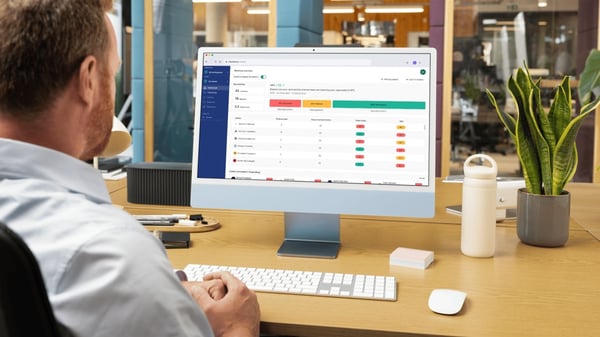
Clientshare gives suppliers a more consistent way to manage the process around them with consistent live dashboards, action management and feedback alerts, reinforcing continuity rather than one-off preparation. For clients, that creates a more connected review experience. For suppliers, it reduces admin, improves follow-through and gives leadership better visibility across the account base.
Keep the room focused on problem solving
The most useful reviews create space for discussion, challenge and decision-making, rather than simply moving from slide to slide.
That means keeping live reporting light, asking better questions and making room for the right voices to contribute. If a service issue is under discussion, the conversation should move quickly from summary to diagnosis and options. If a new opportunity is being explored, the focus should be on feasibility, priorities and what both sides would need to do next.
This is often where including subject-matter experts makes the biggest difference. Their presence helps the meeting stay practical and credible, especially when the discussion moves beyond account updates into real problem-solving. Combined with senior stakeholder input, that creates a much healthier balance between strategic direction and operational detail.
Make following up part of the process
No QBR creates much value if momentum disappears as soon as the call ends. Actions should be confirmed live, with clear ownership, regular progress monitoring and realistic deadlines.
What matters most is visibility. If actions disappear into separate notes, inboxes or spreadsheets, follow-through becomes fragile. If they remain visible in a shared, structured way, the QBR starts to function as a continuous process rather than a quarterly event.
This is another area where Clientshare supports its customers with management of the full review process, avoiding disconnected follow-ups after the meeting.
Turn good QBR habits into an enterprise standard
Once a stronger review process is working in a few accounts, the next step is scaling it. For enterprise suppliers, that usually means creating a shared standard that defines what good looks like while still leaving room for account-level flexibility.
A useful QBR standard does not need to be complicated. It simply needs to make the essentials clear: how agendas should be framed, what the pre-read should include, which stakeholders should be involved, how actions should be captured and how quickly follow-up should happen. When those elements are standardised, teams can spend less energy reinventing the process and more energy tailoring the conversation to the client.
This creates benefits beyond efficiency. It gives leadership a clearer view of account governance across the business. When the process is more consistent, it becomes easier to compare practice, spot risk earlier and understand which accounts may need more support across a wide portfolio.
Final thought
Building stronger Quarterly Business Reviews is not just about improving one meeting, it’s about creating a better way to manage important client relationships over time. When suppliers combine clear foundations with a more repeatable process, QBRs become more useful, more consistent and easier to scale.
That is where a more structured digital approach earns its place. It helps teams prepare with less friction, run better discussions and maintain momentum after the meeting. More importantly, it helps the QBR do the job it is supposed to do: strengthen alignment, make progress visible and support better decisions quarter after quarter.