Most businesses collect customer feedback through surveys, NPS questions and Business Reviews. But effective customer feedback management goes further than gathering responses.
Customer feedback management is the process of consistently reviewing what customers say and recording what happens next. It creates a history of sentiment across each account, making important changes easier to spot and act on.
Without that process, a lower score or detailed comment can quickly disappear into meeting notes or individual inboxes. Businesses are left with isolated snapshots instead of a clear view of how the relationship is developing.
By managing feedback consistently over time, you can identify recurring concerns, understand whether customer sentiment is improving and see whether the actions you take are making a difference.
A single score only tells you so much
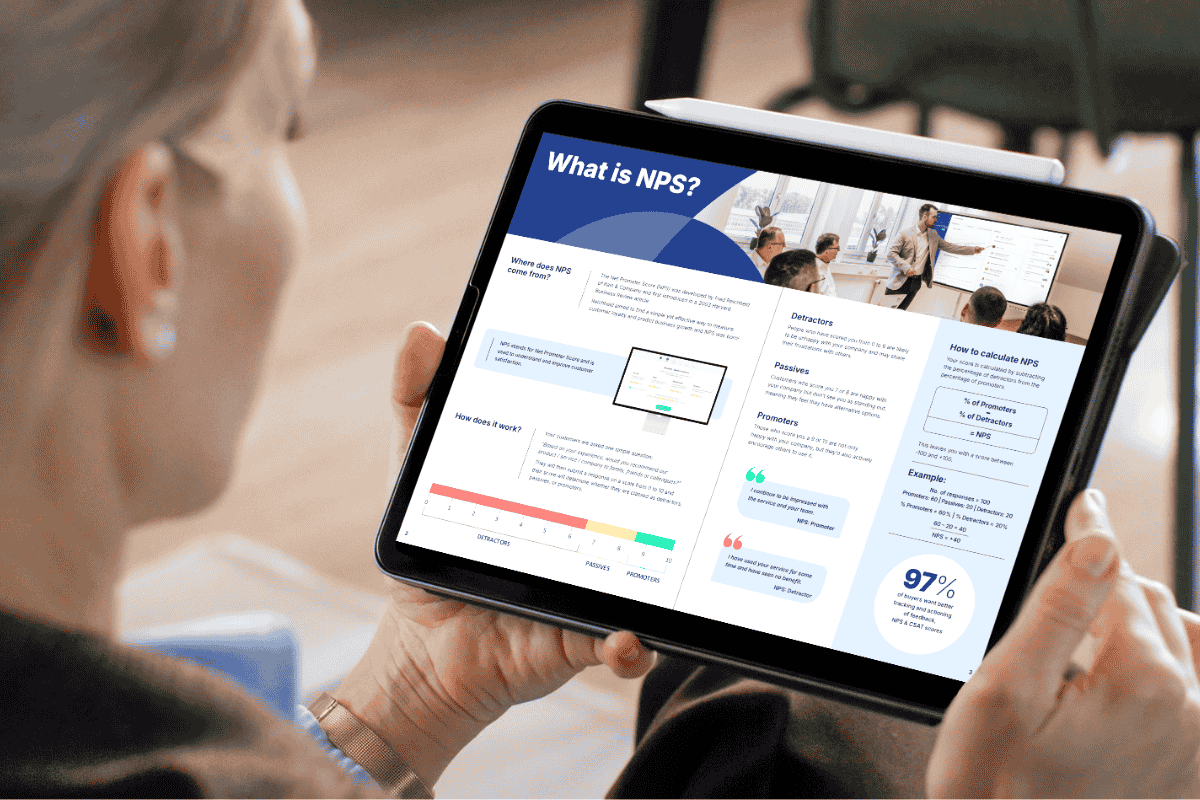
NPS, CSAT and other feedback measures provide a useful indication of how a customer feels, but the number alone rarely tells the full story.
An NPS of seven might look positive in isolation. If the same stakeholder previously gave you a nine, however, the change could signal that something in the relationship has shifted. Alternatively, an account’s overall NPS may also remain strong while an influential stakeholder becomes less satisfied. Looking only at the average could mean missing an early warning from someone involved in the next renewal.
The direction of travel is often just as important as the latest result. Looking at feedback over time helps account teams see whether sentiment is improving or declining and whether completed actions have made a difference.
Context matters too. Written comments, the stakeholder’s role and recent changes to the service can all explain why a score has moved. Without that context, businesses risk responding to the number rather than the underlying issue.

Consistency makes comparison possible
To understand how customer sentiment is changing, feedback needs to be gathered and managed consistently. That doesn’t mean every customer must receive the same survey at the same time. The right questions and cadence will depend on the relationship and the service being provided.
There does, however, need to be enough structure to compare one period with another. If feedback is requested sporadically or only collected when something goes wrong, genuine patterns are much harder to identify.
A consistent process might combine feedback from Business Reviews with shorter surveys between meetings. In the Clientshare context, users can collect all the feedback gathered from Business Reviews and the shorter, at-scale check-ins via Connect, in one place.
Over time, this creates a clearer picture of the relationship. Account teams can distinguish a temporary frustration from a longer-term decline, while senior leaders gain a more reliable view of customer health across the portfolio.
Every response needs a next step
One of the biggest gaps in many feedback programmes appears after the customer has responded. The survey has been completed and the score has been added to a dashboard. But what happened next?
A strong feedback management process should make it clear whether the response has been reviewed, who owns the follow-up and when the customer will receive an update.
Not every comment needs to become a major improvement project. Sometimes the right response is to acknowledge the feedback, clarify a misunderstanding or explain why a requested change isn’t possible.
What matters is that the customer can see their feedback has been heard and considered.
A simple feedback flow might look like this: Collect → Understand → Act → Update → Revisit

The final ‘Revisit’ step matters because completing an action doesn’t automatically mean the customer’s experience has improved. Revisiting the issue allows the account team to check whether sentiment has changed.
Closing the loop builds trust
Customers are more likely to keep sharing honest feedback when they believe something will happen as a result.
If they repeatedly raise the same concern without receiving an update, the problem becomes bigger than the original issue. It starts to suggest that the business either isn’t listening or doesn’t have the structure needed to respond.
Closing the feedback loop doesn’t always require an immediate resolution. Customers generally understand that some changes take time and not every request can be accommodated. When this is the case, clear communication is often more important than instant completion. An update explaining what has been agreed and when progress will be reviewed can help maintain trust while the work is underway.
It also makes future conversations more productive. Instead of beginning each Business Review with the customer repeating old concerns, both sides can focus on progress.
A shared process improves accountability
When feedback is managed informally, it often depends on the habits of individual account managers. One person may record every comment and follow up diligently, while another relies on memory or private notes. This creates an inconsistent customer experience and limits visibility across the business.
A shared process makes expectations clearer. Account managers know what they need to record, while leaders can see whether important issues are being addressed.
It also helps businesses spot themes across multiple accounts. If several customers raise the same concern, the issue may require a broader operational response rather than a series of isolated fixes.
Positive feedback deserves the same attention. It can reveal which parts of the service customers value most, highlight potential advocates and show where there may be a genuine basis for developing the relationship further.

Make feedback part of the customer relationship
Feedback is most valuable when it’s connected to the wider management of the account. It should inform Business Reviews, renewal preparation and account strategy. It shouldn’t sit in a separate survey tool, disconnected from the people responsible for the relationship.
Clientshare helps businesses bring Business Reviews, customer feedback, actions and sentiment trends together in one place. Account teams can see what individual stakeholders have said and which follow-up actions remain open, while senior leaders gain visibility across the wider customer portfolio.
This makes it easier to move beyond simply measuring customer sentiment and start managing it consistently.
Final thoughts
A single score provides a moment-in-time view. A consistently managed history tells you much more. It shows whether customer relationships are strengthening, whether recurring concerns are being resolved and whether your response is having the desired effect.
Most importantly, it ensures feedback doesn’t end with the customer pressing submit.
By creating a clear process for understanding, acting on and revisiting what customers tell you, feedback becomes more than a metric. It becomes an ongoing signal that helps you protect relationships and make better decisions across your business.
Read more: