Account handovers can put customer relationships at risk because valuable context is often held by individual account managers rather than the wider business. When that person leaves or changes role, the incoming team may receive the contract details and performance history but lose much of the understanding that made the relationship work.
Consistent feedback management helps prevent this. By creating a shared record of what customers have said, how their sentiment has changed and what the business has done in response, you can preserve relationship knowledge when account ownership changes.
The customer still needs to build a relationship with their new contact, but they shouldn’t feel as though they’re starting again.
Team changes expose hidden dependencies
Strong B2B relationships often rely on account managers who understand the customer exceptionally well. They know which stakeholders need more detail, what sits behind certain requests and how the customer prefers difficult issues to be communicated.
That knowledge is valuable, but it can also create hidden dependencies.
If the wider organisation doesn’t have access to the same context, the relationship becomes vulnerable whenever the account manager moves on from the account. What looked like strong customer management may have depended heavily on one person’s memory.
A new account manager can usually find the contract, review recent performance and identify open actions. What they may not understand is why those actions matter or how previous events affected the customer’s confidence. This gap can be difficult for internal teams to see, but customers notice it quickly.
Account information isn’t the same as relationship knowledge
Most businesses retain a significant amount of account data. Contracts are stored centrally, performance is reported and communication may be recorded in a CRM.
However, customer relationships also depend on knowledge that is harder to capture through operational systems alone.

A service issue might have been resolved within the agreed timeframe, but the customer may still be frustrated by how it was handled. A stakeholder might have given a positive satisfaction score while expressing concerns about future capacity. These details shape how the account should be managed.
Without that context, the new team sees what happened but not necessarily how the customer experienced it. This is why a handover based mainly on documentation can still feel disjointed. The information may be accurate, yet the relationship history is incomplete.
Feedback creates organisational knowledge
Feedback becomes particularly valuable when it’s managed as an ongoing record rather than a collection of isolated survey results.
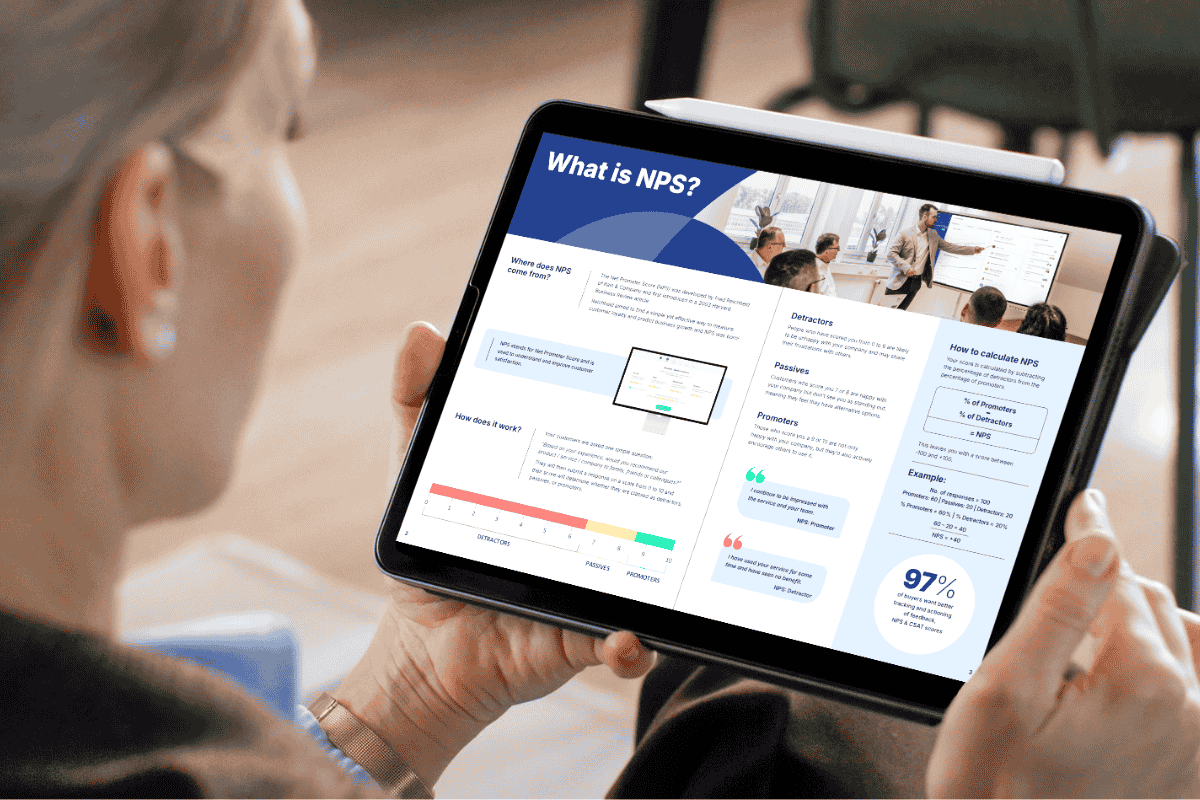
A single NPS or CSAT score shows how a customer felt at one moment whereas a consistent feedback history shows how sentiment has developed and what influenced it over time. It can reveal that confidence improved after a change in communication, or that the same concern has appeared repeatedly despite being marked as resolved.
For an incoming account manager, this provides a much stronger understanding of the relationship. They can see where progress has been made and identify areas that may still require care.
Written comments are especially important because scores alone can be misleading. Two customers may give the same rating for different reasons, while stakeholders within the same account may hold conflicting views. The meaning becomes clearer when feedback is retained alongside the actions and conversations that followed.
Managed properly, this information no longer belongs only to the person who received it. It becomes part of the organisation’s understanding of the customer.
Continuity has a direct effect on customer confidence
Customers know that people change roles and leave businesses; that change itself is rarely the main problem. Frustration develops when the transition creates more work for them or suggests that previous conversations have been forgotten.

Being asked to explain the same concerns again can make a customer question whether their feedback was ever taken seriously. Commitments may appear to disappear with the person who made them, even if the business intends to honour them.
In contrast, a new account manager who understands the history can demonstrate continuity from the first conversation. They can acknowledge previous feedback and confirm whether the customer’s priorities have changed, rather than asking them to reconstruct the relationship.
That doesn’t mean pretending to know everything. A question such as, “I understand reporting visibility has been an important focus over the past few reviews. Is that still where you’d most like us to concentrate?”, shows preparation while allowing the customer to update the picture.
This reassures the customer that their relationship is with the organisation, not solely with one individual.
Better continuity supports retention
Poor handovers don’t always cause an immediate complaint. Their impact may appear gradually through lower engagement or reduced confidence. These changes can be easy to miss if the business only looks at current service performance where operational delivery may remain strong while the relationship itself becomes weaker.
A consistent view of customer feedback makes these shifts more visible. Leaders can compare sentiment before and after the transition, understand whether unresolved issues have carried across and identify where extra support may be needed.
Preserving the feedback history gives the business a stable thread through periods of change, helping the incoming team build on existing progress instead of unintentionally undoing it.
Customer knowledge needs wider visibility
Account managers will always play a central role in interpreting feedback and managing the response. However, they shouldn’t be the only people with visibility of customer sentiment.
-
Senior leaders need to understand whether important relationships are becoming dependent on individual employees.
-
Operational teams may need context about why an issue carries more weight with one customer than another.
-
CX teams can use this visibility to identify patterns across accounts.
This turns feedback into a business asset and makes customer management more resilient when responsibilities change.

This is where Clientshare helps by bringing feedback, Business Review history and agreed actions into one shared platform. When an account changes hands, the incoming team can see not only what the customer said, but how the organisation responded and what remains outstanding.
The value isn’t simply having more information. It’s preserving the connection between feedback and what happened next.
Final thoughts
Great account managers make an enormous difference to customer relationships. Their personal understanding and judgement can’t be reduced to a system entry, nor should businesses try to remove the human element from account management. The goal is to make sure their knowledge doesn’t disappear when they move on.
Consistent feedback management gives the wider organisation a reliable understanding of the relationship. It allows new account teams to recognise what matters to the customer and continue the progress already made.
Account handovers will always involve some change. But when feedback is visible, contextualised and connected to action, the customer relationship doesn’t have to reset.
Read more: